
Transport trucks cross the Canada/U.S. border over the Ambassador Bridge in Windsor, Ont., on Nov. 26, 2024.Dax Melmer/The Globe and Mail
Nik Nanos is the chief data scientist at Nanos Research, research adjunct professor at the Norman Paterson School for International Affairs at Carleton University, a global fellow at the Woodrow Wilson International Center for Scholars in Washington and the official pollster for The Globe and Mail and CTV News.
Donald Trump is the Great Disruptor. Not only is the American President reshaping the Canada-U.S relationship, he may very well unknowingly impact who will win the next federal election.
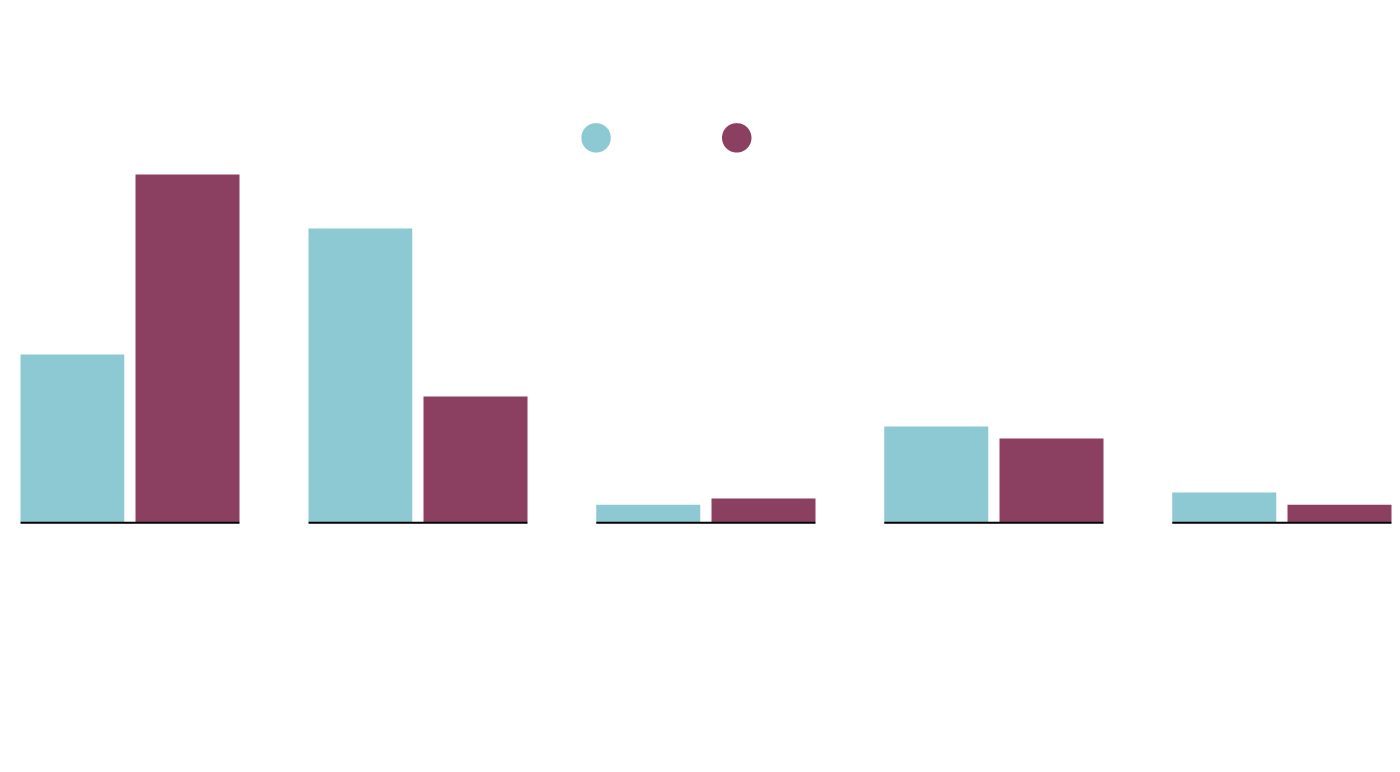
Back in 2017 during his first term, Nanos asked people how we should respond to the Trump tariff threat. The first preference of Canadians was to negotiate (49 per cent) followed by retaliating immediately (28 per cent), and then doing anything to avoid escalating (16 per cent). Only three per cent thought we should wage a full-on trade war.

How should Canada respond to
the U.S. imposing tariffs?
Opinion of Canadians, 2017 vs. 2025
2017
2025
58%
49%
28%
21%
Retaliate with new tariffs on U.S. goods imported into Canada
Try to negotiate a lifting of the U.S. tariffs on Canadian goods
16%
14%
4%
3%
Escalate the U.S. action into a broader trade war with the U.S.
Do everything to avoid escalating the U.S. action into a trade war
5%
3%
Unsure
THE GLOBE AND MAIL, SOURCE: NANOS RESEARCH

How should Canada respond to
the U.S. imposing tariffs?
Opinion of Canadians, 2017 vs. 2025
2017
2025
58%
49%
28%
21%
Retaliate with new tariffs on U.S. goods imported into Canada
Try to negotiate a lifting of the U.S. tariffs on Canadian goods
16%
14%
4%
3%
Escalate the U.S. action into a broader trade war with the U.S.
Do everything to avoid escalating the U.S. action into a trade war
5%
3%
Unsure
THE GLOBE AND MAIL, SOURCE: NANOS RESEARCH
How should Canada respond to the U.S. imposing tariffs?
Opinion of Canadians, 2017 vs. 2025
2017
2025
58%
49%
28%
21%
16%
14%
5%
4%
3%
3%
Retaliate with new tariffs on U.S. goods imported into Canada
Try to negotiate a lifting of the U.S. tariffs on Canadian goods
Escalate the U.S. action into a broader trade war with the U.S.
Do everything to avoid escalating the U.S. action into a trade war
Unsure
THE GLOBE AND MAIL, SOURCE: NANOS RESEARCH
Fast forward to our latest tracking on this with The Globe and Mail and CTV News, and opinions have changed drastically in the wake of Mr. Trump’s musings around making Canada the 51st state and his threats of tariffs. Currently, a majority of Canadians prefer immediate retaliation (58 per cent, up 30 points since 2017) while only 21 per cent want negotiation.
Comfortable majorities of Canadians are also game for a wide swath of countermeasures in response to the Trump threats. Almost nine of ten Canadians support (78 per cent) or somewhat support (10 per cent) having provinces remove American beer, wine and liquor from stores. More than eight of 10 support (62 per cent) or somewhat support (21 per cent) putting dollar-for-dollar counter tariffs on U.S. goods entering Canada.

Support for next steps if U.S. imposes tariffs on Canadian goods
Remove U.S. wine, beer and liquor from stores
88.9%
Impose countertariffs
on U.S. goods
82.8%
Suspend exports of oil, natural gas and electricity
75.4%
THE GLOBE AND MAIL, SOURCE: NANOS RESEARCH

Support for next steps if U.S. imposes tariffs on Canadian goods
Remove U.S. wine, beer and liquor from stores
88.9%
Impose countertariffs
on U.S. goods
82.8%
Suspend exports of oil, natural gas and electricity
75.4%
THE GLOBE AND MAIL, SOURCE: NANOS RESEARCH

Support for next steps if U.S. imposes tariffs on Canadian goods
Remove U.S. wine, beer and liquor from stores
88.9%
Impose countertariffs
on U.S. goods
82.8%
Suspend exports of oil, natural gas and electricity
75.4%
THE GLOBE AND MAIL, SOURCE: NANOS RESEARCH
Even the hot topic of using energy exports as a countermeasure has broad support. Three in four Canadians support (51 per cent) or somewhat support (25 per cent) suspending exports of oil, natural gas, and electricity to the United States. Of note, two of three residents of the Prairie provinces (66 per cent) are good with using energy to hit back at the Americans.
Although there is latitude to act, Canadians are divided on whether we can realistically fight back. Forty-two per cent think we hold a strong position and can effectively fight a tariff war with the U.S., while 38 per cent believe we are in a weak position and that a tariff war will seriously damage the Canadian economy.
And it doesn’t matter which party leads us into battle: respondents are just as likely to think a Conservative (31 per cent), or a Liberal government (31 per cent) would result in a positive negotiating outcome.

Political party most likely to have positive negotiation outcome with Trump
Conservatives
31.1%
30.8%
Liberals
Neither would
be successful
14.1%
No difference
18.4%
Unsure
5.5%
Which of the following politicians would do the best job at negotiating with Trump?
Mark Carney
39.6%
Pierre Poilievre
26%
Chrystia Freeland
12.5%
Karina Gould
0.6%
No difference
9.5%
Unsure
11.9%
THE GLOBE AND MAIL, SOURCE: NANOS RESEARCH

Political party most likely to have positive negotiation outcome with Trump
Conservatives
31.1%
30.8%
Liberals
Neither would
be successful
14.1%
No difference
18.4%
Unsure
5.5%
Which of the following politicians would do the best job at negotiating with Trump?
Mark Carney
39.6%
Pierre Poilievre
26%
Chrystia Freeland
12.5%
Karina Gould
0.6%
No difference
9.5%
Unsure
11.9%
THE GLOBE AND MAIL, SOURCE: NANOS RESEARCH

Political party most likely to have positive negotiation outcome with Trump
Which of the following politicians would do the best job at negotiating with Trump?
Mark Carney
39.6%
Conservatives
31.1%
Pierre Poilievre
26%
30.8%
Liberals
Chrystia Freeland
12.5%
Neither would
be successful
14.1%
Karina Gould
0.6%
No difference
18.4%
No difference
9.5%
Unsure
5.5%
Unsure
11.9%
THE GLOBE AND MAIL, SOURCE: NANOS RESEARCH
However, asked which politician would do the best job at negotiating with Mr. Trump, the numbers are clearer. Forty per cent of Canadians gave a tip of the hat to Liberal leadership hopeful Mark Carney, while 26 per cent thought Conservative Leader Pierre Poilievre would do the best job negotiating with Mr. Trump. Chrystia Freeland, a Liberal leadership candidate and the person who played a key role in the last trade negotiation, was named by 13 per cent as the best negotiator.
With federal politics transfixed on Mr. Trump, Canadians are thinking twice about who should lead the country. On the eve of Justin Trudeau’s resignation, Pierre Poilievre’s Conservatives had a whopping 26-point advantage over the Trudeau Liberals.
Liberals had hemorrhaged support to the Conservatives among young people and women. When Conservative support is at 47 per cent, the reality is that there are many Liberals in the blue column registering both their discontent and anger at a tired government. But in the period following Mr. Trudeau’s resignation and Mr. Trump’s broadside against Canada, voters have been swinging away from the Conservatives and moving to the leaderless Liberals.
The swing has been striking: Ballot support which was 47-20 favouring the Conservatives before Mr. Trudeau stepped down is now 38-30. The once-projected Conservative supermajority is at risk. An expected federal election that was predicted to be a Liberal car crash may now be a horserace.
What have we learned in the past four weeks?
First, Mr. Poilievre’s focus on past anger toward both the carbon tax and Justin Trudeau is yesterday’s news. Canadians are thinking of the future. Mr. Trudeau taking the lead on the response alongside Canada’s premiers, and Liberal leadership hopefuls focusing on Mr. Trump, is in sync with what Canadians are worried about. Mr. Poilievre’s pivot has been too slow. He was ahead of the Liberals in 2024 when he was tapping into anxiety about the rising cost of living, but he’s been flat-footed when it comes to telling Canadians how he’d manage Mr. Trump.
Second, the next election will not be a referendum on Mr. Trudeau and also will not be a referendum on the Liberal Party of Canada. The next election will be decided by a simple question: Who can best manage Canada’s relationship with Mr. Trump? Pragmatism may override anger and party loyalty.
Finally, the numbers may very well change again. Just because the trendline has moved against the Conservatives over the past four weeks does not mean it will continue to do so. It suggests that we are in a fragile transition period. As Canadians change the lens through which they see their political options, they may change their minds again as the two frontrunning parties sharpen their focus on the binational relationship.
Whatever the case, the shadow of Mr. Trump looms large for both the future of Canada and of our political leaders.