Michael Ignatieff is a former Liberal Party leader and professor of history and rector emeritus of Vienna’s Central European University.
Imagine what your private life would be like if every one of your relationships was transactional, if every important human encounter depended on a deal – so much for me, so much for you – and every deal could be cancelled if it no longer worked for either party.
What would marriage or family life be like? What would happen to your relationships at work and your friendships if no one could be sure that you would be there when they needed you?
Such an approach would damage what we value most: the understandings that connect us to others and link us in communities of belonging, which can turn into communities of sacrifice when someone or something we care about must be defended.
Now think what the world of geopolitics would look like if all relations between states were based on nothing but deals.

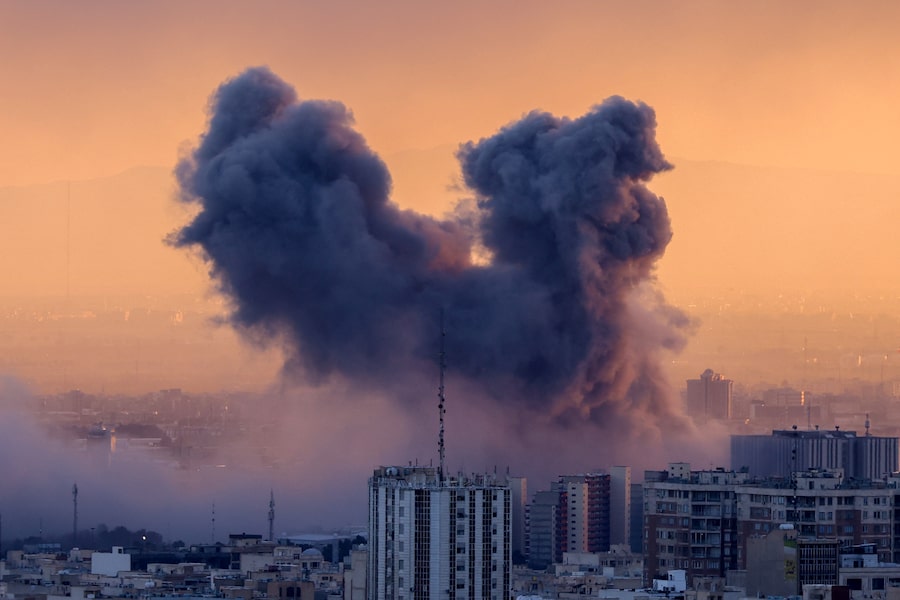
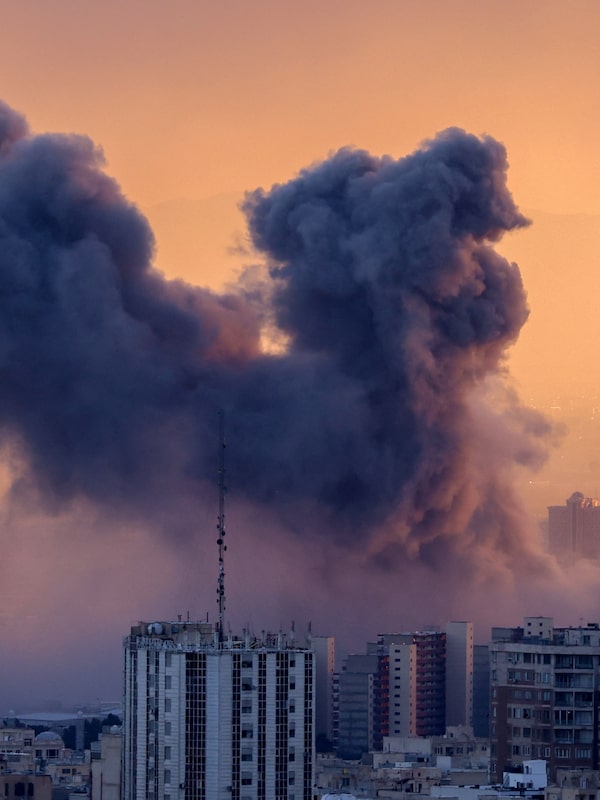
A first responder emerges from the smoke at the site of an Israeli air strike that hit an apartment building in Beirut on April 8, 2026.Bilal Hussein/The Associated Press
If everything is transactional, then everything will be dependent on the leader who makes the transaction. So when a leader meets another leader, the deal they make today may be revoked tomorrow if either one feels it’s in their interest to do so. In a purely transactional world, there are no stable allies, because there are no treaties, which bind a state to come to the aid of a friend. Since allies aren’t treaty-bound to come to each other’s assistance if the other is attacked, there is no real friendship in international relations. There are no norms governing international conduct either, since norms constrain deal-making and a leaders’ margin for manoeuvre.
Interstate equilibrium is maintained by force, threats, intimidation or more deal-making. International institutions tasked with enforcing norms wither, because norms and rules constrain leaders’ discretion. Who needs institutions, rule making and rule-enforcing bodies? Who needs diplomats? A leader can always fly in or meet on Zoom with their opposite numbers. With international institutions withering away, there are no gathering places where states get together to negotiate the live and let live arrangements that prevent war.
States, in this world, have no permanent friends, only permanent rivals, and they have no loyalties to anything but their own interests. Absent universal norms, leaders have no responsibility for the helpless or the vulnerable outside their territory, and only the shrinking number of leaders elected democratically have enforceable obligations to their citizens.
Once a transactional, deal-driven approach takes over ordinary human relations, private life becomes suspicious, hostile and lonely. Likewise, in the world of nation-states, deal-making – in the absence of institutions, norms and rules – is a recipe for chaos, fear and disorder.
What if that’s the world we’ve already entered?
The Art of the Deal, U.S. President Donald Trump’s 1987 account of his adventures in the New York real estate market, remains his template for interstate relations and his guide to his responsibilities as a President. What if the art of the deal misunderstands our world and makes it a more dangerous place?
A president who sees global politics through the lens of New York real estate looks at Gaza and sees beachfront property that would make a fabulous Mediterranean resort if the rubble was cleared away.
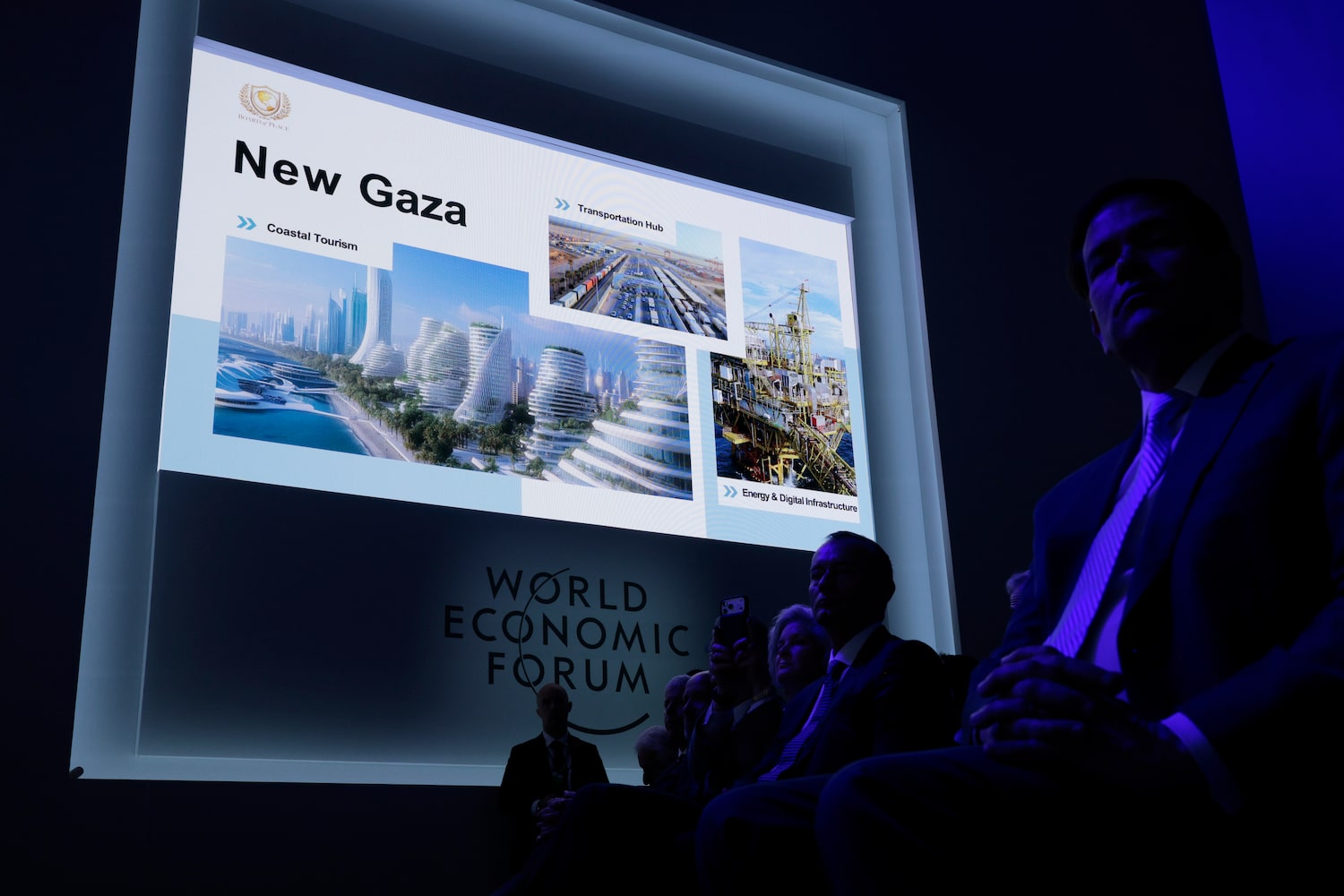
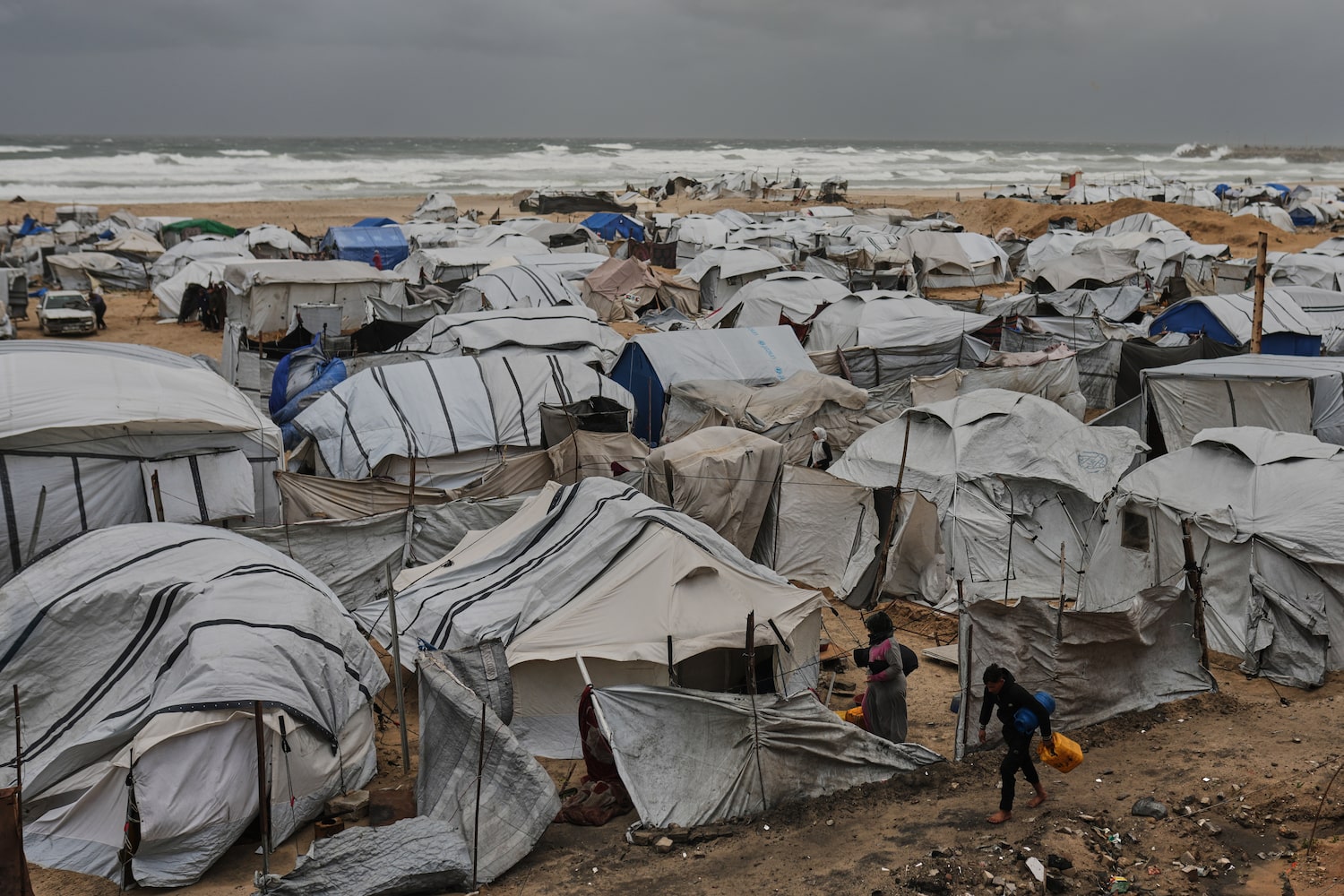
Mr. Trump’s son-in-law, Jared Kushner, raised in the same New York real estate circles, couldn’t understand why Palestinians wouldn’t give up dreams of a homeland for a redevelopment package that would make a few of them rich, many of them servants in the beachfront hotels, and the rest exiles from their own land. A deal maker doesn’t understand there are some goods that don’t have a price and there are some attachments that can’t be traded.
That turns out to be true not just with Palestinians, but with Canadians as well. We have a state of our own, and no deal, even one offered by a U.S. president, can persuade us to surrender it and become the 51st state. Deal-making – and the idea that everything has a price – meets its limit whenever land, identity and history are at stake.
Dealmakers are perpetually baffled to discover that in international politics there are some deals that just can’t be done. Mr. Trump sent his hand-picked dealmakers, Steve Witkoff and Mr. Kushner, to find a Ukraine deal, only to discover that Ukraine is not about to surrender the portions of Donbas it holds, because Ukrainians will never see negotiations as a real estate transaction. It is the surrender of national territory, and no peace that is achieved by surrender will be permanent or honourable.
Dealmakers who have powerful militaries tend to think their armed forces can apply the leverage that makes it possible to make an offer you can’t refuse. Mr. Trump’s threats to Iran are like the scene in The Godfather where a horse’s head is left in the bed to “persuade” a man to take a deal.
A president commands resources a Mafia don can only dream of, but those very resources can lock you in. Once a president believes that force is the best persuader, then his deal-making has to be fast if it is to work, since you cannot keep your military waiting on-station indefinitely.
Having bombed Iran nuclear facilities in July, Mr. Trump came back in February, parked a carrier strike group in the region and told the Iranian leadership: Make a deal or face annihilation.

U.S. Special Envoy for Peace Missions Steve Witkoff, Jared Kushner and U.S. Navy Admiral Brad Cooper, commander of U.S. Central Command, observe flight operations aboard Nimitz-class aircraft carrier USS Abraham Lincoln in the Arabian Sea on Feb. 7, 2026.US Navy/Reuters
In the face of the threat, the Iranians chose negotiation. They were willing to dilute their enriched uranium, provided they could hold on to it. The Americans insisted the uranium be removed from the country.
In the end, Israeli Prime Minister Benjamin Netanyahu reportedly convinced Mr. Trump to go to war. The result was Epic Fury, the closure of the Strait of Hormuz and skyrocketing oil prices.
Iranian leadership, faced with a coercive deal, concluded that the best way to survive was to attack the Gulf States and take their neighbours’ oil production down with them.
American deal-making, backed with violence, has led straight to chaos. Although it appears we pulled back from the brink this week, it was diplomacy, via Pakistan and China, that may have saved the day.
previous U.S. president had looked at Iran’s nuclear program, the regime’s revolutionary Shia ideology and its Revolutionary Guards’ capacities for repression and concluded that he was facing a problem that could not be solved. It could, on the other hand, be managed.
Having accepted this premise, President Barack Obama left the frame of coercive deal-making behind, and committed the U.S. to the world of diplomacy, the art of managing problematic relationships that have no once-and-for-all resolution.
Mr. Obama had the negotiators working in Vienna and Geneva for 20 months. Mr. Obama also understood, as Mr. Trump does not, that he needed allies and international organizations to get the job done.
In March 2015 in Lausanne, Switzerland, U.S. Secretary of State John Kerry, left, holds a meeting with Iran's Foreign Minister Mohammad Javad Zarif, right, over Iran's nuclear program.The Associated Press
He roped in the permanent members of the UN Security Council, plus Germany, as well as the UN’s nuclear regulator, the IAEA. The Joint Comprehensive Plan of Action (JCPOA), reached in 2015, wasn’t perfect, but it ensured international inspection of Iran’s nuclear program, and it tied Iran and the U.S. together into a process, which over time, might have led to the containment of a rogue regime and the avoidance of all-out war.
That’s diplomacy, as opposed to deal-making. Diplomats create frameworks, draft documents, negotiate undertakings and create institutions to back up observance of agreements and make them last. Diplomacy is about creating processes, relationships and institutions that bring stability to the international system, especially in situations like Iran, where there are no deals that can resolve the matter, no regime-change strategy that will rid the world of a bad but thoroughly entrenched ruling clique.
Mr. Trump, with Mr. Netanyahu baying at his back, pulled the U.S. out of the JCPOA in 2018, on grounds that look mostly like their joint unwillingness to be bound by any deal done by a Democratic predecessor.
The war in Iran offers a parable about what the world comes to look like when you abandon diplomacy for coercive deal-making. If you stick to diplomacy, you build coalitions, you play a long game, you wear the other side down and you settle for half a loaf in the hope of getting the whole loaf later. If you bet everything on the leverage of force, your military starts dictating your timetable. If you order up the aircraft carriers, you have to use them. Once you unleash the threat, you have to carry it out or risk carrying the accusation – TACO, meaning Trump Always Chickens Out – to the end of your presidency.
The Iran war brings home, too, that when you have reduced all relations, including with former allies, to deals, your allies will not come when you call and will leave you alone to face the risks of your decisions. You will have to clear the mines on your own, open the Strait of Hormuz to shipping or throw up your hands, as Mr. Trump did, and tell allies it is their problem (in the process abandoning America’s 80-year global guarantee of free navigation in international waters).

A man walks on shoreline rocks as oil tankers and cargo ships line up in the Strait of Hormuz, as seen from Khor Fakkan, United Arab Emirates, on March 11.Altaf Qadri/The Associated Press
When the UN and other international institutions are sidelined, when norms of territorial integrity and sovereignty are disregarded, when the U.S. ceases to accept a role as a guarantor of global order and becomes a predator hegemon, it finds itself alone, facing a Chinese and a Russian predator, without the friends and allies it has counted on for 80 years.
A predatory America increases its isolation by its ambassadors’ contempt for diplomacy overseas. The U.S. ambassador to Canada rebukes Canadians and its media for being negative about their neighbour. The U.S. ambassador in Paris condemns France for allowing violent radical extremism to increase unchecked. In each of these cases, it’s as if there’s no relationship to nurture, no shared past, nothing for American diplomats to celebrate as allied achievements in common. Instead, their job is to parrot MAGA talking points. The old diplomatic code – you should say what you want in private, but not in public – in order to respect the sensibilities and the sovereignty of your hosts is dismissed as old school. The point of being an American diplomat is to tell everyone, including old friends, who’s boss, over and over again.
Once allies have been lectured about their internal affairs too often, once America’s president repeats, too often, that he doesn’t trust them, then when he demands that they help him clear the Straits of Hormuz, they are within their rights to remind him that it’s not their war. But this only hastens the disorganization of the world. No one is safe in a transactional world based on deals, in a world where past commitments, treaties and institutional undertakings mean nothing, where diplomacy has been replaced with lectures, where international organizations are sidelined. The de-institutionalization of world politics, the disintegration of alliance structures, leaves the hegemons ever closer to a confrontation with each other that threatens everyone with catastrophe.
We can take heart, if that’s possible, from what happened in the Cuban Missile crisis of 1962, when two superpowers came within a heartbeat of a nuclear exchange.
U.S. Ambassador Adlai Stevenson, seated at right, describes aerial photographs of launching sites for intermediate range missiles in Cuba during an emergency session of the United Nations Security Council on Oct. 25, 1962, at the height of the Cuban Missile Crisis.The Associated Press
What followed was a realization that diplomacy was the only alternative to Armageddon. The Limited Test Ban Treaty, signed by Nikita Khrushchev and John F. Kennedy, followed in 1963. After that, years of negotiation, not between real estate dealmakers, but expert professionals, eventually produced the Strategic Arms Reduction Treaty (START I) that allowed both countries to scale back their arsenals and stop a destructive and dangerous arms race. Later, New START, was negotiated in eight separate rounds between May and November, 2009, by professional diplomats, and came into force in April, 2010.
Now, however, we have no treaty structure to prevent the nuclear and AI-enhanced technology race from spiralling out of control. Even predatory hegemons have an interest in agreeing to limits and guardrails. They, too, want their territory safe from predation. Deconfliction regimes that prevent collisions and accidents, treaties that stop them from deploying space-based systems to blind each other’s satellites and communications systems, agreements to limit the deployment of AI-powered autonomous weapons systems: these are the tasks of a 21st-century diplomat.
Middle powers, lacking the coercive power to impose deals, naturally prefer diplomacy. Canada’s Prime Minister Mark Carney is out there, with the best of them, making deals to diversify our exports and build new relationships that reduce our dependence on the United States, but there’s only so much he can do if our international institutions – NATO, the UN, the WTO, the WHO – are too weak to be reformed and too easily ignored to hedge the hegemons.
We must strive for a world beyond the transaction, the deal, the threat; a world that accepts problems can be managed, but not solved; that goods like honour and sovereignty cannot be traded; and above all, that adults must be wise enough to know that an agreement to agree to disagree is safer than a fight to the death.

Residents in Tehran watch and take pictures as flames and smoke rise from an oil storage facility on March 7, during the U.S.-Israeli military campaign in Iran.Alireza Sotakbar/The Associated Press