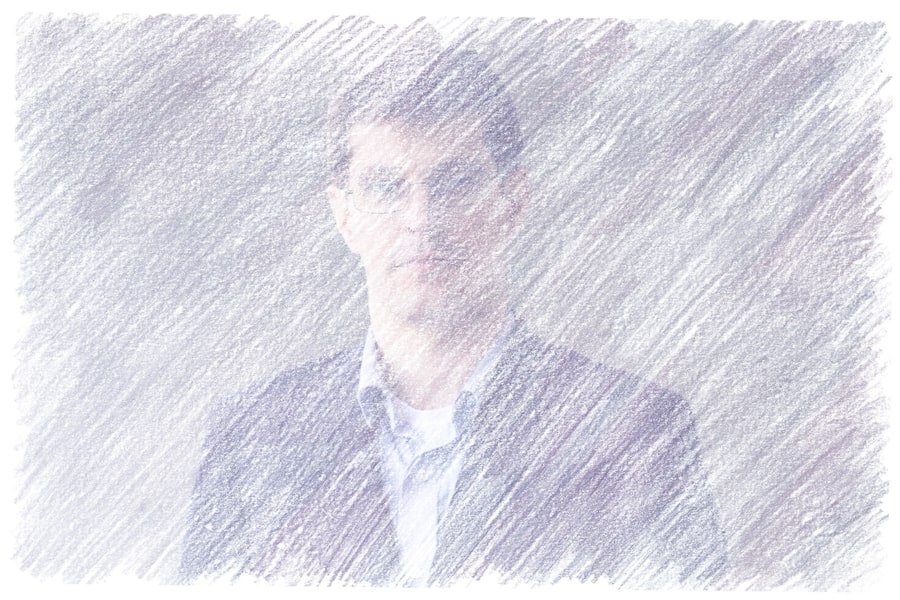

“There is a moment before impact that is the last instance of things as they are,” writes Steven Galloway in his bestselling novel, The Cellist of Sarajevo. “Then the visible world explodes.”
Ten years ago, on Nov. 16, 2015, Mr. Galloway’s world as he knew it exploded. The popular (or so it seemed) professor and acclaimed novelist was suspended from his job as chair of the venerable creative writing program at the University of British Columbia. Two days later, a university memo sent to students, faculty and staff of the program, informed them that “serious allegations” had been made against Mr. Galloway. The school’s priority was “attending to the safety, health and well-being of all members of our community.” It included a link to counselling services.
What had he done? Speculation loves a vacuum, as became immediately evident on social media and in the chattering classes of CanLit. The chattering has never really stopped.
Mr. Galloway was fired the following June, after an independent investigation. A year after he was suspended, a now-infamous open letter calling for due process for Mr. Galloway and signed by some of Canada’s biggest literary names was published.
Long after Mr. Galloway was suspended, seemingly out of the blue, from his job, the impacts of the high-profile – and, as you will see, botched – case, continue: careers derailed, jobs lost, friendships ended.
This is the story of an academic firing that irrevocably fractured the country’s literary community, causing wounds that, a decade later, still fester.
The consequences are most significant for the accuser and the accused, but they have also enveloped others involved intimately or extremely tangentially in the case, as a defamation lawsuit looms. The ending to this story has not been written. But its narrative has already altered many lives.
“A lot of people have gone down with this particular ship,” says Margaret Atwood, who signed the open letter, vociferously defended it, and has maintained a keen interest in the case. “Out of the best of intentions, they thought they were helping someone.”

The allegations, which have not been tested in court, are extremely serious. Mr. Galloway’s accuser, known as AB, alleges sexual and physical assault. Three specific occasions are outlined – one on his boat and two at his office on UBC’s picturesque Vancouver campus.
Mr. Galloway has vociferously denied the allegations. He says that he and AB had a two-year-long consensual affair; both were married to other people at the time. (He has since divorced and remarried; his wife is another former student.) AB has called it an ongoing abusive relationship and “traumatic bonding.” What has been established is that AB, whose identity is protected by a court order, told one of her professors, the author Keith Maillard, about the allegations in November, 2015. He told a second professor in the program, novelist Annabel Lyon, who was temporarily in charge while Mr. Galloway was in Ohio for a speaking engagement.
Tenured and tenure-track faculty were called to an extraordinary weekend meeting, at the home of professor Linda Svendsen, in which the allegations were revealed by Profs. Lyon and Maillard, according to court documents. Prof. Lyon read a statement from AB that she was prepared to go public with her story; that she had met with CBC’s The Fifth Estate and that CBC lawyers thought her evidence was “damning.” (This, court documents show, was not true; that while a producer did meet with AB, CBC lawyers were not consulted. Further, the show never considered including the Galloway story in its piece about university sexual assaults.) The meeting – a “toxic, traumatic event” as later described by one of the attendees, associate professor Bryan Wade (who has since died) – resulted in a decision to inform then-Dean of Arts, Gage Averill, who suspended Mr. Galloway with pay and sent out that memo.
In retrospect, it is clear that the case was badly mishandled, beginning with the off-site meeting, rather than going directly to the dean, then the public memo, even if it did state that no findings of wrongdoing had been made about Mr. Galloway. And in another bizarre move, a former student in the program, Chelsea Rooney, was dispatched to see if there were other complaints against Mr. Galloway, or anyone who could corroborate the claims by AB.
At the time, Prof. Averill told The Globe that Mr. Galloway’s suspension was made public because “it was apparent that a number of people in the creative writing program” were aware of the allegations and the story would soon get out. “We thought it best to go to the community with a balanced and limited communication,” he wrote in an e-mail in November, 2015.
We now know the reason people knew was that bizarre meeting, the instructions to Ms. Rooney and other actions taken around the initial investigation by people who had no business doing so. The memo likely only fuelled more speculation.
“By this time, through the Internet, millions of people believed that Galloway was a rapist,” Ms. Atwood writes in her new memoir, Book of Lives. “He was a pariah: his life as a published writer and university teacher was effectively over.”
It was a perfect storm. In the run-up to the explosion of the #MeToo movement, and in the midst of the Jian Ghomeshi case, a professor and bestselling author was accused, it seemed, of something that might have to do with sexual impropriety. With no details available, other than what was in that memo, speculation was intense. Twitter in particular was widely used at the time by people of all political stripes, a universally accessible soapbox. People tweeted with abandon.
A retired judge was appointed to conduct an independent investigation. Mary Ellen Boyd interviewed AB as well as people who became known as ancillary complainants, including Ms. Rooney, who told The Globe in 2016 that she had not intended to register her own complaint and believed she was acting as a witness for AB. (Neither Ms. Rooney nor her lawyer responded to an interview request this fall, while Prof. Averill, now UBC’s provost, declined an interview request.)
In the end, the investigation did not find, on a balance of probabilities, that Mr. Galloway had committed sexual assault or assault.
Many of the details of the case came out in affidavits and other documents filed in a lawsuit that Mr. Galloway launched in 2018. He is suing AB, Ms. Rooney, Prof. Lyon, Prof. Maillard, and several others who commented on his case on social media. Also named in the lawsuit is an art critic who wrote about an exhibition of AB’s that dealt with the allegations in question.
Before even going to trial, this defamation suit has already made legal precedent, as defendants attempted to have the suit dismissed as what’s known as a SLAPP – a strategic lawsuit against public participation. Anti-SLAPP laws in B.C. and Ontario are meant to allow for quick dismissal of defamation claims that are seen as attempts by powerful people or organizations to intimidate others into silence.
Attempts to have the suit dismissed as a SLAPP – which in B.C., is the Protection of Public Participation Act, or PPPA – went all the way to the Supreme Court of Canada and were ultimately unsuccessful.
The trial is finally scheduled to begin on Oct. 5, 2026. A whopping 12 weeks have been set aside for the proceedings.
While many people I contacted this fall still refused to speak about the Galloway case, even off the record, some acknowledged, 10 years after Mr. Galloway was suspended, that they wish they had handled things differently – and certainly feel the matter should have been handled differently by UBC. Those who agreed to speak to The Globe and Mail include one of the ancillary complainants in the case.
“Looking back now, if I had known what was going to happen, I would not have participated in it,” says a former student who submitted a formal complaint to UBC – although, as they explained in an interview, they felt roped into the process and never intended to become a complainant.
The complainant, whose identity we are protecting because the reporting was supposed to be a confidential process, told me they were encouraged to share their own negative experiences regarding Mr. Galloway (much less serious than AB’s allegations) with a UBC official. Before they knew it, they were reluctantly writing – and signing – a statement, and were shocked when told that Mr. Galloway would be reading it. “At this point I was now, without my full understanding or consent, designated as a complainant,” they told me. They were then interviewed by Ms. Boyd, not knowing, they say, that the answers would be used to form a second statement.
“It was a deeply confusing time and it was like there was this haze of distortion that fell over everything,” they told me, emphasizing that they were acting in good faith.
“No parties that were part of it deserved the way it turned out.”
In June, 2018, UBC was ordered to pay Mr. Galloway $167,000 in damages; an arbitrator found that communication by the university contravened his privacy rights and caused harm to his reputation. An additional $75,000 penalty was later ordered for breaching confidentiality following that first payout: $60,000 to Mr. Galloway and the rest to the UBC Faculty Association, which was representing him. With the UBC arbitration case settled, he sat down with my colleague Gary Mason. “I’ve won a moral victory but my life is destroyed,” said Mr. Galloway.
The monetary settlement did not suffice for Ms. Atwood. In 2021 and 2022, she and fellow novelist Susan Swan wrote repeatedly to UBC’s president, board and other high-ups, reprimanding the university for its rush to judgment without giving Mr. Galloway due process.
“We expect you will agree that, had anyone at UBC done any due diligence whatsoever at the beginning of this saga, and had UBC not chosen to go public … this whole regrettable story would never have unfolded in the way that it has,” they wrote in one letter.
In another: “The trail of destruction is extensive: people were mobbed, shunned, and fired for standing up for one of the fundamental tenets of democracy: due process and the right to a fair trial. The casualness with which these democratic ideals were mocked and dismissed, often by ‘educators,’ was breathtaking.”
They wanted the board to acknowledge the university’s “disastrous handling of the case” and organize a reconciliation process around the matter. They offered to help.
They say the only responses they received were from university lawyer Hubert Lai, who declined to engage, citing privacy concerns and the fact that legal issues between UBC and Mr. Galloway had been resolved.
UBC declined an interview request about the case this fall, citing privacy law. Instead, it sent a statement lauding the creative writing department.
At the height of the Galloway controversy, Kim Goldberg gave herself a job. The B.C.-based poet decided she would keep tabs on who had signed, or unsigned, the contentious open letter in support of Mr. Galloway. Ms. Goldberg, part of a group of prolific online posters who were incensed by the UBC Accountable letter, tracked the names and published them regularly on social media. For this work, she was accused of “McCarthyism” by the pro-Galloway side, as she wrote in a book of essays that came out of the Galloway case, Refuse: CanLit in Ruins. (Another of the essays, “Burn” by Prof. Maillard, was named in the defamation suit.) The anthology was one of the first works of art to come out of this chapter in CanLit. It won’t be the last.
“I was very vociferously opposed to that open letter, as was a whole set of the CanLit community that I would now [say developed into] a Twitter mob,” Ms. Goldberg recently told me. “It left no room for any sort of discussion or closer examination of anything. There was just a lot of what now, to me, seems like self-righteousness.”
Ms. Goldberg, who doesn’t know Mr. Galloway, was hailed by the editors of Refuse for making an important contribution to “the resistance.” But she now feels differently about her actions (except the essay). “I don’t think I would ever get caught up in tribalism on any issue now like I did then,” she says.
As poorly as the initial process was mishandled at UBC, that open letter calling for “due process” unleashed a firestorm. Released a year after Mr. Galloway’s suspension, the letter was signed by a long list of CanLit luminaries – including Ms. Atwood, Miriam Toews, Michael Ondaatje, Sheila Heti, and Yann Martel. Big names in the book world also signed, including Louise Dennys, Mr. Galloway’s then-publisher at Knopf Canada, and Geoffrey Taylor, who was then director of the Toronto International Festival of Authors.
The response to the open letter was immediate, fierce and relentless. Many were shocked by what they felt it ignored. Where was the concern for the women who had complained? Signatories were called rape apologists, and warned that they were on the wrong side of history.
“I was completely surprised and shocked,” says Ms. Swan, a signatory. She thought clarifying their position – it was about due process – would calm things down. “Instead it blew up into the biggest flame-war in maybe North American internet life.”
Several of the signatories un-signed, including Ms. Toews and Camilla Gibb (both of whom declined interview requests). Even Madeleine Thien, who had publicly written to UBC demanding that they take her name off any university communications because of their handling of the case, eventually unsigned the letter. Ms. Thien, who told UBC in 2016 that it had “taken a tragedy and turned it into [an] ugly, blame-filled, toxic mess, destroying lives in the process,” did not respond to an interview request.
Some of the signatories added a statement about why they had signed, or published pieces explaining themselves, hoping to defuse the situation. Ms. Dennys was urged by others to un-sign. She held firm.
“Anyone who signed the letter was given a hard time,” she recently told me. “Some took it very hard and felt absolutely devastated by the ire that descended upon them.”
Of all the signatories, it was Ms. Atwood, in particular, who faced the most criticism. Fellow writers and readers went after the feminist literary icon, feeling betrayed.
Erika Thorkelson, a former UBC creative writing student, published an essay about re-evaluating Ms. Atwood in light of the controversy, writing that she “has shown that her ability to tell compelling stories about fictional women far outstrips her ability to listen to real ones.”
Ms. Atwood often shot back at her critics, and in January, 2018, published an essay in this newspaper titled, “Am I a bad feminist?”
“It was a posse of, what shall we call them, true believers,” Ms. Atwood told me. “Who were believing they knew not what, because nobody knew specifically what this guy had been accused of, except it was bad and sexual.”
“That’s pretty dangerous thinking,” she later added. “If you’re not open to at least listening to the evidence and knowing what the accusation is, you’re just part of a destructive, vicious mob.”
Carmen Aguirre, an author and theatre artist based in Vancouver, took on the unenviable role of spokesperson for those who signed the letter. A BIPOC woman who had fled fascist Chile as a child and who herself was raped at 13, Ms. Aguirre seemed perfectly positioned to be a credible voice. She volunteered knowing she would be “completely” destroyed, she told me. Indeed, she was vilified for her role, and not just on social media. She recalled a panel about the issue where she was the only speaker supporting the UBC Accountable letter. When she spoke, people rolled their eyes or sighed, she recalled. The other panelists did not address her. “It was as if I didn’t exist.”
Ms. Aguirre, who has written a play inspired by the Galloway case, a Molière adaption called The Consent Club, knew when she spoke out that there were risks of a “big career cost.”
The career consequences rippled out, far beyond Mr. Galloway, whose own three-book deal for a series of lighthearted genre novels called Roy Pepitone, Ventriloquist Detective was ultimately cancelled by Penguin Random House Canada.
Several of Mr. Galloway’s supporters said they found themselves out of contract work at UBC, including author Brian Brett.
“I was just disappeared. I didn’t even learn I’d lost my job until my e-mail to a student wouldn’t work,” recalled Mr. Brett in a written account that he shared with Ms. Swan. There was a whisper campaign against him, he said; he became a pariah. (Mr. Brett died last year.)
People on both sides of this issue – those who signed the letter and those who spoke out against it – told me about impacts on their lives and careers, including their ability to publish and sell books. “There were professional opportunities that I lost because I engaged early on and strenuously in these conversations,” Ms. Thorkelson said. Things she was working on “disappeared,” professional connections ended.
The controversy quickly spilled outside CanLit and into academia at large. Julie Rak, a professor at the University of Alberta, who did not know Mr. Galloway, was involved in a counter-letter that collected more than 600 signatures. She became one of the most vocal opponents of UBC Accountable – co-editing Refuse with fellow academics Hannah McGregor and Erin Wunker, with whom she had co-published the counter-letter.
Prof. Wunker declined and Prof. McGregor did not respond to an interview request. But Dr. Rak did talk to me. She says because she wasn’t part of the CanLit community, such as it is, she was particularly free to express her views.
Her actions caught the attention of Mr. Galloway. He could not talk publicly, having signed an NDA, but a few days before Christmas, 2016, Mr. Galloway wrote privately to Dr. Rak, pleading with her to stop.
“I’m begging you, as a human being in pain, to stop holding me up as an example of patriarchal violence, and to stop your attack on me,” he wrote in the e-mail, which Dr. Rak shared with me. “I am not that person. I’m asking for some kindness. Please. Please.”
Meanwhile, at Mr. Galloway’s long-time academic home, UBC, his departure and the ensuing controversy had a toxic effect on the program itself. In 2018 a new director was brought in, Canadian novelist Alix Ohlin, who had been living in the U.S. and was thus seen as removed from the controversy. Under her watch, there was “tremendous healing,” associate professor emerita Rhea Tregebov told me. “She came in post-fiasco and she was just the right person.” (Prof. Ohlin declined an interview request. Prof. Lyon, who became chair of the program for a three-year term in 2022 but is currently on leave, did not respond to an e-mail.)
Ms. Thorkelson, who now teaches at Emily Carr University, says that ugly time led to a kinder, gentler method of teaching creative writing. “At UBC in particular, it inspired a kind of soul-searching around the way that teaching happens,” she said. “Around the dynamics in the classroom and understanding that instructors are in positions of power and what are the ethical uses of that power.”
To be sure, one positive that has come out of this debacle is an increased awareness of the need for appropriate boundaries between faculty and students. Drinking with your students (as Mr. Galloway regularly did) – and sleeping with them – is ill-advised, to say the least. UBC enacted a Sexual Assault and Other Sexual Misconduct policy in 2017.
“Policy is necessary,” says Dr. Rak. “But it isn’t going to solve our problems. What is going to solve our problems is a cultural shift around what’s okay.”
Jen Sookfong Lee, a celebrated author and book editor, says the conversation around appropriate relationships with people in power – particularly men – in publishing and creative writing programs is now happening more out in the open, rather than in the shadows.
Ms. Lee, a vocal opponent to the open letter, says she has no regrets about that time and sees the Galloway firestorm as a significant, positive turning point.
“Honestly, CanLit was so toxic before that that it needed to be burned to the ground anyway.”
Ms. Goldberg, though, does regret her actions. She herself, in ensuing years, has been mobbed for her own against-the-grain – one could say offensive – views. She found herself attacked and cancelled, she says, when she became a vocal critic of vaccine mandates, weighed in on what she calls gender ideology, and the Israel-Hamas conflict. She also tweets in opposition to Indigenous land acknowledgments.
“The majority of CanLit friends I stood shoulder to shoulder with in that Twitter mob in the Galloway days have now defriended me on Facebook. Many have blocked me. Such is the fickleness and disingenuousness of Twitter mobs,” she told me. “They are cults essentially.”
She has found a new community, becoming active in firearms. She’s now writing a book of haikus about her entry into the gun world. She hosts an open-mic night in Nanaimo, B.C., once a month, where any expression and any political leanings are welcome.
Connecting – or attempting to – with people 10 years after the events stunned the fairly small world of CanLit, I found that many would not even respond to queries about this case. Often those who did reply were wary.
Some were still upset with me for my reporting on the case. Each side thought I was against them at some point. A colleague described reaction to my work on this file as a Rorschach test: If they were on one side, they saw my writing as being too hard on Mr. Galloway; on the other, too sympathetic. I had always felt that my reporting had been just that: reporting, using the facts that were known to me.
The truth is, like everyone else, I was intensely curious. Journalist, human and someone who peripherally knew Mr. Galloway – I had interviewed him a few times; we were on friendly terms – I was dying to know what happened.
When the way it was handled in the early days by UBC came to light through court documents, I was shocked at the ineptness. And when the nature of the ancillary complaints against him was revealed – he played favourites, he made insensitive comments, that sort of thing – they seemed rather petty.
Mr. Galloway having an undisclosed affair with a student was completely inappropriate, and, it would seem, a firing offence, along with other administrative transgressions. But what happened to Mr. Galloway was beyond a firing. It was a social-media firing squad. He lost his livelihood, his writing career, his reputation, many friends. There are people who think he deserved it; others who say if every professor who slept with a student was terminated, there would be a lot of leaderless lecture halls in universities across Canada.
The case was a sensation and I wrote an astounding 41 pieces about it between November, 2015, and January, 2024, not including stories about other controversies or issues that referenced it. A decade on, I have to ask myself: Did this reporting fuel the fire? And what are the potential consequences of writing about it now, again?
A major concern is the potential impact this case could have on the reporting of sexual violence. As Mandi Gray, a survivor and academic who studies this field, writes in her book Suing for Silence: Sexual Violence and Defamation Law, lawsuits by people accused of sexual assault “have a widespread silencing effect.” If defamation cases can have this kind of impact, surely a news story about this specific case could too.
“I would say that things have only gotten more depressing since the publication of the book,” Prof. Gray told me, calling it a global problem. (Prof. Gray, who was contacted by AB before she took her complaint to Prof. Maillard, is being sued by Mr. Galloway over tweets sent in 2016 and 2018.)
As for the case itself, a recent application by the defence to separate the so-called Twitter defendants from the UBC defendants was not successful.
Mr. Galloway declined an interview for this story, but sent a statement through his lawyer.
“For over six years, the defendants have brought motions and multiple appeals preventing me from presenting concrete evidence in a trial that proves their allegations are false and malicious. I am eager to proceed to trial and welcome a full and public examination of the facts.”
Mr. Galloway’s was not the only world blown apart. First and foremost is AB, his accuser, who has experienced great distress.
“The tragedy here extends far beyond AB’s acute and protracted suffering,” wrote lawyer Joanna Birenbaum, in a statement to me. “Countless women who are currently enduring gender-based harassment and abuse in silence, are deterred from coming forward or seeking help because they fear being dragged into the prolonged legal battle that AB has faced.”
This is a real and terrifying concern.
But what other recourse did Mr. Galloway have? If he is not guilty of sexual assault – for which he has never been criminally charged – does he not deserve to try to clear his name?
As Justice Elaine Adair wrote in her 2021 ruling on the PPPA application, “the reputational harm to Mr. Galloway from being called a rapist and someone who has perpetrated criminal acts is likely serious and sustained. Litigation appears to be the only available avenue for possible rehabilitation of Mr. Galloway’s reputation.”
As for a monetary payout, in B.C., general damages are not specified in claims, Mr. Galloway’s lawyer Daniel Burnett explained to me. “Specific monetary damages,” he said, “will also loom significantly in this case, given the destruction of a very significant writing career.”
One thing I’ve wondered is whether, a decade later, this case would be handled differently today.
Ms. Atwood believes so: “I don’t think UBC would be so stupid to condemn this guy in public before they knew what he was being accused of.”
I also wonder if public perception – and actions – would be different now.
“I think after a few years, one began to see all the cracks,” said Ms. Dennys. “And I know that many people have realized that there were cracks and just would like it to be settled, once and for all.”
Meghan Bell, who was a UBC MFA student during these events, was initially part of the crowd that went after Mr. Galloway. Then she noticed the cracks.
“I think he blurred the boundaries between student and professor in a way that was irresponsible” said Ms. Bell, who has written about the case on her Substack. “There’s a big difference between being an immature jerk who hooked up with a student and was drinking too much with students, and a violent rapist.”
“Maybe you can deserve to lose your job,” continued Ms. Bell. “But you don’t deserve to lose all your friends and your writing career for that.”
Veldon Coburn – who is Anishinaabe, a member of the Algonquins of Pikwàkanagàn – also has regrets. He was initially part of the Twitter crowd criticizing Mr. Galloway, which included many Indigenous people.
“I think we all got dragged into it,” he said. But as he learned more he changed his mind. He felt as an Indigenous man, he had a particular obligation to speak out. “We come from a demographic that as far as injustices go, we get convicted on allegation alone,” said Prof. Coburn, who is Associate Professor, Faculty Chair – Indigenous Relations Initiative at McGill University.
“I think it actually created a new injustice,” he said: the destruction of his life, reputation and ability to earn a living. “So Steven Galloway, 10 years out, is still a pariah.”
The unwitting complainant I spoke to for this story has misgivings beyond how UBC handled the case, noting that Mr. Galloway is a father. “I can’t even imagine what those kids went through for years. And maybe are still going through,” they said. “That part haunts me now. The ripple effects that it had on his family.”
In 2019, Ms. Atwood published the highly anticipated sequel to her 1985 blockbuster, The Handmaid’s Tale. In The Testaments, which would go on to co-win the Booker Prize, Aunt Lydia, who readers thought was the villain of the dystopian story, turns out to be a hero, working clandestinely to uncover the truth about Gilead.
As Ms. Atwood reveals in Book of Lives, The Testaments was directly affected by the Galloway case. “I was experiencing at first-hand a pale version of what it’s like to live through an ideological clampdown,” she writes.
Ms. Atwood, who has met Mr. Galloway only once, she says, has an intense curiosity about the case. In The Testaments, Aunt Lydia sneaks around “gathering bits of the real story,” just like her creator, Ms. Atwood, has been engaged in on the Galloway front. She “collects evidence against a domineering and corrupt cult, as I had been doing,” Ms. Atwood writes in her memoir, adding: “The other effect of the Galloway Affair on me was that it ate a lot of my time. My file on it is much larger than those for any of my novels.”
The Galloway saga more directly would make great material for a novel, says Ms. Atwood. “It’s not going to be written by me,” she told me. “But it should be written by him.”
Mr. Galloway is selling boats for a living these days. It’s a step up from shovelling gravel and cleaning pools, both of which he did after being fired from UBC.
As for Ms. Atwood’s idea, Mr. Galloway – who has both the literary chops and most intimate knowledge of the case – will not be chronicling his own destruction in book form. Now 50 years old, he no longer writes, I’ve been told by reliable sources. Not at all.