Sam Eagan is a New York-based journalist covering politics, sports and masculinity.
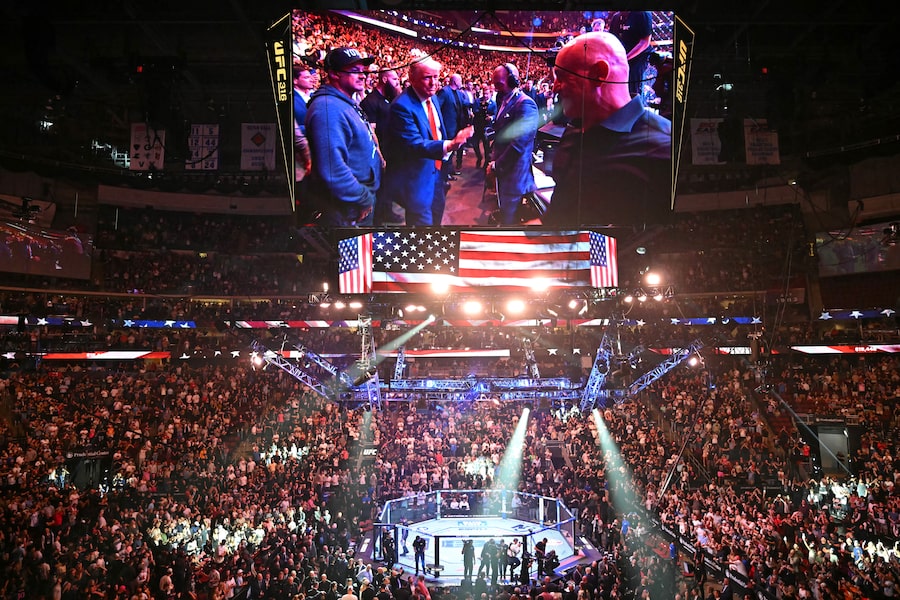
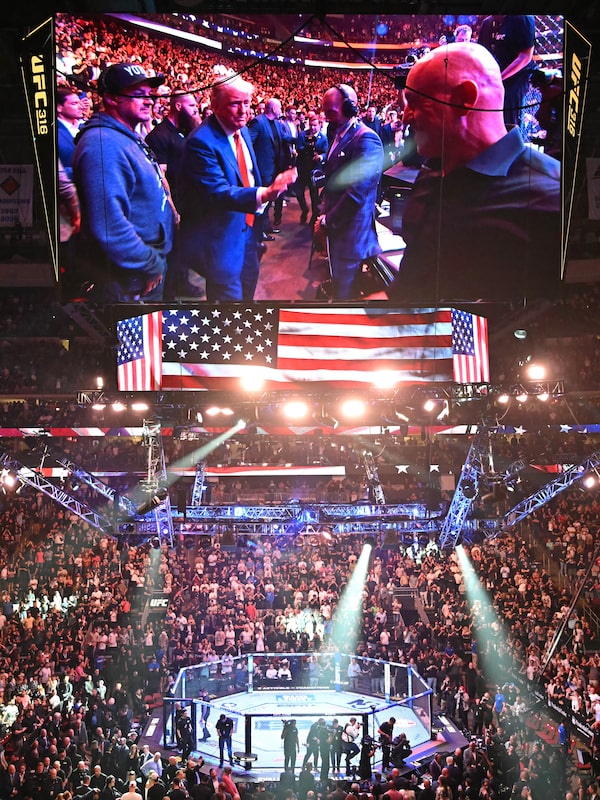
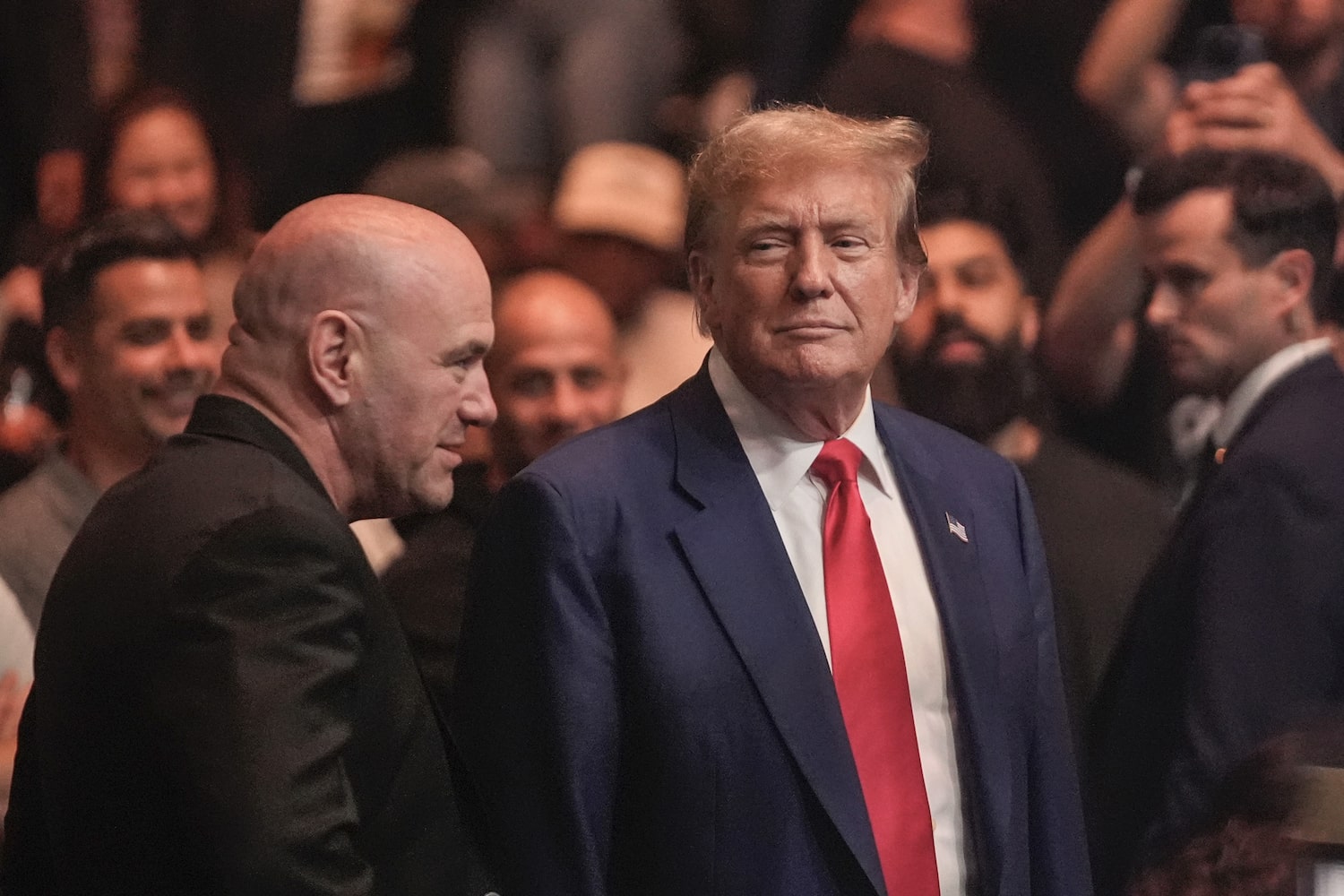
In November, 2024, I watched from the arena floor of Madison Square Garden as Donald Trump made one of his first public appearances as president-elect of the United States. Fresh off his second presidential win, and to roaring applause, Mr. Trump was there to celebrate with one of his largest voting blocs: young men, who had flipped by 15 percentage points to the Republican Party from four years prior – at the 309th iteration of the Ultimate Fighting Championship, a showcase of no-holds-barred, mixed-martial-arts fighting in a metal cage called The Octagon.
While Kid Rock’s American Badass droned over the arena sound system, Mr. Trump made his way toward the Octagon flanked by his would-be Department of Government Efficiency czar Elon Musk, future intelligence director Tulsi Gabbard, House Speaker Mike Johnson, health secretary aspirant RFK Jr., and the CEO of the UFC, Dana White. For almost 10 minutes, the ovation continued. Then, the violence began.
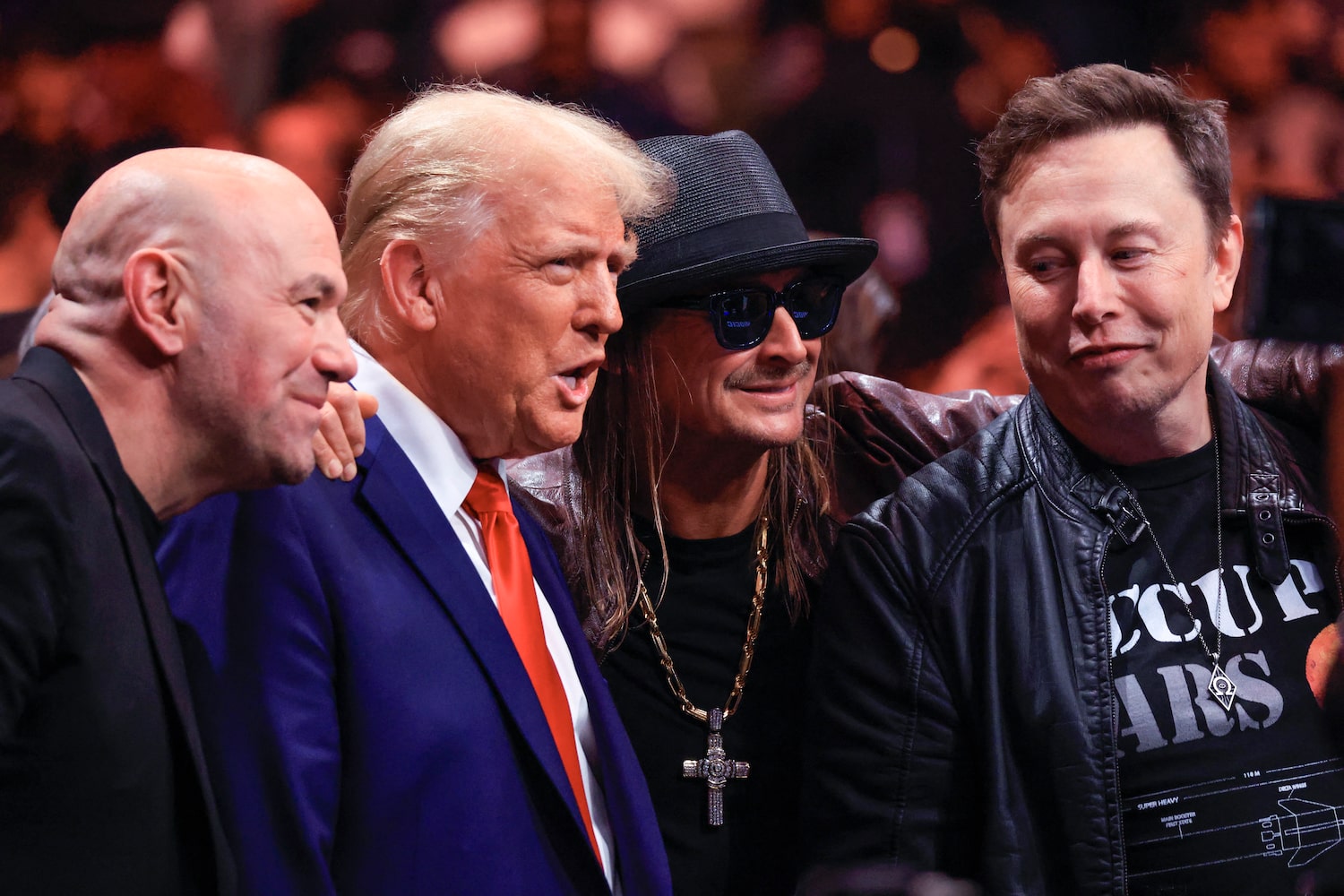
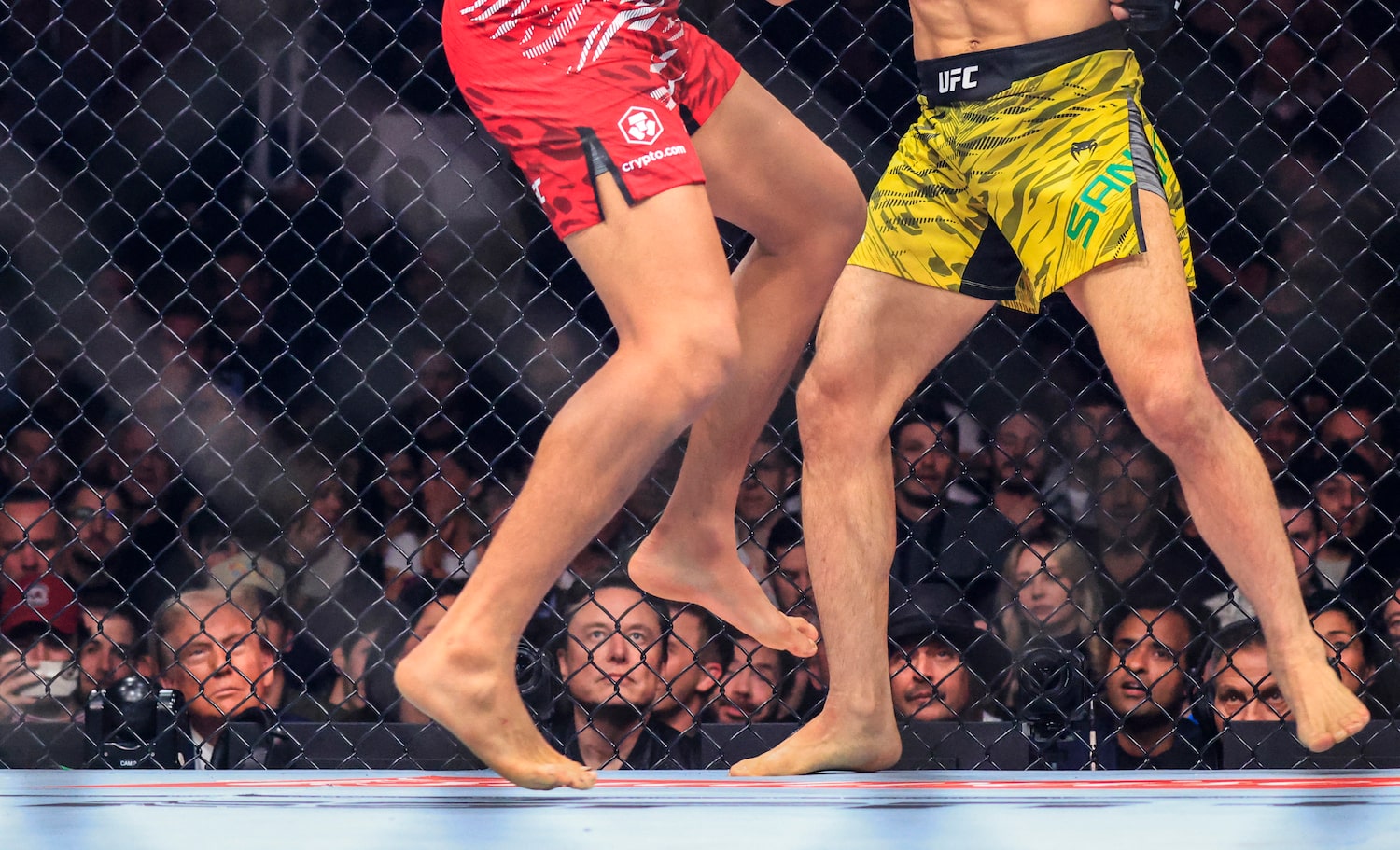
The evening put a capstone on Mr. White’s multiyear effort to help Mr. Trump win over a coalition of hyper-online male influencers, who aided in delivering Mr. Trump his election victory. It also made clear how attuned Mr. White is to the grievances and insecurities of modern men, and how the Democratic Party’s choice to view those grievances as illegitimate (or unworthy of serious attention) cost them the White House. It would be a mistake for the Democrats to continue on the path of ceding ground to Mr. White’s poisonous brand of masculinity – the kind that gave rise to a Trump administration that has advanced the same.
UFC 309 was the culmination of a more than 20-year-long relationship between Mr. Trump and Mr. White, whose mutual loyalty first took shape back in 2001 when Mr. Trump agreed to host a fledgling UFC at the Trump Taj Mahal (now the Hard Rock Hotel and Casino) in Atlantic City, N.J. In 2016, Mr. White was among the first influential figures to publicly endorse Mr. Trump, and in 2019, the UFC began to host the President at its events after he was booed at a World Series baseball game in Washington (though initially he was also booed by UFC fans).
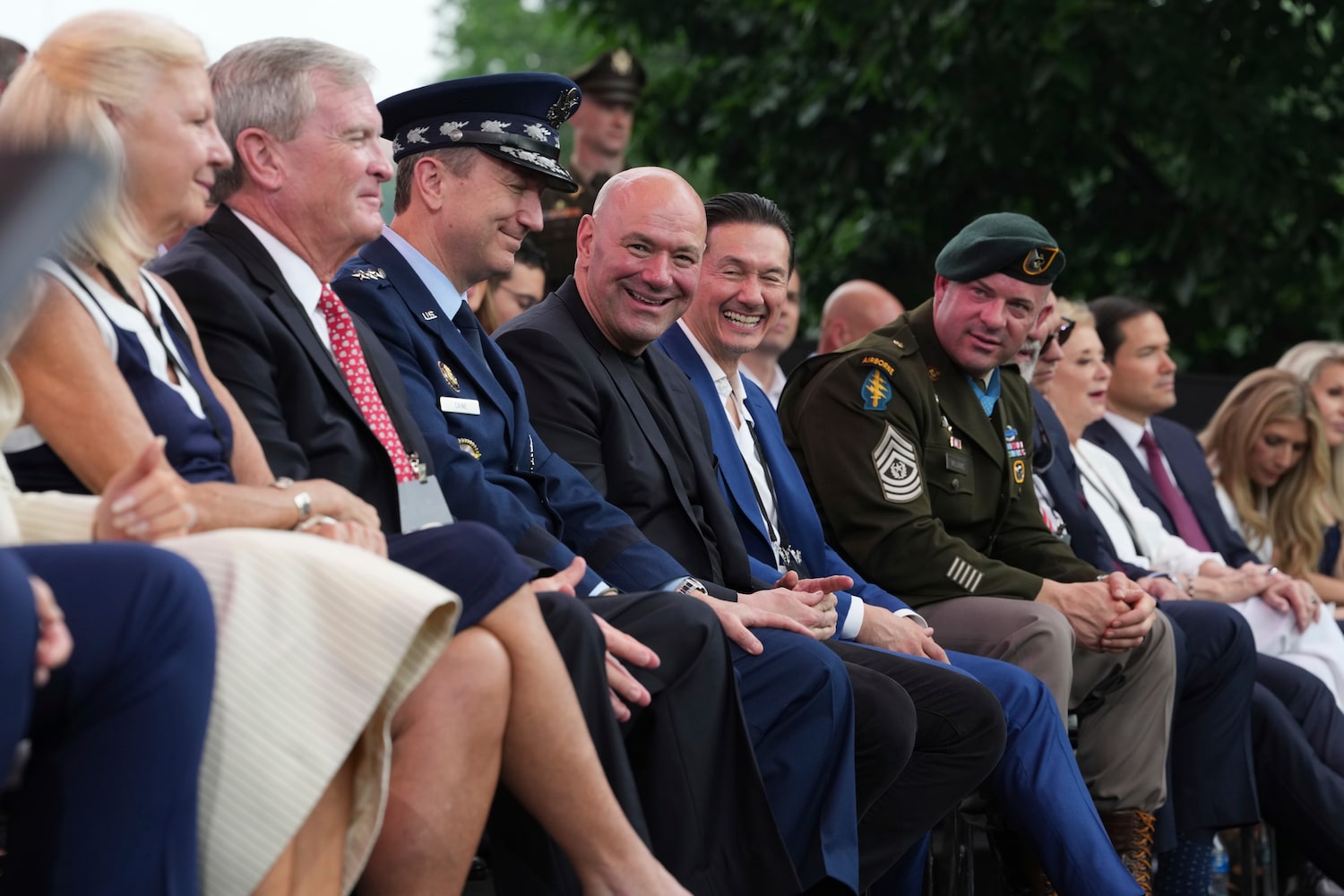
Mr. White has been handsomely rewarded for his allegiance. He sat in the front row at Mr. Trump’s long-promised military rally in June, and just last month, Mr. Trump promised to host a UFC event at the White House in 2026 as part of the celebrations for America’s 250th birthday.
During crucial periods of the UFC’s rise, the media has comprehensively failed to recognize its burgeoning cultural power and has resisted taking the sport, and its fans, seriously.
Three years prior to UFC 309, at the height of the COVID-19 pandemic, I attempted to pitch a story on the UFC’s rising cultural and economic power to my colleagues at Vice Media. I wanted to cover a class-action antitrust lawsuit that had been filed by former fighters, alleging that the UFC had exercised both monopoly and monopsony powers to suppress hundreds of fighters’ wages (the case has since led to a US$375-million settlement). At the time, the UFC was already garnering millions of pay-per-view purchases, had nearly US$1-billion in revenue, and had scored a billion-dollar deal with ESPN on the back of the meteoric stardom of Irish fighter Conor McGregor.
In the newsroom, however, I encountered the pervasive notion that the UFC was more of a fringe sporting community than a mainstream point of interest. (One producer I pitched told me they didn’t find it surprising that people who choose to fight in a cage are paid poorly.)
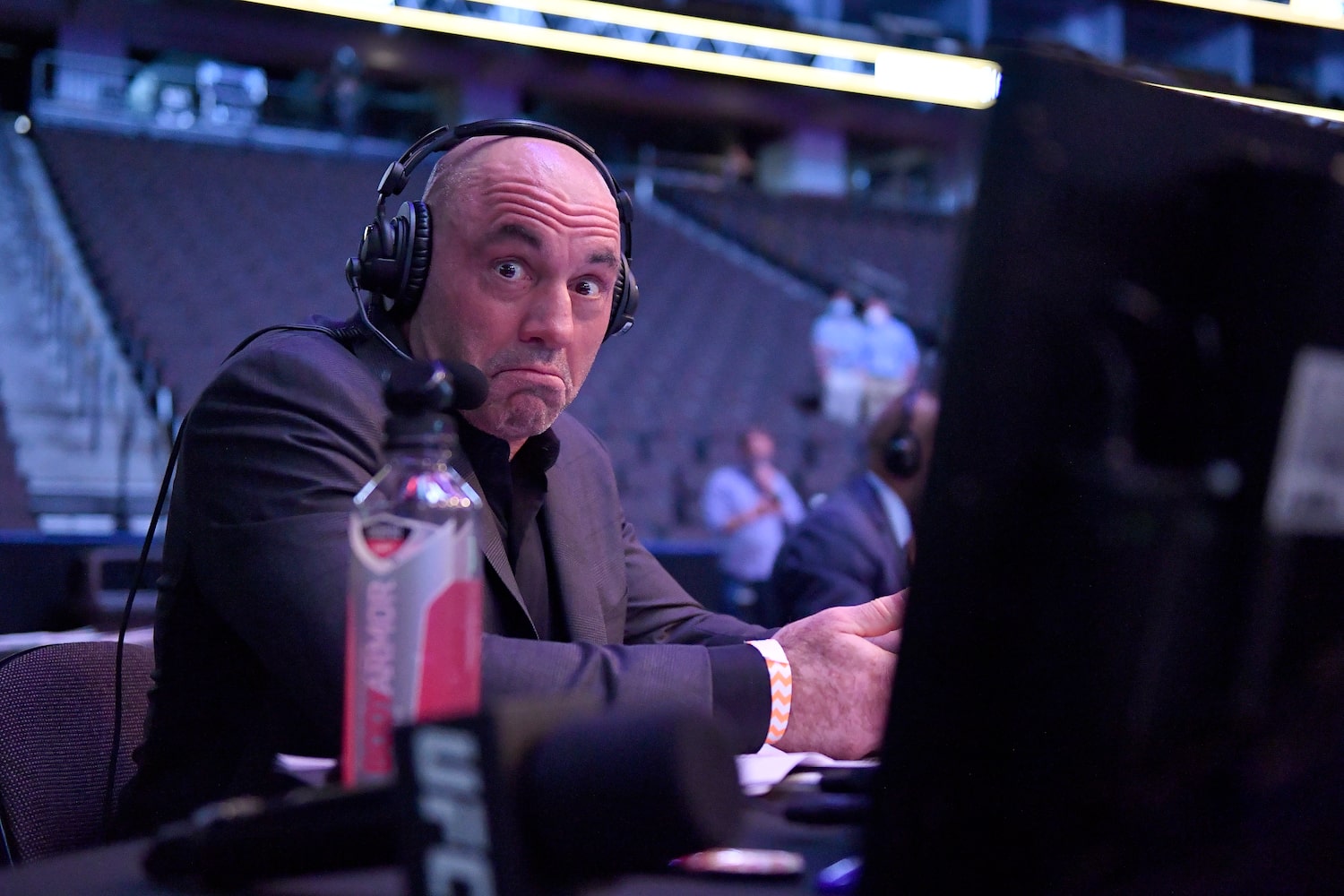
As COVID-19 continued to spread, anti-lockdown sentiment had also started to grow online, with young men often at the epicentre of the rage. Fitness influencer Bradley Martyn (boasting 4 million followers on Instagram) lambasted the shuttering of his gym in California as government overreach, while calling out the hypocrisy of his state’s Governor, Gavin Newsom, for attending a private party that violated California’s own COVID restrictions. Mr. Martyn found himself among a growing cohort of male influencers who felt they were being unfairly targeted for their views during the pandemic. The aggrieved also included Canadian-American party/lifestyle influencer group the Nelk Boys, who were demonetized on YouTube after throwing massive parties that violated COVID restrictions, and podcaster Joe Rogan, who faced widespread backlash after promoting the use of ivermectin (an antiparasitic drug) to treat the coronavirus.
Mr. White was perhaps one of the most “mainstream” faces in the burgeoning cottage network of alternative media figures resisting COVID guidelines, but it nonetheless allowed him and the UFC to occupy a countercultural space that appealed to young men.
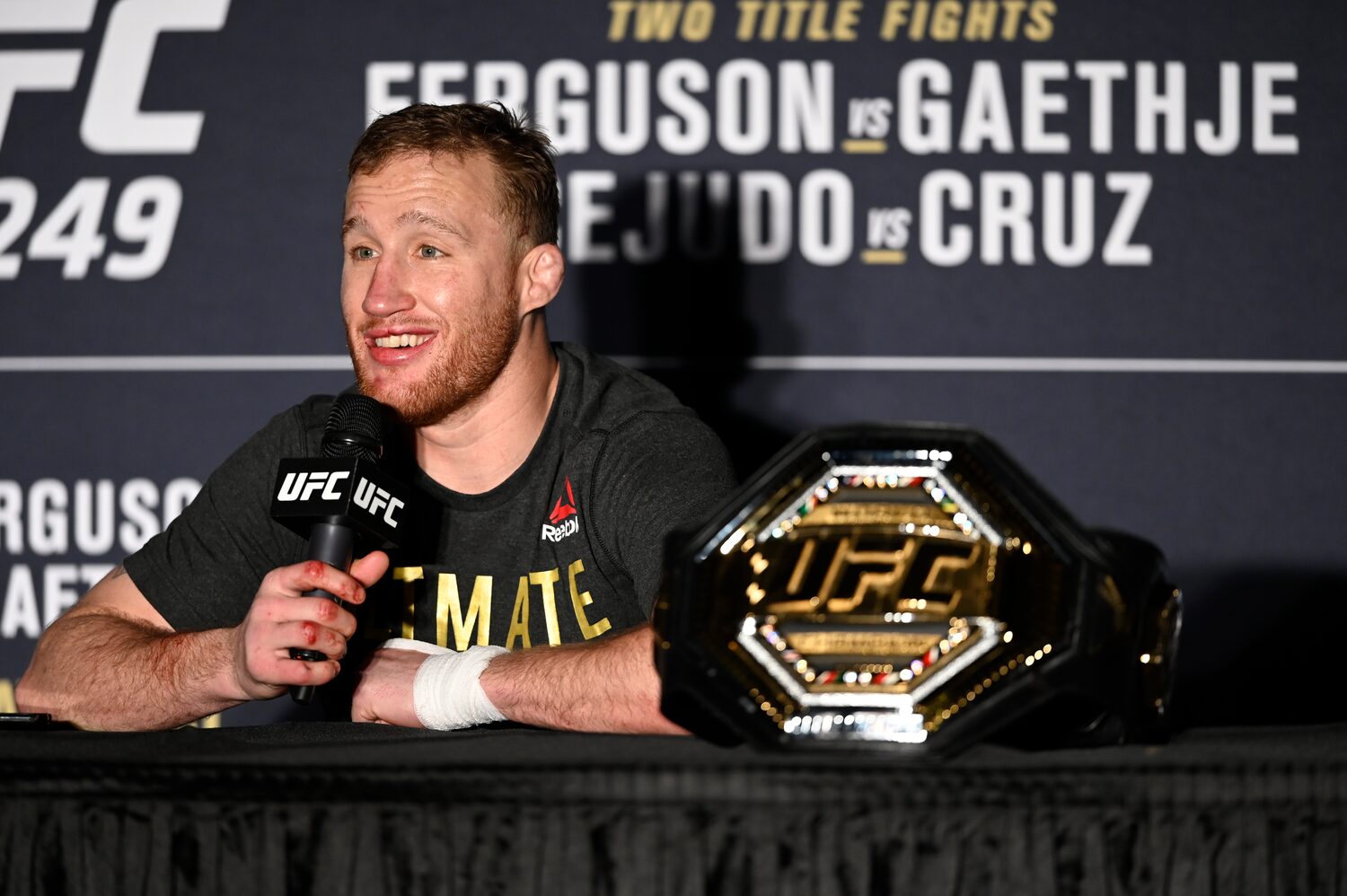
Mr. White hosted UFC 249 in May, 2020, at an empty stadium in Jacksonville, Fla., which began with a prerecorded video of Mr. Trump demanding the return of sporting events just two months into the pandemic lockdowns.
Shortly after, Mr. White would go on to set up “Fight Island,” a venue located on the outskirts of Abu Dhabi that was designed to further subvert COVID guidelines. In the media, Mr. White positioned himself as a maverick, speaking extensively about how he wouldn’t allow his company to go under, and that he was going to keep his staff paid by resisting COVID closures. ”I’m not a brick-and-mortar business. All I need is an Octagon, some cameras and a satellite to feed this thing to the world. I‘m going to go figure out how to do this," Mr. White told me when I interviewed him last year. In our conversation, he claimed that his fanbase grew 68 per cent during the pandemic.

Dustin Poirier and Conor McGregor face off during the UFC 257 weigh-in at Etihad Arena on UFC Fight Island in Abu Dhabi, in January, 2021.Jeff Bottari/Handout Photo via USA TODAY Sports
In just two decades, the UFC has transformed mixed martial arts (MMA) from a sideshow novelty sport into a genuine sporting titan. The UFC generated more than US$1.4-billion in revenue in 2024, and has since sold out London’s O2 Arena and the Sydney SuperDome, with its biggest stars garnering tens of millions of followers on social media and countless impressions on platforms like TikTok, Instagram and YouTube. While the sport may appear lowbrow or even “trashy” to some, it is this disconnect between the interests of the UFC’s mostly young, male following, and what mainstream media often deems worthy of coverage, upon which Dana White has built his sporting empire.
Outside of Madison Square Garden, shortly after Mr. Trump’s victory party at UFC 309, one teenager and his father told me at length how the UFC had given them both something to look forward to and bond over during the height of the pandemic. Both had since become ardent Trump supporters.
It was Dana White who had gone to work transforming a hodgepodge of aggrieved, mostly male online influencers into a maneuverable political coalition in the years leading up to that night at MSG. In 2020, Mr. White would host the Nelk Boys on Fight Island not long after their run-in with YouTube, and began appearing on their podcast regularly. Recognizing their massive cultural cachet, Mr. White would sell Mr. Trump on appearing on the Nelk Boys’ show in 2022, which YouTube quickly took down after Mr. Trump claimed that the 2020 election was stolen – but not before it was viewed nearly 5 million times. Fast-forward to 2024, and Mr. White had flipped the Nelk Boys interview into a full slate of appearances on podcasts whose key demographic is young men, hosted by the likes of Mr. Rogan, comedians Theo Von and Andrew Schulz, and many others, who collectively speak to millions of young American men and boys each week. “Influencers are the future. … Social media is the future,“ Mr. White told me.
It was this slate of interviews that many experts and pundits – from The Financial Times to The New Yorker – have argued was pivotal in delivering the American presidency to Donald Trump for a second time. “I need to give a lot of credit to Dana,” Mr. Trump’s former social media guru, Alex Bruesewitz, told Politico last month.

As income inequality soars to record highs, young American men are far more likely to struggle in school and far less likely to enroll in college than their female counterparts. While the median wages of men have declined, the median wages of women have grown. Today, on average, men are more likely to suffer from mental health issues than women. Between 1968 and 2023, the suicide rate for young men in the U.S. nearly doubled, and men are now three times more likely to die deaths of despair. Many men report feeling that gender perceptions have not kept pace with the social and economic realities of the world that they now live in, often feeling pressured to be providers in a world where the costs of food, rent and education are significantly higher than that of their grandfathers, who were also asked to do the same.
While these trends have grown more and more pronounced, the Democratic Party has spent the last decade-plus largely abandoning men’s issues in favour of a platform that centres issues like abortion, LGBTQ rights and racial inequity. These are all deeply important platforms that the Democrats should maintain, but need not exclude comprehensive plans to address the economic and social insecurities that have increasingly plagued men for decades.
The influencers who generated massive turnout for the Bernie Sanders campaign were derisively referred to as “Bernie Bros” in the media, and were routinely called racist and sexist by the Democratic establishment in both the 2016 and 2020 election campaigns. Many of the most prominent influencers that promoted Mr. Trump in the leadup to the 2024 campaign, like Mr. Rogan, Mr. Von, and controversial online streamer Sneako, began their latent political activism by earnestly supporting Mr. Sanders.

Influencers who generated turnout for Bernie Sanders during the 2016 and 2020 election campaigns were sometimes derisively referred to as 'Bernie Bros' in the media.JIM YOUNG/X90065
Ten years later, Mr. Trump would redirect the rage of these men away from the economic elite that Mr. Sanders had derided, and toward a cultural elite. “Manhood is under attack,” Mr. Trump proclaimed in an interview less than a month before the 2024 election.
Terms like toxic masculinity have become increasingly prominent over the last decade, and while there are undoubtedly a number of aspects of traditional masculinity that have proved harmful, the Democratic Party has failed to provide a salient alternative for their view of men’s role in society. In her 2024 DNC nominee speech, Kamala Harris never once addressed any issues directly pertaining to men (or even uttered the word “men”).
Meanwhile, the media began to disdainfully describe the loose network of young male influencers growing in popularity during the election campaign as “The Manosphere,” an overly broad, ill-suited term that can encompass everyone from comedian Mr. Von to alleged sex trafficker Andrew Tate. This is a problem. If everyone who creates alternative media directed at men is placed within a broad category of creators seen as dangerous extremist influencers, those terms lose all meaning. Moreover, this careless labeling and boogeymaning only serves to drive young boys deeper into a reactionary rabbit hole that places more tame, politically incoherent podcasters like Mr. Schulz in close algorithmic proximity to the most dangerous types of gender-based extremism online. The end result is a self-fulfilling prophecy for the left: more disaffected young men have drifted to the right.
As the left has largely abandoned men’s issues, online content that weaponizes young men’s concerns, like that of Mr. Tate, has filled the gap. Some Democrats have already begun to recognize this error. Democratic star Pete Buttigieg joined Mr. Schulz’s podcast for a recent episode, and Texas state representative James Talarico (also a Democrat) made an appearance on Mr. Rogan’s podcast in which the host exclaimed that Mr. Talarico should run for the White House.

Democrat James Talarico was encouraged to run for the White House during an appearance on Joe Rogan’s podcast.Eric Gay/The Associated Press
But should the effort go no further, the end result will not be pretty. One of the most extreme examples is that of Active Clubs, an international neo-Nazi network I first co-reported on for Vice in 2023 that uses MMA training to promote male bonding while also proselytizing far-right political views. Today, there are more than 187 Active Clubs in 27 countries. These dangerous hate groups have grown, in part, by promising to improve men’s lives by engaging them in physical fitness, weight loss, and community.
“A problem with the left is there is no clear place for an aggressive, strong, outspoken young white guy to, like, exist,” said Colin Davis, a left-wing fitness influencer who makes content aimed at bringing young men back into left-wing spaces. “All of the messaging from them is like, ‘Sit down, shut up, listen to other people … You had your turn in charge. Now it’s time to not be in charge.’”
The rage that men feel at “their institutional betrayal" – as the Speaking with American Men Project (a report commissioned by the DNC) put it – has long been characterized by many in the establishment left as, at best, childlike insecurity at the growing equity of their peers, and at worst, a type of racist, sexist vitriol to be quashed. On the campaign trail in 2024, former president Barack Obama chastised Black men for their reluctance to support Ms. Harris. “It’s not acceptable,” Mr. Obama said. “Part of it makes me think that, well, you just aren’t feeling the idea of having a woman as president.” Many of the young men that I have spoken to as a reporter have resented that message.
If there is one place in the world where a young man can be outspoken and aggressive, it is the UFC. And Mr. White recognizes that these influencers, and his own UFC brand, offer a version of masculinity that, at the very least, offers something – anything – to aspire to. When his fighters, who affectionately refer to Mr. White as “Uncle Dana,” step out of the ring after their victories to shake the hand of the President, Mr. White is enabling Mr. Trump to borrow from the divine-masculine ideal that the UFC tries to present: physically fit, unapologetically aggressive, often handsome, and undoubtedly successful.
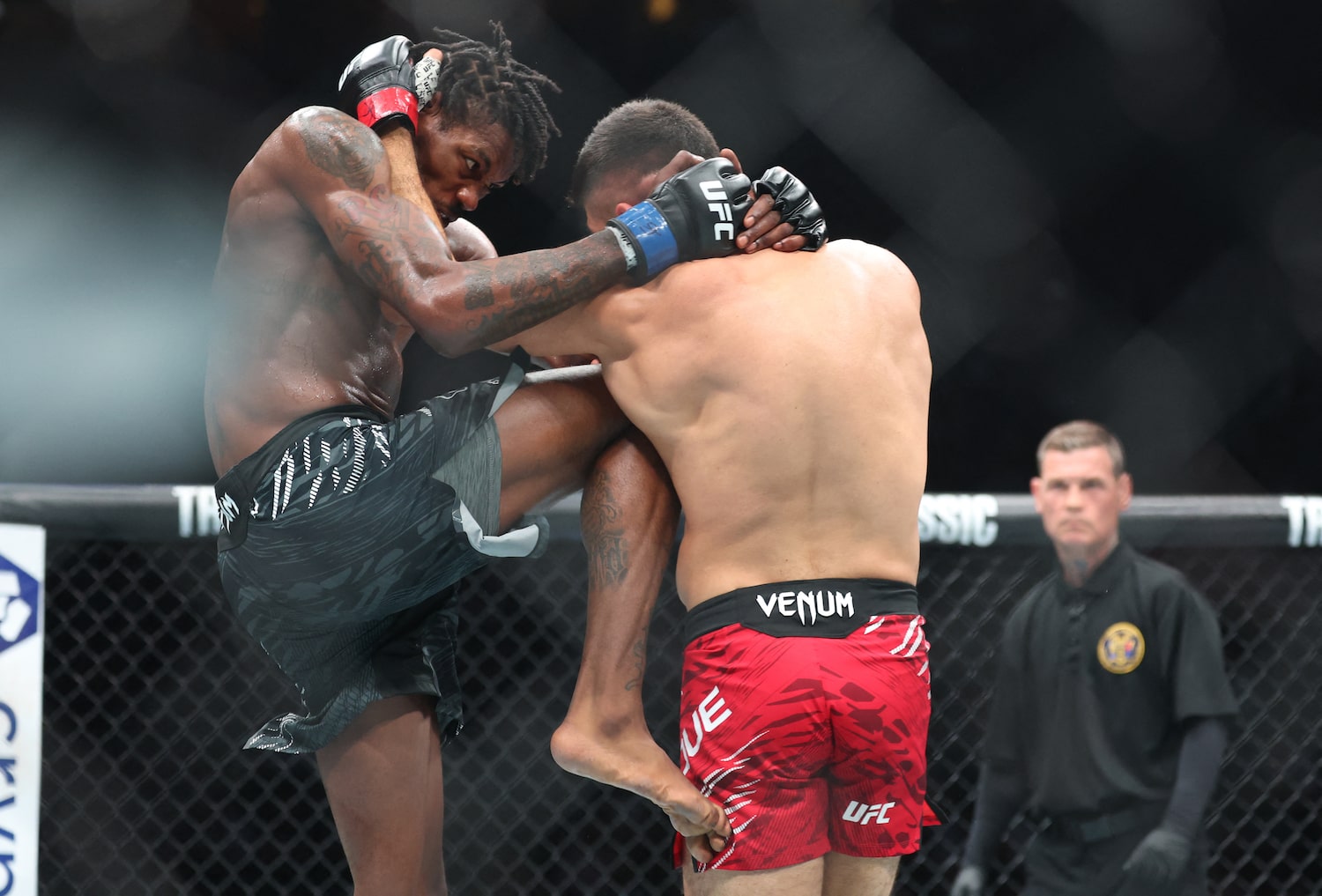

By simply appearing in masculine spaces, Mr. Trump was able to win a battle for the hearts of young men that the Democratic Party largely appeared uninterested in fighting for at all. That disinterest has now transformed into widespread panic among the DNC as a result of Mr. Trump’s victory last year, with the Democratic Party committing millions of dollars to efforts to appeal to young men in the lead-up to the 2026 midterm elections. As part of that effort, the DNC commissioned the aforementioned SAM Project to study why men had broken from the party. “Republicans appear confident, direct, and unafraid to offend,” the study concludes, going on to say that the Democratic Party is perceived as “elite, scripted, and cautious.”
In order to shed this image, the Democrats must embrace the reality that its advocacy for marginalized groups need not come at the cost of appealing to the specific structural issues that men face. Such platforms can, and have, won elections. Kentucky Governor Andy Beshear, the most popular Democratic Governor in America, has won that popularity by focusing much of his effort on cost-of-living issues like infrastructure, health care, and child care while also standing firm on social issues, like abortion and trans rights, that are central to the coalition that Democrats have already built.

Kentucky Governor Andy Beshear is one of the most popular Democratic Governors in America.AUSTIN ANTHONY/The New York Times News Service
In his time as Governor, Mr. Beshear has vetoed both anti-trans and anti-abortion bills that were passed by the Kentucky state legislature. Democrats must also create their own vision of aspirational masculinity that’s different from the noxious one laid out by the far right, lay out a clear vision for how they plan to help men attain it, and make space for those men in a party that has felt unwelcoming to them for some time.
For now, that aspirational vision remains unclear. “Masculinity is a burden, not a blueprint,” the SAM Project also posits, seemingly missing the fact that myself, and many other men like me, are proud of our masculinity. It is not something to be overcome; it is central to our identities and how we navigate the world. If the American left cannot come up with a version of it that men can aspire to, the awful iteration of masculinity that Dana White and Donald Trump have held aloft will continue to win the day.