Ethan Lou is the Opinion Editor in The Globe and Mail’s Report on Business.
There’s a psychological concept called the sad-clown paradox. That those who try to bring joy and make us feel better, who seem unflappable, carry deep sorrow inside.
In one famous joke, a depressed man is told to see the clown Pagliacci. The patient responds, “But doctor, you don’t understand. I am Pagliacci.” Ali G, the comedic character, says of the burger mascot Ronald McDonald: “Even though him [sic] may seem like he’s always smiling, there’s a sadness in the eyes.”
Such were European leaders at the Munich Security Conference this month, the world’s premier geopolitics summit, where the elders of the Old World spent a weekend telling everyone it was all going to be okay.
Times are bad, but we are strong. Such was the energy of the conference. The embodiment of this message was French President Emmanuel Macron, who, without saying the words, anointed himself Captain Continent. “Europe has been vilified as an aging, slow, fragmented construct,” but in fact “everyone should take their cue from us,” he said.

French President Emmanuel Macron, German Chancellor Friedrich Merz and British Prime Minister Keir Starmer meet on the roof of a hotel hosting the 62nd Munich Security Conference on Feb. 13, 2026.Kay Nietfeld/Reuters
“We should be proud of our European achievements,” he added, talking up continental prowess in finance, policy and technology. Europe can be a major power, he said. “I really believe in the power of our audacity.”
Considering the state of the world, it was about as good a weekend as one could expect. Even U.S. Secretary of State Marco Rubio, who said the two sides “belong together,” browbeat Europe only a little, avoiding a repeat of Vice-President JD Vance’s angry performance at the 2025 conference.
But tension was thick in the air nonetheless. Behind closed doors, U.S. Senator Lindsey Graham reportedly exploded on Danish Prime Minister Mette Frederiksen, calling her a “little lady.” Walking the halls of the neo-renaissance-style Hotel Bayerischer Hof, past the Hermann Kaspar painting and one of Europe’s largest chandeliers, watching the geopolitical theatre in a storied building touted to “tap into our collective nostalgia,” one might feel a certain loss and longing. Try as they might to project otherwise – and perhaps because those continental leaders tried so hard – it is plain that outside, beyond the hotel’s 19th-century façade, Europe’s light is fading.

The Bayerischer Hof hotel on Feb. 12, a day before the Munich Security Conference kicked off.Michael Probst/The Associated Press
The EU has irreversibly fractured with Brexit, no matter how much British Prime Minister Keir Starmer said it ain’t so in Munich. War creeps from the east, and Big Brother USA unfriends Europe and eyes its wallet. Not that there’s much to take. Britain’s and France’s economies are barely growing, and Germany’s is stagnant. Facing crushing debt and populist upheaval, continental governments are revolving doors where nothing gets done. Today prisoner exchanges are done in the United Arab Emirates. Gaza peace talks are held in Qatar. Ukraine negotiations might be held in Geneva, but Europe was not at the table.
A proud moment might have come in January at the World Economic Forum in Switzerland, when Europe made U.S. President Donald Trump back down on Greenland annexation.
But here’s what also came out of the WEF: Canadian Prime Minister Mark Carney gave a generation-defining speech on middle-power solidarity – and European Central Bank President Christine Lagarde and Britain’s Mr. Starmer both distanced themselves. In the audience, they might well have clapped, but before the camera and Mr. Trump’s eyes, they shrugged their shoulders and looked at their feet. Last year, NATO head (and former Dutch prime minister) Mark Rutte resorted to literally calling Mr. Trump “daddy.”
A once-mighty people has been brought low. “Europe is a myth,” Larry Fink, head of BlackRock, the world’s largest investment firm, said at a WEF panel. “It’s a beautiful myth, but it’s not working.” Or, using the gamer-speak recently adopted by Tesla’s Elon Musk, one might say the continent has become a “non-playable character.”
It raises a tough question: What is Europe even for? And for those on the other side of the West, who draw our values and institutions from the old country, it raises a further question: What does an irrelevant Europe mean for us?
THE SAD CLOWN OF THE WEST

Mr. Trump has said Europe faces “civilizational erasure” because it has “gone woke” on migration and climate change and because of its alleged suppression of populist voices. He both misdiagnoses the problem and presents questionable evidence. But Mr. Trump is broadly correct on one issue: There is a problem in Europe, alright.
We can trace the source of European decline endlessly. Brendan Simms, the Cambridge scholar, writes about five centuries of the destructive “struggle for supremacy” among the closely packed European powers that led to their second-fiddle status to the United States. Ian Morris of Stanford University traces the origins of Brexit for 10,000 years. Canadian prime minister William Lyon Mackenzie King once said “some countries have too much history.” Such is Europe’s tragedy.
History was what culminated in the Second World War and the utter devastation it wrought. It was only American money that saved the continent, aid from a land unravaged by war. And the Old World was never again the same.
In 1956, Britain and France invaded Egypt after the latter seized the Suez Canal, a major shipping route they funded. But U.S. president Dwight D. Eisenhower, who disdained such echoes of colonialism, had his own geopolitical priorities. Mr. Eisenhower, who had Britain deeply in his pocket, threatened to sell British bonds and ruin its economy. Prime minister Anthony Eden lost that standoff, and then lost his job.
Then Britain would find it could not even win a stare-down against China, a backwater only recently recognized by the world. In 1982, a steely Deng Xiaoping, the chain-smoking Chinese leader no taller than five feet, bluntly threatened to invade Hong Kong. Britain made concession after concession and walked away with what is arguably nothing. It left prime minister Margaret Thatcher “depressed,” she later said. So shameful was that moment, Queen Elizabeth II was deliberately kept away from the handover ceremony.
History has these moments sometimes, which capture the tides of centuries: Europe had become neutered, wearing a veneer of wealth but underneath just a sick man of the West.
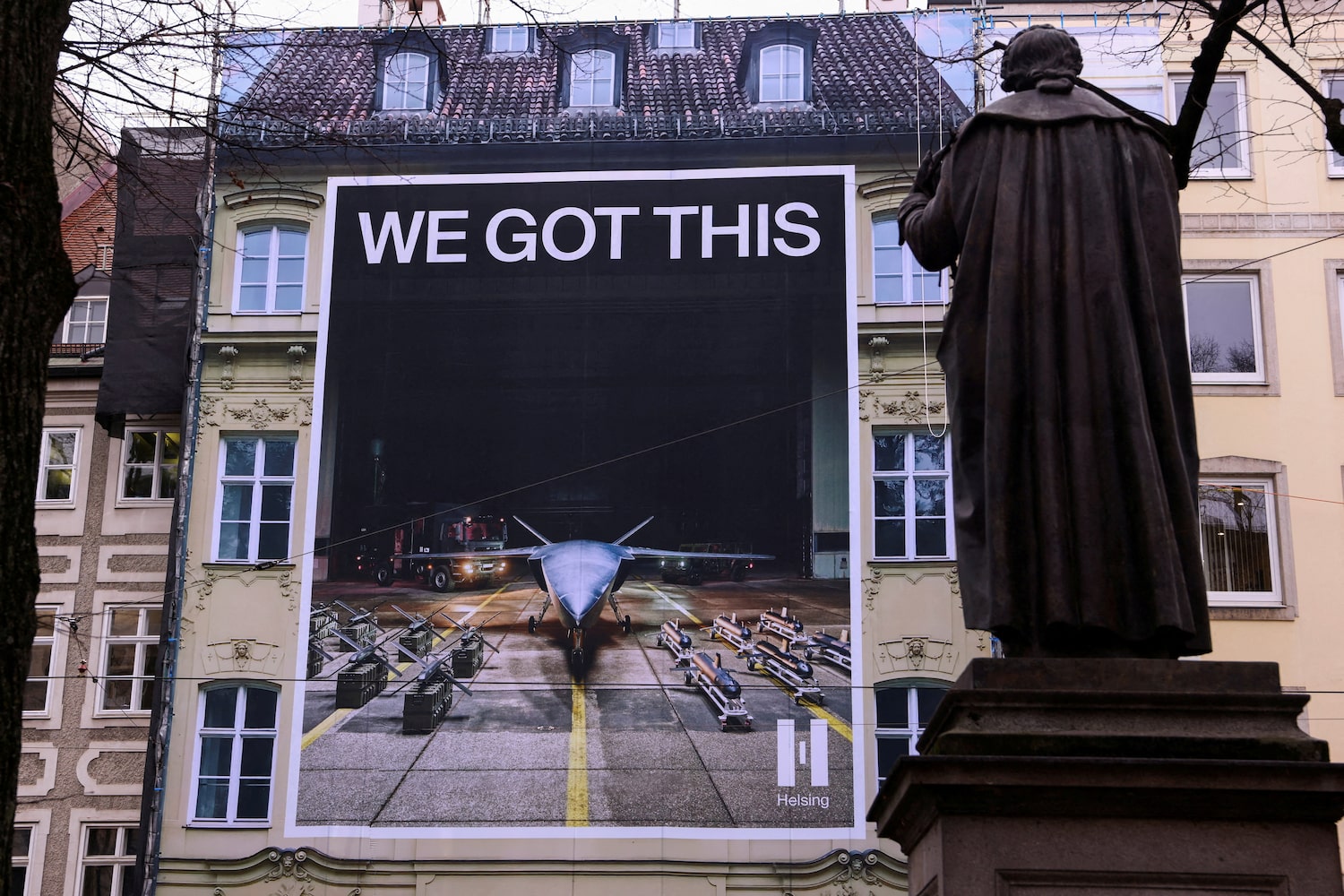
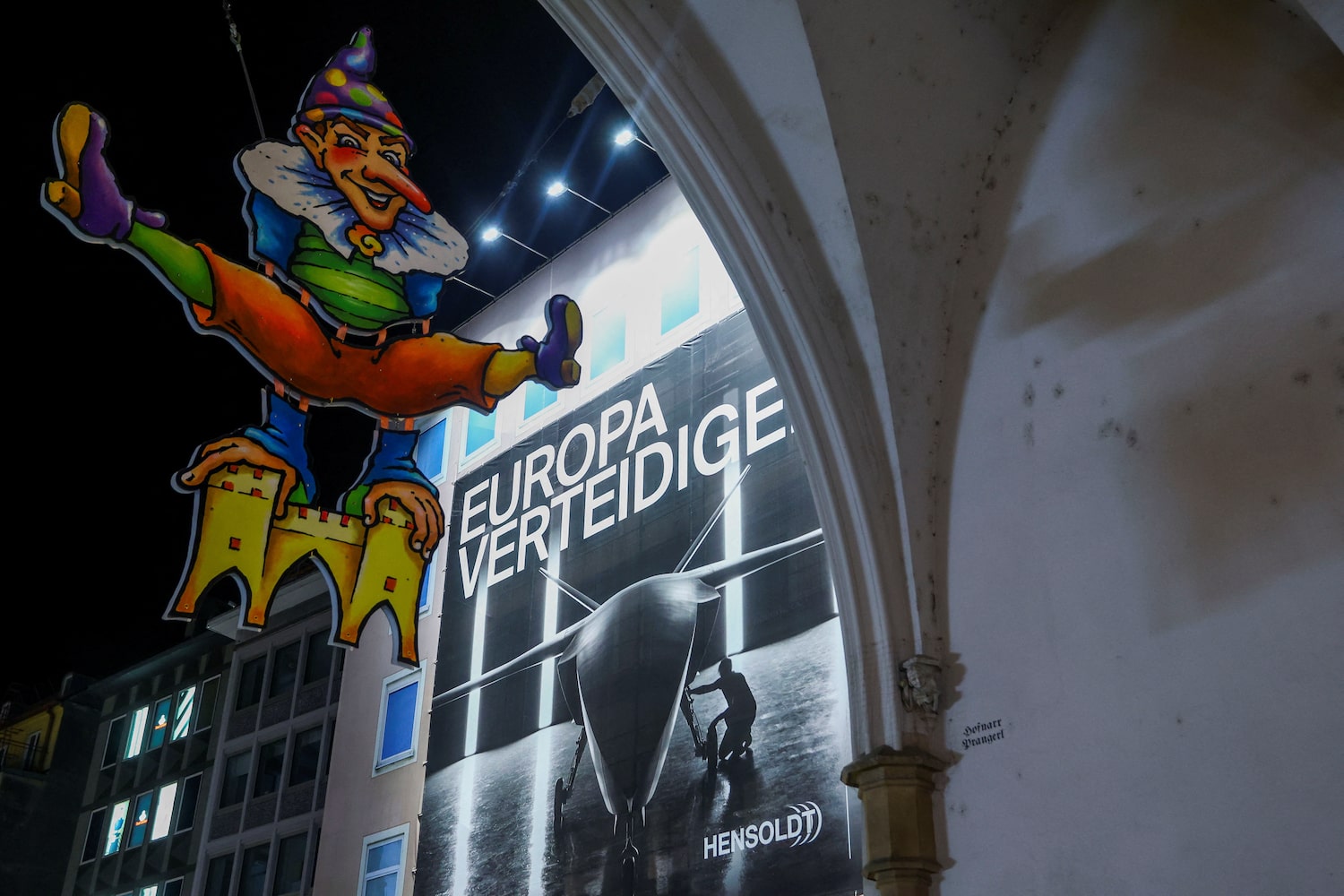
In a rules-based world where institutions are respected, all of this might have mattered less. It may even have been better. One man’s lustrous past is another’s colonial nightmare. The world was moving in a new direction, away from the might-makes-right that has defined much of existence. A new Europe emerged: less powerful, more compassionate, an enthusiastic champion of a new multilateral world. And Europe found a new sort of power.
But then that veneer of wealth started to crack. As entitlements piled up, debt grew and growth slowed. The 2008 financial crisis sparked the eurozone sovereign-debt crisis. The American economy was once about the same as the EU’s, but over the past 20 years, the U.S. economy has more than doubled to US$30-trillion; the 27 EU countries’ economies are at only US$20-trillion, barely more than that of one rising China.
Six U.S. companies founded in the last five decades are valued at more than €1-trillion. In Europe, no company founded during that period is worth even a tenth of that. Some higher-education rankings show only one EU university in the world’s top 30. “Europe is no longer at the forefront of progress,” the European Central Bank’s Ms. Lagarde said in 2024. Europe has been content with old-school industries such as machinery, trains and cars. And those depend on two items that are now either gone or going: cheap Russian energy and abundant Chinese demand. On top of that, China now also makes machines. The proportion of sectors in which China vies directly with the eurozone is 40 per cent now, up from 25 per cent at the turn of the millennium.
Meanwhile, France has now seen five prime ministers in just over two years. Its troubles are the same ones that broke the unwieldy coalition of Germany’s former leader Olaf Schulz, the same that Chancellor Friedrich Merz now faces and the same afflicting the British government that saw six prime ministers in 10 years and its chancellor of the exchequer crying in parliament: Welfare, pensions, healthcare – the entitlements that once stemmed from prosperity now weigh on budgets, but woe be to any government that tries to cut them or raise taxes to fund them.
And so radical politics rise in Europe, for anger and empty stomachs push people toward flashy prophets. In France and Germany, centrist coalitions are barely holding on.
Add to this the return of Donald Trump and geopolitical brinkmanship. The United States does not want to carry Europe or the world order anymore. And we live now in an era of extremes: If you’re not a superpower, you’re not a power at all.
There’s a reason that reaction to Mr. Carney’s Davos speech was so lukewarm in some quarters of the continent. European leaders now walk on eggshells around Mr. Trump, with Germany’s Mr. Merz saying, “We know what we owe you,” to not have a public scolding for not showing gratitude, an experience now known as getting Zelensky’ed. In addition to calling Mr. Trump “daddy,” NATO’s Mr. Rutte sent him grovelling texts describing his moves on Iran as “truly extraordinary” and a “big success,” thanking him for making Europe pay more for defence.
The fraying of the transatlantic partnership, like a rotting carcass, is now attracting vultures. China sees the decay of what Germans call the Weltordnung, and it sees further reason to test Europe, to play hardball in trade talks. Russia, already bent on regional dominance, flies drones into Poland and Romania. Seldom before, perhaps not since the Dark Ages or the fall of Constantinople, has such a proud continent seemed so small in such a big world.
THE SLOW FADE OF SOFT POWER

After it came back from a season break in 2024, Emily in Paris, the show about an American gallivanting across a caricatured continent, was 36.6 times more popular in Canada than a typical Netflix production. Forty-four per cent of Canadians want this country to join the European Union. These data confirm anecdotes: It’s hard to go a week without seeing friends’ Instagram pictures from Porto or Tuscany. And you somehow know six people who have done a semester abroad in Aarhus or Stuttgart.
This Euro-lust is not undeserved. Decline is long. Ask a Roman in the fourth century, and she would not know that her empire was falling. Even as Europe fades, its wellspring of soft power remains visible. Canada’s cultural ties aside, we live in a world that Europeans built. China’s super rich have snapped up European vineyards. North Korea’s Kim Jong-un studied in Switzerland. The Thai king treats Germany as a second home. The UAE loves France’s Louvre museum so much it spent US$1.3-billion on licensing and loan fees for Louvre Abu Dhabi.
Indeed, the vestiges of Europe’s power show precisely why its decline is a problem: We mourn a loss only when it has value.
Even with Mr. Trump’s disdain for Europe, he mandates that new federal buildings use classical architecture to “visually connect our contemporary Republic with the antecedents of democracy in classical antiquity.” Mr. Trump swears by Italian suits and Swiss watches. Germany’s Mr. Merz charmed Mr. Trump with an invitation to his ancestral hometown. Britain’s Mr. Starmer used a royal invitation as a trump card during his visit to the White House. Mr. Trump later also accepted an invitation to the Dutch royal palace. Mr. Carney, to assert Canada’s sovereignty, invited King Charles to deliver the throne speech, an event the likes of which have not been seen in nearly half a century. Cambridge’s Prof. Simms has suggested making Charles emperor of Europe, a modern day Charlemagne, to stabilize the continent.

A sculpture titled 'The Orange Plague' by Danish artist Jens Galschiot depicts U.S. President Donald Trump as a self-proclaimed King of Justice, during the Munich Security Conference on Feb. 13.Johannes Simon/Getty Images
There’s even some power left that is more than soft. There’s a saying that the United States innovates, and the EU regulates. It’s meant derogatively – that the United States gives the world internet giants and the artificial-intelligence boom, and Europe mandates caps that stick on bottles (for better recycling) and made Apple use USB-C. But think about the impact. The EU sets global standards in regulating climate protection, competition, food handling, privacy and social media. In a world often criticized for unbridled capitalism, where trillion-dollar corporations are gaining unprecedented power, the EU is the lone bulwark against problems that the free market either creates or cannot address.
And where Europe retreats, its antithesis fills in the blanks. It sounded like a good thing when the colonial powers left Africa, and it was, but now we do not live in a good world. Russia’s Africa Corps, mercenaries who took over from the Wagner Group, have been active in six countries that we know of and probably more that we don’t; more than half of that continent has some military pact with Moscow. China has stakes in 46 ports and includes all but two countries in its Belt and Road infrastructure program. In Djibouti, Chinese debt has accounted for as much as 70 per cent of the economy. Eyeing Africa’s natural resources, Russia and China now own so much of the continent that there are reports of them meeting and clashing with each other. In the United Nations, most of Africa votes with China and Russia, although that’s probably no big deal – who cares about UN votes these days?
Europe’s decline exacerbates the trajectory the world is on, and we will end up with a meaner, smaller place. If Europe does not fix its trajectory, it would be to the detriment of not just itself – and therein is also a lesson particular to Canada.
THE ‘EXISTENTIAL CHALLENGE’

In this new era, institutions and soft power – no longer underpinned by the hard power of the United States – no longer command the clout they used to. Now it is all about defence and industry. It’s about power and money, although it boils down to just money, for that is where power comes from.
Mario Draghi, the former European Central Bank chief and Italian prime minister, painstakingly wrote 400 pages on this subject in 2024, calling for regulatory reforms, a unified capital market and €800-billion more per year in business investment, among 170 recommendations. “We have reached the point where, without action, we will have to either compromise our welfare, our environment or our freedom,” Mr. Draghi said. “This is an existential challenge.” But, as Politico noted, “Draghi’s report got about a day’s worth of coverage in the continent’s major media outlets and then was quickly forgotten.” European leaders must heed that report.
Beyond the major, structural changes, there’s a simple solution: Work harder. Continental productivity is still relatively high – how much economic value a worker produces with how much work. It’s just that Germans work 86 hours for every 100 hours Americans work, and the French work even less at 77 hours. In Britain, critics say, decades of social policy that saw work as inherently bad for mental health has resulted in a vicious circle of unemployment. Germany’s Mr. Merz lectured his country earlier this month, saying, “Work-life balance and a four-day week will not be enough to maintain our country’s current level of prosperity.”
In that respect Canada shares something with Europe: Through our trade and security dependency, we, too, have been propped up by the Americans, who now grow weary of that role. We must take in a lesson: Throughout modern history, dark trends originate on the continent and then ripple forth. In Europe, this country sees a crystal ball, threatening a future in which we, too, will be so irrelevant.
Some of Canada’s path will be easier than Europe’s. Canada has vast natural resources, and a handful of provinces and territories is easier to corral than 27 countries plus the others. But while Europe can simply work harder, Canada is already working hard – we work the same hours as Americans, but with our abysmal productivity we make only European wages. Something has got to change.
The greatest issue of all is that one of Canada’s strengths is also a weakness: We have but a handful of provinces and territories – a small internal market that has problems trading with even itself. Europe, the second-biggest economy, can stand alone and be the big cheese if it musters the will. But Canada, the world’s 10th-largest economy, never can. For Canada to prosper and stand tall, we need a stable world order and big players in it that respect that order. Canada needs a strong Europe.
So, it is all the more important that Europe gets its act together. It must accept the inevitability that life will get harder. The only choice is when. For all the 100-page reports and complex proposals from various policy shops, it really boils down to a marshmallow test: Will Europe make the hard decisions today so that it may have a better tomorrow, or will it coast on accumulated wealth and standing until it all runs out?