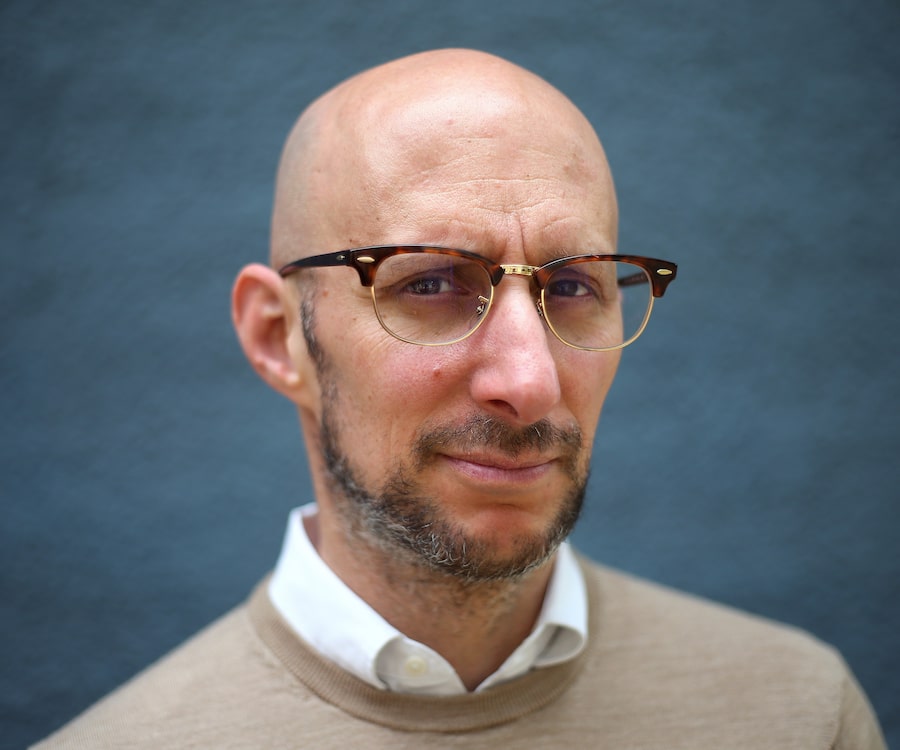
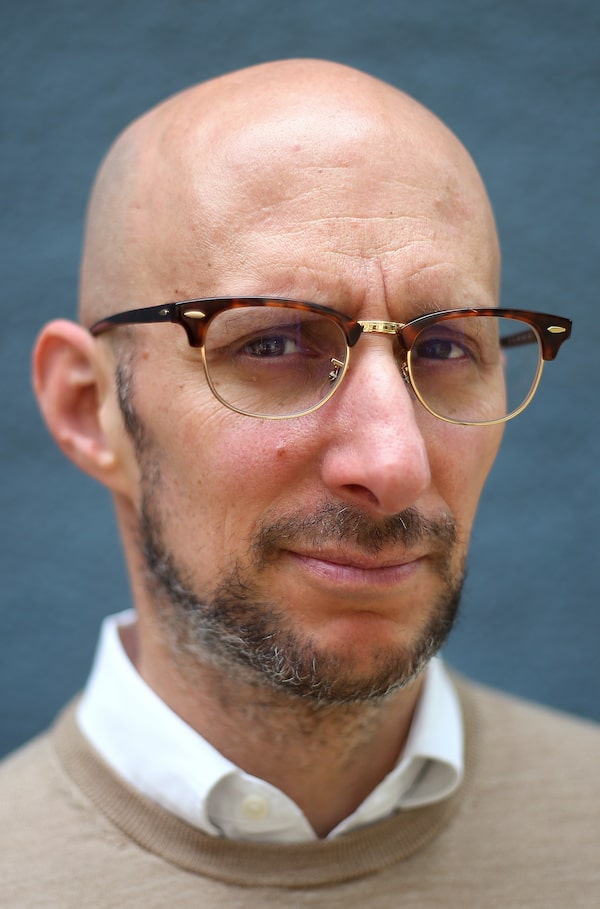
Corey Mintz is a writer based in Winnipeg.
Last month, I turned 50. The date not only marked my half-century on this planet, but the 20-year anniversary of my going bald. That said, I suspect I lost my hair a little earlier than 30. I just hadn’t accepted it yet.
When I had hair, I never knew what to do with it. As a kid I refused to brush or comb it. As a teenager I let my hair, which was naturally curly, build height like Kramer. In my 20s, I dyed it blue, along with my eyebrows (I thought it would look silly if my eyebrows didn’t match). I looked like an extra in a low-budget ’80s postapocalyptic movie where the production design calls for “a background full of trash-can fires and malnourished weirdos.”
And then one night, when I was 29, I saw a photo of myself sitting in a restaurant booth, showing more skull than hair. Seeing myself for the first time as others did, the light from a low-hanging chandelier accentuating what was not there, it was impossible to avoid how thin the hair on top of my head was compared to the hair on the side. It had been some time since scissors had touched this area, and yet it looked like I’d just been to the barber.
I’m bald, I thought.
Not balding. Not thinning. Not receding. But bald.
That moment felt scary, even a bit embarrassing, when I considered how long I’d spent assuming I had more hair on top than I did, but how clear it must have been to others who thought it impolite to point out.
But that fear was followed quickly by the state of grace known as acceptance. I was past the point of no return and therefore past denial. Instead, I felt comfort in the clarity of the path forward.
This was in winter. I gave myself until my birthday in the spring to enjoy having hair. When I awoke on May 5, I plugged in my electric clippers and shaved off what was left.
In the mirror, for the first time, I saw what my head would look like until the end of my days.
I don’t spend much time thinking about my hair, much less worrying about it. I never doubt how my hair looks, or whether I am in need of a trip to the barber. Exiting the shower, it takes only seconds to dry off. For the rest of my life, I’ll never have to consider another hairstyle, and whether or not it’s fashionable. It’s cheap, too. Every couple of years my trimmer breaks and I replace it for $40. Though I suppose I use a little more sunscreen.
However, I understand that this transition is not so easy for others experiencing hair loss or struggling with the decision to “go bald,” which in many cases is more about acceptance than choice. “They always ask what to do,” says Navin Ramgoolam, 2022 North American Hairstyling Awards’ Barber of the Year. “A lot of them, what I tell them, they’re hearing it for the first time. I have to think about how they’ll handle this information when they receive it. It’s not an easy conversation.”
Mr. Ramgoolam, who has worked in the Caribbean, New York and Baltimore and is currently based in Montreal, says men everywhere react to hair loss the same way – they usually start by asking him to assess their baldness (“Am I really really bald?”), followed by seeking advice on what they should do next. (Combover? Plugs? Scalp micropigmentation? Shave it all off?)
“The emotions and confidence of receiving a fresh haircut, what that brings, they’re imagining a life without that,” he says.
I get it. We are taught to fear hair loss. Even without ever hearing the story of Samson, as a child I understood the idea of our hair as an emblem of power, and the loss of it a harbinger of weakness (though that sounds more like an indictment of our vanity).
But attitudes about balding have changed drastically in the past 30 years.

Telly Savalas, one of the actors to play the bald Bond villain Ernst Stavro Blofeld, had shaven-headed roles for much of his career after he cut off his thinning hair for 1965's The Greatest Story Ever Told.MGM
Growing up, it was hard not to notice the stereotype of the ineffectual bald man. Though nearly half of men experience some level of hair loss (42 per cent of men struggle with moderate to extensive baldness) it seemed to affect less than 1 per cent of celebrities.
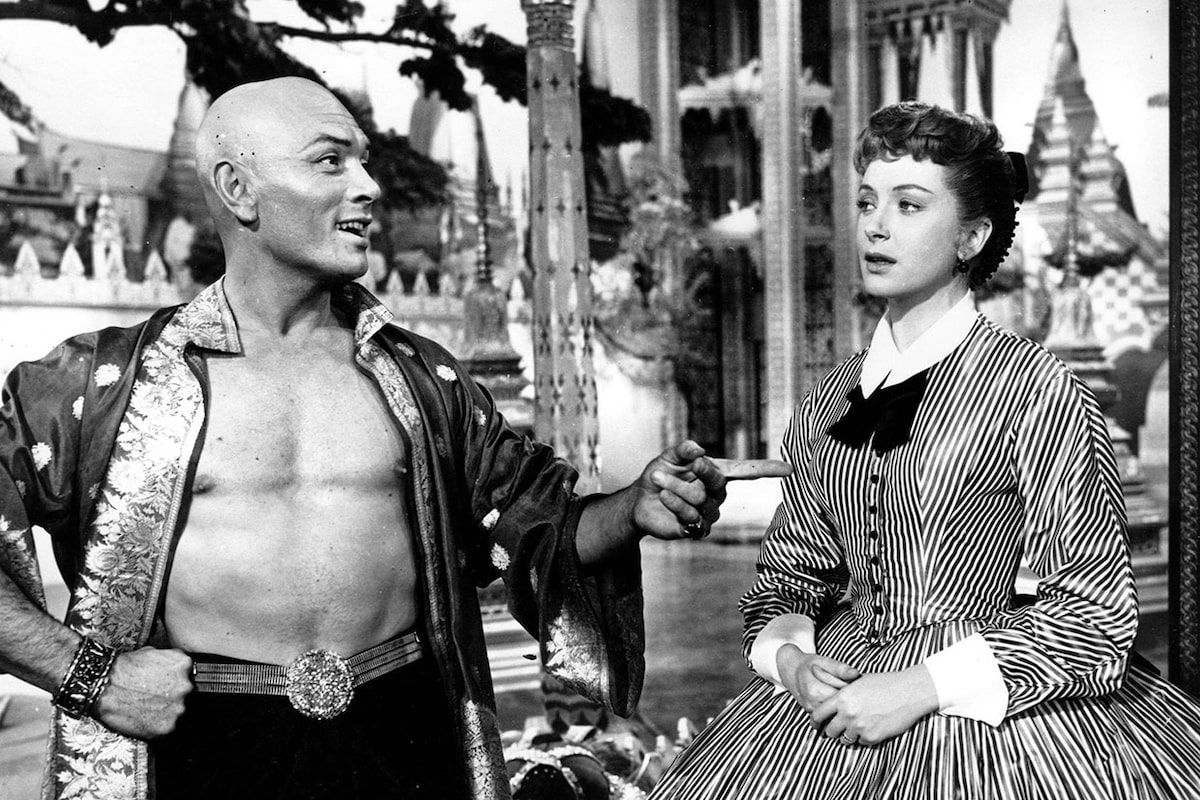
Back then, there were no bald movie or TV stars outside of Telly Savalas (best known as Kojak) and Yul Brynner. After shaving his head for the title role in The King and I, a part he would play in more than 4,400 performances, Mr. Brynner adopted the shiny-skull look that made him iconic. And yet despite his sex-symbol status, newspapers of the time still paid him left-handed compliments – “Brynner’s Romantic Image Lifts Baldies,” mocked one headline.
Outside of those two, bald actors played weaselly bosses, paranoid military officers and neurotic neighbours. Baldies could be loudmouths or drunks or occasionally a dignified cabbie, lawyer or politician who helps move the plot along. But a virile hero? Never.
The 1970s offered a shift in attitude, when stars such as Jack Nicholson, Gene Hackman and Sean Connery let their hair go as they aged, but during the 1980s pop culture doubled down on the aesthetics of masculinity. Muscles and hair were in. Goodbye Elliot Gould and James Caan. Hello Arnold Schwarzenegger and Sylvester Stallone.

Patrick Stewart, who went bald in his teens, rose to fame as Jean-Luc Picard on Star Trek: The Next Generation in the 1980s.The Associated Press
Patrick Stewart was a standout of the era. Although he’d been a working actor for 25 years, it was his performance as starship captain Jean-Luc Picard that made him a star – and was one small step for bald men. When asked why baldness had not been cured by the show’s 24th century, Star Trek creator Gene Roddenberry said, “By the 24th century, no one will care.”
People did care in the 80s, when skinheads were the most visible baldies. A shaved head made people question whether you were a neo-Nazi. The 1980s were also known for another thing: Sy Sperling, founder of Hair Club for Men, as the company was then known. At the climax of his TV commercials for hair-loss replacement, Mr. Sperling would gaze into the camera, his luscious dark hair shining, and declare, “I’m not only the Hair Club president, but I’m also a client.” Holding up a faded “before” photo, the image of a previously bald Mr. Sperling showed proof of how sad and feckless he had been without hair, next to how strong he was with it. This was the “I’m the captain now” meme of 1984 and every boy on my schoolyard knew this catchphrase.
Then, in 1994, something changed.
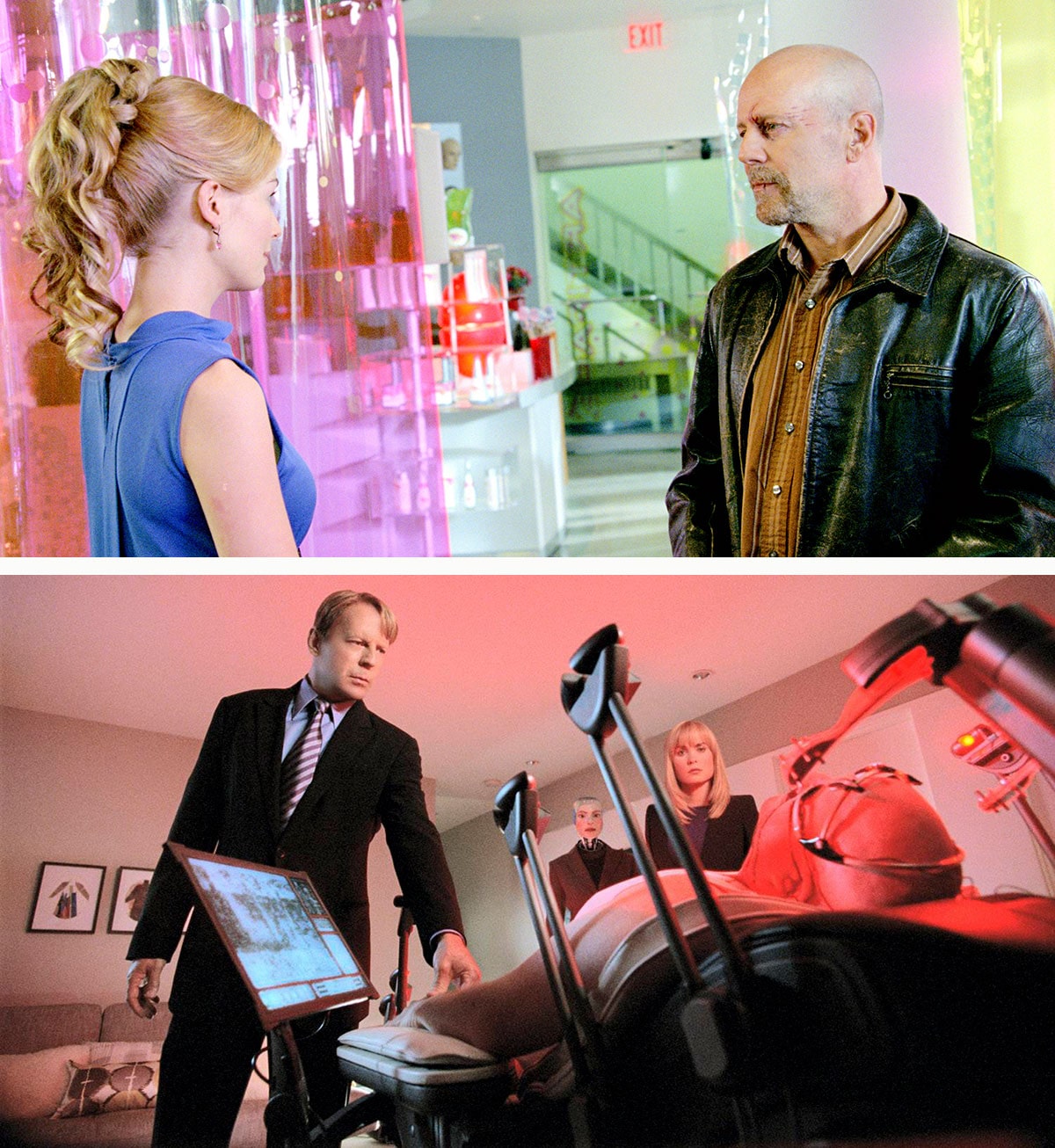
By the time he achieved stardom in the 1985 TV series Moonlighting, Bruce Willis’s hair was both thinning and receding in the formation known as the widow’s peak. And yet the man was so hot he could make wine-cooler ads sexy. Mr. Willis spent a decade holding on to those scraps, no doubt aided by a legion of hair and makeup artists, cinematographers and publicists, before shaving clean it to play a boxer in 1994’s Pulp Fiction. The reaction to Mr. Willis’s bald head was unanimous – we loved him and it. While a famous, beautiful, charming man choosing to let go of his hair was not quite an act of civil rights heroism, it nevertheless opened socio-cultural doors.
For years, balding tennis player Andre Agassi wore a wig on the court and even lost the finals of the 1990 French Open due to a hairpiece malfunction that left him distracted. Not long after Bruce Willis, Mr. Agassi let go of the charade and shaved his head clean.
Andre Agassi, playing with a wig in 1991 and without one in 1995, eventually came to embrace his baldness on the court.Patrick Kovarik/Getty Images
Baldness was now on the table as a choice, maybe a better choice, for men who had lived in fear of losing this symbol of their masculinity. That same year, a swimmer in my high school shaved his head, to cut down on resistance in the pool, he told me. Though I suspect the teenager, who possessed a handsomeness as improbable as the coolness of his name, Scott Speedman, was experimenting with public opinion. The high school chatter was that even without hair, Scott was still better looking than any of us.
Yes, it is easier for beautiful people to embrace baldness. But perceptions were changing. By the early 2000s, the term “shaved head” was replacing the word bald. It was often positioned as a choice, rather than a curse.
Soon we were awash in bald hunks. There were those who had begun their careers without hair – Tyrese Gibson, Vin Diesel, Ed Harris, Corey Stoll, Common – and those who transitioned to baldness as celebrities – Samuel L. Jackson, Jason Statham, Dwayne Johnson, Billy Zane, Laurence Fishburne, Mark Strong, Woody Harrelson – all while stars of previous decades continued to mask their baldness under increasingly preposterous wigs (you know who I’m talking about). It crystalized that someone like Stanley Tucci was getting more handsome without hair while Nicholas Cage and John Travolta looked silly holding on to their façades.

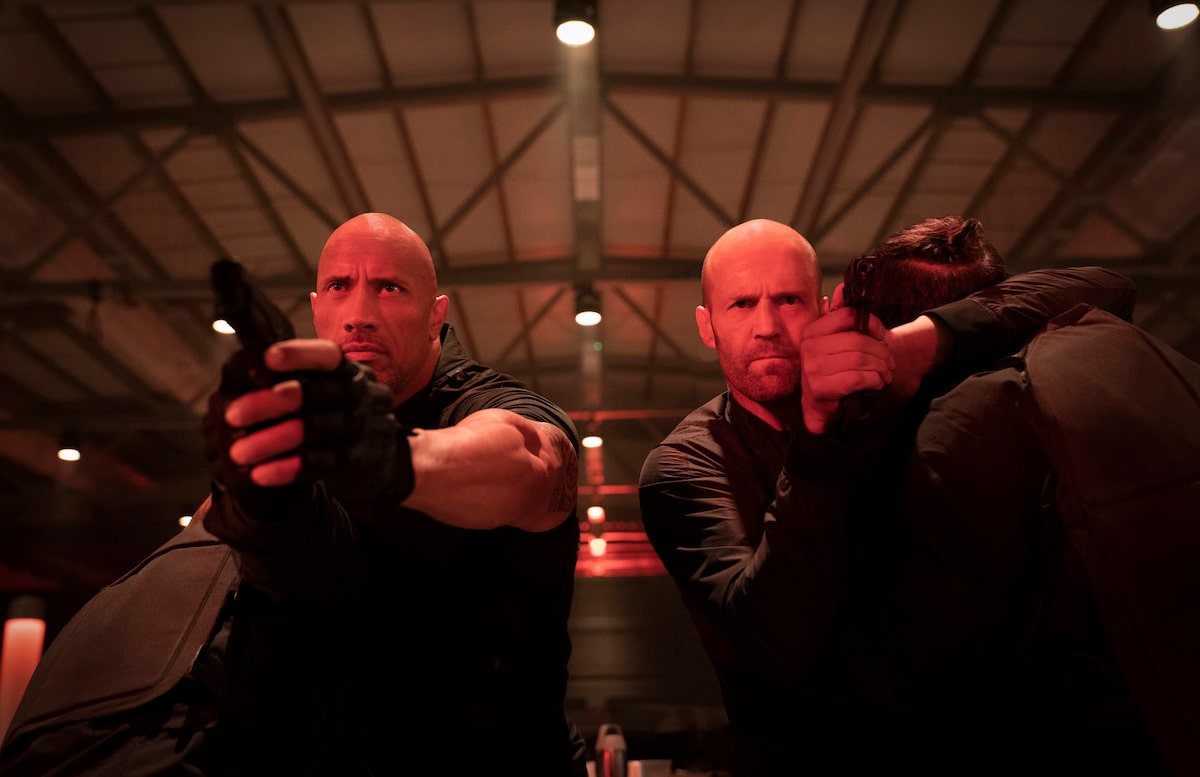
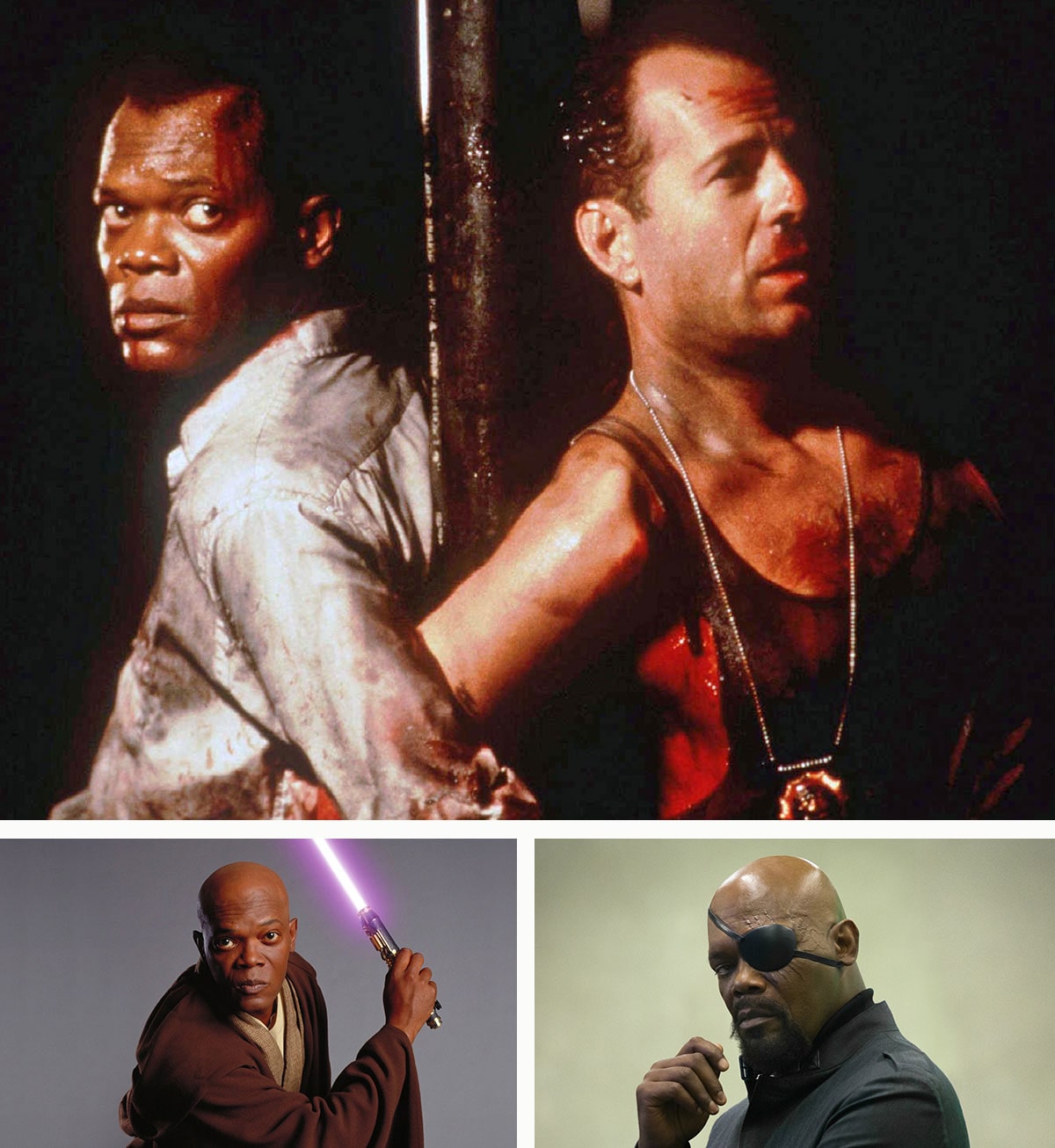
In 2005, when I embraced my baldness, I usually found people referring to me as having a shaved head. When I corrected them, “I’m bald,” they would tell me, “No, you shave your head,“ as if there was a difference in my value, depending on whether baldness had been done to me, or by me.
Even today, there is an entire industry that capitalizes off the perception of baldness as weakness. A quick Google search teaches me two things. First, that my search history will forever inundate me with ads for minoxidil and finasteride. And second, websites promising their hair potions “in discreet packaging” suggest that, as far as we have come, there is still profit in maintaining the feelings of shame associated with hair loss – that taking steps to prevent it must also be done in secret.
It has never occurred to me, until this moment, to pursue hair-loss replacement. In my case, it would be like trying to win back custody of kids I’d neglected. I didn’t treat my hair well when I had it. It wouldn’t feel fair for me to get another shot (though I do occasionally see someone with a stunning head of hair and imagine, just for a moment, what it would be like to steer so majestic a ship).
For anyone who wants to prevent or replace hair loss, I understand. There should be zero shame in this. If that’s your choice, there are businesses standing by to serve your needs as a customer. You don’t need me for that. No. I’m here to help you go bald.

For the bald-curious person, barbershops can be a useful source of advice on whether and how to make the cut.Fred Lum/The Globe and Mail
If you are at the stage that we in the bald community call bald-curious – not certain that it’s time, or how you would feel without hair – and you’re struggling with the decision, I have three key pieces of advice.
First, be realistic. When you look in the mirror or at photos, asking your partner, barber, priest or rabbi to inspect the top of your head, be honest with yourself about what you’re seeing or hearing. You don’t have to like it. But there is no international regulatory body that determines what level of thinning constitutes baldness. There is no bald police who decide how much hair you can lose before it doesn’t look good any more. It’s simply how you feel about how you look. In my case, it’s important to me that I be attractive to one person: my wife. After that, the only one I need to please with my reflection is myself. If you really dig how your thinning or receding hair looks, that’s awesome. If you don’t, that’s the only verification you need to know that it’s time.
Second, know your bald styles. There’s a difference between the salt-and-pepper horseshoe of an Alan Arkin versus the even stubble of Jason Statham or the polished shine of Terry Crews. I used to go over my head with a safety razor until I learned my wife likes a hint of stubble. So I switched to using a beard trimmer. In my opinion, a wider head benefits from the contouring of the horseshoe. And it looks particularly distinguished when the hair is grey. Whereas the razor cut requires more symmetry in bone structure, as well as increased daily maintenance (which modern electric scalp shavers make simple).

A beard trimmer helps Corey Mintz to keep traces of stubble, which his wife enjoys.Shannon VanRaes/The Globe and Mail
Finally, at the risk of being trite: Love yourself.
No external change will make as much of an impact as the internal one of learning who you are – of accepting your limitations along with your achievements. So you can’t grow hair on the top of your head. So what? Did your hair get through medical school? Did your hair teach your child to ride a bike? Is it your hair that always uses the turn signal before changing lanes? No. You did those things. And you’ll do more, with or without your hair.
“I have this conversation a lot,” says Mr. Ramgoolam, the barber. “They ask if they should shave or not. I tell them to go for it. Every time. They’ll be much happier not thinking about it, shaving their head and being bald. It’s just a wall, an obstacle. The faster they go over it, their life can go on. Stressing about it, they’re just going to continue balding and they won’t be happy.”
Talk to your partner. Talk to your friends. Talk to a professional. Don’t be a man who will literally pour chemicals on their head rather than go to therapy.
And when you are ready to go bald, do it with style, grace and confidence. Because after 20 years without hair I can say with absolute certainty that the day I went bald, I became a better-looking, happier and truer version of myself.