Irwin Cotler understands the threat that the Islamic Republic of Iran poses far better than most.
He’s studied Iran’s aggressive actions and repressive domestic policies for decades, as a lawyer trained in international law, a law professor, a federal cabinet minister and now, as the international chair of the Raoul Wallenberg Centre for Human Rights.
Oh, and Iran has plotted to murder him (a backhanded validation of the influence of his efforts). All of which is to say: Mr. Cotler’s analysis of the intersection of international law and the U.S.-Israeli military action against Iran carries some justifiable heft.

International human rights lawyer Irwin Cotler at his home in 2020. He has studied Iran's policies for decades.Andrej Ivanov/The Globe and Mail
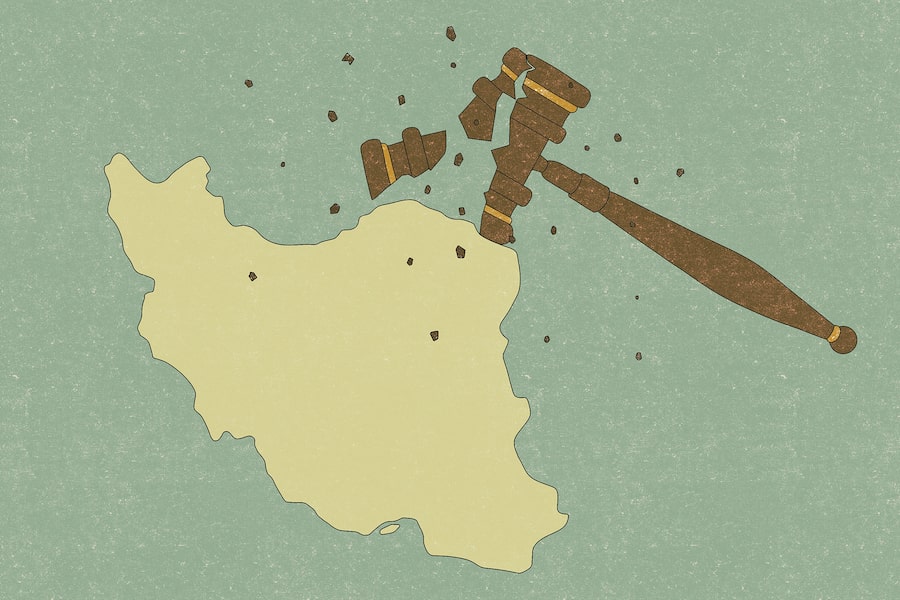
The accepted wisdom of the legality of the attacks on Iran is straightforward: they are illegal, full stop. The United Nations Security Council did not authorize the military action (nor was it asked). Neither Israel nor the United States are responding in self-defence, and even fall short of the restrictive standard for preemptive action, that of imminent threat of attack.
So, the air campaign against Iran breaks international law, and nothing more need to be considered. The reality that Russia would veto any move against its ally in its war of aggression against Ukraine is irrelevant. The stated intent of Iran to wipe Israel off the map is irrelevant.
Mr. Cotler rejects that view (as do we) as far too narrow. A broader perspective – one that takes into account the decades that Iran has spent fomenting war in the Middle East, terrorism across the globe and terror at home – leads to a very different conclusion, namely that it would be unjust and immoral to allow the Islamic Republic to use the letter of international law as a shield. “The UN charter is not a suicide pact,” he said in an interview, quoting his 1960s law professor.
He warns of a sevenfold threat from Iran: the pursuit of nuclear weapons; state-backed incitement of genocide against Israel’s Jews; the sponsorship of international terrorism; destabilization of the Middle East; targeting dissidents around the world; cyber warfare; and lastly, domestic repression.
Any one of the offences on that bill of indictment is serious. Together, they demonstrate that Iran has flouted international law for decades and has chosen to be a rogue regime. Now, the rogue, without shame, invokes the laws that it has mocked and debased.
An offense to diplomacy
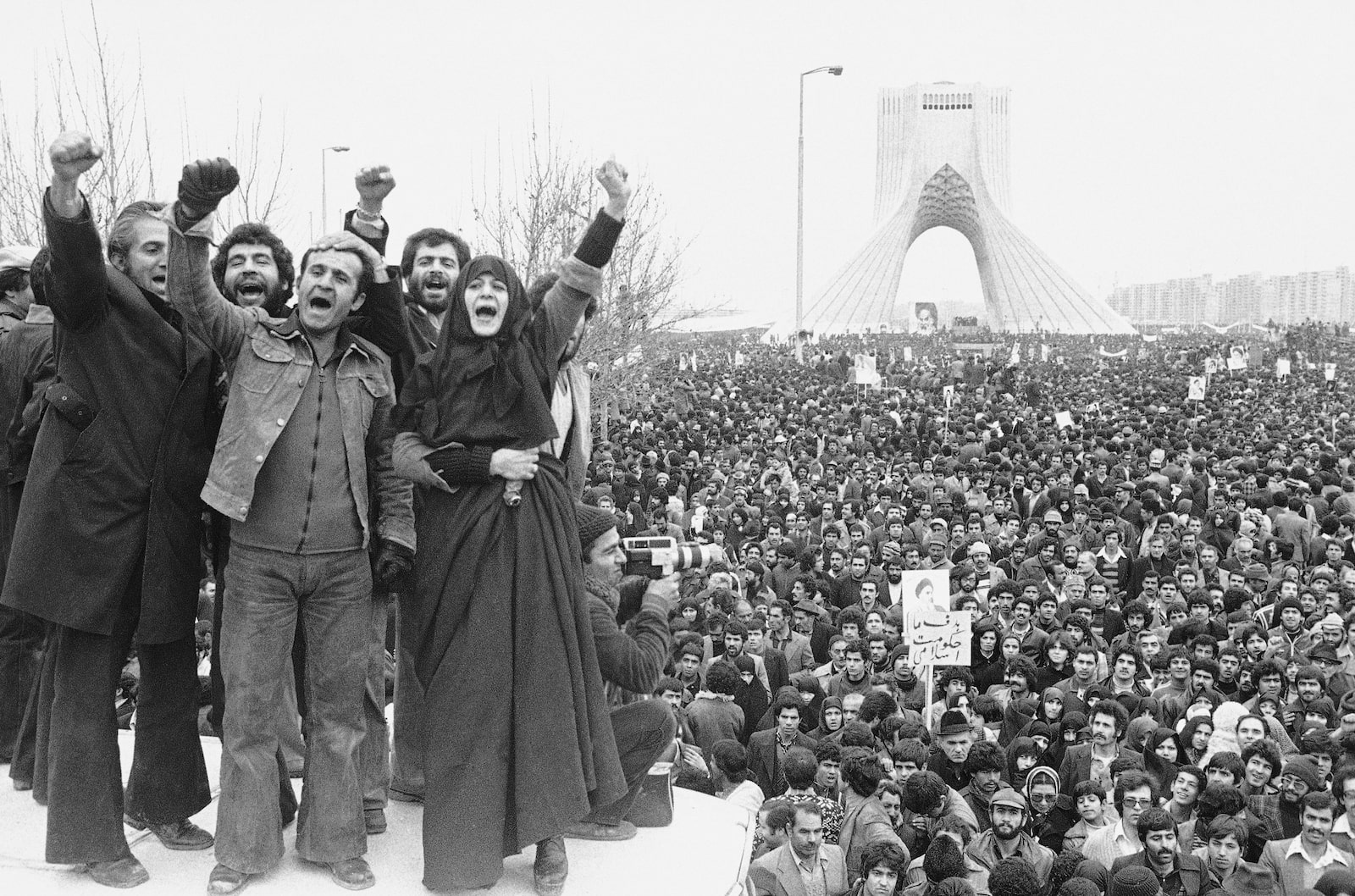
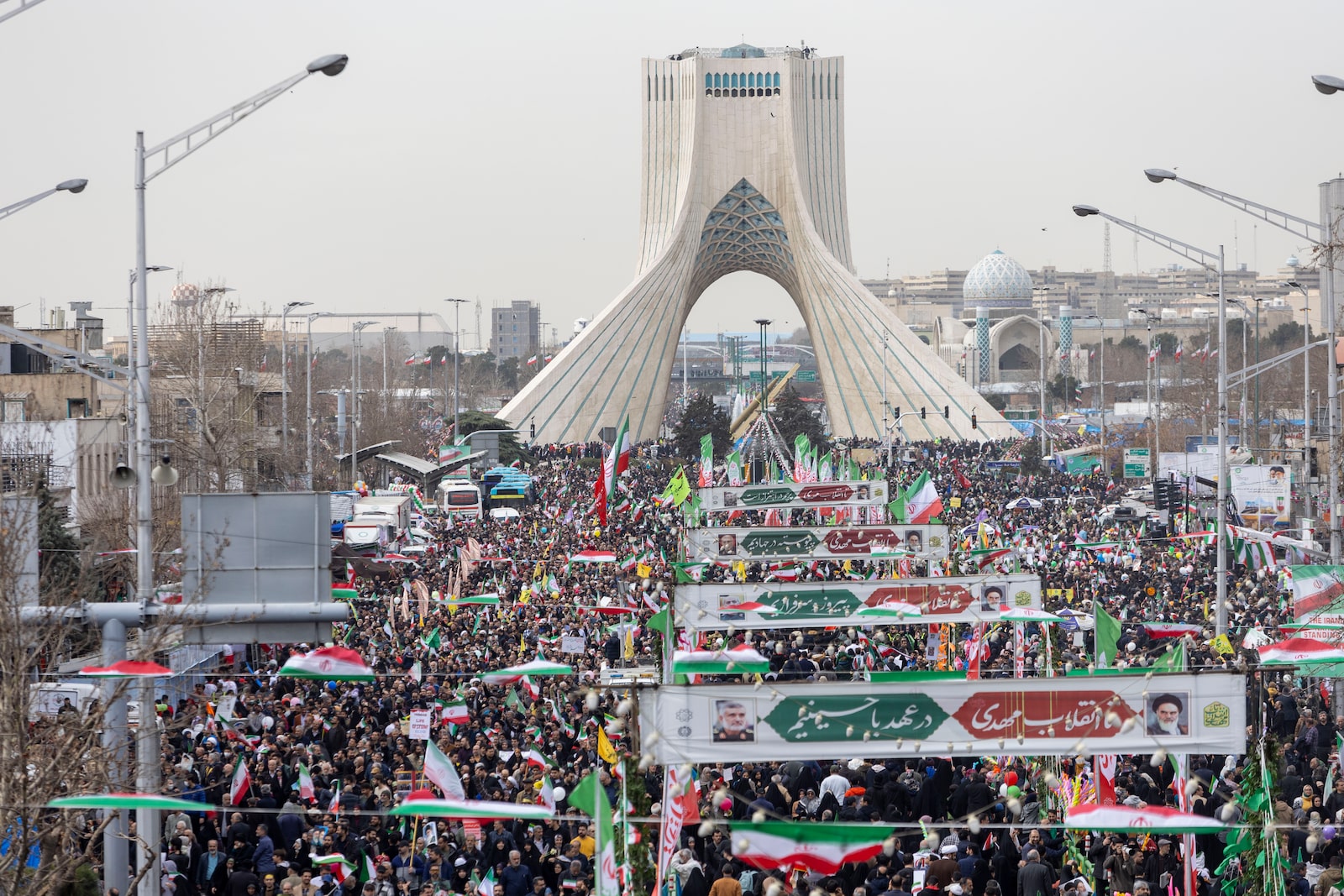
It didn’t take long for the newly born Islamic Republic to start down its path of violating international law – just over nine months. On Nov. 4, 1979, a mob stormed the United States embassy in Tehran, and took 66 Americans hostage.
For centuries, diplomats and embassies have been off limits, an acknowledgement that even adversaries need to communicate with each other. The 1961 Vienna Convention on International Relations is quite clear: Embassies are “inviolable.” Not only that, states have a positive obligation “to take all appropriate steps to protect” embassies and other diplomatic premises.
A 444-day hostage taking is somewhat out of step with those obligations. The hostage crisis would be the first, but far from the last, of Iran’s demonstrated contempt for international law.

Smoke rises from an oil storage facility hit by a U.S.-Israeli strike in Tehran on March 8.Vahid Salemi/The Associated Press
A threat that can be contained, or a threat that’s imminent
Iran’s pursuit of nuclear arms and its goal of eradicating Israel have been unshakeable policies for years. The now deceased Ayatollah Ali Khamenei called Israel “a malignant cancerous tumor” that must be eradicated, and a terrorist base, not a country.
So one can understand that Israel would be unwilling to just see how an Iranian nuclear weapons program would play out. The existential threat posed by a nuclear weapon in the hands of Iran is beyond obvious.
Yet, international law is unambiguous: It’s not enough that a threat is obvious. It must be imminent.
To draw an analogy, the mere threat to shoot someone with a gun would not allow a person, under the standards of international law, to pre-emptively act against a would-be assailant. Neither would the purchase of a gun. Or bullets. Or the loading of said gun with said bullets. Or the loud and repeated intention to fire that gun. Only when the assailant picks up the weapon and gets ready to aim and fire, only then, could you act. Good luck being quick on the draw.
That captures the dilemma that Israel, and its United States ally, face with Iran’s nuclear program. The threat may not be urgent when it is (relatively) easy to neutralize. But by the time the threat is urgent, the window to act may have closed.

Supporters of Iran-backed Hezbollah and its supporters hold a demonstration in Beirut on March 1, following the death of Iran's leader Ali Khamenei, who was killed by a joint U.S.-Israel attack on Feb. 28.Mohamed Azakir/Reuters
Iran’s one-step-removed war with Israel
There’s no doubt that Iran funds terrorist groups arrayed against Israel: Hezbollah in Lebanon, Hamas in Gaza and the Houthis in Yemen. Tehran has provided training, weaponry and billions of dollars. Those weapons have killed Israelis, and destroyed homes and businesses. And Iran has dubbed its efforts an “axis of resistance.”
If Iran had carried out that destruction through its own missiles or warplanes, it would be a clear act of war. Israel would need no further justification for reprisals in self-defence. (Although international law pertaining to the rules of war would still be in effect, as they are in the current conflict.) But international law gives Iran an alibi: so long as it is not controlling its proxies, it is not a party to their attacks, and Israel cannot invoke self-defence.
Defenders of international law often like to draw parallels to domestic law. So here’s one: What would the law have to say if you handed a high-powered firearm to someone who the next day went on to slaughter innocents? And then did the same the next day, and the day after that?
Or to return to the international stage, what would international law have to say if Iran gave Hezbollah or Hamas a nuclear weapon that was detonated in Tel Aviv? Condolences and an admonition not to launch reprisals against Tehran?
The legal conceit that Israel must pretend that it is not being attacked by Iran while that country funnels vast resources into a one-step-removed war makes a mockery of international law.
Terror abroad and at home
International law highly values the inviolability of national borders, in part why the threshold for legal military actions is so high.

Rescue workers search for survivors and victims in the rubble left after a powerful car bomb destroyed the Buenos Aires headquarters of the Argentine Israeli Mutual Association on July 18, 1994.ENRIQUE MARCARIAN/Reuters
But Iran has violated that principle for decades through its support of international terrorism. The actions against Israel are but the most pertinent example. In 1994, an Iranian-backed group bombed a Jewish community centre in Buenos Aires, killing 85 people and injuring 300.
Canada has formally condemned Iran’s activities, with good reason. In 2012, Ottawa formally designated Iran as a state sponsor of terror. Ten years later, the government designated Iran “as a regime that has engaged in terrorism and systematic or gross human rights violations.” In 2024, after much delay, the federal government designated the Islamic Revolutionary Guard Corps as a terrorist entity.
And last July, Canada and 13 other countries condemned Iran’s furtive international campaign of murder and mayhem. “We are united in our opposition to the attempts of Iranian intelligence services to kill, kidnap, and harass people in Europe and North America in clear violation of our sovereignty,” the joint communique stated.
Mr. Cotler has first-hand experience of those attempts. In the fall of 2024, the RCMP informed him that they had uncovered an active plot by agents of Iran to murder him. He was already under police protection.

A candlelight vigil is held on Parliament Hill for photojournalist Zahra Kazemi after she was killed in Iran in 2003.Chris Wattie/The Canadian Press
And there are other Canadians that this country should never forget when contemplating Iran’s crimes. One is Zahra Kazemi, the photojournalist who was arrested, tortured, sexually assaulted and killed in 2003. Then there are the 85 Canadians killed aboard Ukraine International Airlines Flight PS752 on Jan. 6, 2020 by the IRGC. Six years and a sham trial later, Iran has still not come clean on what happened that night.
Iran’s terror is not just for export; the Islamic regime has brutalized its own population for decades, with special viciousness meted out to women and sexual minorities. The regime has ruthlessly repressed protests this year. Countless thousands have died, perhaps tens of thousands. Countless because Tehran has not only killed its domestic opponents, but erased them.
This is the regime that international law must seemingly protect: one that seeks refuge behind diplomatic conventions and then reaches from behind that shield to murder, kidnap and harass citizens of other countries, and to terrorize its own.
The instability of stability

Globe and Mail readers in Toronto learn that WWII has ended with Japan's surrender to Allied forces on Aug. 14, 1945. In the wake of the horrific global conflict, preventing another such catastrophe was paramount.The Globe and Mail
The seeming contradictions make some sense when viewed from the perspective of 1945. A horrific global war had just ended, with tens of millions of soldiers and civilians killed.
Preventing another such catastrophe was paramount, particularly in the emerging nuclear age. So international law places a high value on stability, a recognition that once a war ignites, it can spread rapidly and unpredictably. Indeed, the current military conflict between Iran, Israel and the United States has shown that: The Gulf States have been bombed. A Thai-registered cargo ship was attacked, even though Thailand has no role in the conflict.
But take a step back and the prioritization of stability, above all else, can itself be destabilizing. It is the insistence of international law on stability that has allowed Iran to pursue manifestly destabilizing policies across the Middle East, and elsewhere in the world. It is the rigid view of stability that has allowed Iran to pursue nuclear weapons (defying, oddly enough, UN resolutions to the contrary).
It is a laudable goal to want to avoid war, and the misery it brings. But as Winston Churchill once presciently said in the wake of the 1938 Munich Agreement that dismembered Czechoslovakia for Nazi Germany, those who choose dishonour over war will get both. Less than a year later, his prophecy was proven correct, as the bloodiest war in history broke out.
Ignoring a threat does not make it disappear, and more often than not, allows it to grow.
When the law is immoral, change the law
The letter of international law is, unfortunately, clear. There is no legal basis to attack Iran merely because it murders and terrorizes its citizens and those of other countries, threatens Israel with annihilation, pursues nuclear arms and looks to destabilize the Middle East.
The law never perfectly overlaps with morality. But the law, even the series of conventions known as international law, cannot be a stranger to morality, either. If the verdict of international law is that Iran must be protected, then that law is unjust, and it cannot be allowed to stand.