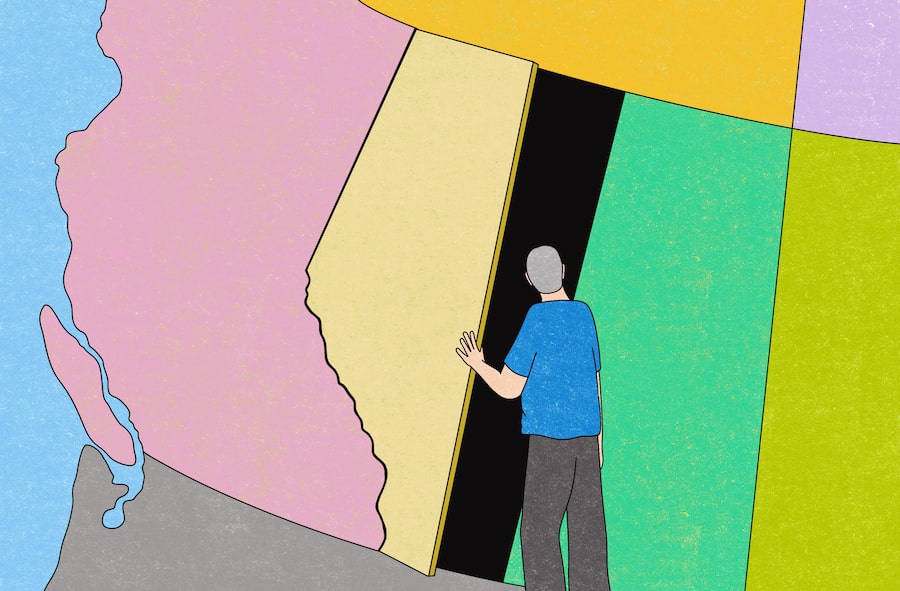
Albertans could soon be voting on one of the most consequential decisions. Pursuing sovereignty could not only create a new country, it would irreparably change the one being broken up.
There’s no guarantee this vote will happen, or how it might turn out. Polls indicate that a strong majority of Albertans want to remain in Canada but there is a persistent undercurrent of unhappiness in the province. Many there argue that Alberta has been pillaged to help central Canada – where the majority of the country’s voters live – while their needs have been ignored.
The grievances are not without foundation, though the picture is not as clear-cut as partisans pretend.
It’s true that Ottawa put roadblocks in the way of another pipeline – while also true that the federal government paid $34-billion to take over and finish the TMX expansion. It’s true that the way the equalization formula treats hydro-electric versus oil and gas favours Quebec over Alberta. It’s equally true that the biggest distortion of equalization is the abundance of wealthy Canadians living in Alberta.
Recent polls show the percentage of Albertans supporting separatism hovering in the high 20s, if including both committed opinion and those leaning that way. However, a substantial number of additional people say they might vote yes in a referendum to send a message to Ottawa – a high-stakes gambit.
If a referendum on separatism is held this fall, prepare for a heated campaign. Foreign actors are seeking already to inflame opinion, according to researchers, and arguments for and against are gathering steam.
Which makes it all the more important for that debate to not be distorted by the many myths of Alberta separatism.

An anti-Brexit protester waves an EU flag with one of the stars symbolically cut out during a demonstration in London in March, 2017. A bare majority voted to leave, triggering a long and messy separation from the EU that brought down several prime ministers.OLI SCARFF/AFP/Getty Images
Myth: A referendum vote is risk free
For anyone who watched the Brexit vote in the United Kingdom a decade ago, there’s a feeling of déjà vu at play in Alberta. In that case, then prime minister David Cameron was trying to placate hardliners in his party and agreed to have a referendum on leaving the European Union, hoping to put the issue to bed. Instead, a bare majority voted to leave, triggering a protracted and messy divorce that brought down several prime ministers.
In Alberta, Premier Danielle Smith leads a party whose supporters are more separatist than the provincial average. Last year, her government changed the rules to make it easier to hold a referendum. This week, separatists submitted what they said was about 300,000 signatures on a petition to hold a vote, more than enough to trigger one under the new rules but barely half the required threshold under the old ones.
Now the process sits in limbo. Before the petition can be certified, a judge must first rule on whether a vote would violate Indigenous treaty rights. Still, even the gathering possibility of a referendum had already left a layer of uncertainty on the province, and uncertainty is not what business leaders or prospective immigrants want.
“Investments have not gone forward because of this potential separatist talk,” Heather Thomson, vice-president of economy and engagement at the Edmonton Chamber of Commerce said in January, adding: “Investors want to see stability.”
If a referendum is held, a majority voting to leave would be a step into the unknown for the province, and country. But even a separatist loss at the ballot box would not mean the rest of Canada can shrug and move on. More on that later.
Myth: A vote to leave is a vote to leave
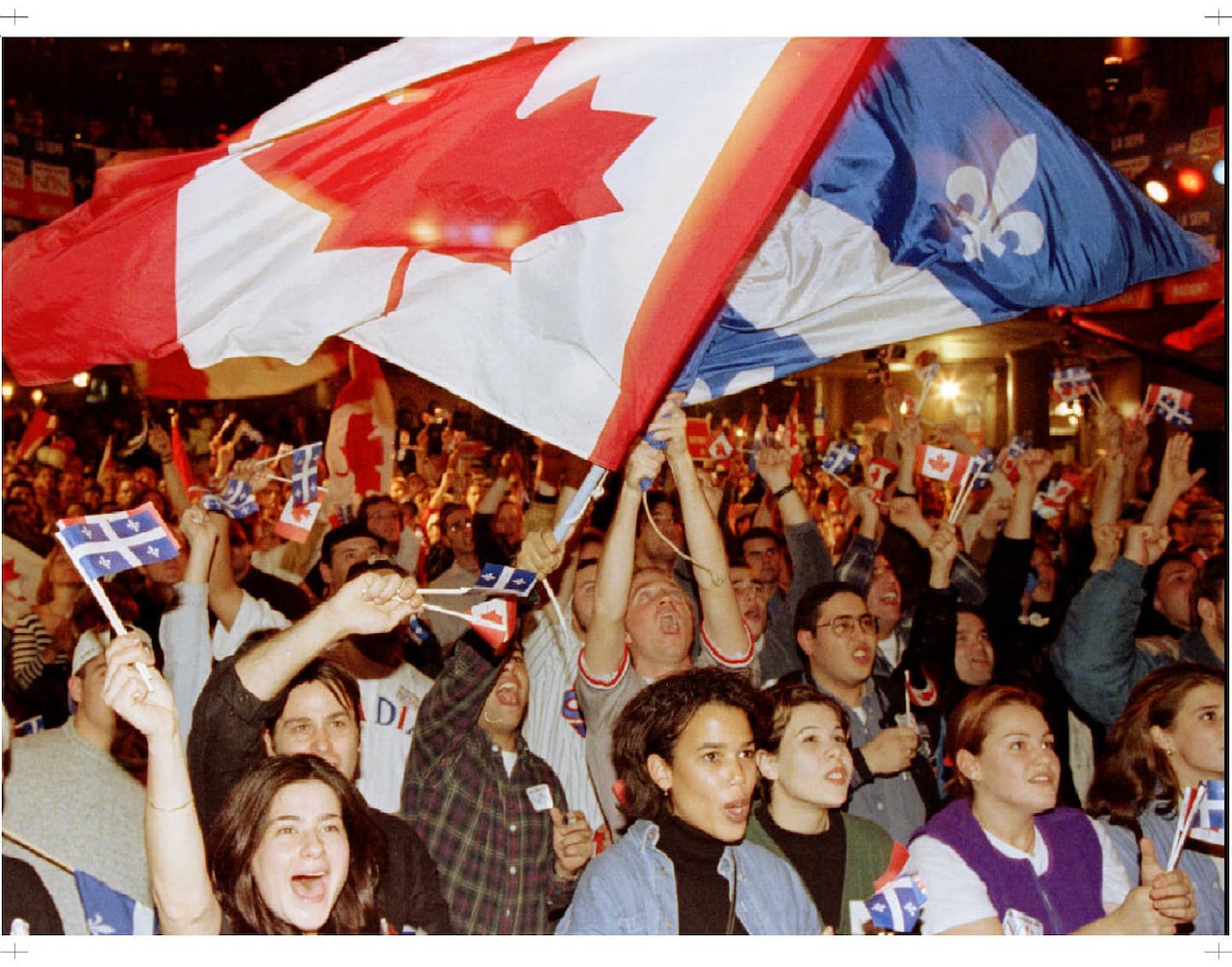
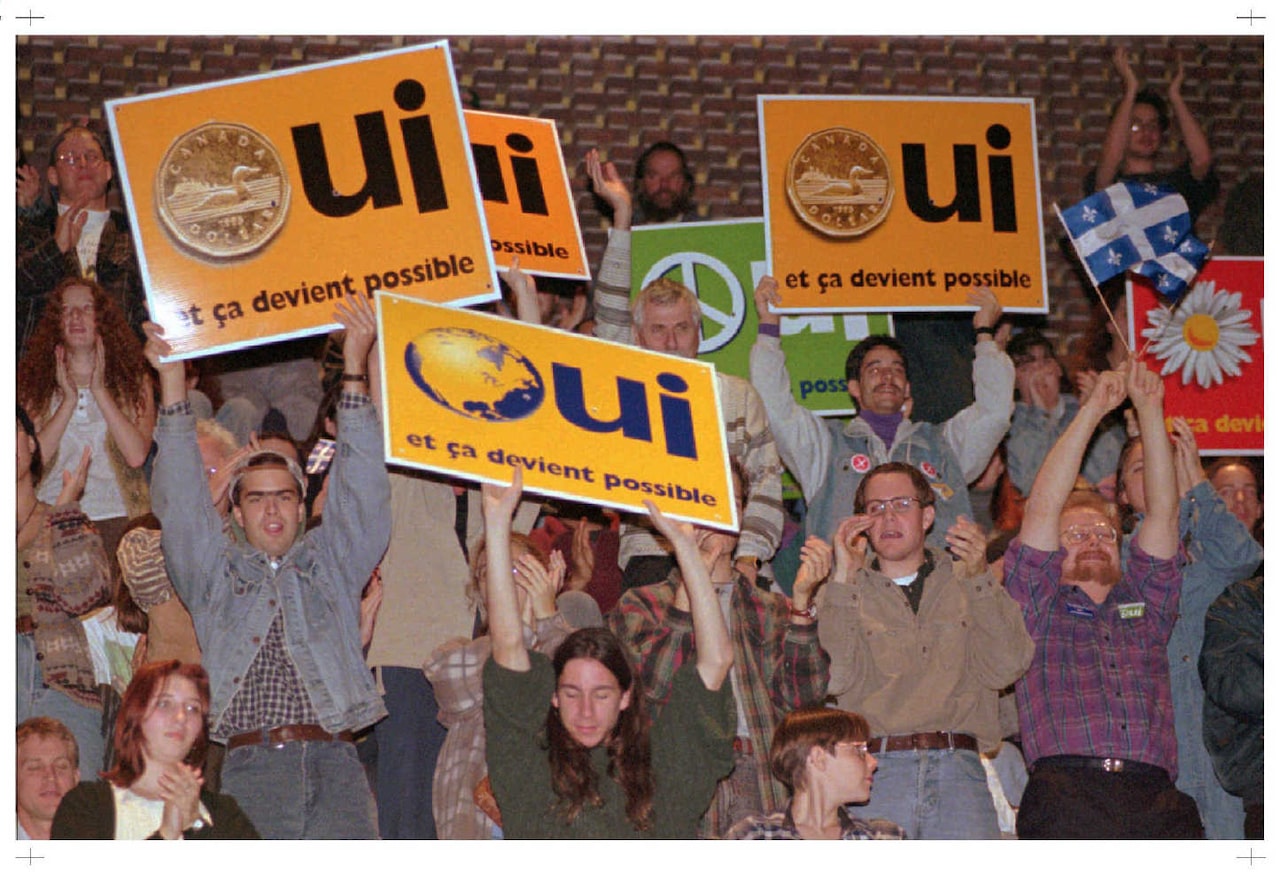
After the razor-thin Quebec referendum result in 1995, the federal government referred three questions about the legality of secession to the Supreme Court. The court’s opinion, and the Clarity Act that flowed from it, spell out how a part of Canada can become independent.
Under this legislation, a winning referendum does not, in and of itself, mean independence. Splitting up Canada requires a constitutional amendment, which requires negotiations with Ottawa and the remaining provinces.
The Clarity Act specifies that a referendum question on separatism must be judged to be clear by the House of Commons. If it is approved, negotiations would follow a clear majority vote – the scale of which is not defined. It’s probably fair to assume that the rest of Canada would not insist on keeping within Confederation a province that overwhelmingly wanted to leave. But a smaller majority would make the talks much more contentious.

Quebec and Ontario newspaper headlines announce the razor-thin Quebec referendum result on Oct. 31, 1995.Ryan Remiorz/The Canadian Press
Such talks can also be expected to include a huge number of thorny topics. Everything from the borders of a post-independence Alberta to its share of the national debt, how to divide up assets and how to respect Indigenous rights.
Crucially, the Clarity Act does not require that these constitutional negotiations lead to a result satisfactory to the seceding province, or to the federalists.
If negotiations deadlock, the province seeking to secede has few options. They can continue as a province of Canada, perhaps under better terms. They can stay at the table in hopes of a deal. Or they can attempt a hail-Mary unilateral declaration of independence, and hope other countries recognize it.
Myth: Alberta’s boundaries are fixed
Alberta came into being as part of Canada, and did not exist before. There’s no guarantee its current boundaries would remain in the event of a majority voting to separate.
There are three main factors that would determine the expanse of an independent Alberta: Indigenous rights, federal lands and the distribution of separatist support.
The issue of treaty rights has already been prominent in the pre-campaign, as supporters made their case and gathered signatures. At the same time, a number of Indigenous groups have been loudly asserting their own rights. Much of the province is now part of Canada because of treaties signed in the 19th century.
Treaties 6, 7 and 8 were signed before Alberta existed and, as Indigenous leaders note, they were nation-to-nation agreements between the pre-settler inhabitants of the land and the British Crown. These treaties do not disappear simply because a majority of Albertans vote to leave.

Hundreds of First Nations members and allies gather outside the Alberta Legislature to protest against Alberta’s proposed separation in May, 2025. The issue of treaty rights has been prominent as independence supporters have made their case and gathered signatures.Artur Widak/Reuters
The status of Indigenous peoples and the lands covered by the treaties – which, under Treaty 8, include the oilsands area – are sure to feature centrally in any negotiations triggered by a vote.
So would federal lands such as national parks and major highways. As well, talks would likely address the status of areas that vote in large numbers to stay. Would Canada really accept federalist enclaves being forced to become part of another country?
Myth: Keeping the Canadian passport
The Canadian passport is ranked as one of the most desirable in the world, allowing unfettered access to more than 180 countries. It’s understandable that Albertans voting for independence might want to keep such a valuable document. And under a recent Canadian law granting citizenship to descendants – even great-grandchildren – of Canadians, they would appear to be able to do so.
However, that presupposes the law is not changed. There’s no reason to believe it won’t be.

The Canadian passport is ranked as one of the most desirable in the world. If Alberta were to gain independence, it's possible millions could lose their Canadian passports.Sean Kilpatrick/Supplied
For starters, political entities rarely split up amicably. Alberta leaving Canada is more likely to be a rancourous process that produces unhappy people on both sides. The idea that the federal government would then allow millions of people from what is – let’s remember – another country retain their privileges as Canadians is nonsensical.
Several 20th-century examples are worth noting here.
When East Bengal split from Pakistan in 1971, Islamabad passed a law to strip residents of the newly independent state of their Pakistani citizenship. And when Panama seceded from Colombia in 1903, residents of the new country became dual citizens only if they had specific ties to the old country. Most became, simply, Panamanians.
Separatists claim that, under current law, it would be possible for seceding Albertans to remain Canadians as well. Perhaps.
But the law would inevitably be changed, as history demonstrates.
Myth: It would be easier to build a pipeline
One of the more curious arguments presented for separatism is that, as an independent country, it would be easier for Alberta to build a pipeline across British Columbia to the ocean. Recall that opposition to pipelines in B.C. has hampered the ability to get them built. That difficulty is a driver of Alberta frustration.
So why would it be easier for Alberta as a separate country to convince Canada to allow a pipeline than for Alberta to do so as a part of Canada? The explanation lies in a selective reading of the United Nations Convention on the Law of the Sea. This agreement, which Canada signed in 1982 and ratified in 2003, lays out the rights of land-locked states.
The relevant section of the treaty here is Part 10. It states that countries that do not border an ocean can seek “right of access to and from the sea” – specifically mentioning rail, waterway, road and, where applicable, porters and pack animals. However, there are two important qualifiers.
This is not an absolute right but must be agreed upon, according to the treaty, between the land-locked state and the one across which it is hoping to transit. As well, right of access is not the same as right to build a pipeline. The treaty states that land-locked and transit states “may include” pipelines and gas lines as means of transport, but only if both parties agree.
In sum, the law of the sea does not permit a land-locked state to impose a pipeline on its neighbour. While an independent Alberta could have some leverage in trying to convince Canada to allow any such pipeline, since two important trans-continental highways cross its current boundaries, that would be subject to negotiation.

Alberta separatist supporters gather during a rally in front of the Elections Alberta headquarters in Edmonton on May 4, as they submit boxes of signatures in the hope of triggering an independence referendum.HENRY MARKEN/AFP/Getty Images
Myth: Separation would lead to huge wealth
According to surveys cited by a commission into the trucker convoy and western alienation, large majorities supporting separation gave economic reasons for wanting to leave.
Given this, it’s not surprising that the pro-separatist Alberta Prosperity Project produced an analysis highlighting what it says would be the financial windfall of independence. It claims an independent Alberta could eliminate sales, personal and corporate income taxes.
While it’s impossible to predict exactly how prosperous a sovereign Alberta might be, the group’s work raises red flags.
For one, the analysis makes no mention of taking over any part of the $1.3-trillion national debt. It lowballs some expenses, such as planning for a sovereign Alberta to spend only $3-billion to $5-billion annually on defence. This would be, at best, 1 per cent of the province’s GDP and far below the NATO standard.
Also, while the group asserts that the province deserves about half of Canada Pension Plan assets, its analysis assumes an “extremely conservative” share amounting to approximately one quarter of total CPP assets – even though Alberta has only one-eighth of the country’s population. And the analysis combines revenue from a future Alberta Pension Plan with government revenues to produce a hypothetical provincial surplus, which is not how pensions are normally accounted for. For example, CPP assets and revenues are strictly segregated from government revenues.
A more sober assessment of Alberta’s future as an independent state is reflected in an analysis last year by University of Calgary economist Trevor Tombe. He points out fiscal problems, including that the group has eliminated Old Age Security and child benefits without explaining how to fund what might replace them, and notes that doing away with taxes would blow an $80-billion hole in the budget.
Prof. Tombe argues that an independent Alberta would also face economic headwinds, including a productivity decline and an increase in the cost of trade that could shrink the economy by tens of billions of dollars. “A separate Alberta would be a poorer Alberta,” he concludes.

Jeff Rath, Alberta Prosperity Project leader, speaks to Albertans at a separatist event in Eckville, Alta., in January. The group claims independence would create a financial windfall, but their analysis makes no mention of taking over any part of the $1.3-trillion national debt.AHMED ZAKOT/The Globe and Mail
Myth: A no vote means no problem
Money may turn out to matter less to Albertans than they told pollsters. “The value of freedom is priceless,” argues the Alberta Prosperity Project. It’s entirely possible voters there would accept being less prosperous if it meant being masters of their own destiny.
However, a majority may decide that is too big a risk to take. If a vote happens, Albertans may choose to reject the separatist vision out of love for Canada or a desire for stability. Or perhaps because they seek to build a better country together rather than dismember one out of anger.
That would not, to be clear, be a reason to assume the concerns of separatists were dead. Alberta alienation did not spring from nothing and the grievances that have driven it require real attention. Building a better country is an effort for all Canadians.
And that’s no myth.