On university campuses this week, there were many young faces, but also a lot of old ones. Professors working past normal retirement age – into their late 60s and beyond – are a growing cohort on campus.
These delayed retirements are stifling the process of faculty renewal and creating an imbalance with younger generations. University administrators are grappling with the issue, and they need to do more to promote faculty renewal and ensure there is the right mix of professors of different ages.
Since the end of mandatory retirement in the early 2000s, the number of professors over age 65 has soared. Just 1.7 per cent of professors were 65 or older in 2000. By 2024, that proportion had risen to 12.1 per cent. One-quarter of full-time Canadian academic staff are now over age 60, while less than 15 per cent are under 40. There are now more professors aged 69 or older than under 35.
Older professors tend to have smaller classes, lighter teaching loads and more control of their schedules. While they may be vigorous in their late 60s, they can stay on the job into their 70s and beyond, and in most cases, administrators can’t force them to retire.
The situation creates a series of inequities. First, these delayed retirements result in less money to hire younger professors, leaving them in precarious sessional lecturer positions, or causing them to leave the field. It also means that fewer doctoral students, who are more likely to be women, get hired to replace professors. It also likely slows down the hiring of racialized professors.
Some academics in their 60s and 70s are stars in their fields and serve as valued mentors to younger professors and students. Yet it’s undeniable that people generally experience some cognitive decline as they get older, something that could make it harder for them to advance the frontiers of knowledge in their research.
Younger staff are also more likely to bring new ideas and have innovative teaching and research techniques. Research shows that senior faculty can act as “gatekeepers” to new ideas, preventing innovation.
Older faculty are paid substantially more than their younger peers. At Canada’s 15 leading research universities, full professors, who are more likely to be older, earn a median salary of $196,725, much more than associate professors.
When you factor in higher salaries and more heavily used benefits, professors over 65 likely cost institutions 50 per cent more than the average academic staff, estimates Alex Usher from Higher Education Strategy Associates. This is significant, given many universities are facing financial challenges, and salaries and benefits are their biggest expense.
Meanwhile, sessional lecturers – often younger academics trying to find a way to get a tenure-track job – are paid significantly less. It’s common to make around $10,000 for teaching a one-term course. When positions do come open, administrators may prefer to hire contract staff, given that they have no control over how long tenured professors will stay on the job.
Some professors working past traditional retirement age collect their pensions on top of their salaries, a practice Ontario’s Progressive Conservative government has called “double dipping.” This can add another six-figure sum to professors’ annual salaries (although part of the pension money has been contributed by plan members).
The Ontario government never followed through on a 2019 plan to eliminate the practice after faculty unions warned the change would violate collective bargaining and age discrimination law. Federal law requires members start receiving pension income in the year they turn 71, making it difficult to avoid to dual payments if employees are still working.
Administrators have limited tools available, but they can do more to coax older professors to pass the torch to younger academics. Older professors should be required to handle regular course loads and contribute to research in the same way younger academics are.

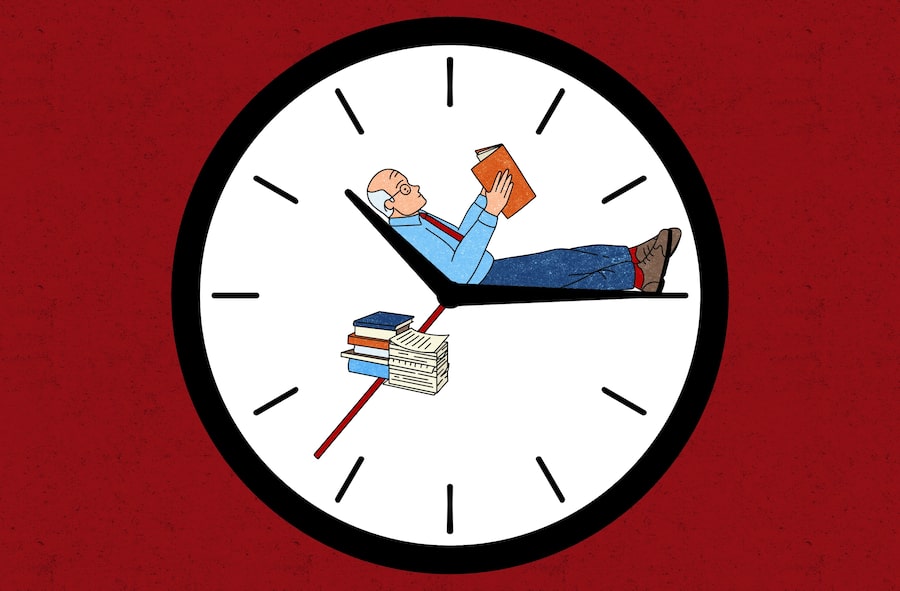
At Canadian universities, delayed retirements are inhibiting the process of faculty renewal and creating an imbalance with younger generations.Sammy Kogan/The Globe and Mail
While administrators shouldn’t interfere with academic freedom, they can keep track of output measures, such as the number of courses taught, PhD students supervised, research published, committees served on, etc. Data can also be collected on the quality of teaching. Administrators should push back on professors who aren’t meeting standards, regardless of their age.
Making these metrics public within the department – or having provincial governments mandate they be made public, like a “Sunshine List” – would certainly shake up the culture and push underperformers to shape up or leave.
Positive incentives can also help professors make the jump into retirement. After decades in academia, many want to stay engaged and connected to the university after retirement. While professors might not receive their previous salary, they can be valued contributors, teaching courses on contract, and collecting grants to continue their research.
Phased retirement programs, where professors can work part-time for several years after agreeing to a retirement date, are already widely offered, but they could be sweetened with better provisions. More money for buyouts would also help.
Frances Woolley, a newly retired professor of economics from Carleton University, says it can’t be left to professors alone to decide when their jobs end. She proposes a model used by some law firms, where partners sign an agreement to leave at age 65. Other fields have their own models, such as senators, who have an age limit of 75, and judges, who must retire at 70 or 75, depending on the jurisdiction.
Universities are vibrant places where young generations learn, and they shouldn’t be allowed to turn into gerontocracies. It’s time for universities to directly tackle the issue of aging faculty and build a pathway to faculty renewal.