Integrating photovoltaic panels into building structures is the next wave in architecture
Most of us identify solar power with big panels hooked on to rooftops. But a new generation of sustainable buildings is incorporating the technology into the edifices’ structure.
“When I started, you had to be a little guerrilla to get things done with photovoltaics," said Anthony Pereira, founder of New York-based altPOWER, who started work in the city in 2001 on one of the U.S.'s first buildings outfitted with building-integrated photovoltaics (BIPV). Now, the technology is taking off around the globe.
In its simplest form, a BIPV panel is a sandwich, usually with solar cells in between two layers of glass, that produces clean electricity. Unlike rooftop panels, BIPV panels are integrated into the building’s exterior facades, overhangs and elsewhere, replacing materials like concrete, brick and wood.
BIPV use has grown in Europe and is gaining traction in North America, with Transparency Market Research predicting international growth of 19 per cent between 2013-2019.
Here are some innovative projects where integrated solar panels have been put to work.
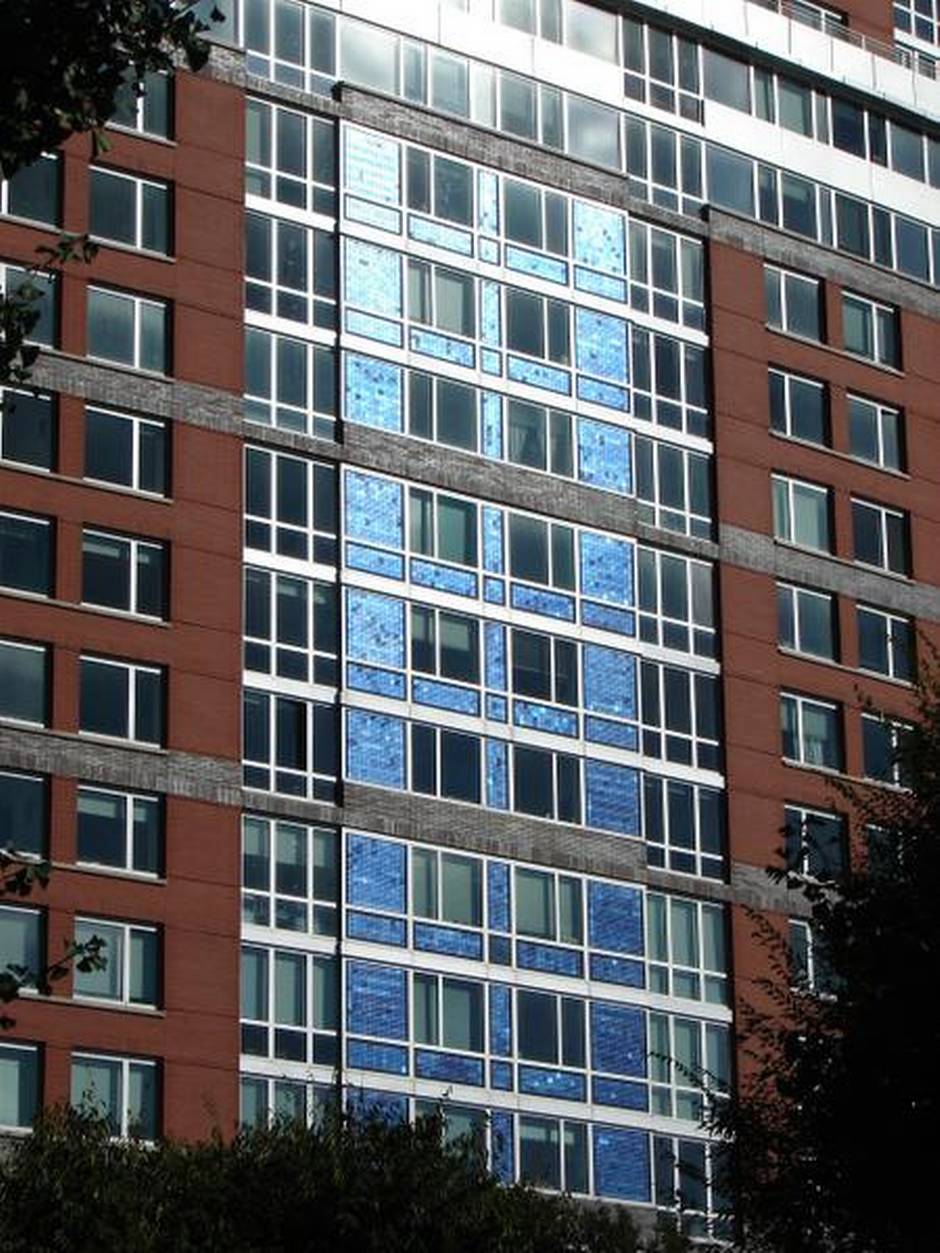
1. The Solaire, New York City
The 27-storey apartment building, completed in 2003, is LEED Gold certified. An intense project for Anthony Pereira, it took one year to get the necessary approvals. BIPV panels were used in Solaire's entrance canopy and façade. It also has rooftop panels which, together with the BIPV panels, produce a total of 33 kilowatts of power under optimum conditions.
Pereira’s firm altPOWER used recycled silicon wafers for the BIPV solar cells. Crystalline silicon is used to make BIPV single or polycrystalline wafers that deliver about 10-12 watts per square-foot of PV array, under full sun.
"We're still a few years off from seeing it on every building," Pereira says,"But making a brick creates a bigger carbon footprint than making solar glass."
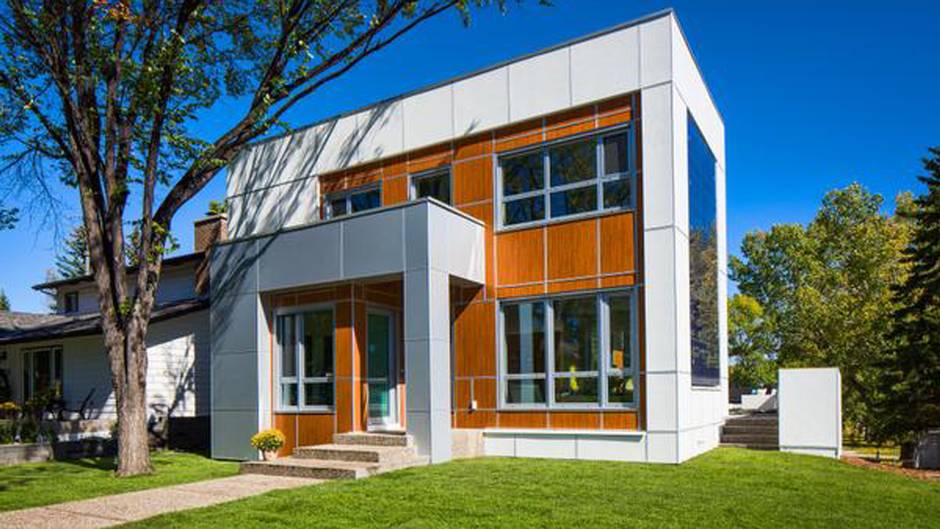
2. Residence, Calgary
The home in a Calgary suburb features about 17 square metres of frameless, translucent, 190-watt solar modules installed on the home's south-facing wall.
The grid-connected BIPV panels do double-duty: They draw fresh air into the home year-round, heating the air in the winter while also generating 2.3 kW of electricity, about 30 percent of the house's requirements. On occasions when the panels are producing more electricity than needed, the excess is exported to the grid, says David Vonesch, an engineer and partner in Calgary-based SkyFire Energy, the company that installed the BIPV.
Two years ago, it cost about $13,000 for the home's BIPV. Today, a similar system costs about $11,500, Vonesch says. While more expensive than roof solar panels, BIPV panels use heavier glass and should last a decade past the typical 25-year warranty, says Vonesch."We've installed more BIPV in 2014 than our 13 previous years combined," he adds.
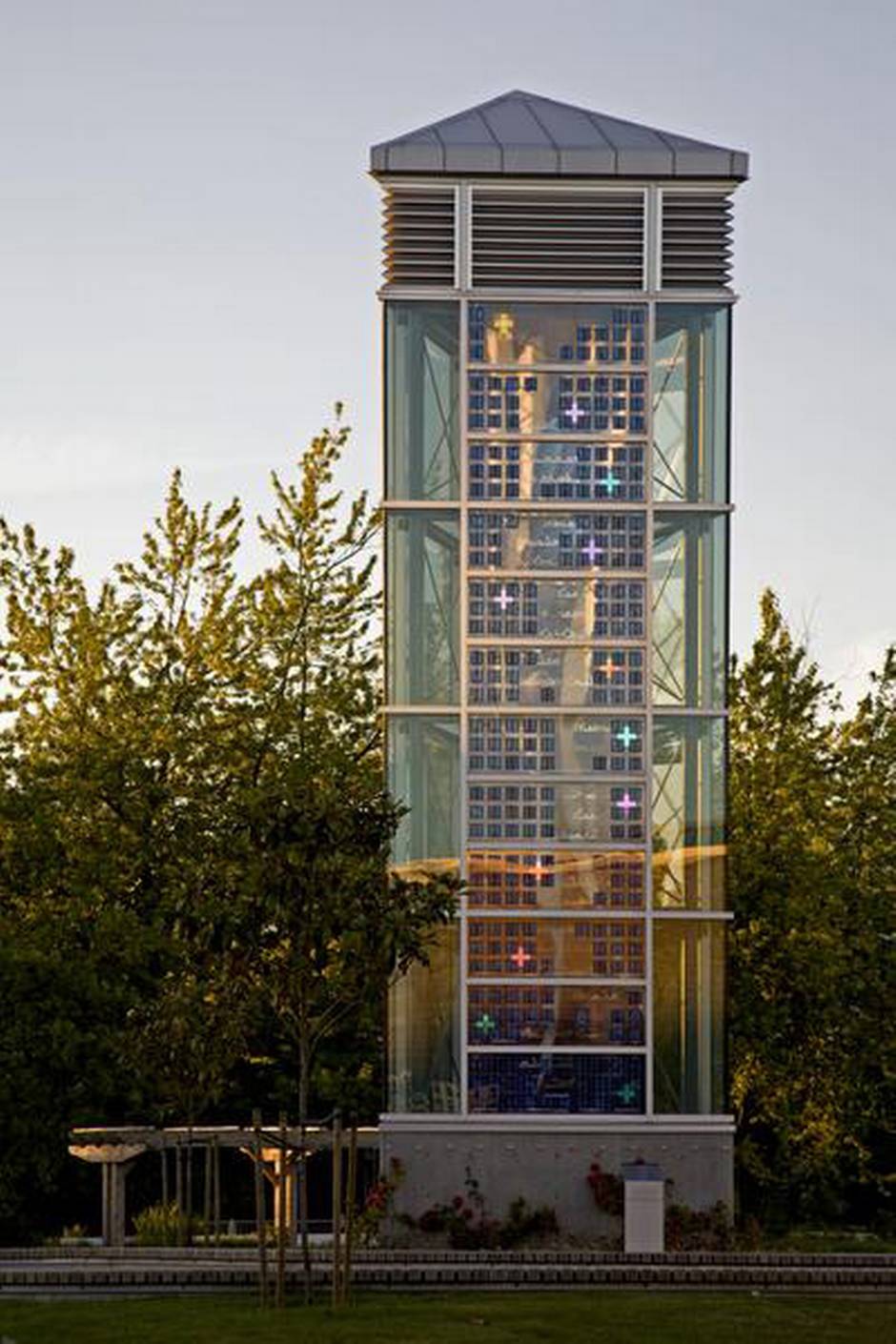
3. Regent College, Vancouver
At Regent College, the University of British Columbia's theology school, a tower that delivers fresh air and natural light to an underground library has seamlessly married BIPV with coloured glass.
The 12-metre tall, triangular True North tower features, on the south face, a 1.8 by 7.3- metre vertical collage, the first permanent installation in North America to integrate stained glass and BIPV. In 2007, Canadian glass artist Sarah Hall designed 12 panels where the BIPV sections are arranged on an open grid with the collage visible throughout the glass.
The German-made panels, featuring biblical scripture, are 2.5-centimetres wide, says Brad McTavish, of Grout McTavish Architects, the Vancouver firm that designed the tower. Each panel contains a glass layer, then photovoltaic components, then dichroic (changing colour) glass, followed by an air space for cushioning and finally, the outer stained glass.
The True North tower’s role is to draw air and light down to the below-grade library where precious books are housed. In a clever arrangement, electricity for the fan that moves air down to the library is produced at the tower's BIPV south face."It sets a new paradigm on how to create a LEED Gold building while introducing artistic architecture," McTavish says.
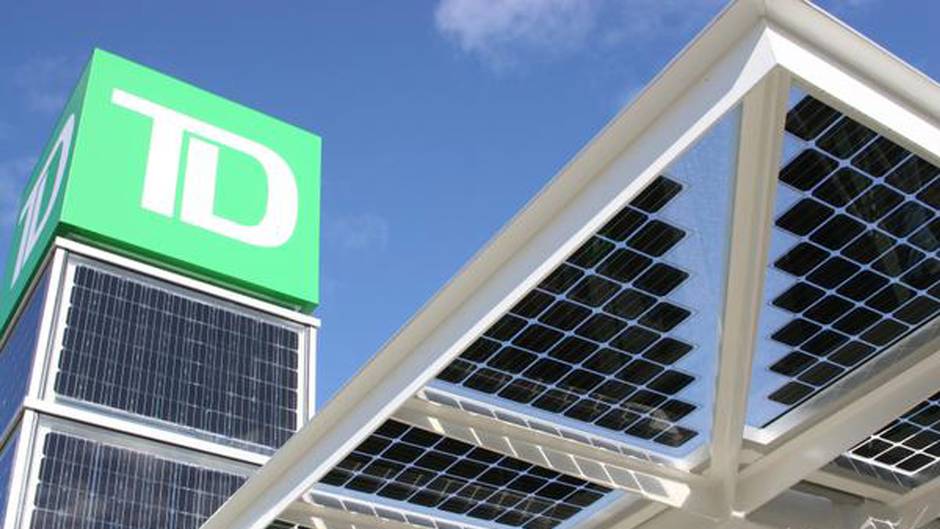
4. TD Bank, Mississauga, Ont.
Last fall, Toronto's Eclipsall Energy Corp. completed its first BIPV installation, a new TD Bank branch in Mississauga.
Eclipsall custom-made 30 frameless, glass-on-glass photovoltaic panels that serve as a street-level, marquee-like canopy along the bank's south facade. Several BIPV modules were also incorporated into the curtain wall tower at the top of the bank. The use of BIPV, in tandem with other green technologies, has helped the TD branch earn a LEED Platinum rating, the highest.
Eclipsall's work on the ambitious project began early."BIPV starts at the architectural level," says Mikael Niskanen, Vice-President, Operations."It has to be planned with the building envelope."
Eclipsall got its start with solar technology but since taking a shine to BIPV, spent about 18 months and 65 trials coming up with the ideal PV module. The company uses a bifacial cell where both sides collect light. The solar cell is encapsulated on both sides by material that is itself surrounded by glass, creating a five-layer product.
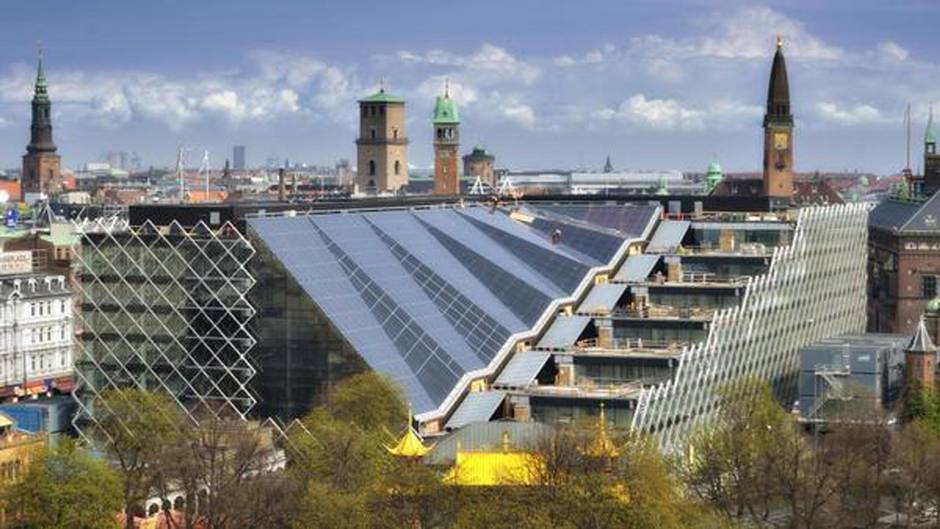
5. Industriens Hus, Copenhagen
In the heart of the Danish capital sits Industriens Hus, where, since spring 2013, it's been churning out 43 kWp of electricity generated by BIPV. The triple-glazed, rhomboid BIPV and screen-printed glass make up four angled portions of the office building's atrium. The unique design was created to optimize BIPV output."There's not a single right angle," says Anthony Pereira, whose altPower designed and installed the BIPV."It's an intense, high-performing piece of glass."
Because of the awkward shape of the glass, the entire surface of the units could not be covered by PV cells.
The project was technically challenging because the BIPV glass is double-insulated with coatings in irregular shapes and with aesthetically-minded screen printing. Because the BIPV was used in a skylight, building code requirements and international standards required it to be safety glass.
For more innovation insights, visit www.gereports.ca
This content was produced by The Globe and Mail's advertising department, in consultation with GE. The Globe's editorial department was not involved in its creation.