Only 16 months ago, Canada-India relations hit a low point as Ottawa accused Indian diplomats of being part of a campaign of violence against Canadians.
At the time, a deepening of ties between the countries would have seemed unthinkable. But much has changed since then.
Now, Mark Carney is preparing to make his first visit to India as Prime Minister.
During the trip, which begins Friday in Mumbai, the country’s financial capital, Mr. Carney intends to launch talks on a comprehensive free-trade agreement with India. He wants to entice Indian investors to play a bigger role in Canada’s economy and is even expected to sign a defence co-operation agreement with the country. He will later meet with Prime Minister Narendra Modi in New Delhi.
The visit is also expected to result in a major deal to supply India with uranium, as well as agreements to deepen ties and co-operation on nuclear energy, oil and gas, artificial intelligence, quantum computing and aerospace.

Prime Minister Mark Carney and Diana Fox Carney board a government plane in Ottawa on Thursday to begin their trip to Asia.Adrian Wyld/The Canadian Press

Narendra Modi, who met Mr. Carney at the G7 summit last summer, now gets to return the hospitality in New Delhi.Amber Bracken/Reuters
It’s a major U-turn from Thanksgiving Day in October, 2024, when Canada expelled Sanjay Verma, who was then India’s high commissioner in Canada, and five other Indian diplomats. The RCMP had deemed them “persons of interest” in an investigation probing what the force described as a campaign of alleged violence, extortion and intimidation directed at the Sikh diaspora by agents of Mr. Modi’s government.
Only 13 months earlier, then-prime minister Justin Trudeau had first opened a diplomatic rupture when he publicly accused the Indian government of playing a role in the murder of a Canadian-Sikh activist who was a vocal critic of New Delhi.
Like many foreign-policy shifts executed by Canada in the past year, the reason for this reversal is Donald Trump, and the U.S. President’s increasingly protectionist and mercurial approach toward traditional allies. Canada needs deeper overseas markets, more foreign investors and reliable trading partners. India, the world’s most populous country, with a rising middle class, is offering this.
Fen Hampson, a senior Carleton University professor of international affairs, said Canada can’t afford to lecture India, which is now the fifth-largest economy in the world. “You can’t talk down to India. You have to talk up to India.”
By all appearances, that is what Canada’s government now intends to do.


Catching up
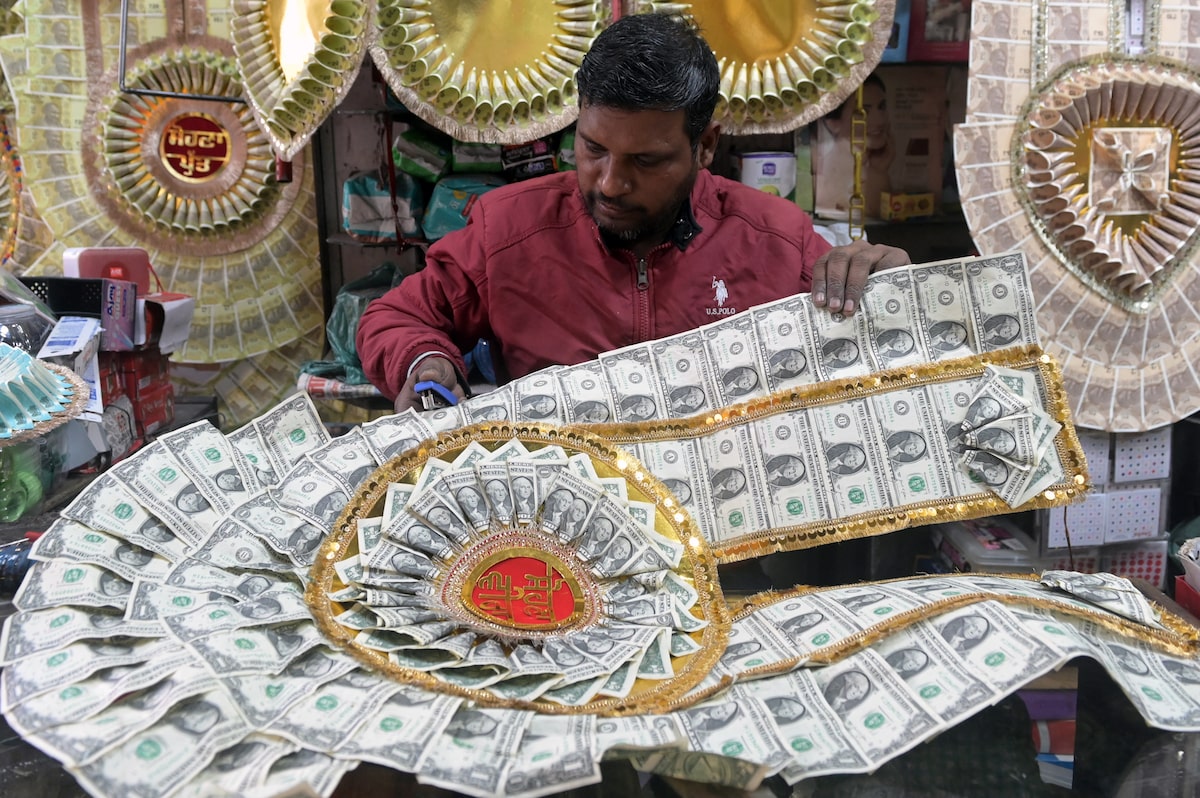
Canada is now behind its peers in terms of preferential trade access to India. The diplomatic deep freeze with New Delhi prompted Ottawa to shelve trade negotiations in 2023.
In the past four years, many of Canada’s trading rivals have struck deals with New Delhi that reduce the costs and barriers to selling goods and services to India – eliminating much of the tariffs the Indians charge on their imports. This includes the 27-member European Union, New Zealand, Britain, as well as the four-country European Free Trade Association, which includes Norway and Switzerland. Mr. Trump this month struck an interim trade pact with India and an agreement to negotiate a more comprehensive deal later.
India is hungry for economic partnerships with the West because of its strategic competition with China, analysts say.
Canada and India will launch negotiations on a trade agreement when Mr. Carney and Mr. Modi meet in New Delhi. Dinesh Patnaik, India’s current high commissioner to Canada, said he expects a deal could take less than 12 months. “We’re giving ourselves a year but it will happen a lot faster,” the envoy said in an interview.
The diplomatic chill of more than two years was also at odds with Canada’s own Indo-Pacific Strategy, unveiled in 2022, that identified 12 countries bordering the Indian Ocean, including the largest, India, as a major driver of future economic growth.
Despite India’s size, Canada’s merchandise exports to the subcontinent were only $5.3-billion in 2024, less than 1 per cent of all Canadian exports that year. By comparison, Indian exports to Canada were $8-billion. “We are now the only country in the G7 that doesn’t have a preferential trade agreement with India,” said Vina Nadjibulla, vice-president of research and strategy at the Asia Pacific Foundation of Canada.
Hot and cold
Relations between the two countries have swung between friendly and cool over the past 75 years. Canada was a major development-aid donor to India after the Colombo Plan of 1950, but New Delhi’s development of a nuclear-weapons program using a CIRUS reactor supplied by Canada for peaceful use opened a rift that lasted decades.
In 1974, after India detonated its first nuclear device using material produced by the same CIRUS reactor, Canada banned exports of uranium and nuclear hardware to India.
It would be another 20 years before a Canadian prime minister visited India after that: Jean Chrétien in 1996.
This estrangement didn’t affect Indian interest in immigrating to Canada, particularly from the northern state of Punjab, where many adherents of the Sikh faith live. By the 1980s, thousands were coming, a flow that accelerated in the 1990s and beyond.
A fault line, however, opened up between Canada and India over a small portion of Sikhs settling in Canada: those who seek to carve the independent homeland of Khalistan out of Indian territory.
India has long complained that Canada provides a haven for Khalistan advocates. The Canadian government has frequently responded to India’s complaints by pointing to the Charter of Rights and Freedoms and noting that freedom of expression is protected in Canada.


The Air India bombing, whose 40th anniversary came and went last summer, would colour India and Canada's future relationship on the issue of Sikh separatism.Caulkin and Redman/AP; Sammy Kogan/The Globe and Mail
The 1985 bombing of Air India Flight 182 that killed 329 people, most of them Canadians of Indian descent, bolstered the Indian government’s conviction that Canada was not taking extremist behaviour seriously. Talwinder Singh Parmar, a Sikh separatist, was considered by police and a public inquiry to be the mastermind of the bombing. He was never convicted and died in 1992 after fleeing Canada.
Shortly after the 1985 tragedy, The Globe and Mail ran a story citing an unnamed Indian Foreign Ministry official complaining that Canada had not “woken up to the gravity of the extremist threat early enough.”
On the nuclear matter, it took until the 2000s before Canada and India put the issue behind them. Then-prime minister Stephen Harper in 2009 concluded negotiations with India on a deal allowing Canadian companies to resume sales of uranium and nuclear technology to India for the first time since 1974. This deal was cemented during his 2012 visit to New Delhi.
The highly symbolic agreement demonstrated that Canada no longer considered the South Asian country a nuclear pariah and led to a five-year deal to sell uranium to India that started in 2015.


Outrage over the killing of Hardeep Singh Nijjar sank Indo-Canadian relations further in 2023. Karan Brar and his alleged co-conspirators were, according to Canada, linked with the Indian government.Ethan Cairns/The Canadian Press; Felicity Don/Reuters/Reuters
A slaying on Canadian soil
Today, Canada and India are still recovering from the 2023 diplomatic rupture that set the stage for the 2024 expulsion of New Delhi’s envoy in Ottawa.
Tensions between Canada and India over Khalistan reached a boiling point in 2023 after a Sikh-Canadian campaigner for a separate Khalistan, Hardeep Singh Nijjar, was shot dead in a gangland-style killing in Surrey, B.C., that June.
A few months later, Mr. Trudeau rose in the House of Commons to publicly accuse India of a role in the murder – triggering a feud with New Delhi. India, which has denied the accusation, expelled 41 Canadian diplomats as part of its response.
This 2026 reset of relations leaves unresolved Ottawa’s accusation that New Delhi conducted an extrajudicial assassination of Mr. Nijjar on Canadian soil. India still vehemently denies any involvement, but both countries have pledged to co-operate more closely on security going forward. Four Indian nationals now face charges in the Nijjar case.
Canada and India have set up communications channels to resolve security concerns when they arise. Last September, Nathalie Drouin, the Prime Minister’s national security and intelligence adviser at the time, headed to New Delhi, and earlier this month, Indian National Security Adviser Ajit Doval visited Ottawa, with both sides talking about tackling transnational organized criminal networks and the flow of illegal drugs. Ms. Nadjibulla, of the Asia Pacific Foundation of Canada, described these new law enforcement co-operation mechanisms that have been established as a “hotline” to resolve problems early.

What’s on offer in trade talks
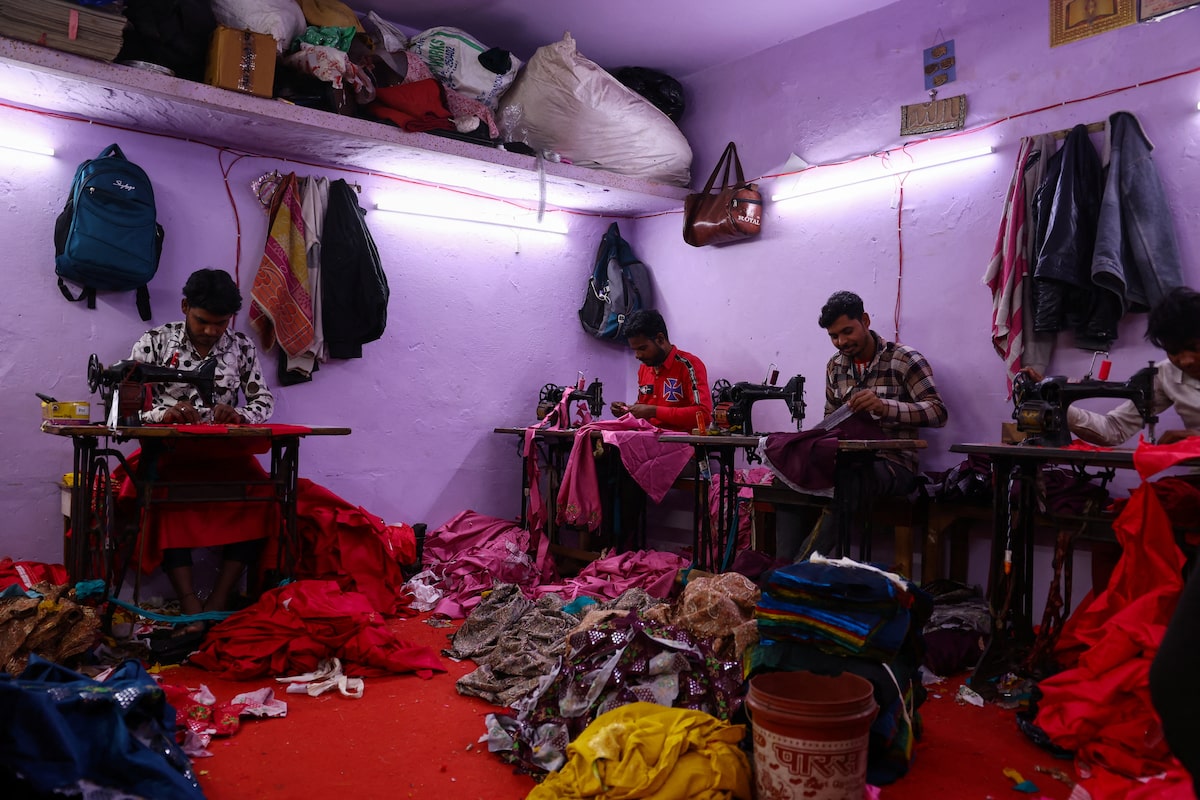
A big win would be tariff relief on exports to India. The EU and other Western countries obtained significant tariff relief under their trade deals with India, putting them ahead of Canada when it comes to cost advantage in its market of 1.4 billion people.
Mr. Patnaik, India’s high commissioner to Canada, has said that he anticipates a uranium supply deal between India and Canada will be announced during Mr. Carney’s trip.
The Globe in November reported that both countries were putting finishing touches on a deal worth about US$2.8-billion over 10 years, with terms subject to change before it was unveiled. The uranium would be supplied by Canada’s Cameco Corp., and the export deal could be part of a broader nuclear co-operation effort between Canada and India.

Supplying Canadian uranium to India's atomic power stations, like this one in Tamil Nadu state, could be part of the diplomatic thaw between the countries.R. Parthibhan/The Associated Press
India has indicated that it wants to buy Canadian liquefied natural gas as it gradually shifts energy imports away from Russia.
Mr. Patnaik said he expects Canada to sign agreements with India during this trip on nuclear energy, oil and gas, artificial intelligence, quantum computing and aerospace, as well as a co-operation deal on defence.
Indian tariffs on Canadian agricultural products continue to harm Saskatchewan’s farming industry.
Last year, India imposed a 30-per-cent tariff on Canadian yellow peas. It also has 10-per-cent levies on lentils.
Saskatchewan Premier Scott Moe’s government is urging Ottawa to reach an agreement with New Delhi. He said he’s concerned that India could hike tariffs on lentils because of domestic issues in that country.

Mr. Modi is on friendlier terms with Russia than Canada is. President Vladimir Putin was in New Delhi this past December.Adnan Abidi/Reuters
How much of a relationship does Canada want?
The Indian Prime Minister’s friendship with Russian President Vladimir Putin – and robust trade between their two countries – underlines the possible limits of agreement between New Delhi and Ottawa.
Canada has spent more than $25-billion in recent years to help ally Ukraine fight off Russia’s full-scale invasion, which began in 2022. By comparison, Mr. Modi praised his “deep and unbreakable relationship” with Mr. Putin when he played host to the Russian President in December. “Humanity has gone through many challenges, but ties between Russia and India have been like the North Star,” Mr. Modi said.
Mr. Patnaik said Canada and India, both former British colonies, share many values, including democracy, freedom of the press and a preference for market economies.
“We may not agree on some strategic issues. We may not agree on the way to deal with Cuba or the way to deal with Iran or Ukraine. But we do not have a conflict on any strategic issue.”
India’s envoy said there’s tremendous benefit for both his country and Canada if Canadians really want this relationship to work.
“A lot of people ask me this question, ‘How can Canada trust you?’” he said.
“I don’t need them to trust me. I need them to understand if they want this relationship or not.”
He said India wants closer ties. “I’m not here to prove to you that I am Caesar’s wife; I’m here to have a relationship with you,” he said, referring to the aphorism “Caesar’s wife must be above suspicion.”

Foreign Affairs Minister Anita Anand will be with Mr. Carney in India, as will three other cabinet members and two premiers.Justin Tang/The Canadian Press
Big delegation
A significant portion of Mr. Carney’s cabinet is joining him on the India portion of the trip, including Foreign Affairs Minister Anita Anand, Defence Minister David McGuinty, Finance Minister François-Philippe Champagne and International Trade Minister Maninder Sidhu.
Also part of the delegation are Saskatchewan’s Mr. Moe and New Brunswick Premier Susan Holt, who is joining for the Mumbai portion.

The Golden Temple of Amritsar, holiest site in the Sikh faith, is usually a stop for Canadian leaders visiting India, but not Mr. Carney.Narinder Nanu/AFP via Getty Images
No visit to Punjab’s Golden Temple
The Carney visit to India is conspicuous by the absence of a trip to the northern state of Punjab, a major source of immigration to Canada. The Prime Minister’s two predecessors, Mr. Trudeau and Mr. Harper, both visited Punjab and its Golden Temple in Amritsar, the holiest site in the Sikh faith, during their first official trips to India: Mr. Harper in 2009 and Mr. Trudeau in 2018.
Visiting the Golden Temple has been widely viewed as a symbolic gesture toward Canada’s large Sikh community, a group that has played a significant role in Canadian politics.
Goldy Hyder, president and chief executive officer of the Business Council of Canada, said he’s in favour of the Carney itinerary for India.
“This is a serious time and warrants a serious visit. Prime Minister Carney is right not to get distracted by diaspora political events,” said Mr. Hyder, who is an Indo-Canadian.
With reports from The Canadian Press

Ludovic Marin/AFP via Getty Images
India, Canada and a new world order: More from The Globe
The Decibel podcast
Thanks to the U.S. Supreme Court, President Donald Trump’s trade war is even less predictable than when it started a year ago. Reporter Jason Kirby spoke with The Decibel about the ruling, and who has suffered or prospered from the tariff regime it challenges. Subscribe for more episodes.
Commentary
Campbell Clark: After many missteps, where do India and Canada fit?
Brahma Chellaney: Canada’s relationship with India is set to evolve