Justin Trudeau’s rise and fall, as seen on The Globe’s front pages
Justin Trudeau’s rise and fall, as seen on The Globe’s front pages
From his father’s ‘walk in the snow’ to his farewell speech at the leadership convention, and the turbulent times in between, here’s how the Prime Minister left his mark on Canada
March 1, 1984 | At 12, Justin Trudeau got a memorable lesson in exits from his father, Pierre. “I had a good day,” the prime minister told reporters of his decision to quit, reached in an Ottawa blizzard two nights earlier. “It was a great walk in the snow. I went to judo, felt very combative, and here I am.” The move surprised both close aides and the opposition – whose leaders were vacationing in Florida – and made “walk in the snow” part of the Canadian lexicon.
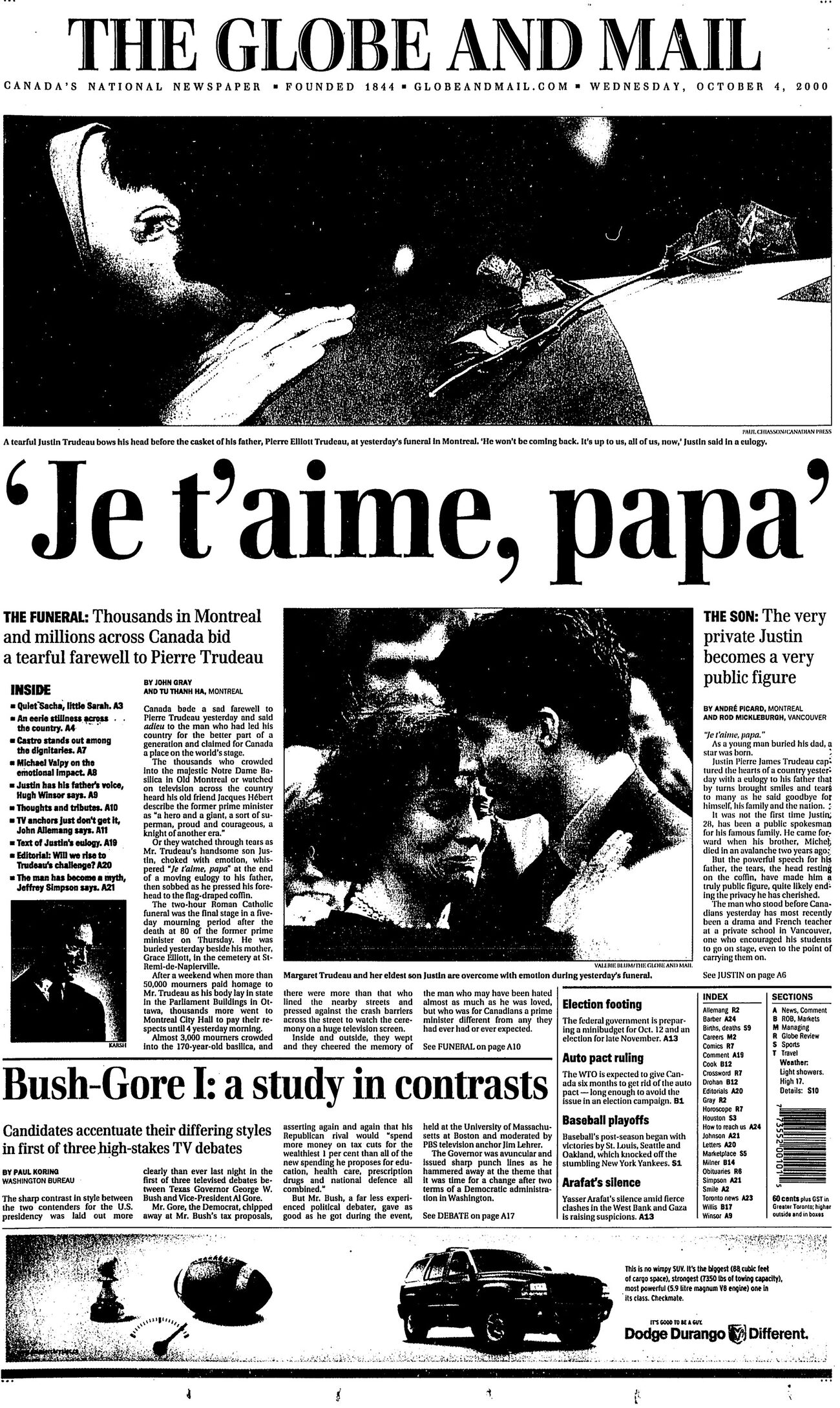
Oct. 4, 2000 | As a young man, Trudeau fils was a little-known and private figure. That changed at Trudeau père’s funeral in Montreal, where the son eulogized the late leader’s “deep love for and faith in all Canadians.” The speech struck a nerve with the public, and some Liberals suggested he leave teaching and run for office. He said no, but did turn more of his energies to social causes and public speaking over the coming years.
Oct. 15, 2008 | By the time Mr. Trudeau did run as a Liberal MP in Montreal, the party had fallen far. Leader Stéphane Dion, allying with the Greens to challenge the governing Conservatives, instead suffered heavy losses, and Stephen Harper’s prorogation of Parliament hobbled a Liberal-NDP plan to unseat him with a coalition government.
May 3, 2011 | The next election was catastrophic for the Liberals, then led by Michael Ignatieff. Reduced to third-party status, the Liberals needed a fresh face, and Mr. Trudeau looked like a promising option. He hesitated at first, citing family reasons: he and his wife, Sophie Grégoire Trudeau, then had two young children, with a third to come.
April 15, 2013 | Months of encouragement from his party, and favourable polls, led Mr. Trudeau to seek the Liberal Party leadership after all, which he won comfortably. “Canadians are looking to us, my friends,” he said in his acceptance speech. “They are giving us a chance, hopeful that the party of Wilfrid Laurier can rediscover its sunny ways,” he said, calling back to the 19th-century Liberal leader’s speech about peacefully settling the Manitoba Schools Question.
Oct. 20, 2015 | “Sunny ways, my friends,” Mr. Trudeau said on election night, thanking the supporters who helped bring the Liberals back to majority government. Mr. Trudeau got busy assembling a new cabinet – the first gender-balanced one in history – to follow through on pledges of more spending on social programs, progressive taxation and the resettlement of thousands of refugees from Syria’s civil war.
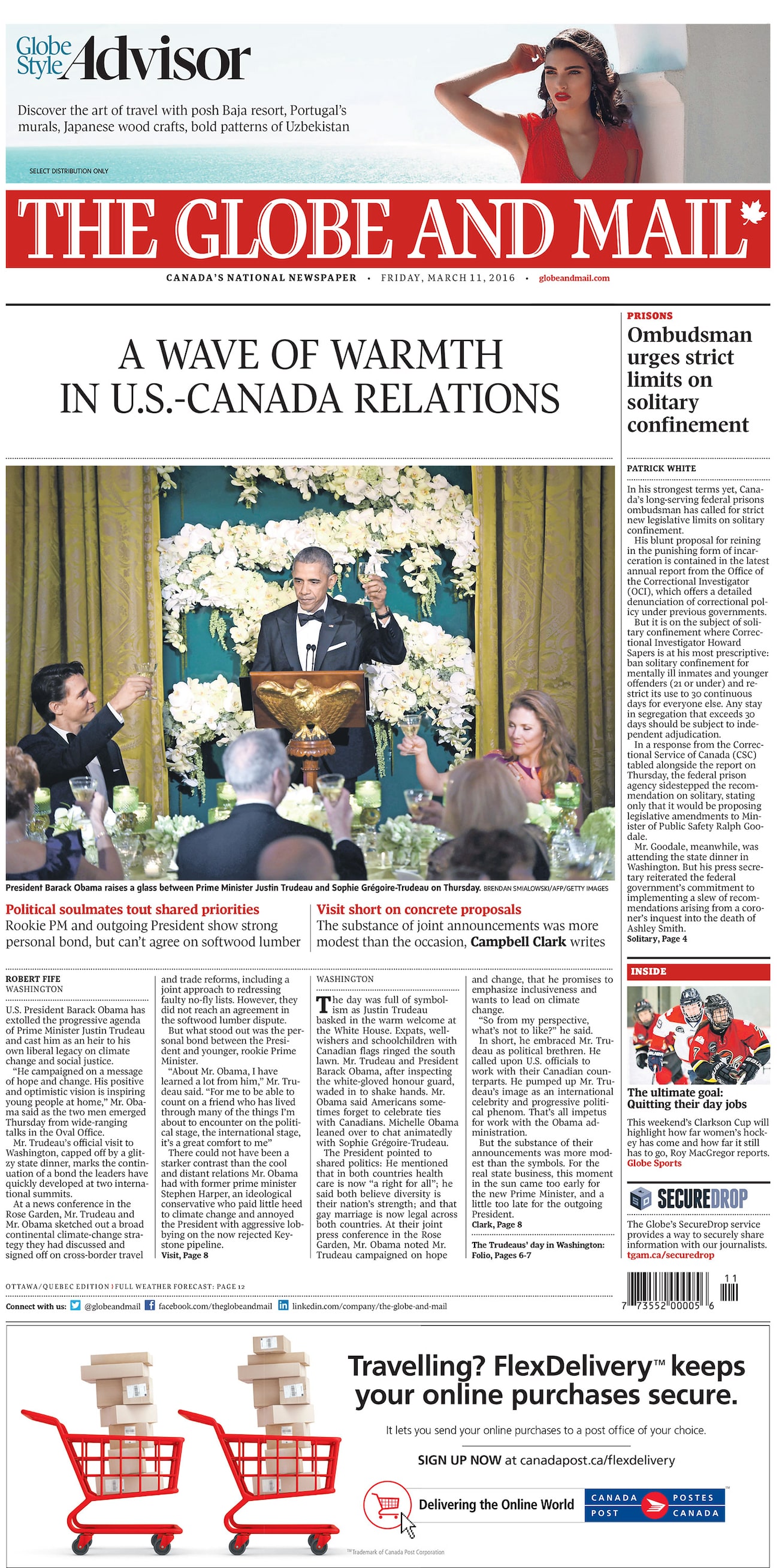
March 11, 2016 | Mr. Trudeau billed himself as a progressive abroad as well as at home, and found common cause with U.S. President Barack Obama on climate action and foreign policy. A glitzy state dinner in Washington – the first such event for a Canadian prime minister in 19 years – helped cement that relationship.
Nov. 10, 2016 | Ottawa had been counting on Hillary Clinton to succeed Mr. Obama and continue his work, but to its surprise, Donald Trump won. The next four years would be a struggle against “America First” protectionism as Mr. Trump tore up NAFTA, backed out of the Paris climate deal and made friends with autocrats that Canada continued to oppose.
Dec. 21, 2017 | Three times during his tenure, the federal ethics commissioner looked into whether Mr. Trudeau had crossed a line in his personal or political dealings. First was the Aga Khan scandal. The commissioner ruled that Mr. Trudeau broke conflict-of-interest laws by accepting all-expenses-paid family trips in the Bahamas, where the Aga Khan – leader of the Ismaili Muslim sect, and an old friend of Pierre Trudeau – had a private island.
Feb. 7, 2019 | Confidential sources alerted The Globe to a new scandal involving SNC-Lavalin, an engineering firm facing corruption and fraud charges. Mr. Trudeau’s office pressed the justice minister to look into a deal that would avert a trial and possible fallout in the company’s home province, Quebec. Jody Wilson-Raybould’s refusal, her cabinet demotion and resignation as a Liberal fractured the caucus as it headed into elections that fall.
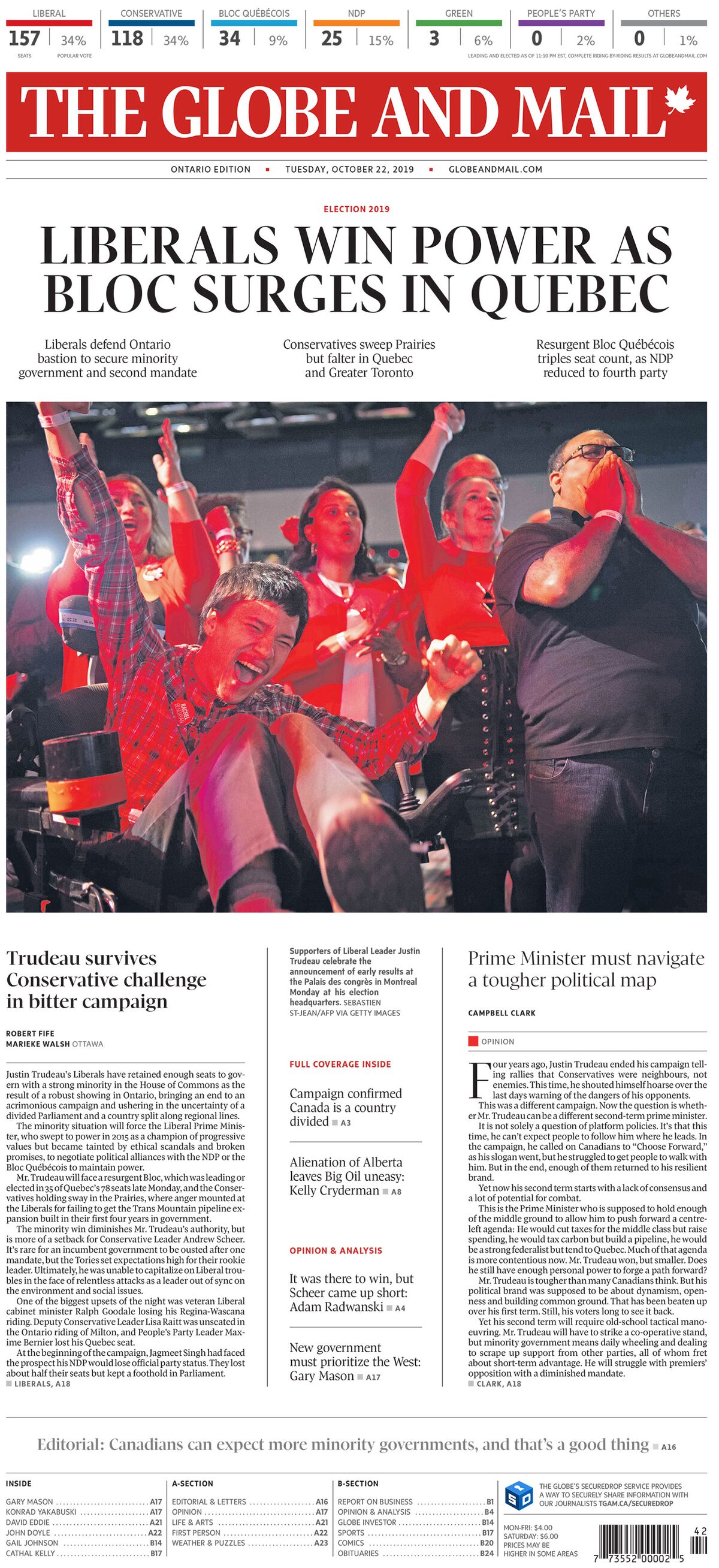
Oct. 22, 2019 | On election night, the opposition largely failed to capitalize on Mr. Trudeau’s scandals, but the Liberal seat count fell just enough that, if they were not careful, a confidence vote could topple them. Co-operation with the NDP on child care and other issues helped avert that. Meanwhile, CSIS had found evidence that China tried to meddle in the 2019 race, without success; the agency would brief the government on those threats, and others, for the next few years.
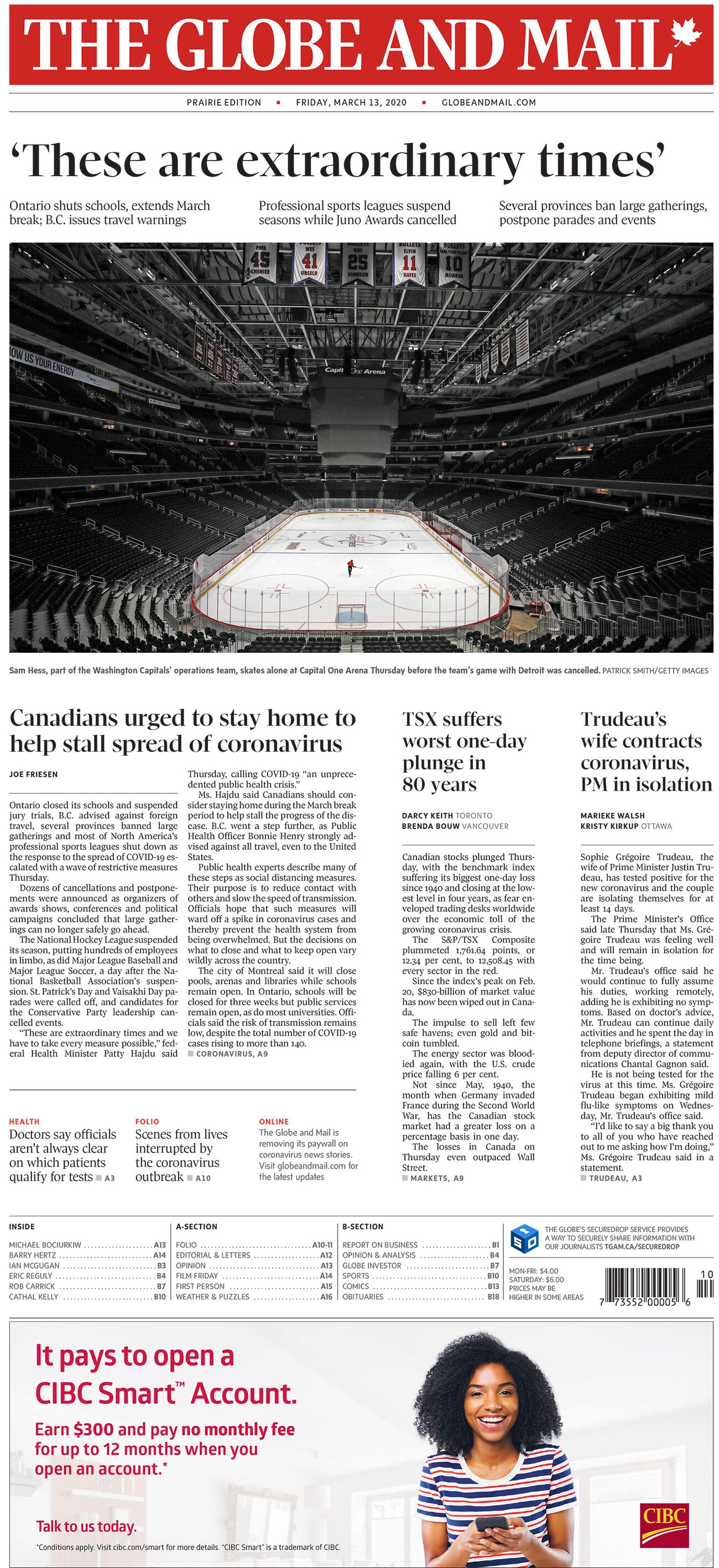
March 13, 2020 | Canada, heeding the World Health Organization’s dire warnings about COVID-19, began to lock down over March break, urging people to stay home. March 13 was the first of Mr. Trudeau’s daily briefings from Rideau Cottage, which kept Canadians up to date on the crisis and federal relief plans for people and businesses. Over the next four years, COVID-19 would kill more than 60,000 people in Canada, and more than seven million worldwide.
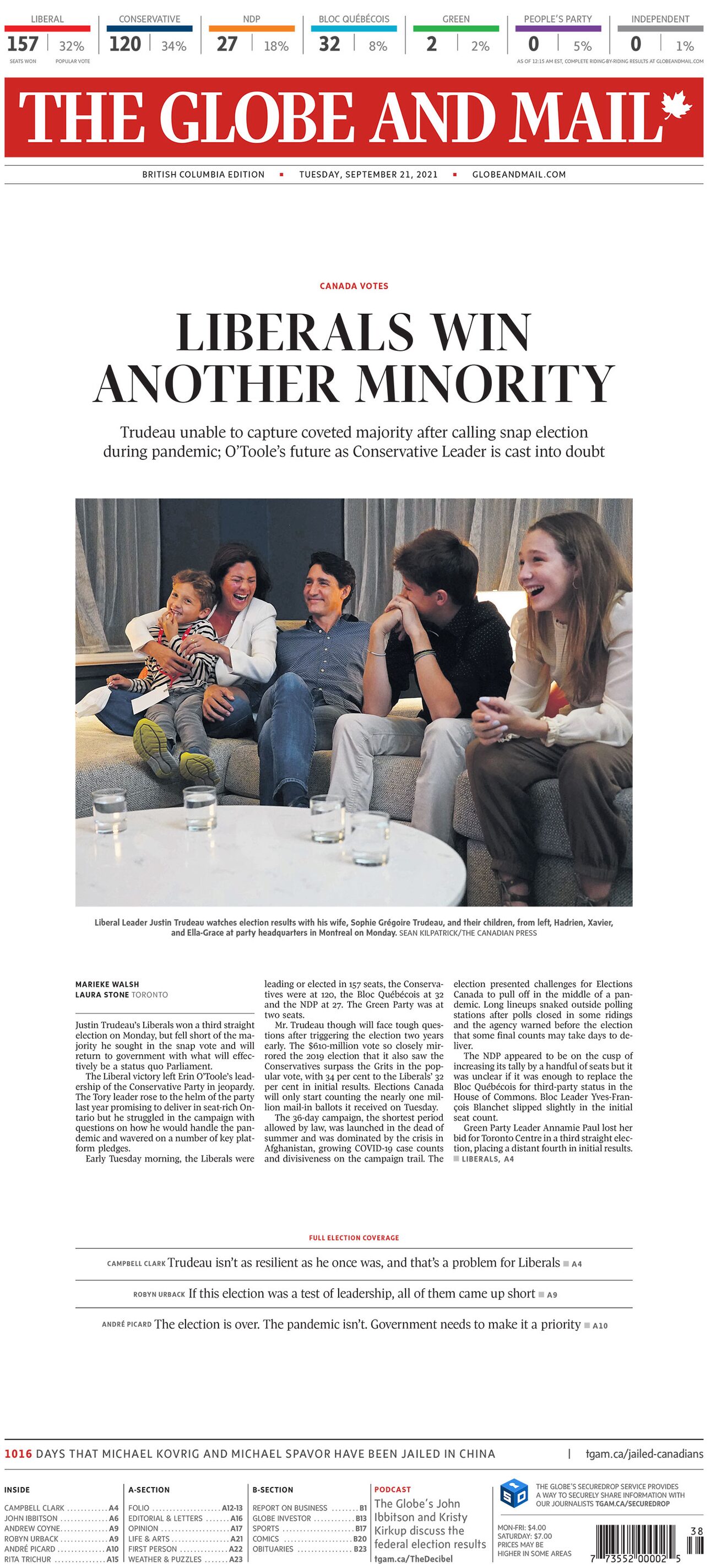
Sept. 21, 2021 | Mr. Trudeau, hoping for a majority to govern through the pandemic, called a snap election whose outcome was much the same as the last one. Months later, the Liberals made a deal with the NDP: Jagmeet Singh would support the government on confidence votes, in exchange for action on pharmacare, dental care and other issues. That gave Mr. Trudeau time to seal deals with provinces on $10-a-day child care.
Feb. 15, 2022 | Right-wing groups, seizing on frustration with COVID-19 policies, led convoys of trucks to occupy border crossings and the streets outside Parliament Hill. After three weeks of standoffs, Mr. Trudeau invoked the Emergencies Act, allowing tougher measures to arrest people and freeze bank accounts. A public inquiry found those measures appropriate, but a Federal Court judge ruled in 2024 that it was an “unreasonable” infringement on Charter rights.
Sept. 4, 2024 | Last year was a gloomy time for the Liberals as once-safe ridings began to flip Conservative in a string of by-elections. The Tories’ leader, Pierre Poilievre, stepped up pressure on Mr. Singh to break his pact with Mr. Trudeau. Eventually he did, saying his support for confidence motions would be case-by-case only.
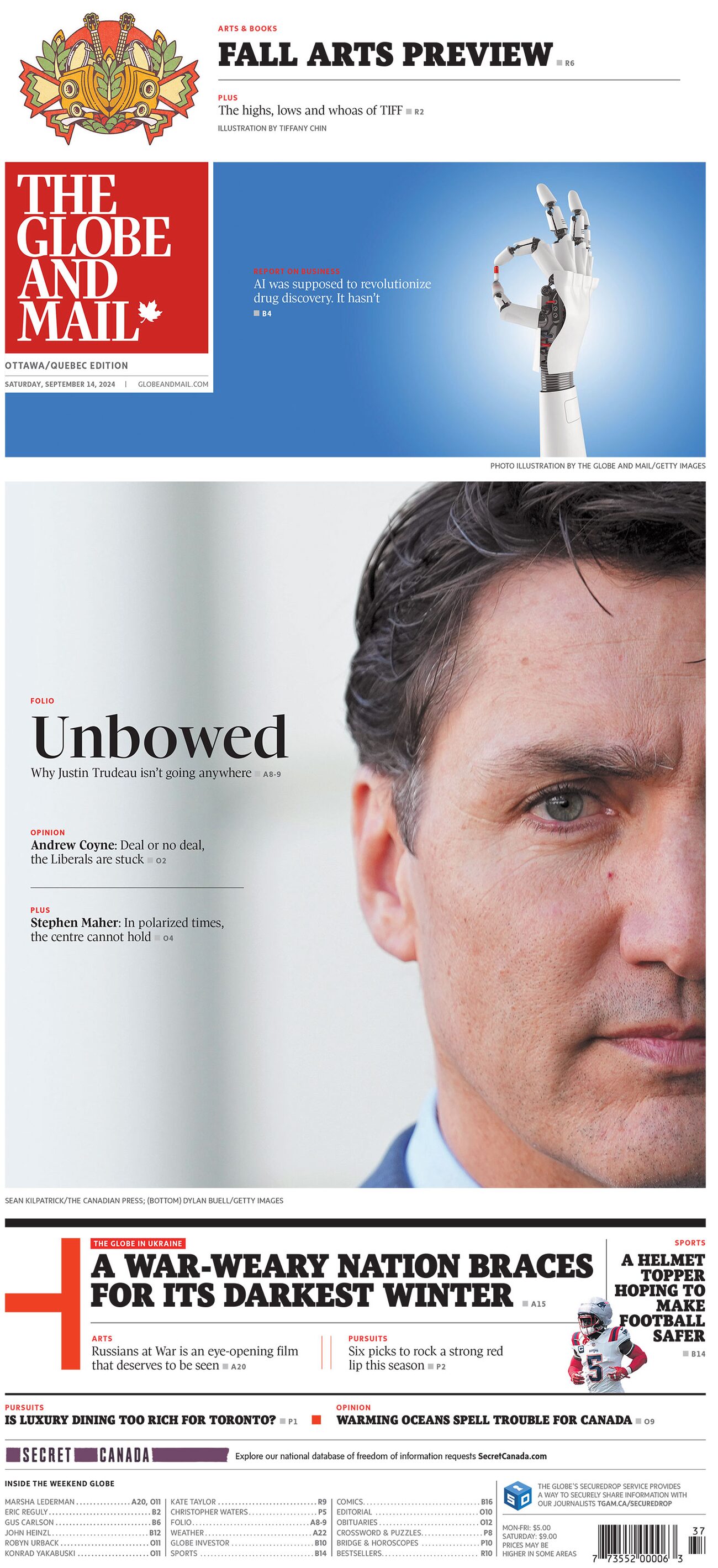
Sept. 14, 2024 | As MPs and former ministers called on Mr. Trudeau to quit before the 2025 election, The Globe learned of even tougher talk behind the scenes, which the Prime Minister brushed off. Confidential sources said Mr. Trudeau believed he could win as an underdog, despite a double-digit gap with the Conservatives in public opinion polls.
Nov. 7, 2024 | The U.S. Democrats had a leadership crisis of their own in 2024, pressing an aging Joe Biden to step aside so Kamala Harris could seek the presidency. It didn’t work: by November, the GOP was headed back to the White House and both chambers of Congress. Mr. Trump began to call Mr. Trudeau the “governor” of a 51st state and threatened punitive tariffs against Canadian and Mexican goods.
Dec. 17, 2024 | The Trump threat stirred more unrest in the Liberal cabinet: Finance Minister Chrystia Freeland wanted to save money for a potential trade war, but Mr. Trudeau pressed ahead with new spending on cost-of-living relief. A gambit to replace Ms. Freeland with former bank governor Mark Carney backfired: she quit, Mr. Carney never joined cabinet and a disordered fiscal update put more pressure on Mr. Trudeau to step aside.
Jan. 7 and 11, 2025 | At the Rideau Cottage steps where he once briefed Canadians on the pandemic, Mr. Trudeau gave some personal news one morning: he would leave the prime ministership once the Liberals picked a new leader, which they would do before Parliament’s return in March. Through the week, Canadians looked back at his career and wondered who would lead the country in turbulent years ahead.
March 8, 2025 | The first week of the tariff war proper was chaos: Each day, Mr. Trump introduced, postponed or made new exceptions to trade restrictions as Mr. Trudeau vowed to fight back. The Liberals, convening in Ottawa that weekend to choose Mr. Trudeau’s successor, could see one silver lining in this: Their chances of electoral survival against the Conservatives had improved as Canadians weighed who could best respond to an economic crisis.
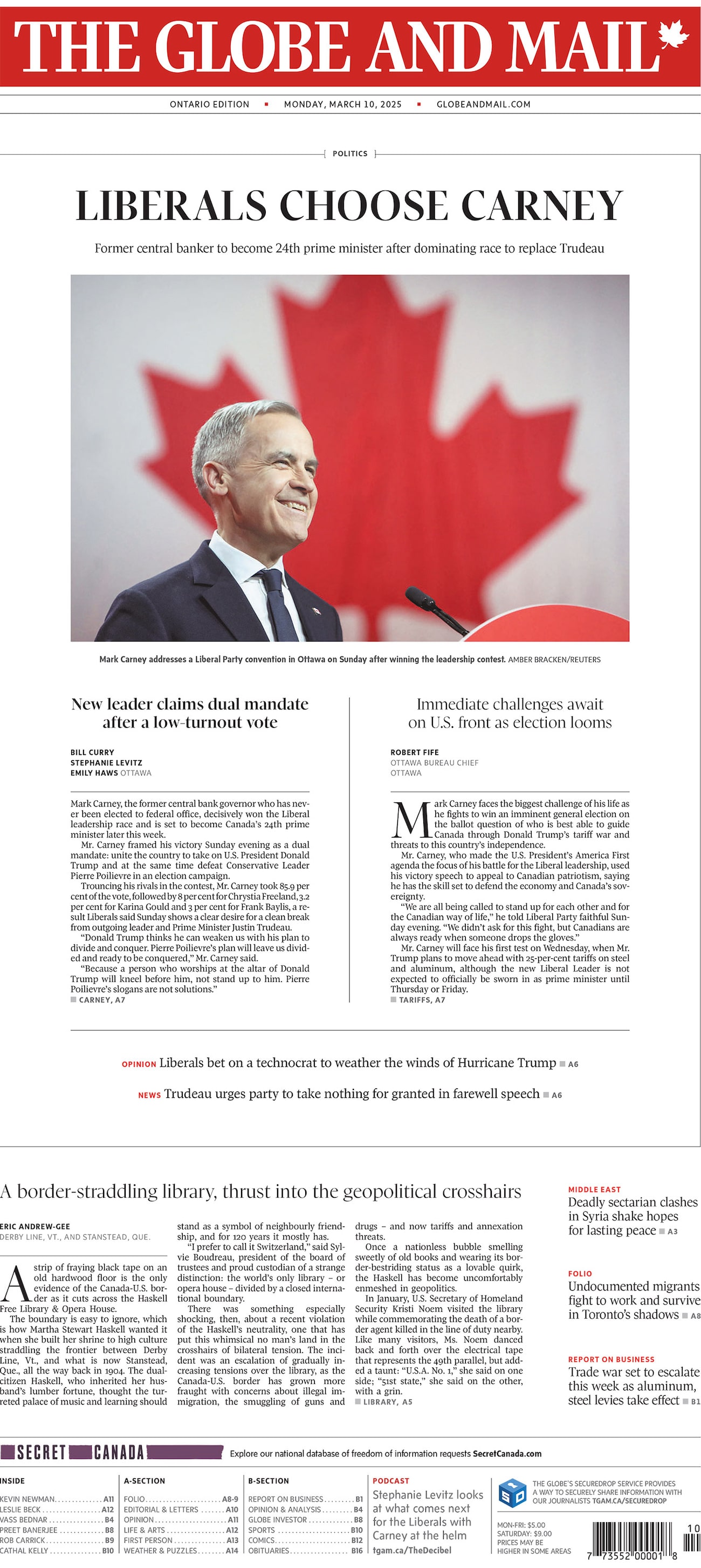
March 10, 2025 | Before his party gave the leadership to Mark Carney – a former central banker who had never held elected office before – Mr. Trudeau gave a farewell speech encouraging Liberals to be ready for existential threats to Canada from the south. “Make no mistake, this is a nation-defining moment. Democracy is not a given. Freedom, it’s not a given. Canada is not a given. None of those happen by accident. None of them will continue without effort.”