

The leaders in focus
This is part of a series of election-season profiles of the main party leaders: Mark Carney of the Liberals, Pierre Poilievre of the Conservatives and Jagmeet Singh of the NDP.
There are a few different ways you could think about the political situation Mark Carney is in.
One is what the Liberal Leader told a brewpub in Barrie, Ont., a couple months ago as he talked about the menace of Donald Trump.
“If there’s not a crisis, you wouldn’t be seeing me,” Mr. Carney said, in a shrewd political sales pitch costumed like a self-deprecating confession. “Honest. I am most useful in a crisis. I’m not that good at peacetime.”
Another way to make sense of his place in this wild political realignment is to recognize the mind at work beneath the banker’s haircut.
Mr. Carney is so strategic in his approach to the world that for years he’s been a dedicated runner and careful eater, in part because he believes he needs to be in good physical shape to work at a certain level, with long hours and punishing travel. He has to be truly wrung out to abandon that and lay into some French fries or a bag of Doritos.
Hurricane Trump is an untameable force, but sensing where the wind is blowing and planning meticulously is the way Mr. Carney functions.
“If this were an ordinary election with ordinary issues, he would never be able to distinguish himself,” Liberal powerbroker Frank McKenna says. “But this is not an ordinary election. There really is one issue and one issue only, and it’s around economic anxiety.
“You probably couldn’t sit down and design a person who has a better set of tools to deal with economic anxiety,” he adds.
Then again, you could simply frame this moment for Mr. Carney around what Jean Charest recently told him, which pleased Mr. Carney enough that he shared it with reporters on an overseas flight just before the election campaign started.
“You’re the luckiest fucking guy in Canadian politics,” Mr. Charest said.

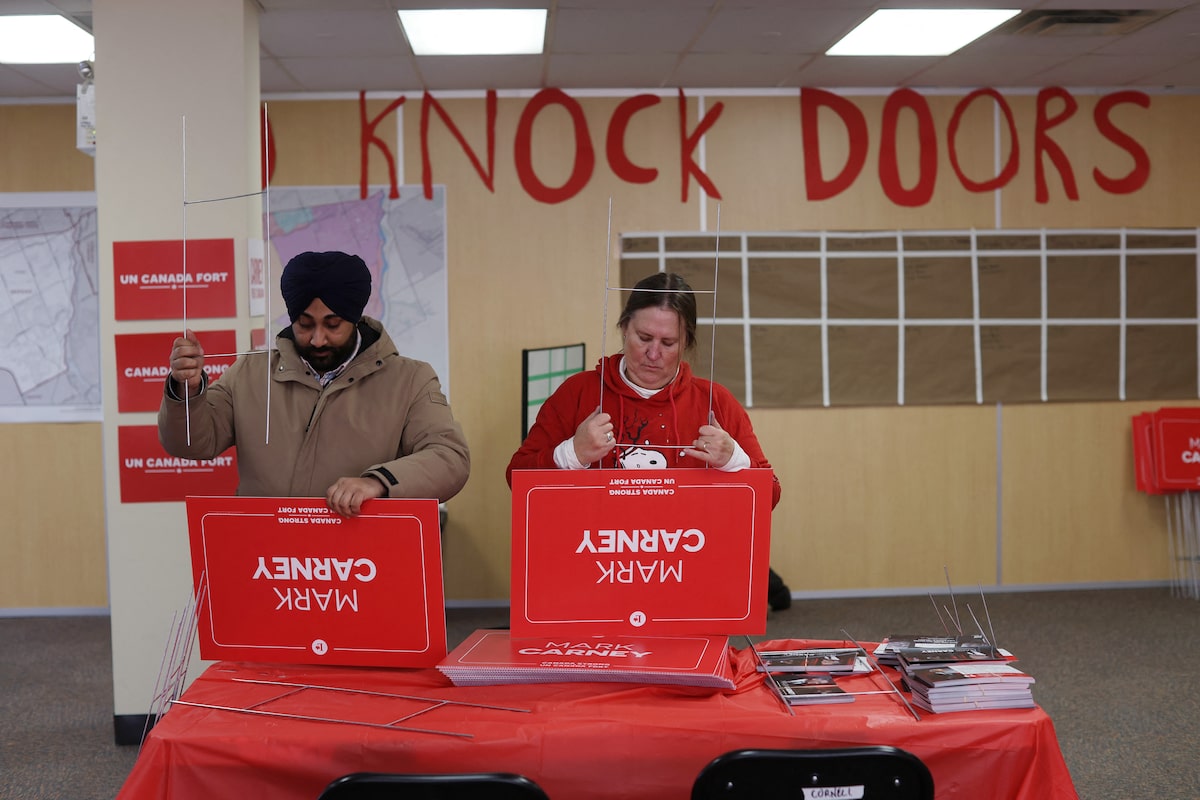
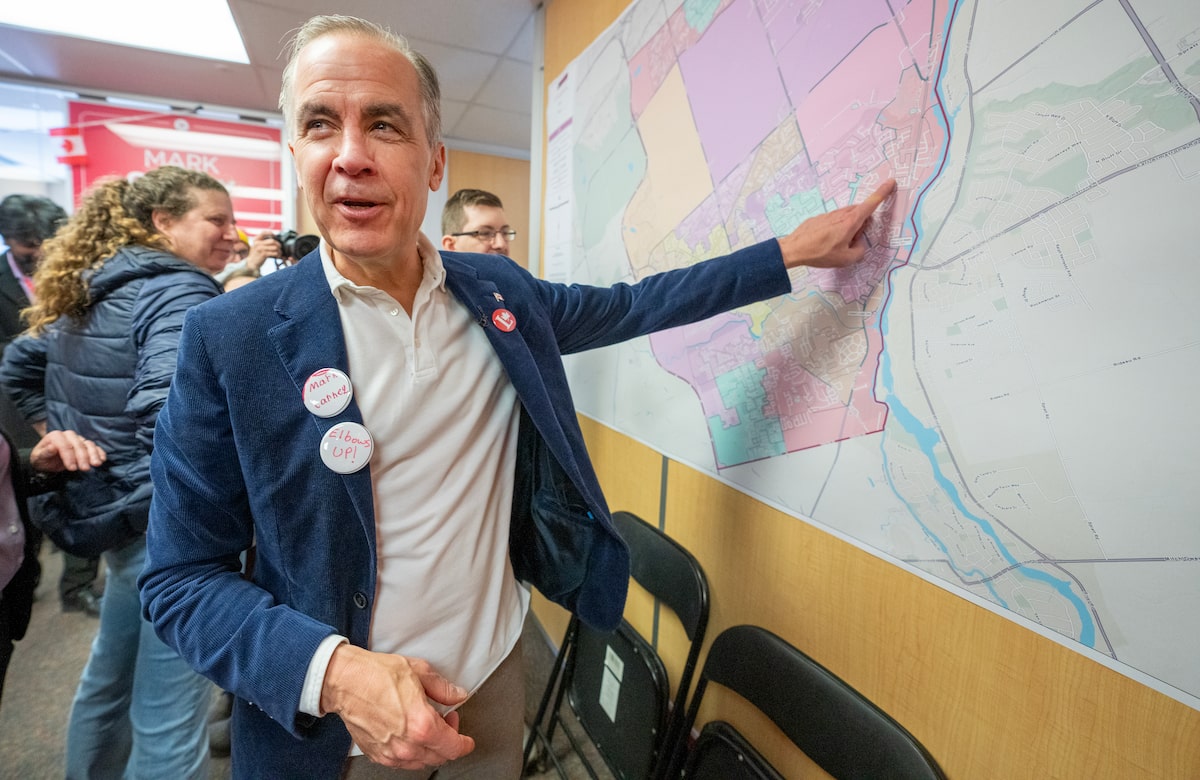
Although Mr. Carney’s team did not make him available for an interview, I spoke at length with 15 people who know him or have worked closely with him.
Pretty much everyone who’s crossed paths with him comes away impressed by his intelligence, which has a distinct sifting quality: distilling, making connections, putting things in order.
He’s often charming and very funny. He can also be impatient, caustic or condescending when he feels like someone isn’t keeping up their end of the bargain; the phrase “doesn’t suffer fools” comes up a lot. When he was governor of the Bank of England, the Financial Times reported that staff called encountering this side of him “getting tasered.”
Some people see this as a function of how he absorbs information: asking question after question to peel an idea down to its foundations and figure out how it fits with what else he knows. It can read as a dominance move, leaving the person he’s questioning to feel like they’ve been stripped for parts, too.
And virtually everyone makes the same point about his career path: He gave up boatloads of cash when he left investment banking for the public sector.
It’s influence rather than money that drives him. Not power for power’s sake, but a seat at a table where he can make big calls that matter, because he believes he’s equipped to do so. Public policy offers that like nothing else can.

Mark Carney was born in 1965 in Fort Smith, a town built around a former Hudson's Bay trading post. It had nearly been the capital of the Northwest Territories, until that honour went to Yellowknife.Pat Kane/The Globe and Mail

This is the house where Mr. Carney spent his early years. Today, he speaks often of his Fort Smith roots on the campaign trail.Pat Kane/The Globe and Mail
The importance of learning was at the centre of the family in which he grew up. Mr. Carney’s parents, Bob and Verlie, met at a church event in Vancouver. They were both teachers, and after they married, the two eldest Carney kids, Brenda and Sean, were born in Vancouver.
Bob was offered a contract as a high-school principal in Fort Smith, NWT, a town of 2,000 people on the Alberta border. Their third child, Mark, was born there in 1965. The family returned to Vancouver briefly, where the youngest, Brian, was born, then they did a short stint in Yellowknife before settling in Edmonton when Mark was six years old.
Bob completed his PhD at the University of Alberta and worked for the provincial government before becoming a professor of education. Verlie stayed home while the kids were young and then redid her teaching degree once they hit their teenage years.

Mr. Carney spent his high-school years at St. Francis Xavier in Edmonton, where he played for the school trivia team and was treasurer of his grad council.Kaeden Dupre/The Globe and Mail
There were three family rules. First, they all went to church on Sunday. The second was that they had dinner together every night – six nights a week in the kitchen, and in the dining room on Sundays. The third was that they were all going to university, though they could do whatever they liked after that. “They were educators,” Brian Carney says of his parents’ mentality. “Education is a gift, education opens doors, and if we’ve got the opportunity to send you to university, which we do, then we’re going to make sure you do that.”
The Carney kids followed that rule, and then some. Brenda went to U of A, then moved to Vancouver Island to get her master’s and take up what Brian calls “the family business,” teaching at Vancouver Island University. Influenced by family friends, Sean decided to go to Harvard. Mark followed him a couple of years later, and Brian, wait-listed at Harvard, went to Notre Dame. Loans, scholarships and Bob’s second job doing parole board hearings financed it all.
“My parents were over the moon,” Brian says. Bob died in 2009, and Verlie now lives in Nanaimo, B.C., near Brenda.
Brian’s best guess is that the family dinner conversations about what was happening in the wider world somehow shaped the paths they all ended up on. Because he was the youngest, the discussion often flew over his head, so he did a lot of observing. “There’d be times when I’d be like, ‘Mark, what are you doing? You can’t talk to Dad like that! You can’t tell Dad he’s wrong,’” Brian laughs.
One summer, Mark saw an article in the Edmonton Journal that said Fort Smith was in Alberta. “Well I would like to tell you Fort Smith just happens to be in the N.W.T.,” the 11-year-old wrote in a letter to the editor. “I know this because I was born there and it used to be the capital of the Northwest Territories.”
When he was 14, he was assigned a school project to collect newspaper articles on a divisive political issue. He was “saddened and dismayed” to discover that most of the newspaper’s coverage ran against the federal government’s efforts to patriate the Constitution.
“While your paper does have the right of freedom of the press your personal views should be kept on the editorial pages,” he wrote in another letter. “Although your position may be the more popular one, that does not excuse your lack of responsible journalism.”

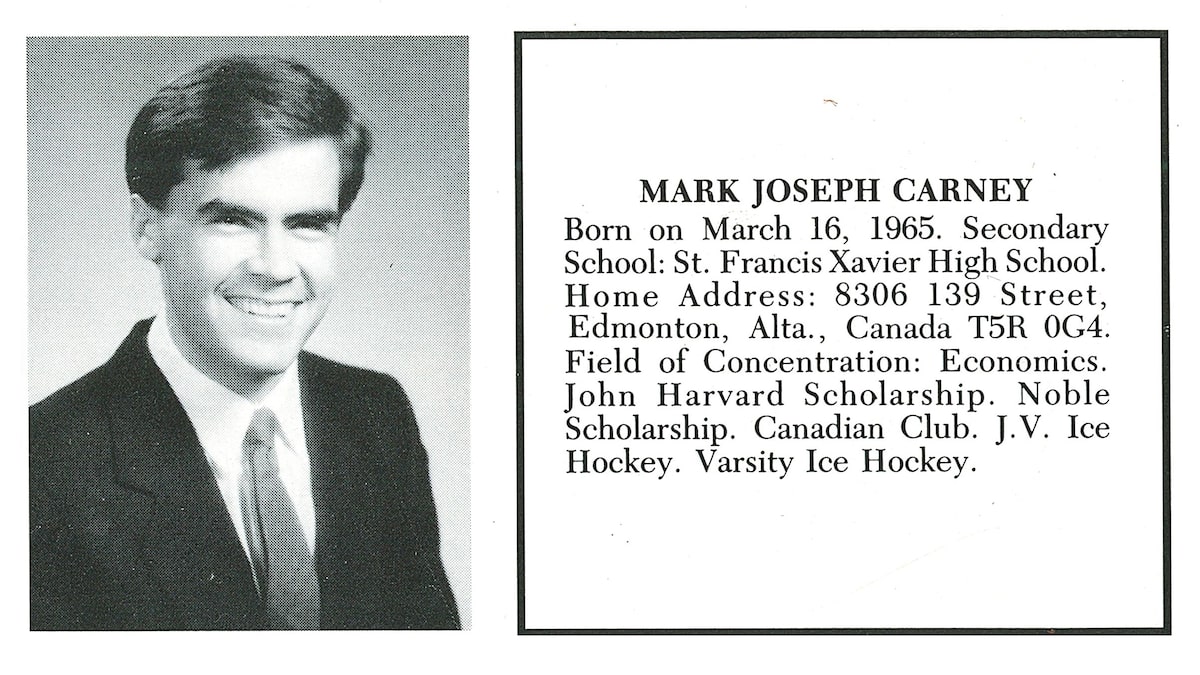
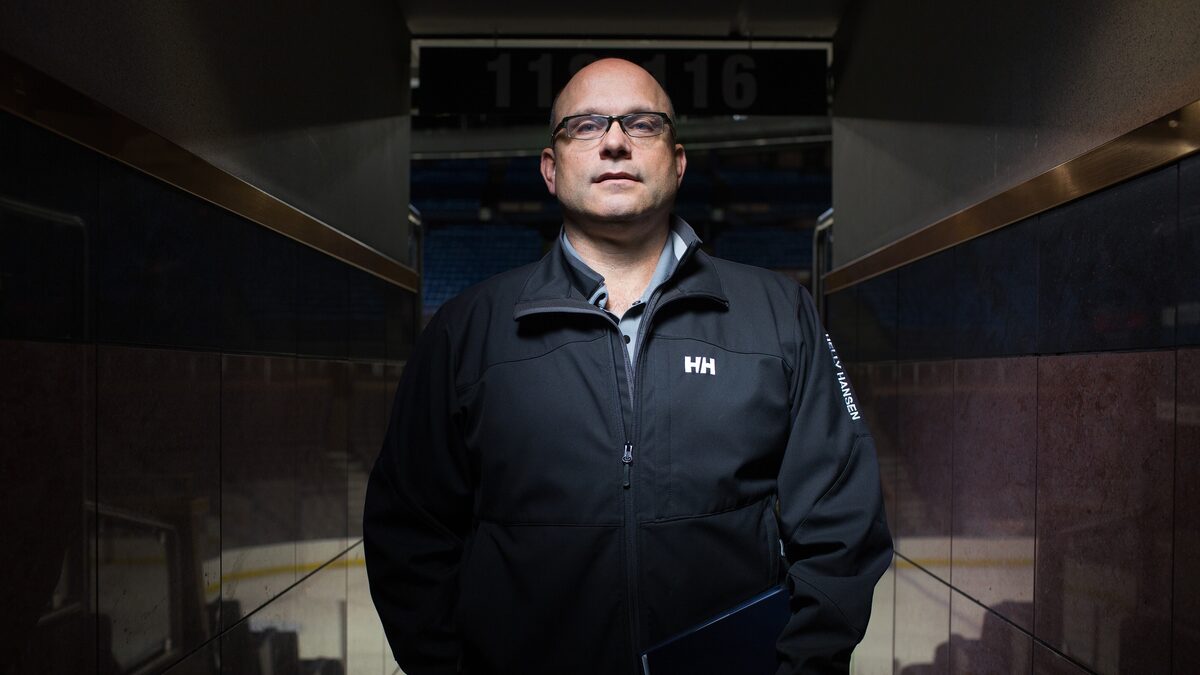
When Mr. Carney started at Harvard, he and Peter Chiarelli, another freshman from Ottawa, were assigned rooms on the same corridor. They had hockey, their home country and their middle-class upbringings in common, so they became fast friends.
Both joined the Harvard Crimson hockey team. Mr. Chiarelli was captain and Mr. Carney was the third goalie, so he largely played with the junior varsity team. He was small, but quick.
His nickname, obviously, was Carns.
During one playoff game, Harvard ran up a huge lead and the coach pulled the starter. The other Crimson goalie got his forehead opened up by a stick, so Mr. Carney was called into service. The result is a single Moonlight Graham stats line with a perfect record: 0.00 goals against average.
“Mr. Shutout, we call him,” cackles Mr. Chiarelli, now an NHL executive with the St. Louis Blues.
After dinner, Mr. Carney would bury himself for hours on the underground floors of the Widener Library.
“His study notes were three different levels above everyone else’s study notes,” Mr. Chiarelli says. “It wasn’t a summary, it was substantive questions about what he was learning. So it was almost like he was answering the exam in his study notes.”
The way he describes his friend, Mr. Carney sounds like the oldest 18-year-old in the history of the world: disciplined and compartmentalized, a system for everything, and a bone-dry wit that snuck up on you. One more thing, too.
“I say this as a dear, loving friend, but he was always cheap.”

Diana Fox would enter Mr. Carney's life when he lived in Britain, her home country.Amber Bracken/Reuters
After Mr. Carney graduated from Harvard with an economics degree in 1988, he got a job with Goldman Sachs. He worked for the investment firm in London and Tokyo as an analyst in the credit risk department, though much of his draw to the job was student loans that needed paying off.
In 1991, he left for the University of Oxford to get his master’s and PhD, figuring that would be useful for the public policy career he eventually wanted.
He was co-captain of the Oxford Blues hockey team. Diana Fox, a speedy player on the women’s team, caught his attention when she scored a hat trick over Cambridge. He and the British-born economist married in 1994, and would go on to have four children.
Margaret Meyer, official fellow in economics at Oxford’s Nuffield College, supervised Mr. Carney’s doctoral thesis, which examined how domestic competition might improve the national competitiveness of companies.
Most students working on a doctoral thesis pick one branch of research from which to approach a problem and master that single lane, Prof. Meyer says.
“What Mark did was rather different. He had a question that could be tackled from a number of perspectives, each of which had its own literature,” she says. “And so he basically, in a sequence, mastered three different literatures and made an original contribution to three different literatures.”
His was the longest thesis she ever supervised, and also one of the most quickly completed.
After Oxford, Goldman offered Mr. Carney a job in London, and he stayed at the investment bank for the next decade, taking on increasingly senior roles at the intersection of finance and geopolitics. By 2003, he had ascended to become one of Goldman’s managing directors of investment banking, based in Toronto, when a door seemed to open on his long-planned shift to public policy: He saw an ad in The Economist seeking applications for a deputy governor at the Bank of Canada.
David Dodge, the governor at the time, thought the central bank needed more expertise in how capital markets functioned, and then there was Mr. Carney applying for the job with precisely that background.
From the start, it was clear to others inside the bank that Mr. Dodge viewed Mr. Carney as a possible successor. But a year after he started, there was a retirement in the Finance Department, and finance minister Ralph Goodale asked if his department could have Mr. Carney on loan to fill in as senior associate deputy minister, acting as sherpa to the G7. You don’t say no to the finance minister, Mr. Dodge notes, but that doesn’t mean he was thrilled.
“I was pissed off,” he says genially.

Mr. Carney jokes with outgoing Bank of Canada governor David Dodge at his final policy speech in 2007 before Mr. Carney succeeded him.Adrian Wyld/The Canadian Press
Mr. Carney stayed at Finance until the spring of 2007, when Mr. Dodge announced that he wouldn’t accept a second term as governor. His successor returned to the bank, then took over as governor in early 2008.
The Bank of Canada has an unusual corporate culture. It is neither investment bank nor government department, but a little of both, with a high-minded academic bent and a flattened hierarchy in which the quality of your ideas covers your price of admission to any given conversation.
Meetings had an established pattern that predated Mr. Carney and continued during his governorship and beyond. The most junior deputy governor would speak first, and so on up the chain of seniority, with the governor speaking last. The idea was to ensure that everyone could say their piece without the senior voices at the table generating a gravitational pull that towed everyone else behind them.
Early in Mr. Carney’s tenure as governor, Don Drummond, then chief economist at Toronto-Dominion Bank, proposed a theoretical neutral interest rate that could be compared to the policy interest rate to offer a sense of where things would sit if everything was functioning as the central bank wanted. He was invited in to discuss the idea.
“I spent the morning being shuffled from one deputy governor to the other, them all basically saying I should be ashamed to call myself an economist and, quite frankly, they should be writing to my universities to have my degrees repealed,” he deadpans. “I’m exaggerating, but they were not impressed.”
Then they gathered in the governor’s boardroom for lunch.
“Governor Carney comes in, and the first thing he says is, ‘I find this idea quite intriguing,’” says Mr. Drummond – who, yes, is a very good storyteller. “So I first glowered at all the deputies, and then gave them a smile, and he went on to say why he found this was kind of an interesting idea.”
Mr. Drummond freely admits that he likes this story because it had a gratifying outcome – the neutral interest rate is still a key part of the central bank’s communication – but it was fascinating to watch the dynamic after Mr. Carney weighed in, obviously knowing his deputies had already said they didn’t like the idea.
“It wasn’t a brawl or anything, but this full-fledged discussion came out,” Mr. Drummond says. “You’ve got to be an economist to appreciate this, but it was fun, like we were all collegial about it.”

Sept. 16, 2008, was a stressful day for these stock traders in Chicago as the depth of the global financial collapse became clear. Mr. Carney, relatively new in his job at the Bank of Canada, would be one of those tasked with weathering the crisis.M. Spencer Green/The Associated Press
By the fall of 2008, when the bottom fell out with the financial crisis, Mr. Carney’s arrival at the bank looked prescient. He had a wide network of financial market contacts, and they viewed him as someone who spoke their language when “the world was falling apart pretty fast,” as Mr. Dodge puts it.
He points to Mr. Carney’s use of explicit forward guidance during the crisis as a useful and innovative move – the U.S. Federal Reserve did the same – that sought to offer more certainty.
“Central bankers don’t like to commit themselves going forward about what they’re going to do, because you don’t quite know how the world’s going to turn out,” Mr. Dodge says. “So it was very unusual for central banks to make forward commitments in terms of what their interest-rate policy was going to be.”
In his leadership victory speech, Mr. Carney invoked a phrase he uses often, echoing U.S. treasury secretary Timothy Geithner during the financial crisis: “Plan beats no plan.”
This means both that someone needs to take charge, and that picking a plan and running with it is better than dithering forever in search of the perfect plan while the crisis overtakes you. It’s something Mr. Carney learned at Goldman.
“At some point you have to make a decision – you’re never going to have perfect information,” he told The Globe and Mail when he was governor of the Bank of Canada. “People will make mistakes – that’s natural. The issue is not that things turn out wrong. The issue is you’ve made the effort and done the right preparation before you make the call.”
In a Conservative fundraising letter, former prime minister Stephen Harper argued that “the hard calls” during the financial crisis were made by the late Mr. Flaherty, and he has accused Mr. Carney of trying to claim more than his share of the credit.
Economists and insiders broadly say that Mr. Carney and Mr. Flaherty both did an excellent job in their own lanes. And Mr. Carney says that Mr. Harper offered him the job of finance minister in 2012.
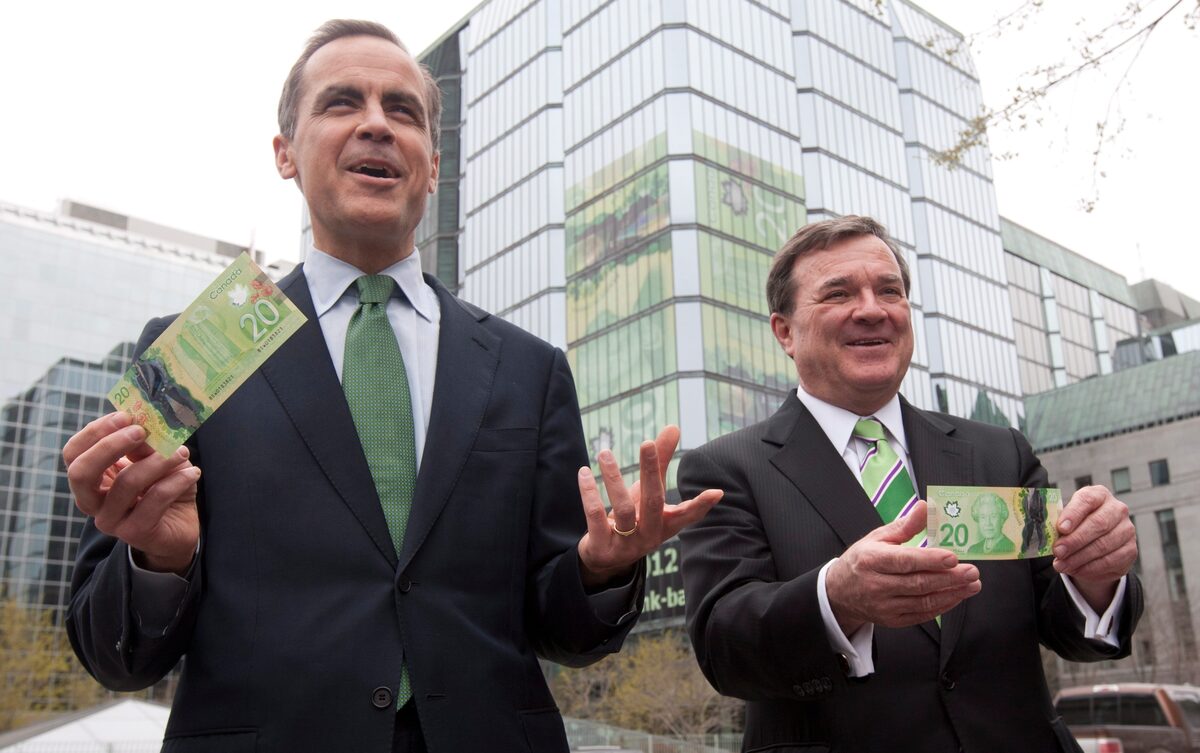
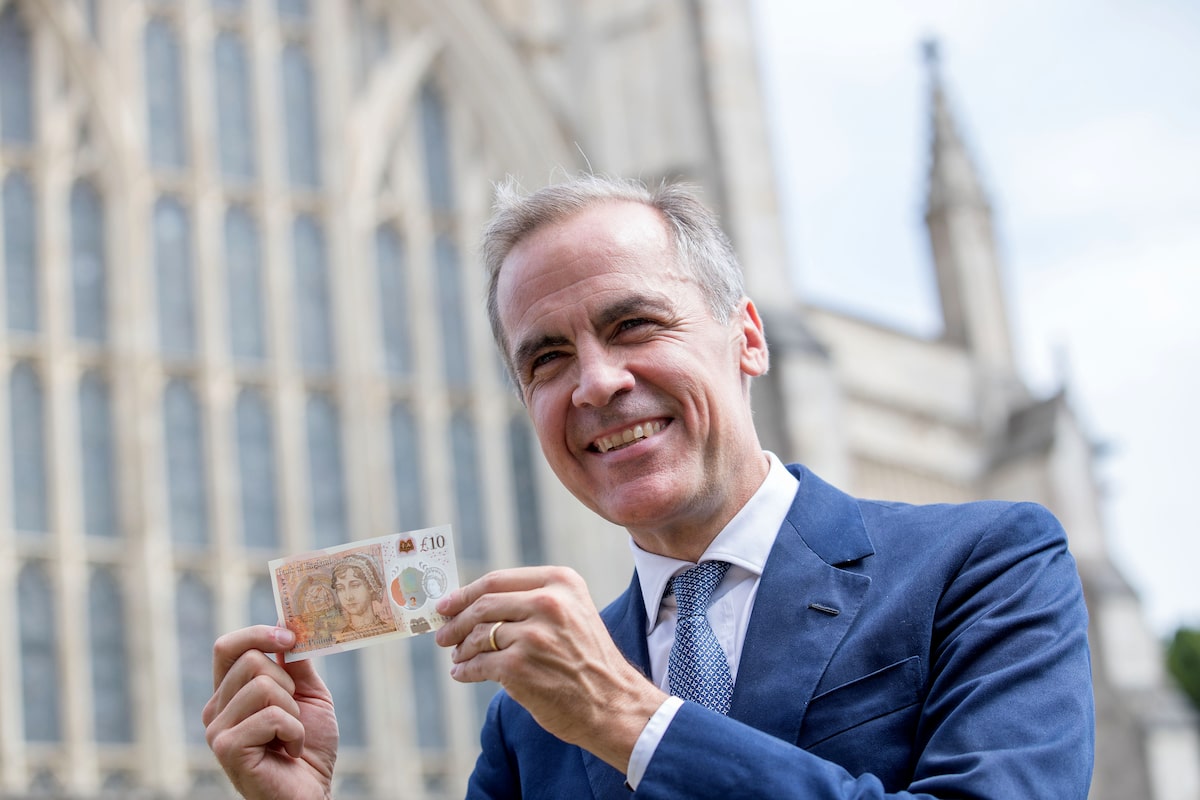
Mr. Carney had become bizarrely well known for a central banker already, and his name was about to come up in even bigger conversations.
Prominent Liberals, including Mr. McKenna and Scott Brison, tried to draft him to run for the leadership, before Justin Trudeau’s ascent came to look inevitable.
An overseas wooing effort – to make Mr. Carney the first foreigner to run the Bank of England since it was established in 1694 – stretched over most of 2012 because, Mr. Carney later told The Globe, “This was quite an unusual idea, and I was happy doing what I was doing.”
Evan Siddall, who had become friends with Mr. Carney working with him at Goldman, was at the Bank of Canada as a special adviser to the governor at the time. He walked into his office one day and Mr. Carney told him incredulously that British Prime Minister David Cameron had just called about the Bank of England.
“I had a very explicit conversation with him at the time where he said, ‘Do you think this disqualifies me from being prime minister one day?’” Mr. Siddall says, adding, “I said no, I didn’t think so. I thought Canadians would find that international experience fascinating.”
Eventually, the British charm offensive prevailed. Several months later, Mr. Carney’s successor at the Bank of Canada, Stephen Poloz, was on his way to one of the regular meetings in Basel of the Bank for International Settlements, when a flight attendant asked what took him to Switzerland.
When she heard that he was a central banker, she instantly asked if he knew Mr. Carney, the governor who “saved us during the crisis.” Then she pondered: Who was it who replaced him at the Bank of Canada, anyway?
“Well, that would be me,” Mr. Poloz said.
He writes in his 2022 book, The Next Age of Uncertainty, “It is fair to say she felt terrible for not recognizing me, but I reassured her that this was exactly as it should be – no crisis, no notoriety for the central bank, no worries.”

Stephen Poloz, in the foreground at a 2015 interview, took over the Bank of Canada from Mr. Carney, whose official portrait hangs at back right alongside his predecessors. Mr. Poloz left the job in 2020.Justin Tang/The Globe and Mail
Mr. Carney would have no such calm anonymity after he took over at the Bank of England in 2013.
His time there was marked by seismic changes in the British economy and substantial reforms to the bank itself. While he was criticized for sending mixed signals – British MP Pat McFadden infamously called the bank an “unreliable boyfriend” – and accused of taking sides on Brexit, the British government also extended his term twice because he was seen as a steady and capable hand at the wheel.
The morning after the Leave vote won, with the pound tumbling, Mr. Carney delivered a live televised speech.
“Some market and economic volatility can be expected as this process unfolds,” he said from behind a Bank of England lectern, his demeanour somewhere between the upholstered decorum of a funeral director and the voice you’d use to talk a scared cat out from under the deck. “But we are well prepared for this.”
The only hint of possible nerves or the weight of the moment was in his hands, their movements uncharacteristically awkward.

The Brexit vote of 2016, and the ensuing debate about how exactly to leave the European Union, would impact the British economy through the years that Mr. Carney ran its central bank.Daniel Leal-Olivas/AFP via Getty Images
Mr. Carney left the Bank of England in March of 2020, days before COVID-19 shutdowns began. After leaving, he was appointed UN special envoy for climate action and finance, and took on roles as chair of the board at Brookfield Asset Management and Bloomberg, before becoming an economic adviser to the Trudeau government.
Over the past year, as the Liberals tanked in the polls, Mr. Carney was actively mulling a political move. Last summer, he floated the idea of a leadership run with Mr. Siddall, but his friend tried to warn him away.
“I was saying no, no, no, like, why would you do this to yourself?” he says. “And he had a very strong view that this was the time, and it was his shot.”
In the late fall, Mr. Carney asked Mr. McKenna’s advice on the possibility of becoming Mr. Trudeau’s finance minister.
“I told him I thought the government was going down, and that Trudeau was going down, and he would be better off being the second owner of this property instead of the first owner,” Mr. McKenna says. He adds, “I sure misread that situation.”
Whether Mr. Carney ever intended to be Mr. Trudeau’s finance minister forms a sort of black box inside of which the final events of that government are locked. It was Mr. Trudeau telling finance minister Chrystia Freeland that he planned to replace her with Mr. Carney that prompted her scathing resignation letter, and in turn forced Mr. Trudeau’s own departure.
What no one knows – outside of a tiny circle of people who aren’t talking – is why Mr. Trudeau thought Mr. Carney was on board in the first place.
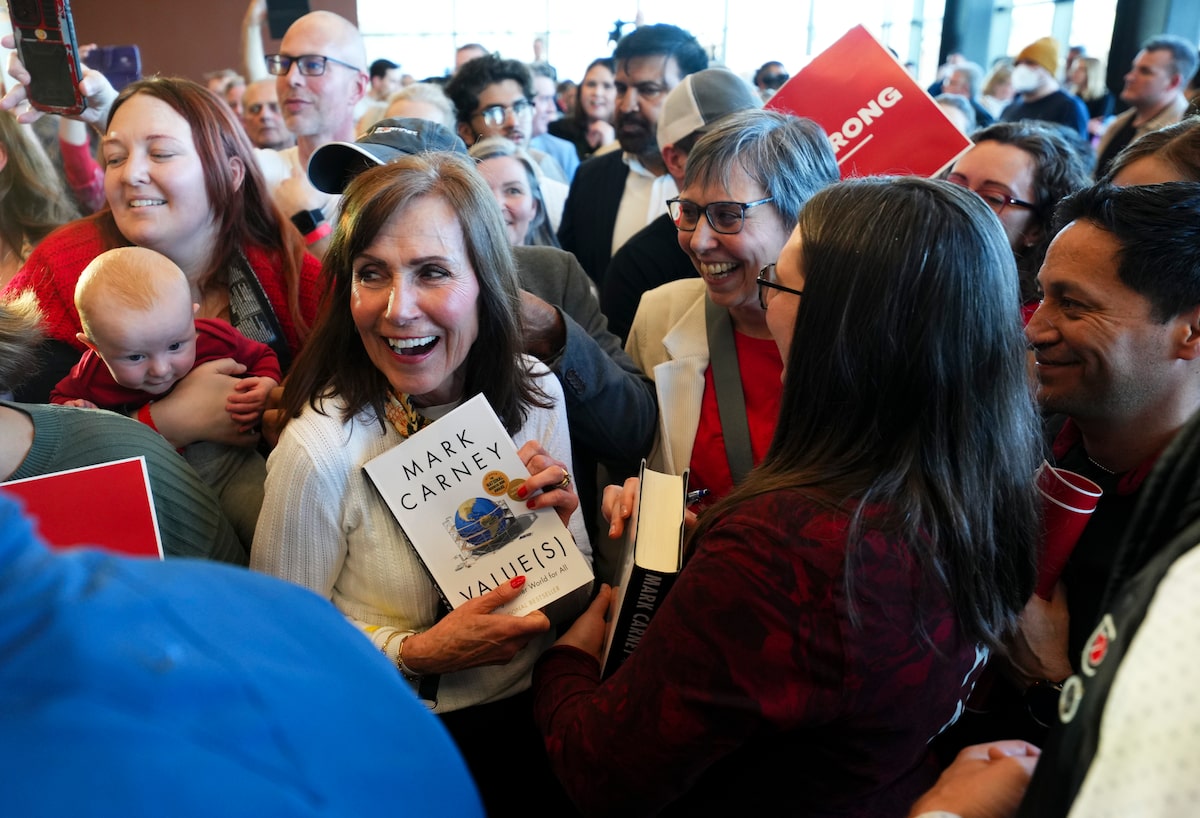
And now here we are, four months or approximately one million political years later.

One thing surfaces again and again when you talk to economists: the idea that you never know what’s coming next. All of their work is built around the knowledge that on one hand this could happen, but on the other, something entirely different could unfold.
The past few months in this country have demonstrated that more vividly than most Canadians could ever have imagined.
Sometimes, an existential threat boils up from a place you never expected, and all of a sudden the entire landscape looks different in the shadow cast by the smouldering heap of Mount Trump.
Or maybe, you’re a banker whose instinct is to carefully and deliberately prepare for everything, from your fitness routine to the meetings you run as a global financial leader. But then one day, you find yourself staring at a bright, shiny political possibility where there should have been only rubble.
There are two ways this ends now. Either Mark Carney’s lofty résumé earns a new entry as the shortest-tenured prime minister in Canadian history, or he authors one of the most stunning political comebacks this country has ever seen.
On one hand. Or on the other. Whatever happens next will be written in an economist’s native language.
Editor’s note: A previous version of this article incorrectly stated that Mark Carney replaced the assistant deputy minister in the Finance Department under Jim Flaherty. He became senior associate deputy minister under Ralph Goodale, replacing the previous G7 sherpa. This version has been updated.
Election 2025: More from The Globe and Mail
The Decibel podcast
Green Party co-leader Jonathan Pedneault wants Canadians to know his party has more on its mind than just climate change. He spoke with The Decibel about what the Greens have in mind on tariffs, cost of living and other issues. Subscribe for more episodes.
Explainers and election-day resources
Voters’ guide: How to cast your ballot, and what happens after
Platform guide: Compare pledges on issues from Trump to housing
Ten economic issues that will define the election, in charts
Who are the people steering the Liberal and Conservative campaigns?