THE LISTING 88 Victoria St., S., Port Hope, Ont
ASKING PRICE $1.495-million
TAXES $9,836.00 (2015)
LOT SIZE 2.7 acres
AGENTS Dee McGee, Patrick McGee, Tina Hubicki (Chestnut Park Real Estate Ltd.)
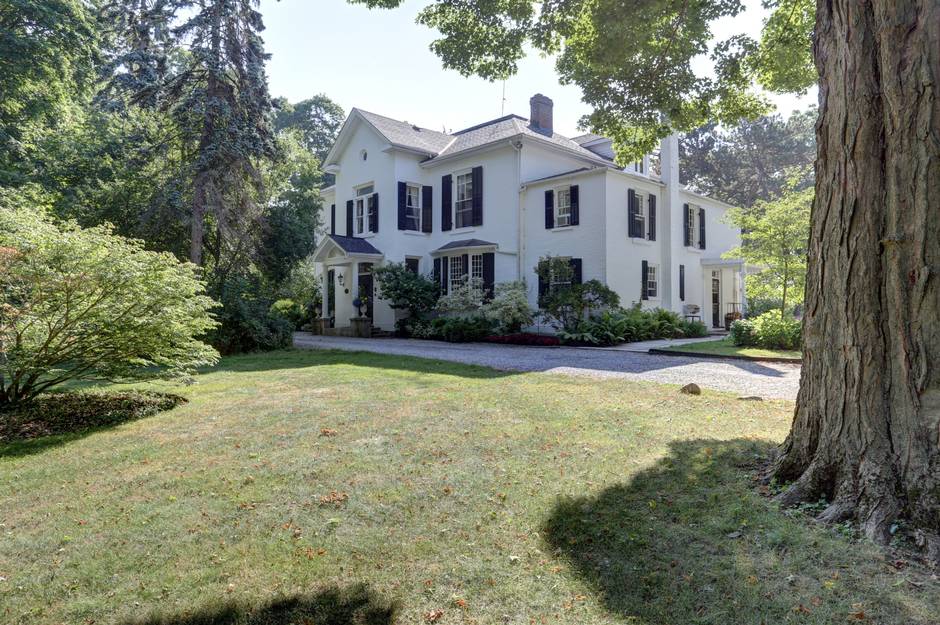
The back story
The owner of one of the most storied homes in the historic town of Port Hope thinks of his long tenure in the circa 1829 dwelling as a guardianship.
“I feel like a caretaker of the house,” Donald Roger says of the property he bought in 1985.
Penryn Homestead is hidden down a shady lane, but many people in town know about its provenance. The first recorded owner was John Tucker Williams, an officer in the British Royal Navy who fought in the Battle of Trafalgar. He came to Canada during the War of 1812 and commanded a vessel on Lake Ontario.
After his service, the commander acquired a vast tract of land along the Lake Ontario shore at the west end of Port Hope. He named the estate Penryn after the area where he was born in Cornwall, England.
He was granted 100 acres but he expanded his holdings by buying more, Mr. Roger says. “You can’t live in a house like this without steeping yourself in some of the history.”
Records show that Commander Williams married Sarah Ward, who was the daughter of another early Port Hope settler, Captain Thomas Ward.
Local lore says the couple rushed to complete a grand new home built with lumber cut on the property and sawed at a mill on the local Ganaraska River. Because the wood was still green, the family had to wait through an entire winter before they could move in.
They settled into the newly-finished home around 1829.
Life as a gentleman farmer did not end Commander Williams’ public service. He commanded the Durham Regiment during the Rebellion of 1837, then became a magistrate and later represented the county in parliament. In 1851, he became Port Hope’s first appointed mayor.
Commander Williams died at Penryn Homestead in 1854. Sarah Williams lived in the house until her death in 1888.
Over the years, the commander’s land was gradually parcelled off. Three of Port Hope’s other stately mansions were built by Commander Williams on nearby land for his children when they married.
A big swath of his former land is now the Port Hope Golf and Country Club, which surrounds Penryn Homestead on three sides. More development is coming nearby as Port Hope attracts more people to the city about 100 kilometres east of Toronto.
The house today
The 5,200-square-foot house has been modernized through the years but renovations have always preserved the original character, says Mr. Roger says.
“It’s a very comfortable home,” he says.
The house has five bedrooms, five bathrooms and six fireplaces. According to Heritage Port Hope, it exhibits features of the neoclassical style, which was popular in Upper Canada from 1810 to the 1830s. Most of those early details are on the interior; the exterior appearance comes from extensive alterations made in the 1890s.
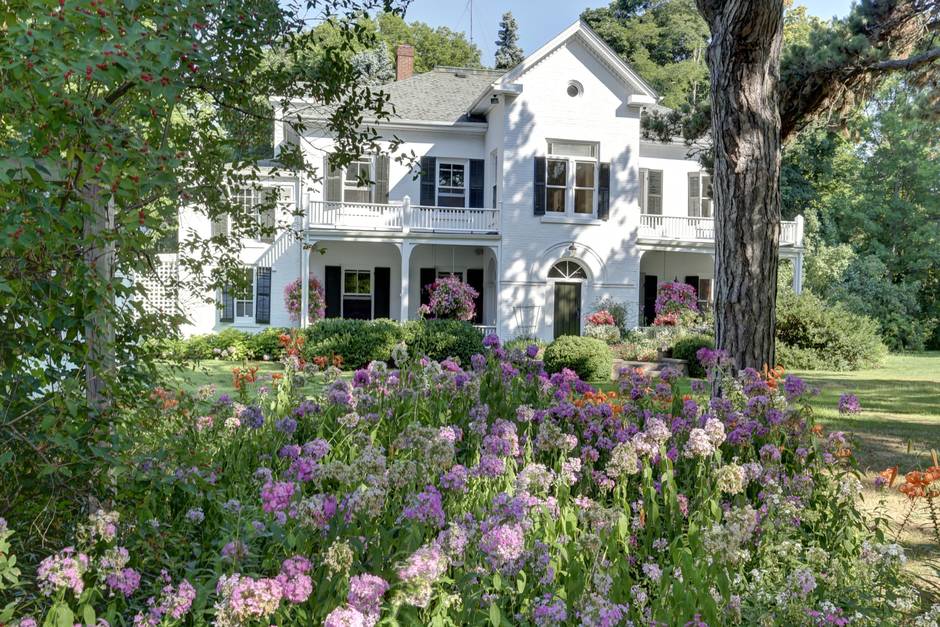
At that time, the roughcast walls were bricked over, projecting porches were built on the north and south sides, and the roof was reshaped with an altered pitch and extended eaves.
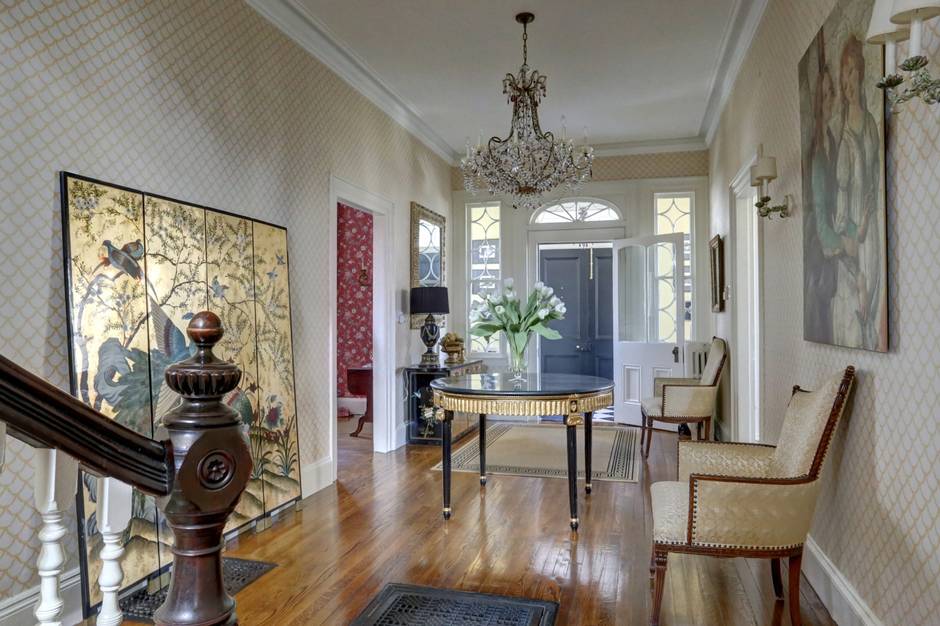
The north porch replaced a portico, but step inside today and you enter through the original front doorway, which still has the fanlight and sidelights common in neoclassical houses.
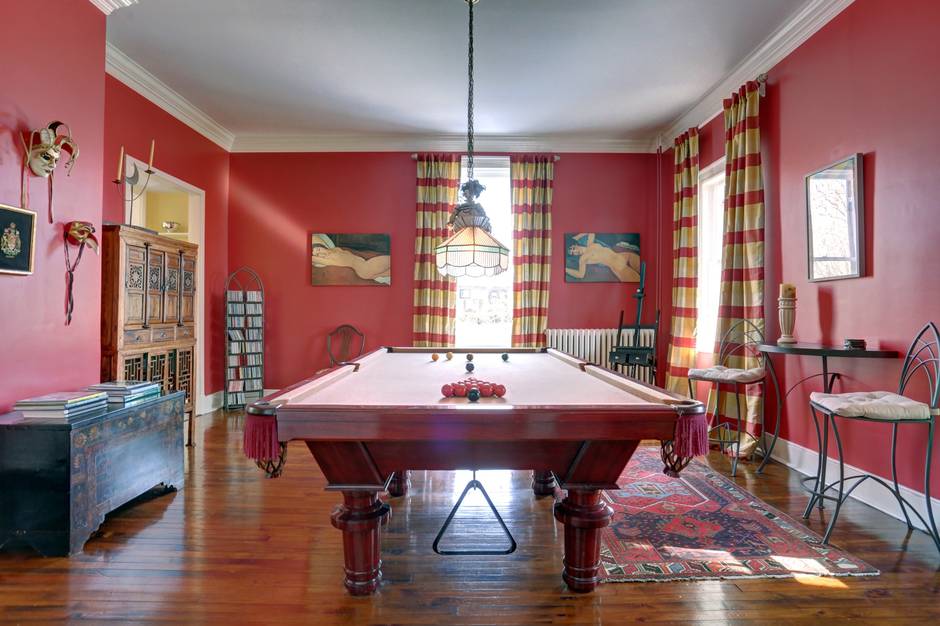
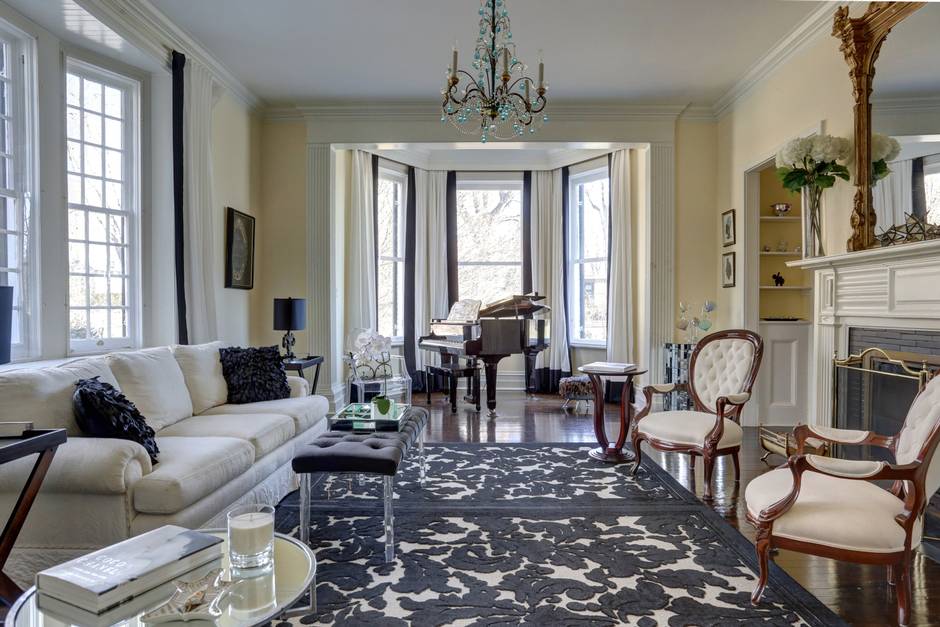
There’s a large formal hallway with stairs winding to a landing and sitting area with large windows facing the lake. The main floor has large principal rooms with high ceilings and windows, which date to the 1890s. There’s a living room with an alcove for a grand piano and a separate billiard room with a custom-made table.
Mr. Roger says that when he bought the house, the bay window was the backdrop for a 19th-century square grand piano made by Chickering. The antique instrument is part of the home’s history and he plans to leave it for the new owners.
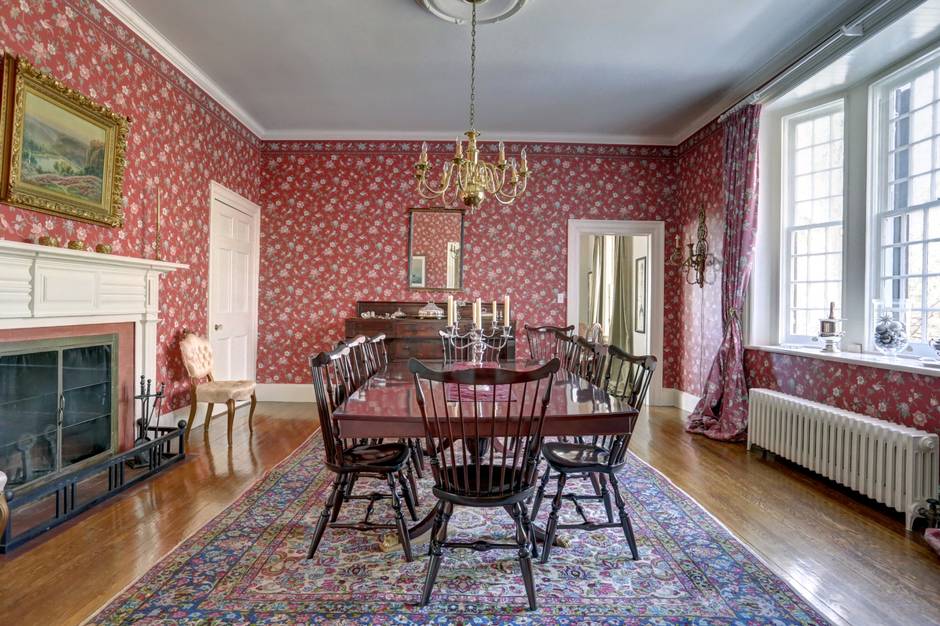
The separate dining room has been the setting for many large dinners and the annual Christmas gathering of the local wine tasting club.
The family room at the rear has an original Rumford fireplace and bake oven. The room has become a favourite cozy spot to relax, says Mr. Roger. “This is a fantastic fireplace. It just roars.”
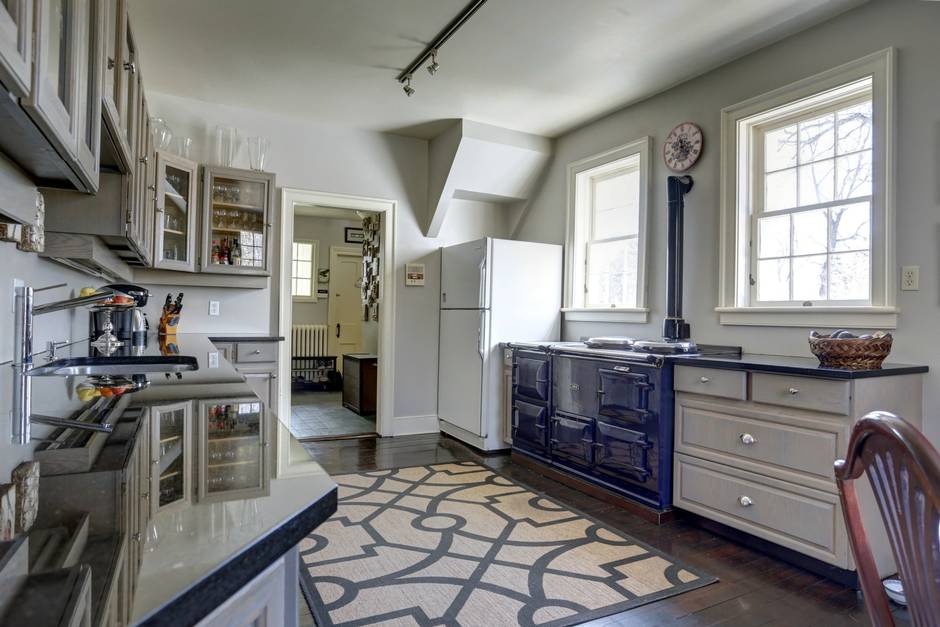
The focal point of the renovated kitchen is a cast iron AGA range. Continuous gas heat keeps the four ovens and two heating plates at a constant temperature. “It’s great for parties,” says Mr. Roger of the range’s versatility. “It also provides great warmth in the winter.”
During 2013’s severe ice storm, the property lost power for three days, he says, but the family could cook and stay warm with the AGA.
Details from the early years can be seen throughout the house in the ceiling cornices, woodwork and carved wooden mantlepieces on many of the fireplaces. The heritage committee also points to “a lovely moulded banister and newel post” on the main staircase.
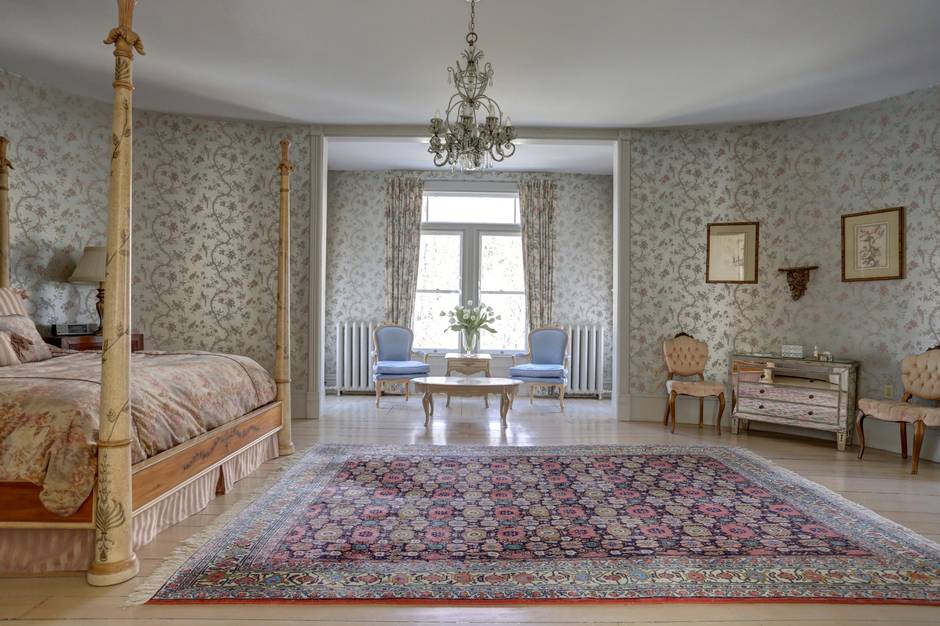
In the 1800s, guests of the naval commander would have climbed those stairs to a second-floor ballroom. They danced in an oval-shaped room with a floor sloping downward at both ends to simulate the deck of a ship. Today, the ballroom is used as a master suite, with a large bedroom and a bathroom with a standalone tub with views over the garden. The alcove where musicians once played is now a sitting area.
The lower level has good height for its age, Mr. Roger says, because the servants would have worked down there. One room held the home’s first kitchen. The fireplace is still in place. The original dirt floor is now brick.
In one far corner of the basement, a bookcase swings away to reveal a hidden room. Mr. Roger suspects it started out as a vault. For Halloween parties in the past, he has staged it with spooky lighting and what appears to be an old skeleton. “You’ve got to have fun with a house like this.”
Over time he realized the basement has another hidden room. “There are still many things we don’t know,” Mr. Roger says. “The house does hold its secrets.”
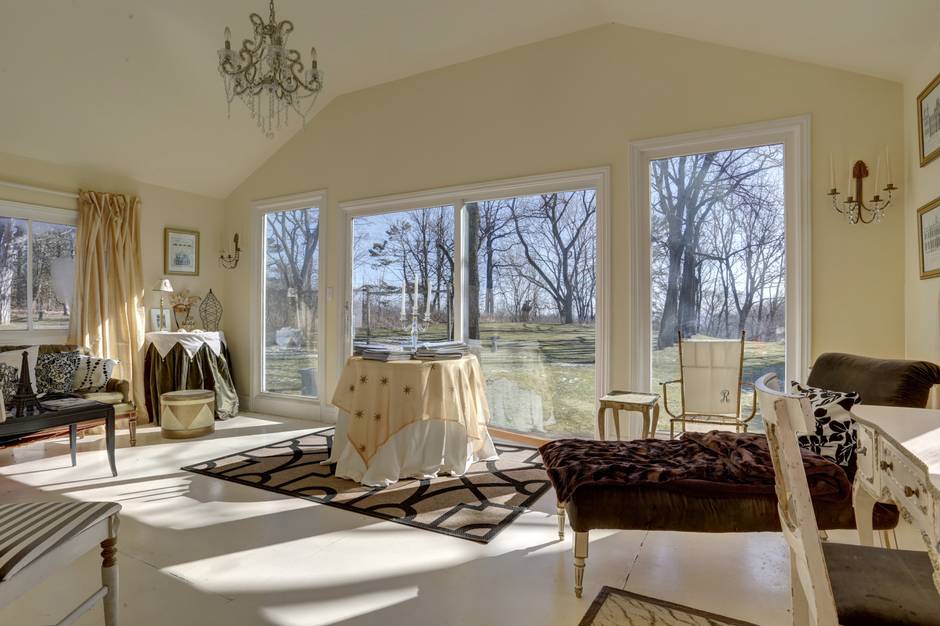
Another building appears old but was actually added in the mid-20th century. It currently serves as a studio and guest cottage.
Mr. Roger, who commutes to his law practice in Toronto’s financial district most days, says the train he takes to and from Union Station is full of people who have left the city for larger lots and small town atmosphere.
The best features
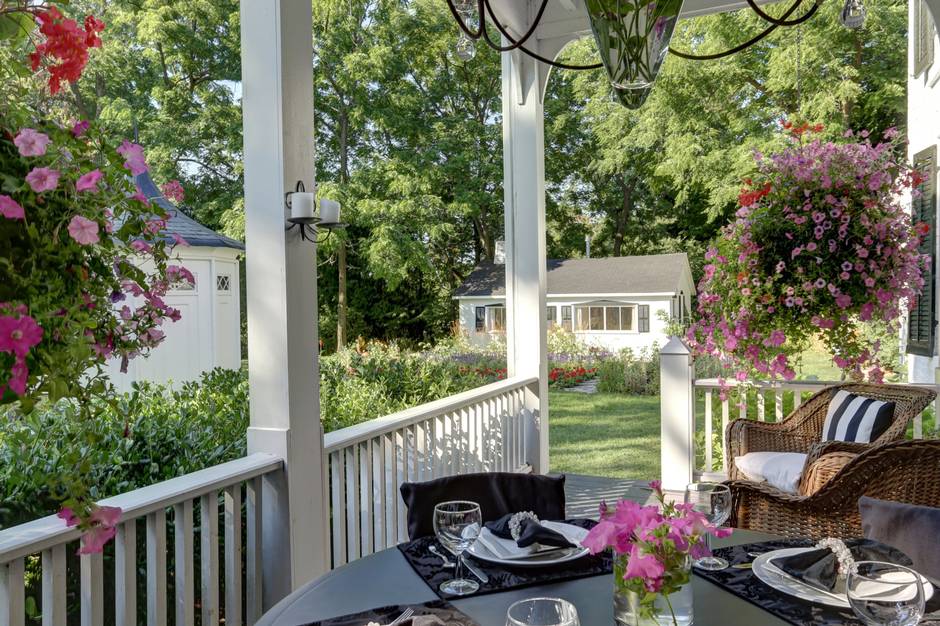
Outside, the house’s verandahs overlook the lawns and perennial gardens, with views of Lake Ontario. A mature grove of black walnut and butternut trees stands beyond the gardens.
Last summer, a family wedding took place in the backyard.
The house’s position at the top of a wooded ravine stretching down to the golf course creates a tranquil setting, Mr. Roger says, and golfers never send errant shots onto his land. “They’d have to be very, very strong and a really bad shot,” he says.
One of the two 19th-century gazebos originally served as an elaborate outhouse with separate entrances for men and women, Mr. Roger says. Today, it has been refurbished inside and out. Another more distant gazebo provides a quiet place to sit surrounded by nature. Along with the house, both of the gazebos and the 2,400-square-foot coach house are protected under the Ontario Heritage Act.