WHAT IS BITCOIN?
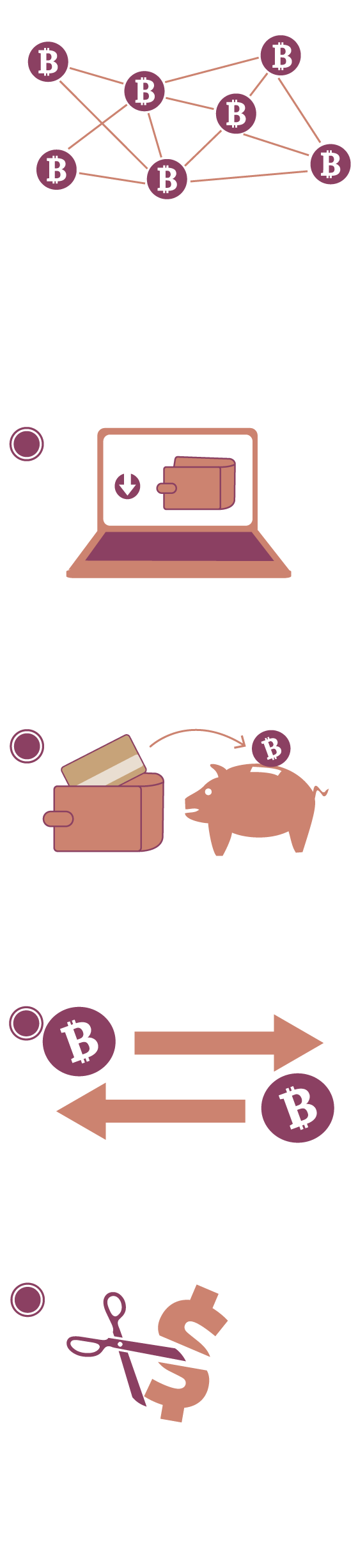
Bitcoin is a completely decentralized form of
virtual currency that enables direct payment
over the Internet by skipping the middleman,
which is usually a bank or credit card company.
Transactions are safe due to cryptography used
to prevent double spending, counterfeiting,
or theft. Users can use bitcoins for a variety of
real transactions.
HOW IT WORKS
1
Before a bitcoin can be purchased, a user must install a virtual 'wallet' onto a personal
computer or mobile device. The wallet is similar to personal finance software and keeps track of bitcoin balance and transactions.
2
The user then pays for bitcoins, either through
a credit card, bank account or anonymously
with cash. Bitcoins are transferred directly into
a bitcoin account, and the user can send and
receive payments directly to a buyer or seller.
3
Similar to trading stocks, a buyer can place an
order for a bitcoin through an exchange
program once the funds are available. Bitcoins
can also be purchased from third parties.
4
Users pay far fewer associated fees by skipping
the middleman in each transaction, and they
can also remain anonymous.
THE GLOBE AND MAIL, SOURCES: BLOOMBERG; BITCOIN.ORG;
BLOCKCHAIN.INFO; MIT TECHNOLOGY REVIEW;
THE WASHINGTON POST; IEEE SPECTRUM
WHAT IS BITCOIN?
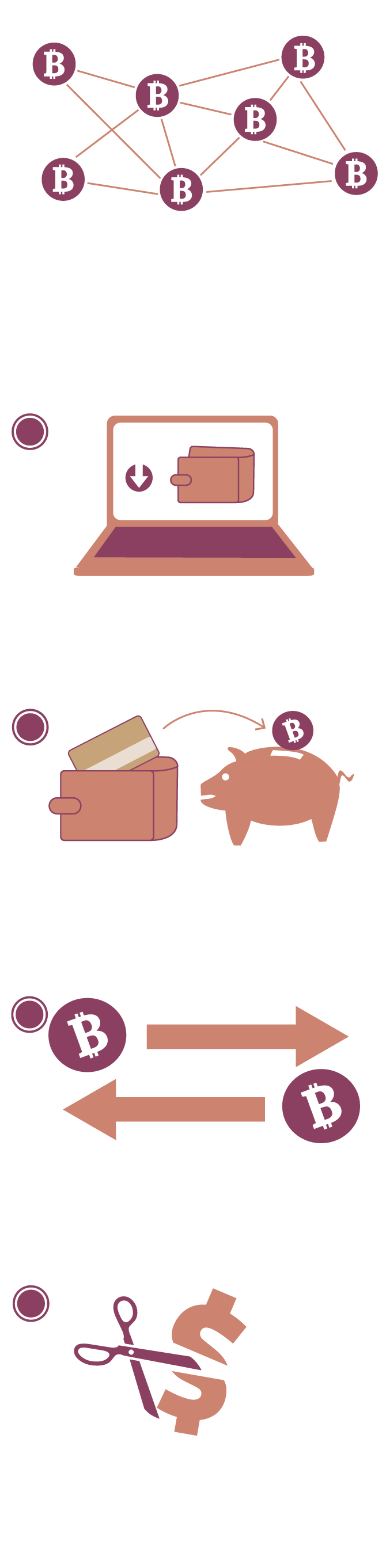
Bitcoin is a completely decentralized form of virtual
currency that enables direct payment over the Internet
by skipping the middleman, which is usually a bank
or credit card company. Transactions are safe due
to cryptography used to prevent double spending,
counterfeiting, or theft. Users can use bitcoins for
a variety of real transactions.
HOW IT WORKS
1
Before a bitcoin can be purchased, a user must install a
virtual 'wallet' onto a personal computer or mobile device.
The wallet is similar to personal finance software and
keeps track of bitcoin balance and transactions.
2
The user then pays for bitcoins, either through a credit
card, bank account or anonymously with cash. Bitcoins
are transferred directly into a bitcoin account, and the
user can send and receive payments directly to a buyer
or seller.
3
Similar to trading stocks, a buyer can place an order for
a bitcoin through an exchange program once the funds
are available. Bitcoins can also be purchased from third
parties.
4
Users pay far fewer associated fees by skipping the
middleman in each transaction, and they can also
remain anonymous.
THE GLOBE AND MAIL, SOURCES: BLOOMBERG; BITCOIN.ORG;
BLOCKCHAIN.INFO; MIT TECHNOLOGY REVIEW; THE WASHINGTON POST;
IEEE SPECTRUM
WHAT IS BITCOIN?
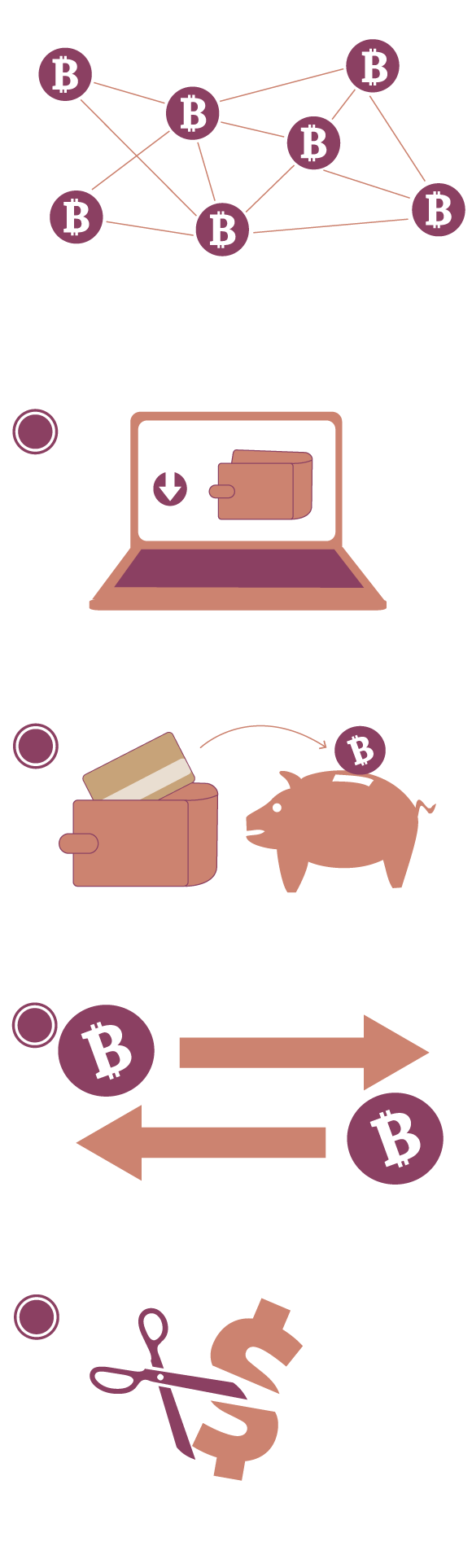
Bitcoin is a completely decentralized form of virtual currency that enables direct
payment over the Internet by skipping the middleman, which is usually a bank
or credit card company. Transactions are safe due to cryptography used to prevent
double spending, counterfeiting, or theft. Users can use bitcoins for a variety
of real transactions.
HOW IT WORKS
1
Before a bitcoin can be purchased, a user must install a virtual 'wallet' onto a personal
computer or mobile device. The wallet is similar to personal finance software and keeps
track of bitcoin balance and transactions.
2
The user then pays for bitcoins, either through a credit card, bank account or anony
mously with cash. Bitcoins are transferred directly into a bitcoin account, and the user
can send and receive payments directly to a buyer or seller.
3
Similar to trading stocks, a buyer can place an order for a bitcoin through an exchange
program once the funds are available. Bitcoins can also be purchased from third
parties.
4
Users pay far fewer associated fees by skipping the middleman in each transaction,
and they can also remain anonymous.
THE GLOBE AND MAIL, SOURCES: BLOOMBERG; BITCOIN.ORG; BLOCKCHAIN.INFO;
MIT TECHNOLOGY REVIEW; THE WASHINGTON POST; IEEE SPECTRUM