Whither housing
CIBC World Markets says people frequently ask about Canada’s housing market in client meetings.
The answer: “It is a multi-dimensional market and a blanket statement will not do.”
Economists Benjamin Tal and Andrew Grantham put some meat on those bones in a report this week, noting that much has to do with “truths, lies and averages.”
Every region is different, and the market segments are different, they said, concluding that “the market will adjust, but given the many faces of the market, the adjustment will not be uniform.”

Averages, on which so much is based, can “mask” many factors. And thus a national average is pointless.
For example, Calgary’s market had been surging, but in the wake of the oil shock “prices have now started to move downwards, prompting concerns of a hard landing for that market,” Mr. Tal and Mr. Grantham noted.
“But, aided by even lower interest rates, other high-flying markets aren’t seeing any sort of landing yet,” they added.
“In fact, the annual rates of house price growth in Vancouver and Toronto have if anything accelerated since the start of the year.”
Where do they see things headed?
“The lack of supply of low-rise housing in places such as Toronto and Vancouver suggests that most of the adjustment will be felt in the high-rise segment of the market. Excess supply of condo units in Toronto along with potential increases in resale activity by domestic condo investors in a reaction to higher borrowing cost suggests that this market will slow down in the coming years.”
The Greek crisis in emojis ...

Left to right: Greek Finance Minister Yanis Varoufakis, Greek Prime Minister Alexis Tsipras, German Chancellor Angela Merkel, IMF chief Christine Lagarde, euro zone finance ministers group chair Jeroen Dijsselbloem. Disclosure: I think I may have seen someone tweet something similar, but with real emojis.
Quote of the day
“No bulls left in the China shop.”
Brenda Kelly, London Capital Group
Chinese stocks tumble
Chinese stocks took a mighty fall today, while other markets were mixed.
The Shanghai composite plunged 7.4 per cent, Tokyo’s Nikkei lost 0.3 per cent and Hong Kong’s Hang Seng shed 1.8 per cent.
“With the Chinese economy stalling, the 100-per-cent rally in Chinese stocks has never been based on fundamentals but was a trade on the government’s economic stimulus,” said CMC Markets analyst Jasper Lawler.
“But with the government introducing new margin rules, the message that investors have taken is that the government thinks the rally has turned into a bubble and they want it deflated.”
K+S surges
Shares of K+S AG surged today in the wake of Potash Corp. of Saskatchewan’s second run at the German fertilizer company.
As The Globe and Mail’s Rachelle Younglai reports, K+S said yesterday that Potash Corp. has put a proposal to its board, and it may launch a hostile bid.
Potash Corp. took an earlier run at K+S in the late 1990s, but Germany blocked a deal. K+S is building a potash mine in Saskatchewan.
Video: Flies, flush toilets and the cottage market
Chart of the day
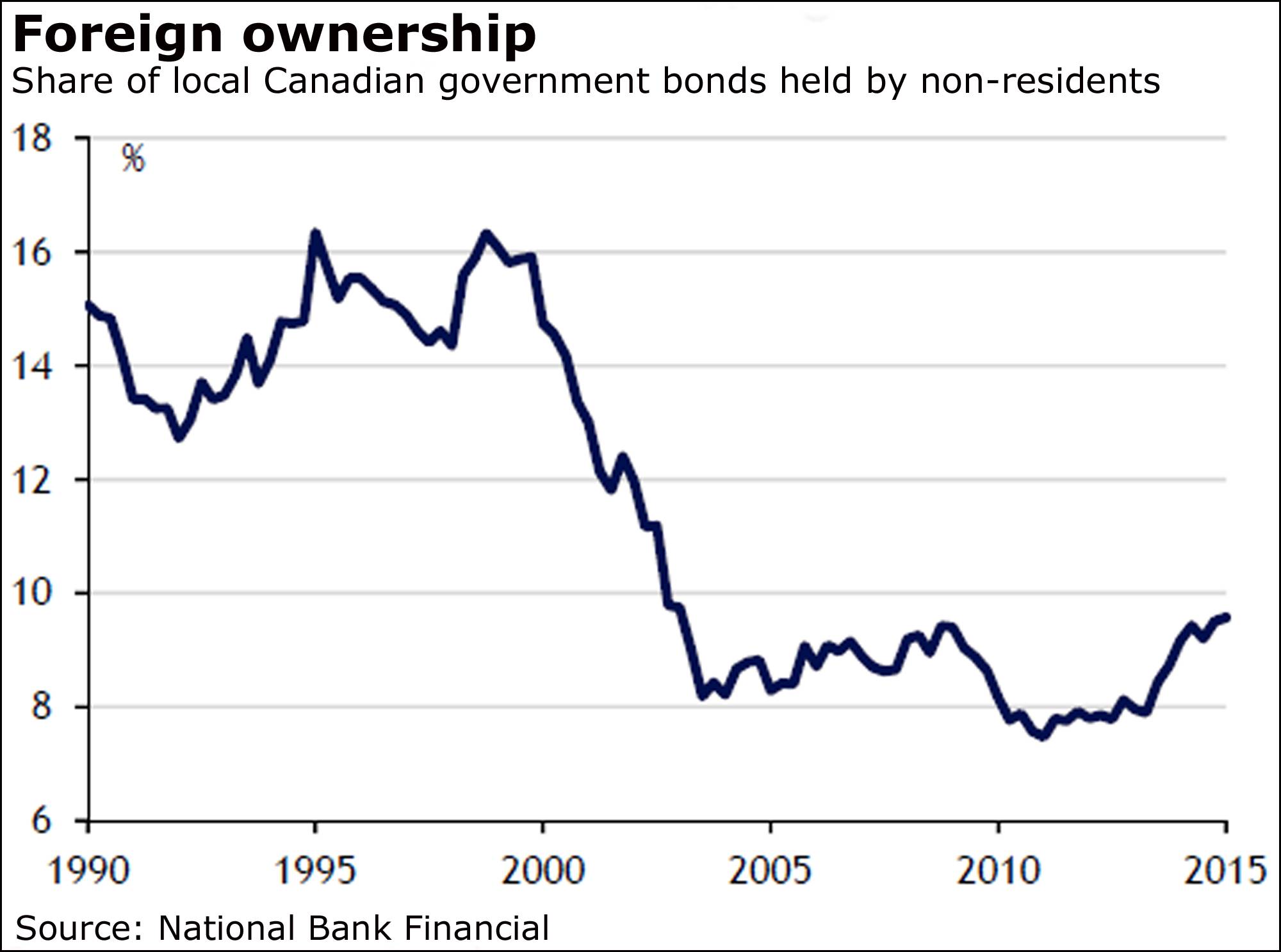
Stressed transit
To borrow a slogan from the Toronto Transit Commission, there’s a reason Canadian politicians are queuing up to promote a better way.
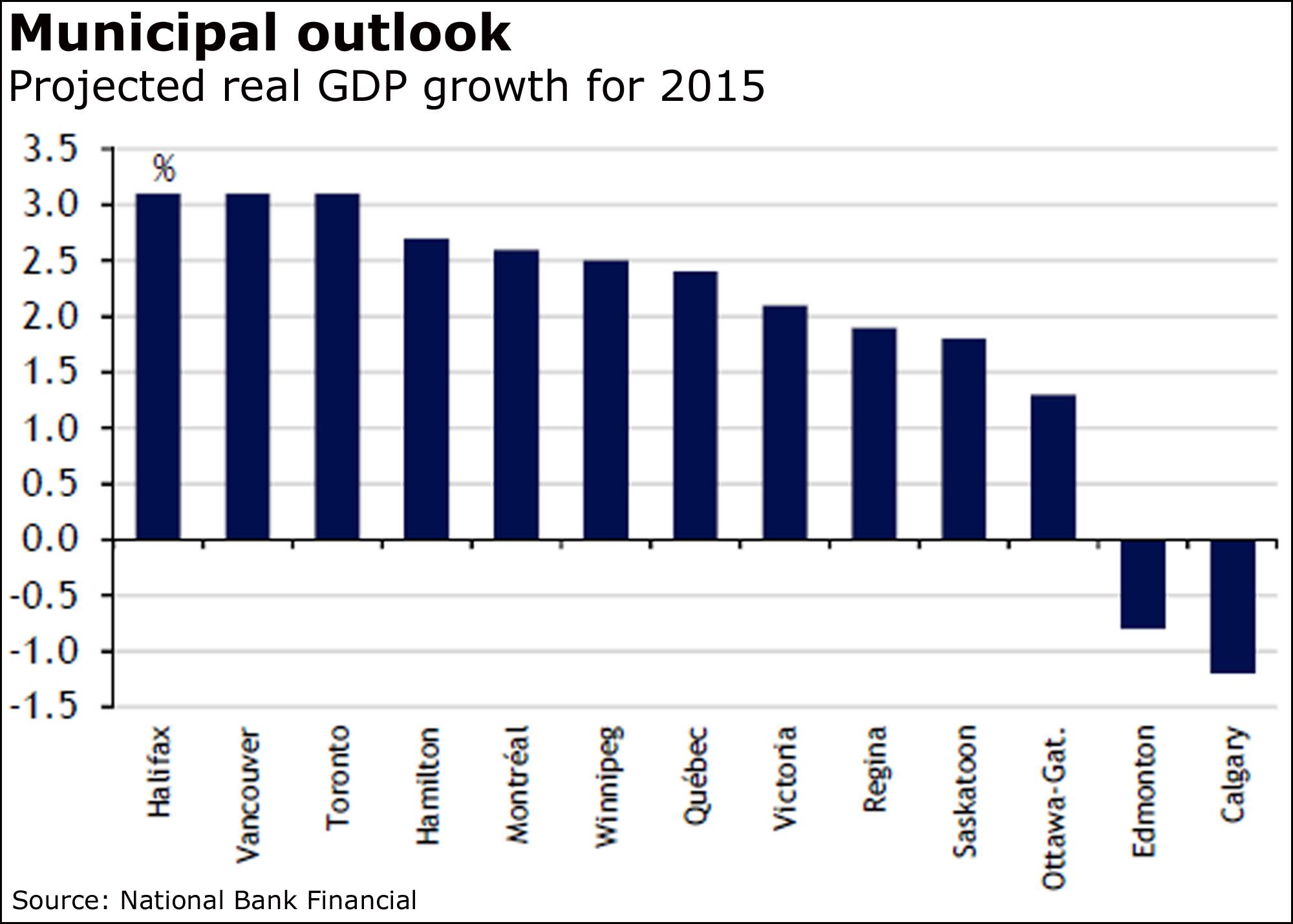
“Despite the current reordering of relative growth fortunes, there’s a broader truth in the municipal sector: Larger and denser populations create real demand for new public infrastructure,” said Warren Lovely of National Bank Financial.
“Congestion and gridlock are productivity killers, robbing a given city, province and country of its economic potential,” he said in a report that looks at the money being pledged by the federal political parties in the run-up to the election.
“Little wonder that leaders at all levels of government across the political spectrum are stressing the importance of transit investment.”
Mr. Lovely, the bank’s head of public sector research and strategy, noted the recent pledges by Prime Minister Stephen Harper, New Democratic Party leader Thomas Mulcair and Liberal chief Justin Trudeau, which amount to billions of dollars over a period of years.
Both Mr. Harper and Mr. Mulcair were talking about transit last week in Toronto, where complaints are common.
“One could excuse lower levels of government for reacting cautiously,” Mr. Lovely said.
“But regardless of the political motive, marginal federal investment is a potentially constructive development - for commuters, for local businesses and for a municipal sector that generally bears the greatest burden when it comes to addressing Canada’s infrastructure deficit.”
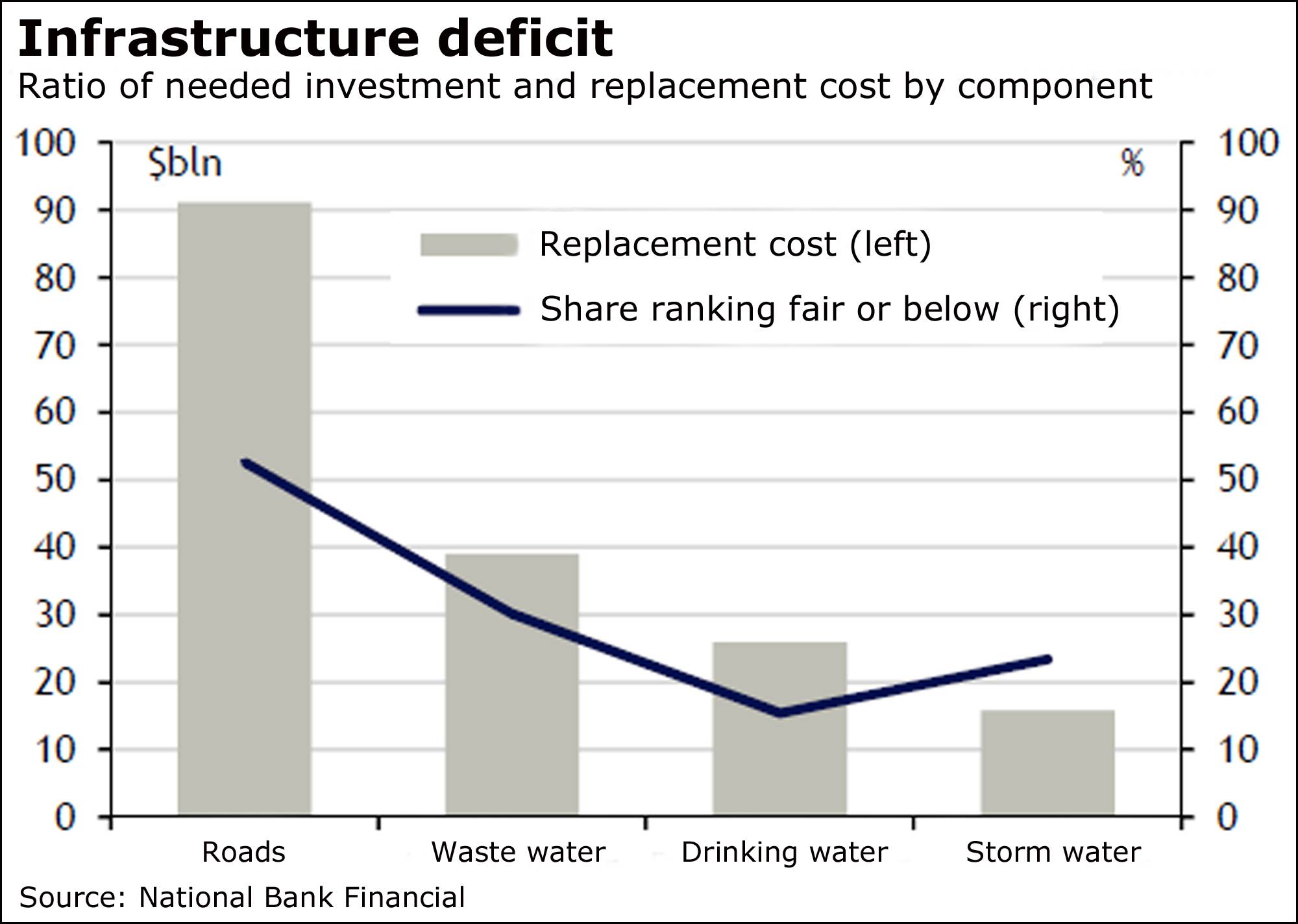
He was referring to a 2012 study that looked at what was needed to bring city municipal infrastructure up to snuff. That amounted to $172-billion, though there has been some money put in since that calculation.
Mr. Lovely noted that populations have been increasing in all but one of the more than 30 major cities.
“At the heart of Canada’s infrastructure agenda is a pressing need to keep ever larger cities moving,” he said.
“Population gains provide fuel for municipal economic growth and lend support to property markets, enlarging the tax base and bolstering property values.”
Who are you calling maniacs?

Quebecor CEO Pierre Dion on plans to seek an NHL team: “We are all, as individuals, hockey maniacs.”