The first best-on-best international men’s hockey competition in nearly a decade begins Wednesday when the puck drops on the NHL’s 4 Nations Face-Off.
NHL players from four of the world’s top hockey-playing countries (excluding Russia) will compete in Montreal and Boston over the next week. The most anticipated matchup will be Saturday’s game between Canada and the United States. After a round-robin, the top two teams will advance to the final on Feb. 20.
The tournament precedes the NHL’s return to the Olympics, next year in Italy, where the league’s best haven’t competed since 2014. The last World Cup of Hockey was in 2016.

Jon Cooper, coach of Canada's team in the 4 Nations Face Off, leads the players through hockey practice in Montreal on Feb. 10, with two days to go till their first match against Sweden.Christinne Muschi/The Canadian Press
Team Canada
As the reigning World Cup champions, as well as the winner of the previous two NHL-endorsed Olympic tournaments, Canada enters the 4 Nations Face-Off just as it does any international hockey competition: with a target on its back. Widely regarded as the spiritual home of the sport, the onus will again be on Canada to set the standard, which in this case means emerging triumphant from a four-game sprint to the title.
Why Canada will win
Connor McDavid was just one year into his NHL career when the past World Cup took place and was awkwardly shoehorned – along with Nathan MacKinnon – into the squad of young guns marketed as Team North America. Nine years later, they have blossomed into two of the best offensive talents on the planet, ranked first and third, respectively, in NHL points over the past five seasons.
With captain Sidney Crosby, who’s managed to shake off the upper-body injury that forced him to sit out games last week, they could form one of the most potent trios in hockey history – three Hart Trophy winners skating together.
In tandem with the likes of Mitch Marner, Sam Reinhart and Brayden Point – all enjoying prolific seasons – the offence is set to take care of itself, particularly on the power play. But it’s the inclusion of ornery competitors such as Seth Jarvis, Anthony Cirelli, Mark Stone and Travis Konecny that shows this squad isn’t about to take a back seat to anybody. And while he may not be the 100-point scorer of six years ago, Brad Marchand – who tallied the World Cup-clinching goal in 2016 – is a master of hockey’s dark arts.

Connor McDavid, Sam Reinhart, Nathan MacKinnon and Sidney Crosby come from a varied list of NHL teams, but will play together for Canada in Montreal.Christinne Muschi/The Canadian Press
Why Canada won’t win
It seems almost sacrilegious to say it, but Canada’s Achilles’ heel may well be between the pipes. The country that has produced generational backstop talent such as Ken Dryden, Patrick Roy, Martin Brodeur and Carey Price is seemingly running on fumes.
Case in point, it says much about Canada’s fall from grace that none of the trio charged with representing the country at the 4 Nations – Jordan Binnington, Adin Hill and Samuel Montembeault – has won a piece of individual NHL silverware. Indeed, all three are located outside the Top 30 in the league in save percentage, with Vegas goaltender Mr. Hill leading the way with a .900 mark.
Thankfully, Canada has a top-tier blueline. Colorado duo Cale Makar and Devon Toews will lead the way as regular defensive partners, and while Alex Pietrangelo’s injury-forced withdrawal is a blow both from a leadership and ability potential, the late addition of Drew Doughty will help ensure Canada has a solid D-core in front of whomever ends up in goal.

Team USA
Despite the increasingly regular presence of the United States at the sharp end of the world juniors – with three gold medals in five years – at the senior level, it’s been slim pickings on the international scene.
The U.S. men haven’t achieved anything higher than a bronze since they lost out to Mr. Crosby’s golden goal in Vancouver 15 years ago.
But, on paper, this year’s edition of the Stars and Stripes looks primed to be Canada’s main rival for 4 Nations supremacy.
Led by captain Auston Matthews – who has more goals than anyone but Alex Ovechkin since he burst onto the NHL scene in 2016 – and a cadre of genuine superstars, Team USA has a genuine shot.
And if the on-ice talent isn’t enough to put it over the top, this roster will also be buoyed by the knowledge that the championship game could be on home ice, in Boston, if the team can make it there.

Auston Matthews, centre for the Toronto Maple Leafs, is a native of California who will captain Team USA at the 4 Nations competition.Claus Andersen/Getty Images
Why Team USA will win
For maybe the first time, it can be argued that the Americans have the deepest roster in the tournament. Maybe they lack the all-world game-breakers on offence that Canada has at its disposal, but it could be that they will get more consistent scoring from across their lineup.
From Jack Eichel to Kyle Connor and Jake Guentzel to the Tkachuk brothers, Team USA’s forwards are a group of sharpshooters, with all 13 having registered a 30-plus-goal season at least once in their careers.
And while that group will happily pull the trigger, it has one of the best on the blueline to tamp the gunpowder. Rangers all-star Adam Fox is one of the absolute best in the NHL at jumping into the rush and marshalling the power play, scoring the third-most points with the man advantage over the past five seasons, winning the Norris Trophy as the NHL’s best defenceman in 2021.
However, it’s in net where the Americans are really set to shine. Connor Hellebuyck, Jake Oettinger and Jeremy Swayman – all three have received Vezina Trophy votes in the past couple of years, with Mr. Hellebuyck winning the award twice in the past five seasons, in addition to taking the William M. Jennings Trophy last year for fewest goals against, an award Mr. Swayman won the previous year.

Connor Hellebuyck, a Michigander who tends goal for the Winnipeg Jets, is likely to start for Team USA.Charles Krupa/The Associated Press
Why Team USA won’t win
For all the hardware the American netminders have accrued, none own that most coveted hockey possession: a championship. And it will likely take a breakout performance from one of them – akin to Mike Richter winning tournament MVP at the 1996 World Cup of Hockey – for Team USA to reach the top.
For all his regular-season plaudits, Mr. Hellebuyck, the likely starter, owns a less-than-sterling 9-19 playoff record with a .905 save percentage with the Winnipeg Jets. The furthest he’s ever gotten was the Western Conference final seven years ago.
Similarly, Mr. Oettinger has guided the Dallas Stars to the same stage before failing to advance to the Stanley Cup final in each of the past two seasons. And despite knocking out the Toronto Maple Leafs in last year’s playoffs, Mr. Swayman has fared less well against championship teams such as the Florida Panthers, going 9-10 with a .922 save percentage in his playoff career.

Team Sweden
As one of three countries to mine gold in the NHL participation era of the Olympics, Sweden has always found a way to contend with the might of Canada, the United States and – although not on this occasion – Russia.
With a population one-quarter the size of Canada’s, Sweden has more-than-respectable returns from the so-called “best-on-best” international competitions, settling for silver 11 years ago in Sochi and winning bronze in two of the three World Cups, most recently in Toronto in 2016.

Sweden's captain will be Victor Hedman, a defenceman for the Tampa Bay Lightning during its back-to-back Stanley Cup wins in 2020 and 2021.Noah K. Murray/The Associated Press
Why Sweden will win
Despite possessing some dazzling offensive talent in the shape of William Nylander, there is little doubt where Sweden’s strength lies heading into the 4 Nations. Erik Karlsson is the lone holdover from that 2014 Olympic team, but the three-time Norris Trophy winner as best NHL defenceman will pair with another in the towering shape of Victor Hedman, the Sweden captain, who has two Stanley Cup rings to go along with his 2018 Norris.
Those decorated D-men will head up Sweden’s blueline, where they will be ably abetted by a pair of Stanley Cup finalists from last season: Gustav Forsling, who got a ring playing for Florida, and Mattias Ekholm, who finished one win short as a member of the Edmonton Oilers. They’ll be joined by Calgary Flames rearguard Rasmus Andersson, who ranks in the NHL’s Top 5 this season in blocked shots for defencemen, while former No. 1 overall pick Rasmus Dahlin of Buffalo and Minnesota’s Jonas Brodin round out the group.
While that septet will be charged with closing down the lanes and limiting access to the middle of the ice, goaltenders Filip Gustavsson and Linus Ullmark will be trusted to actually stop the puck.
Mr. Gustavsson, who ranks in the Top 10 in NHL save percentage at .915, could well be the starter, having gone 22-11 for Minnesota this season.
Why Sweden won’t win
Heading into this season, Sweden’s top two centres were set to be Elias Pettersson and Mika Zibanejad. However, even if you added their point totals together, they’d still only be tied for fourth in the NHL scoring race, with 71 points. In fact, Mr. Zibanejad’s struggles down the middle for the New York Rangers have gotten so bad he’s been moved to the wing.
The burden for scoring goals – as well as setting them up – may well fall on the likes of Toronto’s Mr. Nylander and Devils’ winger Jesper Bratt, who have 119 points between them and could well form two-thirds of the top line. Pitted against some of the best goaltenders and blueliners in the world, it could be uphill sledding for this Nordic nation.

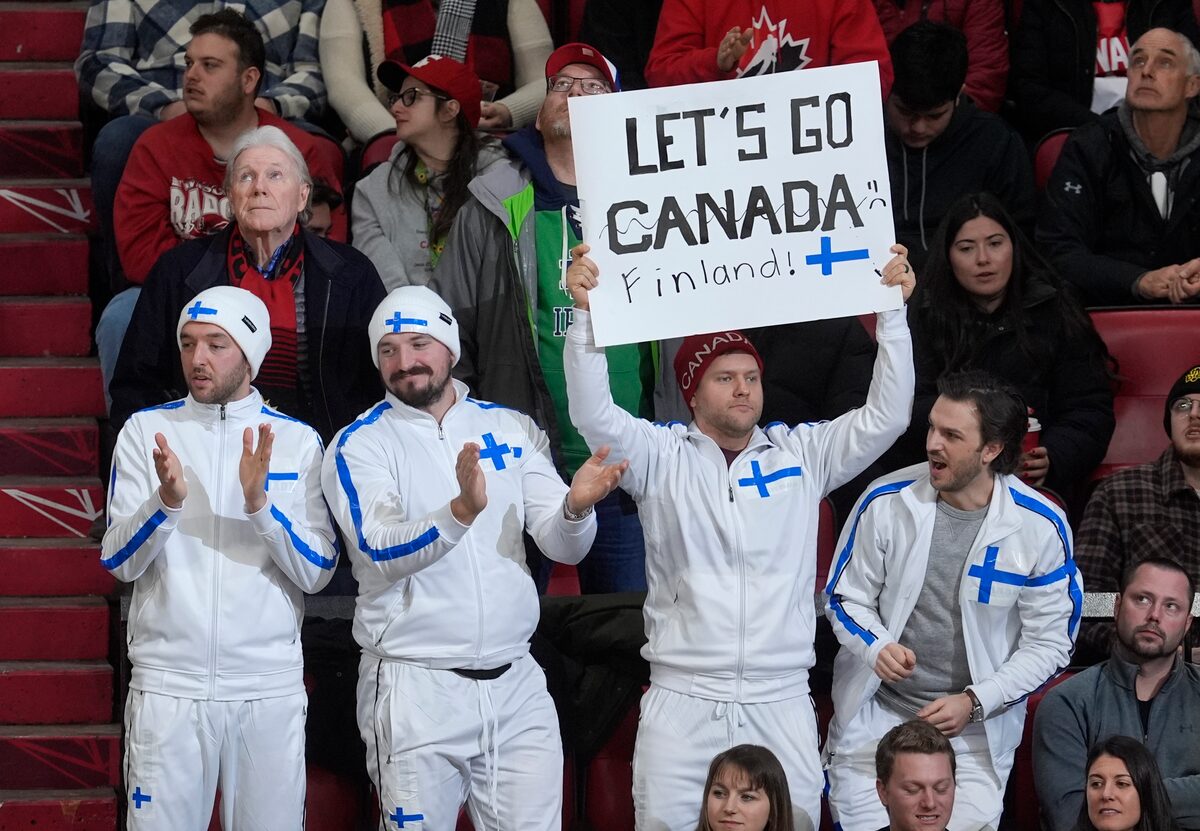
Team Finland
Among the traditional hockey powers, nobody punches above their weight as much as the Finns, particularly when it comes to the Olympic Games. In the five so-called “best-on-best” hockey tournaments featuring Olympic participation, Finland secured one silver and three bronzes, finishing on the podium more than anyone else over that span, including Canada.
And though the team didn’t fare all that well at the previous World Cup of Hockey, finishing last, the country of 5.5 million did make it all the way to the World Cup final in 2004 before being edged 3-2 by Canada in the championship game.

Finnish captain Aleksander Barkov helped the Florida Panthers to take their first-ever Stanley Cup last summer.Nathan Denette/The Canadian Press
Why Finland will win
There’s no doubt about it, Finland is the rank outsider to win the 4 Nations, a dubious honour that is adequately reflected by the bookmakers’ odds. But the Finns are happy to play pesky, and their centre depth reflects that style exactly. Captain Aleksander Barkov looks set to be the perennial winner of the Selke Trophy as the NHL’s best defensive forward now that Patrice Bergeron has retired, and he’s joined down the middle by Sebastian Aho, Roope Hintz and Anton Lundell, with both Mr. Barkov and Mr. Lundell having gained championship-winning experience with the Florida Panthers last year.
As for offence, the recently traded Mikko Rantanen knows where the net is, having scored the fourth-most points in the NHL since the start of the 2020-21 season. In addition, winger Patrik Laine – who has cooled off of late after a sizzling start with the Montreal Canadiens last December – has shown that his shot has lost none of its potency, particularly on the power play.

Dallas Stars players help Miro Heiskanen, middle, off the ice after a trip by the Vegas Golden Knights, which has left him out of commission for Team Finland.Stephen R. Sylvanie/Imagn Images
Why Finland won’t win
Depth isn’t exactly a buzzword around the Finnish blueline. As an NHL-controlled tournament, everyone taking part in the 4 Nations has to be an NHL player, and when it comes to defencemen, Finland has only 11 of them.
Worse still, the best of them, Dallas defenceman Miro Heiskanen, had to withdraw with a knee injury, while Maple Leafs blueliner Jani Hakanpaa, who has played just two games for Toronto this season, finally gave in to the seemingly inevitable and also pulled out.
Behind them, the team is pinning an awful lot of its hopes on Nashville Predators netminder Juuse Saros. But with an 11-23 record and a .899 save percentage through 41 starts, Mr. Saros has looked a shadow of the player with a .915 career average. If he falters, it’s the turn of either Kevin Lankinen or Ukko-Pekka Luukkonen to lead the charge, a tall order given that neither has ever even suited up for an NHL playoff game.