During his two years behind the bench, Marsch has elevated this program to its highest ever place of 26th in the FIFA rankings – it enters the tournament as the 30th best team on the planet – and combined with a run to the Copa America semi-finals two years ago, there is real belief that the Canadian men can now make a mark on the world stage.
But soccer is a whimsical sport. Its vagaries have sent home teams far more talented and better equipped than Canada long before they expected to depart. Some of the sport’s greatest coaches and managers have seen their best-laid plans torn apart at the seams in front of millions of spectators, with a nation’s hopes and dreams crushed by an opponent’s moment of genius or a controversial call.
That’s why Marsch has leaned into the things his team can control, such as set pieces like the penalty kick, and two critical full-blooded team defence strategies: slide plays and the press. Let’s break down these three aspects of the game.
Arguably the most dramatic play in soccer, the penalty kick has long had a pivotal role in deciding the outcome of numerous World Cups, whether as standalone shots awarded for fouls or as part of a tie-breaking shootout.
Thirty-two years on, still no one is quite sure if Roberto Baggio’s wayward kick ever returned to planet Earth, which cemented victory for Brazil against Italy in 1994. And three of the past men’s World Cup finals – starting with that heartbreak for Italy – have been decided by spot kicks.
In a sport of tight margins, set-piece plays such as corner kicks and free kicks can have an outsized influence, but none has the expected return rate of an unopposed shot from 12 yards, with a 79.1-per-cent conversion rate during normal and extra time since the 1978 World Cup. However that rate drops to 69.4 per cent during tense, win-or-go-home penalty shootouts.
While players like Baggio and fellow Italian Antonio Cabrini – the only player to miss out of the nine penalties awarded during regulation time in the World Cup final – struggled in these pivotal moments, Canada has had its own tribulations with penalty kicks on the biggest stage. Alphonso Davies famously missed the chance to score the country’s first World Cup goal four years ago in Qatar, with Belgium goalkeeper Thibaut Courtois saving his effort.
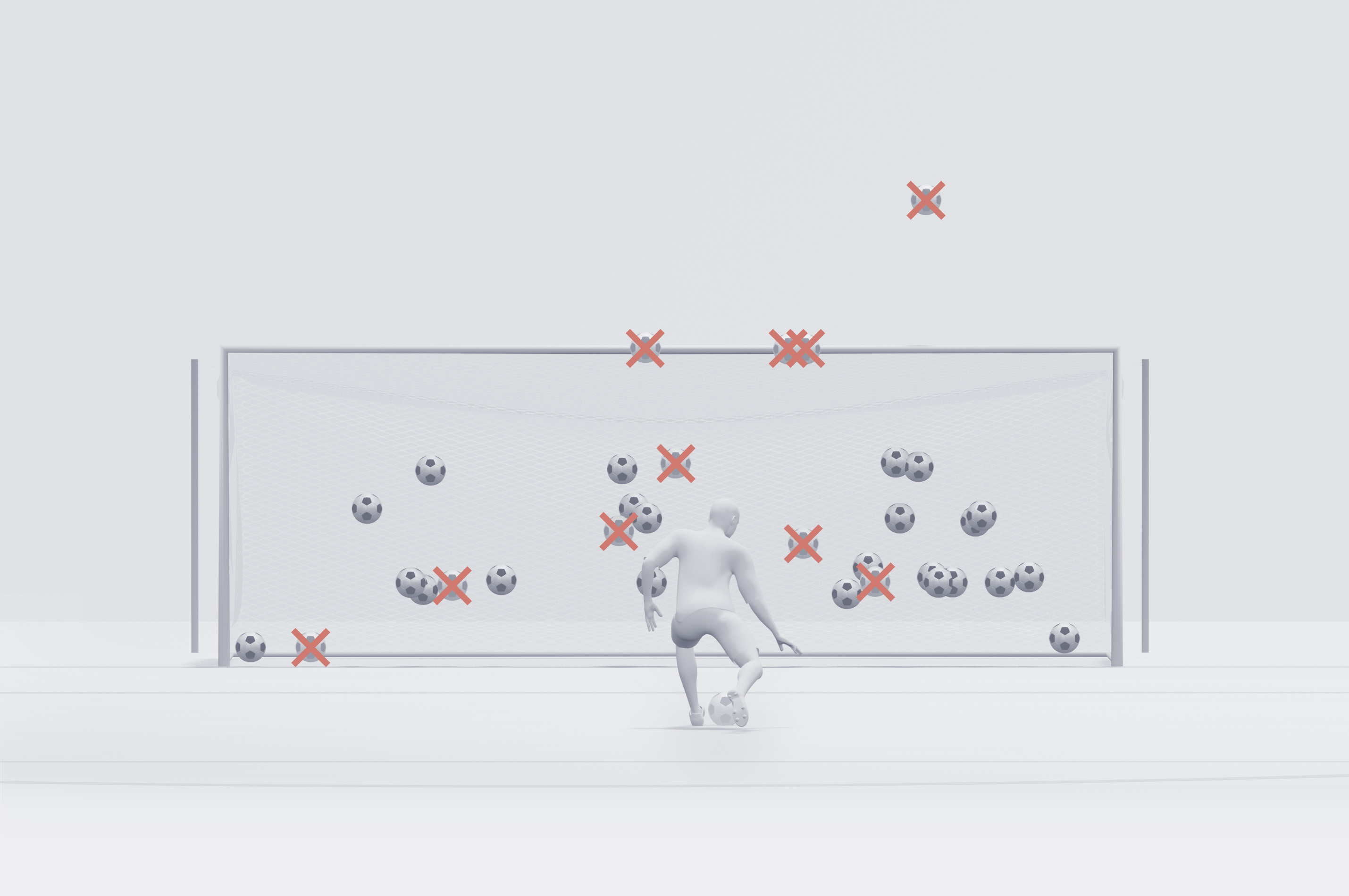
Canada’s record in competitive shootouts is less than pristine, winning just two of the seven competitive shootouts it has contested. But one of those came following Jesse Marsch’s appointment as head coach in 2024, with his team eliminating Venezuela in the quarter-finals of that year’s Copa America.
Nevertheless, this has historically been a weak spot in Canada’s game. Twice last summer the team had disappointments shooting from the spot. They crashed out at the Gold Cup in a shootout against Guatemala, and they lost to Ivory Coast in the Canadian Shield exhibition tournament, with defender Luc de Fougerolles missing the deciding kick on each occasion.
And while Canada under Marsch has leaned into an aggressive, no-holds-barred style of play – leading to a recent run of red cards during the winter run of friendlies – a red card at a World Cup can see a campaign unravel in a hurry, with players having to sit out at least one additional game for the offence. Canada will need to find the right line between risk and reward.
This sort of play emphasizes the idea that defence can sometimes be the best form of attack. Though far from novel – teams have been aggressively trying to win the ball back for decades – the philosophy has been made more popular in recent years. Marsch leans into the philosophy of aggressive, vertical, heavy-metal soccer played on the front foot, backing down from no one or nothing.