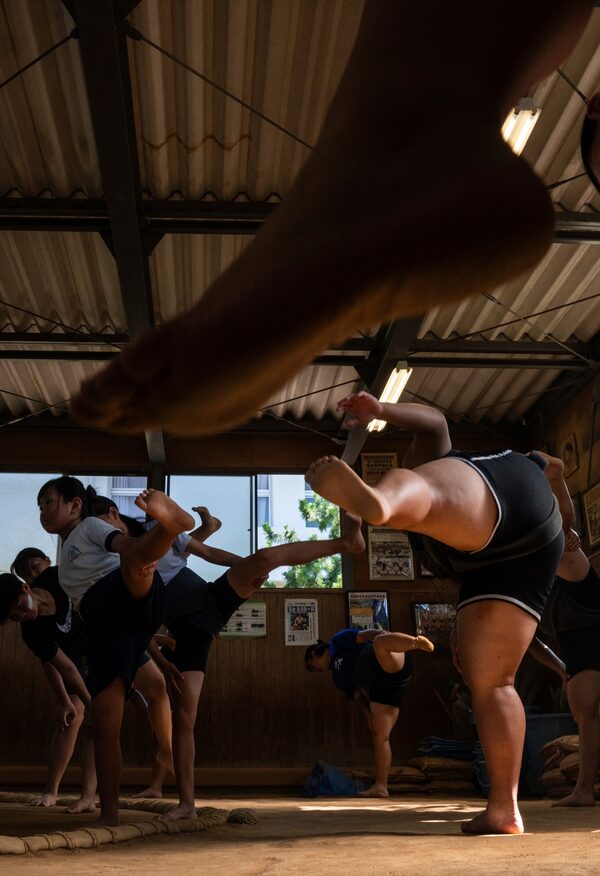
This high school in Tottori is home to Japan’s largest sumo club for women. Being a wrestler, or rikishi, is a kind of quiet defiance: Professional sumo and its traditional rings, or dohyō, are still reserved for men only. But a growing number of rikishi are making their mark at the amateur level.
Sumo evolved out of rituals to entertain Shinto deities, and to many modern Japanese, it is more than a sport. Over 1,500 years, complex rules have formed around everything from the loincloths wrestlers wear, called mawashi, to the dohyō itself, considered a sacred space.
Pictures of men dominate the walls of Tottori Johoku High School, which has been training women since 2016. The school has produced several male sekitori over the years, rikishi who advance to the highest professional levels and earn a salary.
Trainees in Tottori check their weight before and after meals designed to bulk them up. In a country where, by government estimates, more than 20 per cent of women in their 20s and 30s are underweight, success in sumo often means fighting a culture that prizes thin women.
‘In Japan, slim is often equated with beautiful. But for performance and health, thin isn’t everything,’ says Shiho Suzuki, left, one of four female rikishi at the Keio University club in Tokyo. She says the teasing women face can sometimes be enough to make them quit.
Rio Hasegawa, last year’s middleweight world champion, coaches at Keio, where men and women train side by side. These men are fighting bare-chested, whereas women wear the mawashi over a body suit – a fact she feels is unavoidable. ‘I’ve never wanted to compete dressed like a man.’
Airi Hisano, right, is reputedly the strongest female rikishi in Japan, a distinction she has earned while working a day job at Tachihi Holdings. At the company club, she is the only pupil of retired pro wrestler Toyonoshima Daiki, left, who is impressed by how she and other women spar. ‘Women’s sumo is powerful and matches the intensity of male bouts,’ he says.
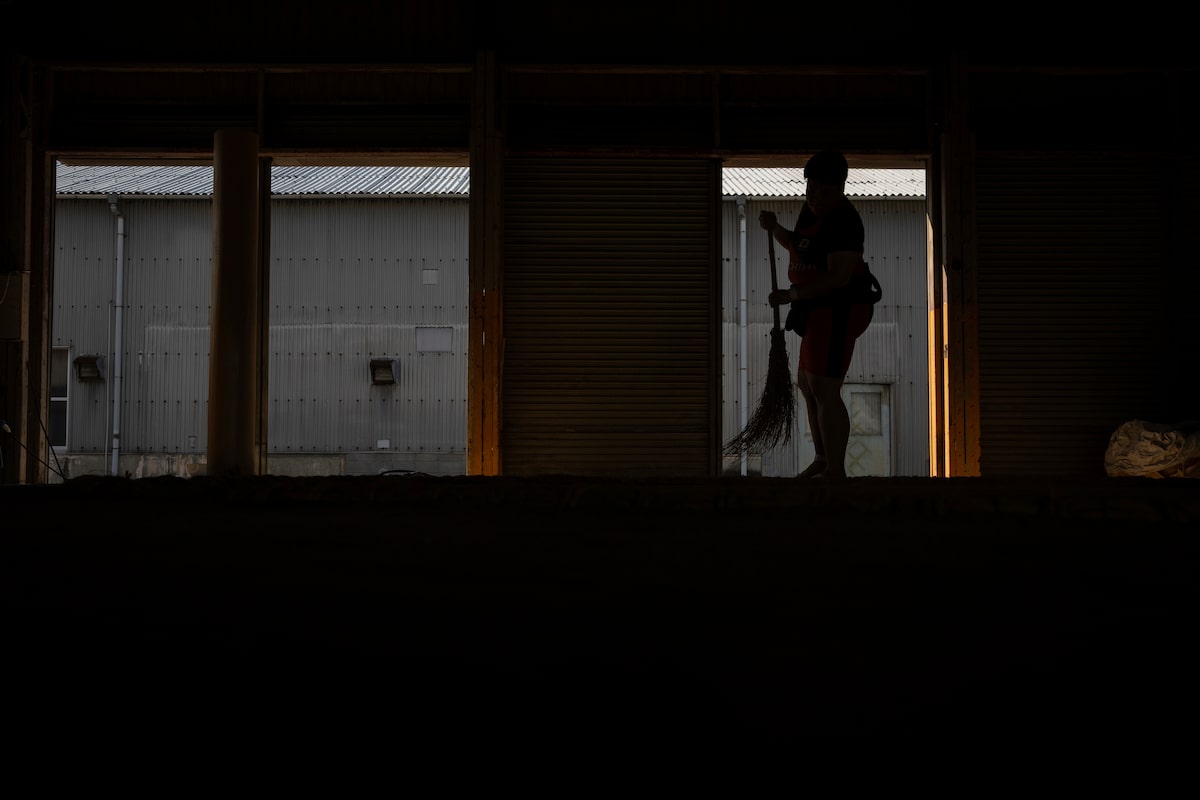
After practice, Airi Hisano removes her training straps and sweeps the ring. The 27-year-old hopes that, one day, men and women will have a more equal arena to compete. ‘I want sumo to become an Olympic sport with no gender distinction,’ she says.
Video: Watch Airi Hisano in action
Airi Hisano and her coach spoke about their high hopes for women's success in sumo wrestling.