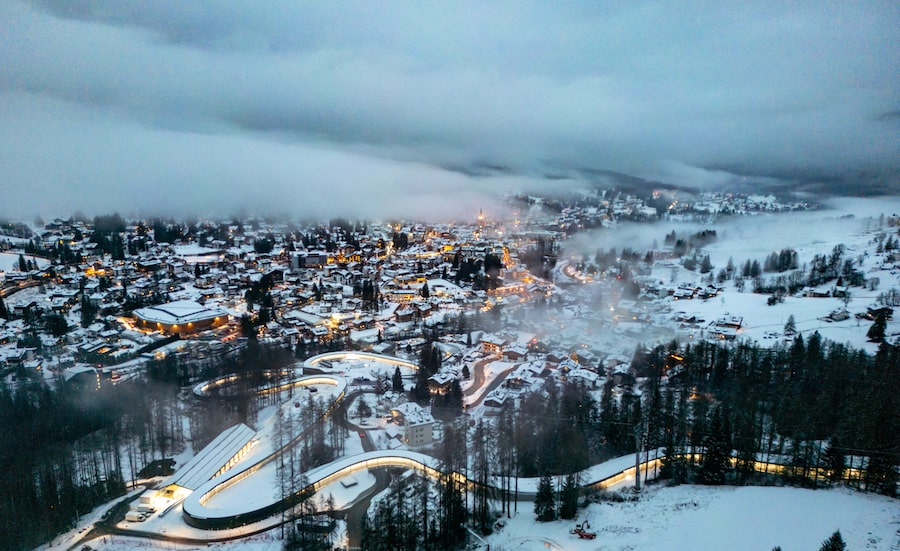
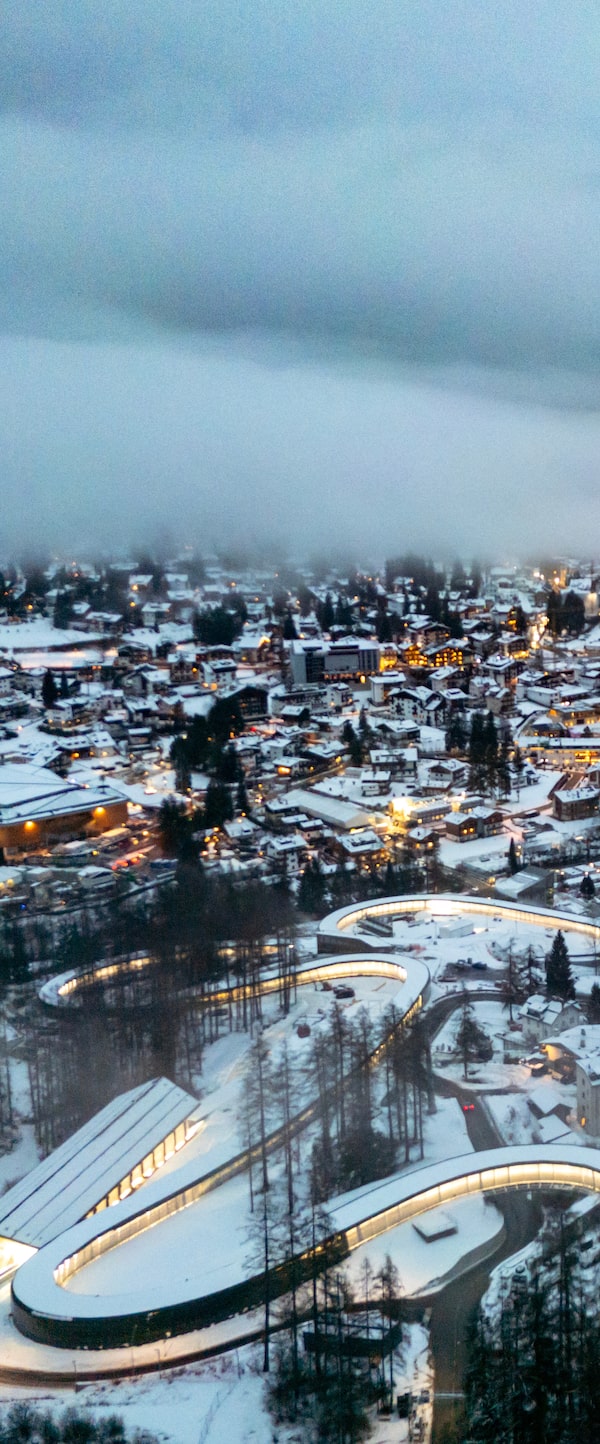
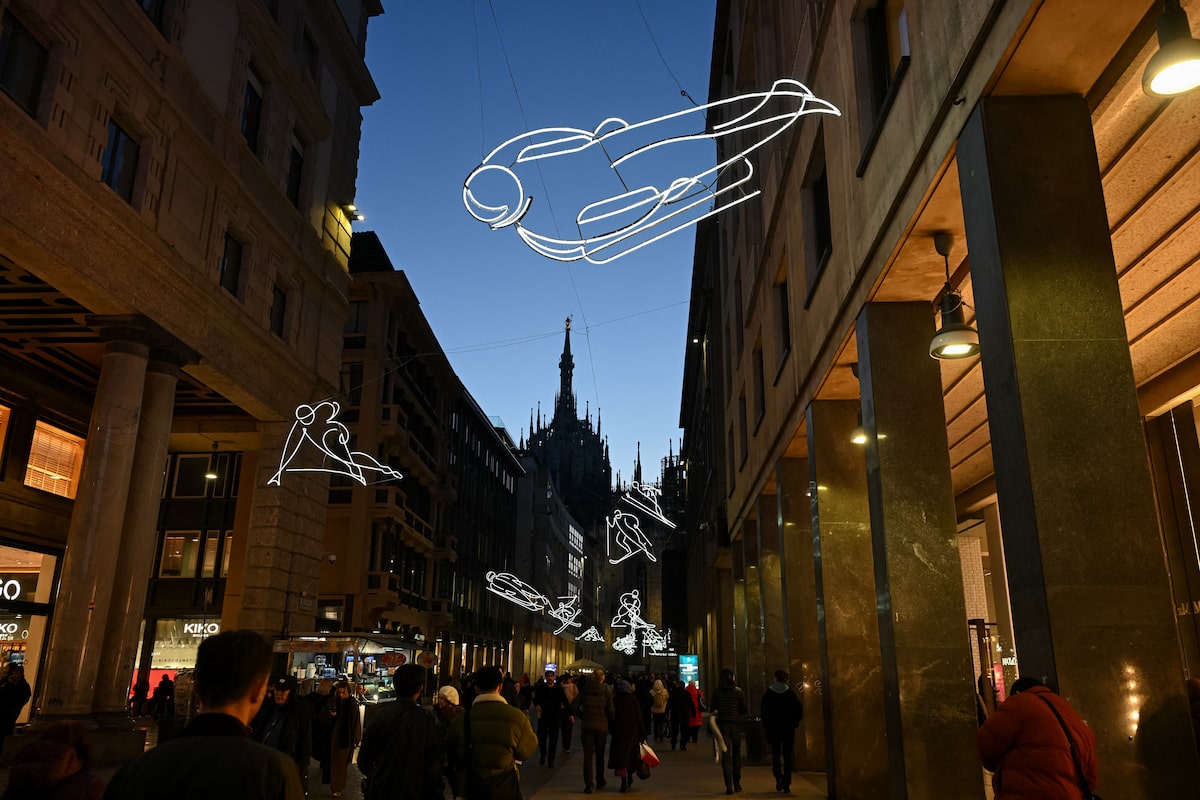
The world spotlight is shining on northern Italy, the site of the Milan-Cortina Olympics, which officially start on Feb. 6. The region is often overlooked by Canadian visitors. If you are going to the Games, you’re in for a treat.
The Games are the most spread out in Olympics history, with events in Milan (hockey and other rink events); Bormio (men’s alpine skiing); Livigno (freestyle skiing); and Cortina D’Ampezzo (women’s alpine skiing and sliding competitions). Milan’s San Siro Stadium will host the opening ceremonies; Verona’s ancient Roman amphitheatre the closing ones.
Visitors to the Alpine competition sites will be enchanted by the mountains and the charming towns, some of which date back to the Medieval era. Italy’s far north – the mountains along the Swiss and Austrian frontiers – is another world, well away from the madding crowds (mostly, that is).
The climate, cuisine, culture – even the language – are distinct, to the point that the Italians who live in the lofty, snow-capped region don’t really consider themselves Italians. “Here, we are Italians only when we’re in the World Cup,” said Marzia Zappa, owner of Hotel Cepina in Bormio.
She was, of course, referring to soccer’s premier event.
Herewith my survival guide, if you will be an Olympics spectator or merely a visitor for a ski holiday.


Distance is your enemy
I can see it now: Honey, there are still tickets available. Let’s catch a ski race today in Bormio and zip over to Cortina tomorrow for the luge.
No, you won’t. Bormio and Cortina are 300 kilometres apart along narrow, twisty and possibly icy mountain roads. That’s at best five hours of wheel time; more likely six or seven.
And once you get to either town, you won’t be able to park anywhere near the action, because everything is cordoned off and the small army of police and soldiers will keep it that way. Milan to Bormio is three hours by car; Milan to Livigno takes four hours.
So pick one Olympic event town or city and stay there, or nearby.

Italian winters are mild by Canadian standards. It was raining in Milan on Jan. 28, when Toronto and Montreal were still mopping up after heavy snowstorms.Luca Bruno/The Associated Press
You call this winter?
Italian winters, even in Italy’s alpine north, are not like Canadian winters. In late January, the highs in Milan were 7 C to 9 C (with rain); in Bormio 1 C to 5 C (with some snow); in Cortina 0 C to 3 C (also with some snow).
Yes, the Italian Alps and Dolomites could be colder during the Games in February, but probably not, since the days will be longer and winters tend not to linger in climate-change whacked Italy. When I was in Bormio in mid-January, there was no snow on the ground. It was wet and, at times, foggy, sort of like Vancouver.
Pack accordingly. No need to bring a sub-Arctic, down-filled jacket to keep you toasty, or snow boots that go to your knees. If you forget anything, Milan and the Olympic mountain towns, especially glitzy Cortina, where the rich and famous, including Sophia Loren, have gathered since 1956, when it hosted the Winter Olympics, are full of winter fashion shops.

Team Italy’s gear has been designed for more than a decade by Armani, whose Milan store celebrated the Games during a recent fashion week. Founder Giorgio Armani died a few months earlier at the age of 91.Antonio Calanni/The Associated Press
Airtime, please
The Feb. 7 men’s downhill ski race, on the Stelvio race course in Bormio, is being touted as possibly the greatest downhill in decades. The Stelvio is notoriously steep, fast, and dangerous, with racers reaching peak speeds of 150 kilometres an hour.
Most of the ticketed seating will be in the grandstands installed at the bottom of the race course. But a second, smaller, grandstand is being placed right before the Saint Peter’s Jump, just a few hundred metres beyond the resort village of Ciuk, about halfway down the course; it will be reachable by car or bus.
At that point, you will be able to watch the racers soar through the air for 50 or 60 metres. That’ll be one of the high-thrill spots. Check to see if your ticket is valid for those seats or can be upgraded for them.

Learning Italian is a plus before visiting, but in the north, it's not the only tongue you'll hear. This sign for tourists is in Ladin, a language of the Dolomites, as well as Italian and German.Nicole Winfield/The Associated Press
Don’t be the ugly American (or Canadian)
Italians will love you if you learn a few words of their language, even if your accent makes you sound like an inebriated goat (as mine still does). It would show respect for their culture and trigger a smile. I mean, when Italians visit Canada or the U.S., they don’t expect to be addressed in Italian, so don’t automatically expect to be addressed in English in Italy.
Learn to say good morning (buon giorno); good night (buona notte); thank you (grazie); you’re welcome (prego); how are you? (come stai?); a coffee, please (un caffè, per favore); how much does this cost (quanto costa) and a few other niceties and practicalities. If you want to impress a local in Italy’s Olympic mountain country, toss out a phrase in the local dialect, which has its roots in Latin. Instead of buon giorno, say bon dì and watch your host’s face light up with astonishment.

To ski or not to ski? That is the question
There are a ton of things to do in the Italian Alps or Dolomites, or in Milan, if you are not watching a competition or skiing on a non-Olympic mountain such as Santa Caterina, just beyond Bormio.
Bormio is locally famous for its hot-springs baths, which have been used since ancient times; Leonardo da Vinci was a fan and wrote about their healing properties. The streets of Cortina D’Ampezzo and Milan are lined with luxury fashion shops, some of them dazzling, all of them expensive, given the recent strength of the euro (in January, it cost C$1.61 to buy a euro).
Milan is more than just credit-card-killer shopping. It is a culturally vibrant city full of treasures. Don’t miss the Pinacoteca di Brera, the art gallery and culture centre whose launch was inspired by Napoleon, and, on the off chance you can nail tickets on short notice, Leonardo da Vinci’s Last Supper.
For something entirely different, take the Bernina Express narrow-gauge railway from Tirano, on the Italian side of the Swiss border, to Chur, the oldest town in Switzerland. The spectacular UNESCO World Heritage route takes you over 196 bridges and through 55 tunnels, passing through forests and by deep gorges and glaciers.

Italian cuisine – which UNESCO recognized last year as a special cultural heritage – is not a monolith. This pasta is Roman, but the Olympic host cities have different dishes.Antonio Masiello/Getty Images
Eat like a local
The Valtellina area, home of Bormio and Livigno, in the Italian region of Lombardy, is acclaimed for its hearty, healthy, simple cuisine – the product of clean, cool mountain farm pastures. The cheeses, meats and grains are particularly good. Try sciatt, a crispy buckwheat fritter with a core of melted casera cheese, or polenta taragna, a dense polenta made of cornmeal and buckwheat flour. The bresaola, the thinly sliced, air-dried salted beef, is delicious.
Wines? Valtellina is renowned for nebbiolo alpine wines, which are lighter, fresher and more mineral-laden that the powerful Barolo wins of the Piemonte region of northwest Italy. Enjoy!

Maja Hitij/Getty Images
Road to the 2026 Olympics: More from The Globe and Mail
Ask us your Winter Olympics questions
On Feb. 2 at 11 a.m. ET, reporters Robyn Doolitle and Rachel Brady, columnist Cathal Kelly and European bureau chief Eric Reguly will be answering your questions ahead of the Milan Cortina Winter Olympics. The Globe's team has been reporting on Italy's preparations and Canada's medal hopes, and will be heading to the Games ahead of the opening ceremony on Feb. 6. Submit your questions now.
The Decibel podcast
The Olympics are giving Italians plenty of on-ice drama to talk about, but so is Heated Rivalry, whose stars are torchbearers at the Games. TV critic J. Kelly Nestruck spoke with The Decibel about the gay hockey love story and how it’s caught on globally. Subscribe for more episodes.
What to expect in Italy
Canadian Olympic Committee works to navigate a very spread out Games
Bormio hopes Olympic spotlight won’t dim its traditional spirit
Why no dark horse will win Olympic gold on the Stelvio ski race course