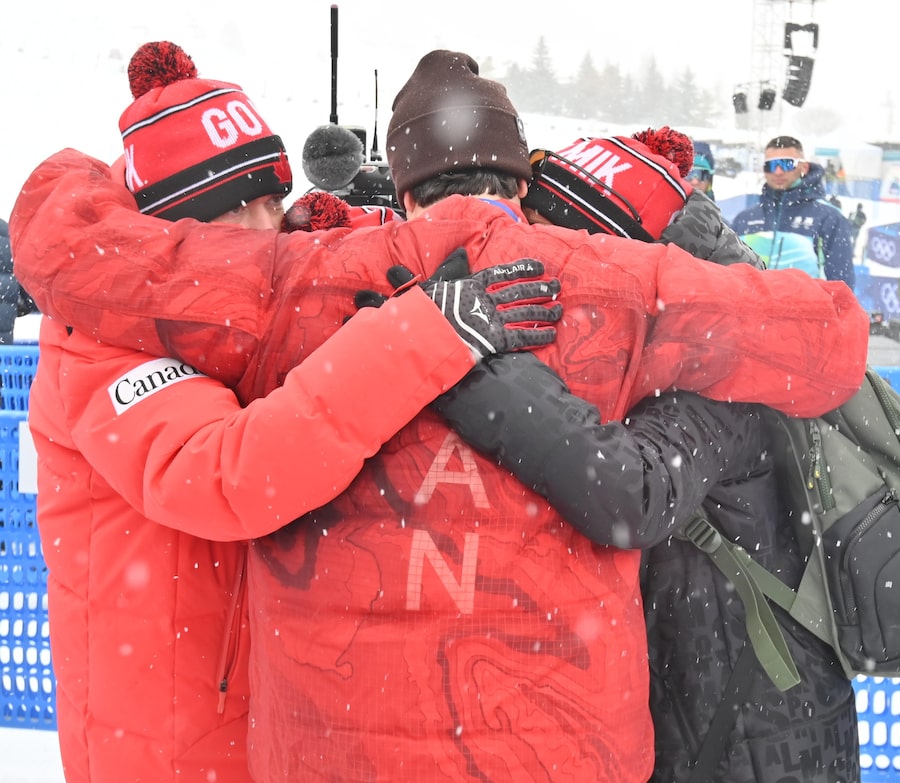
Thank you, lads. We – we Canadians, that is – needed your medals.
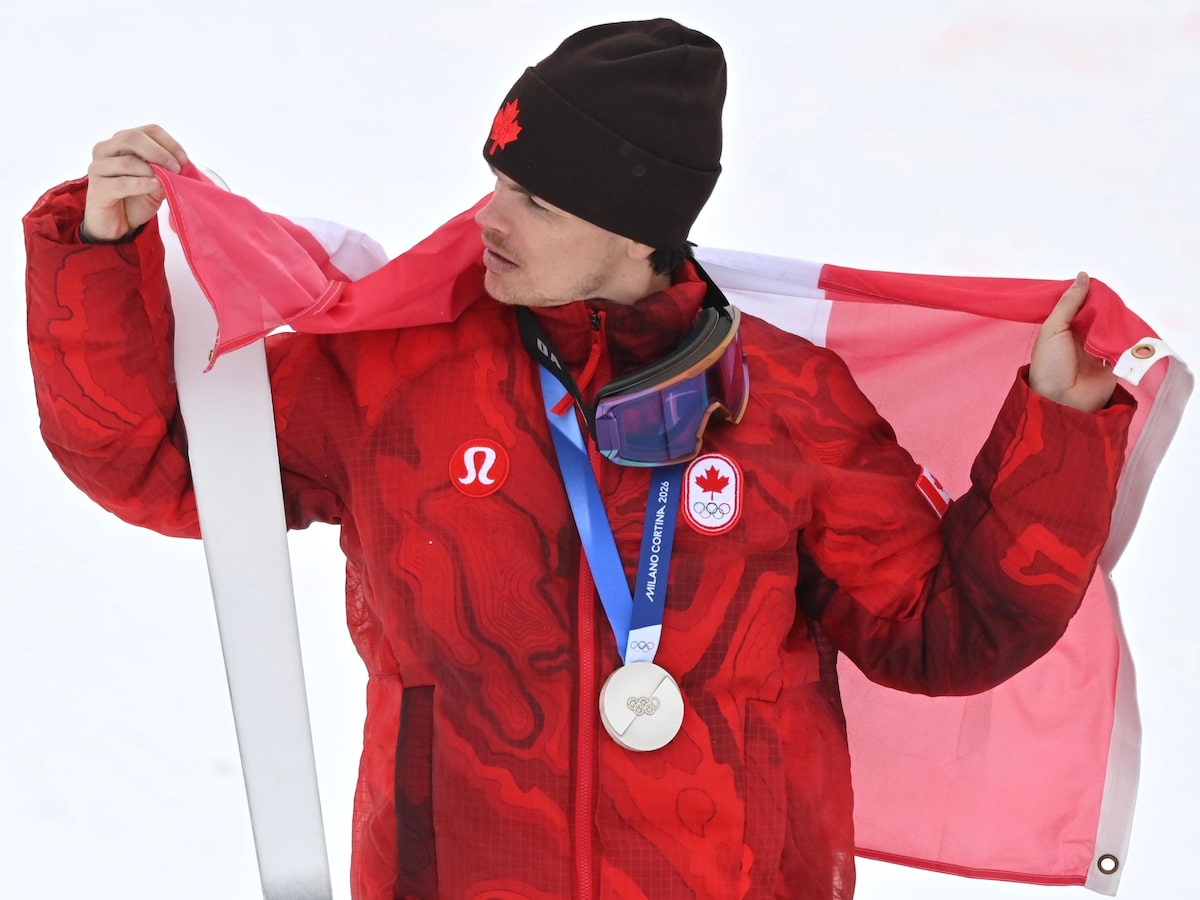
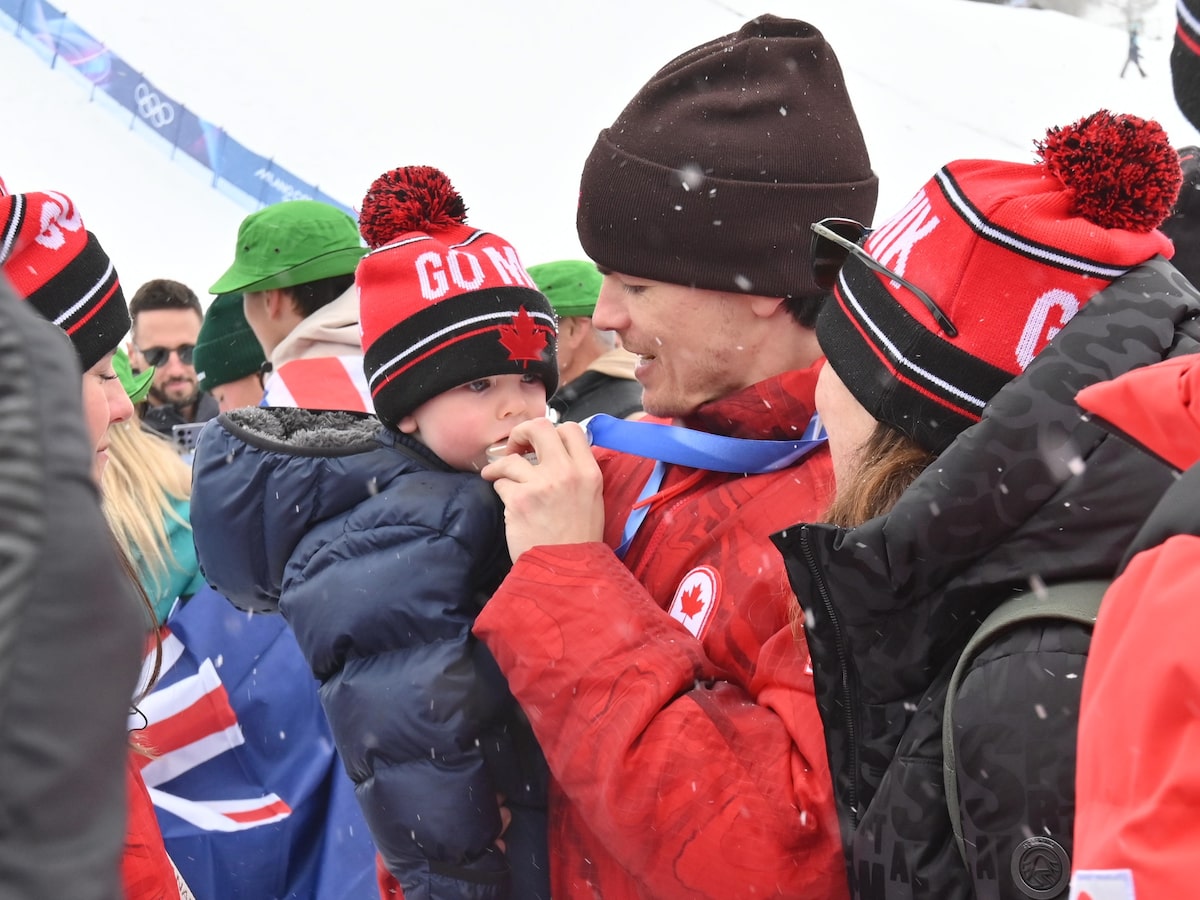
We needed Mikaël Kingsbury, the freestyle skier with the most wins in the history of the sport, to climb the podium in the men’s moguls final in the Milan Cortina Olympics. Ditto Éliot Grondin in the men’s snowboard cross (both won silver on Thursday). Not just because we were short of medals at this stage in the Games – we were – but because we were short of good news in a country that once seemed to have everything going for it.
The headlines since Donald Trump became U.S. President for the second time and took a wrecking ball to democracy, to world trade – especially with Canada – to the environment, to diplomacy in general, and to human decency have been universally gloomy, distressing even.

Protesters at the Olympics have used the world's attention to speak out on social issues, such as the continuing ICE crackdowns in the United States.Claudia Greco/Reuters
Where to start?
Tariffs galore that are hollowing out our manufacturing industry, especially in autos; threats to turn Canada into the 51st state; potential and probable exit from the Canada-U.S.-Mexico trade agreement; Trump’s vow to hit Canada with 100-per-cent tariffs if Mark Carney does a trade deal with China; calling our Prime Minister “governor”; withdrawal from the Paris climate agreement; alleged plans to loot our water; threats to invade our sovereign airspace unless we buy American F-35 fighter jets; accusing Canada of being a major source of illegal immigration and fentanyl when we are clearly not.
The list goes on – and on. Then there is the non-political news. The Tumbler Ridge killings plunged us into national mourning. Mass killings are regular events in the U.S.; they are not supposed to happen to us (though they do once in a while).
As the existential crisis pierces the soul of Canada, Canadian athletes did what they were supposed to do: Train hard to make us proud in the Milan Cortina Winter Olympics.
They did train hard. But inevitably, they and many other athletes got swept up into the moment that can generally, but not exclusively, be defined as: Trump versus the World. The Olympics are not supposed to be political. To varying degrees, they are, of course, perhaps no more so than the 2026 edition.


The Games are outpourings of nationalism of the good kind. Everyone loves it when an underdog athlete from an unlikely country takes the podium or even fails heroically to reach it (remember the Jamaican bobsled team from Calgary 1988?). Everyone loves it when a winner wins again, proving he or she is the real thing, not a one-shot wonder who just got lucky (in these Games, Switzerland’s Franjo von Allmen, with three Alpine skiing golds in five days, comes to mind). Everyone loves a compelling backstory that lifted some poor kid from misery and turned him or her into a star (Von Allmen again; after his father died when Von Allmen was 17, his village crowdsourced his racing career).
I have covered several Olympics and can’t remember a Games so infused with politics as this one. To be sure, Milan Cortina turned into a political beast well before the opening ceremony on Feb. 6. For instance, Russia’s murderous invasion of Ukraine saw it banned from the Games, but Israel, which is widely accused of genocide in Gaza and whose prime minister is the target of an International Criminal Court arrest warrant, was not. How can that be anything other than a political decision by the International Olympic Committee?


Vice-President JD Vance, who was booed at the opening ceremony and watched some U.S. athletes compete last weekend, has been a magnet for criticism of the Trump administration at the Games.Kevin Lamarque/Pool Photo via AP
But the biggest political story at the Italian Winter Games was the dark American shadow cast over them by Trump and his cronies.
U.S. Vice-President JD Vance was booed at the opening ceremony in Milan on Feb. 6. Protests in Milan targeted, in part, the presence of Trump’s goon squad, otherwise known as Immigration and Customs Enforcement, or ICE, in the Olympic city (turns out they were not on the street and mostly concerned with diplomatic security, but never mind – they were there). The accusation from Italian Prime Minister Giorgia Meloni some of the protesters were “enemies” of the state – a charge that could have been scripted by Trump himself – added to the tension.
Trump called Hunter Hess a “loser” after the American freestyle skier said that representing his country “brings mixed emotions,” a comment that endeared him to many non-American athletes and spectators. Some of the spectators I met in Bormio and Livigno, two of the Olympic mountain towns, seemed genuinely concerned that Canada would become the 51st state (“Too bad you have no aircraft carriers,” one empathetic Briton told me). When the Tumbler Ridge tragedy happened, I heard “We are so sorry for Canada” more than a few times.

Canadian fans are easy to spot in the national colours around Livigno and the other Olympic venues.Fabrizio Troccoli/The Globe and Mail
Canada’s athletes lifted our national spirits when they were down – way down. Athletes in general seem programmed to spit out clichés about their performances, but almost every Canadian athlete I interviewed said “I am so proud to be Canadian,” and, this time, their comments truly came from the heart, from a renewed national pride, from a sense that we have everything to lose if we allow Trump to try to bash us into submission.
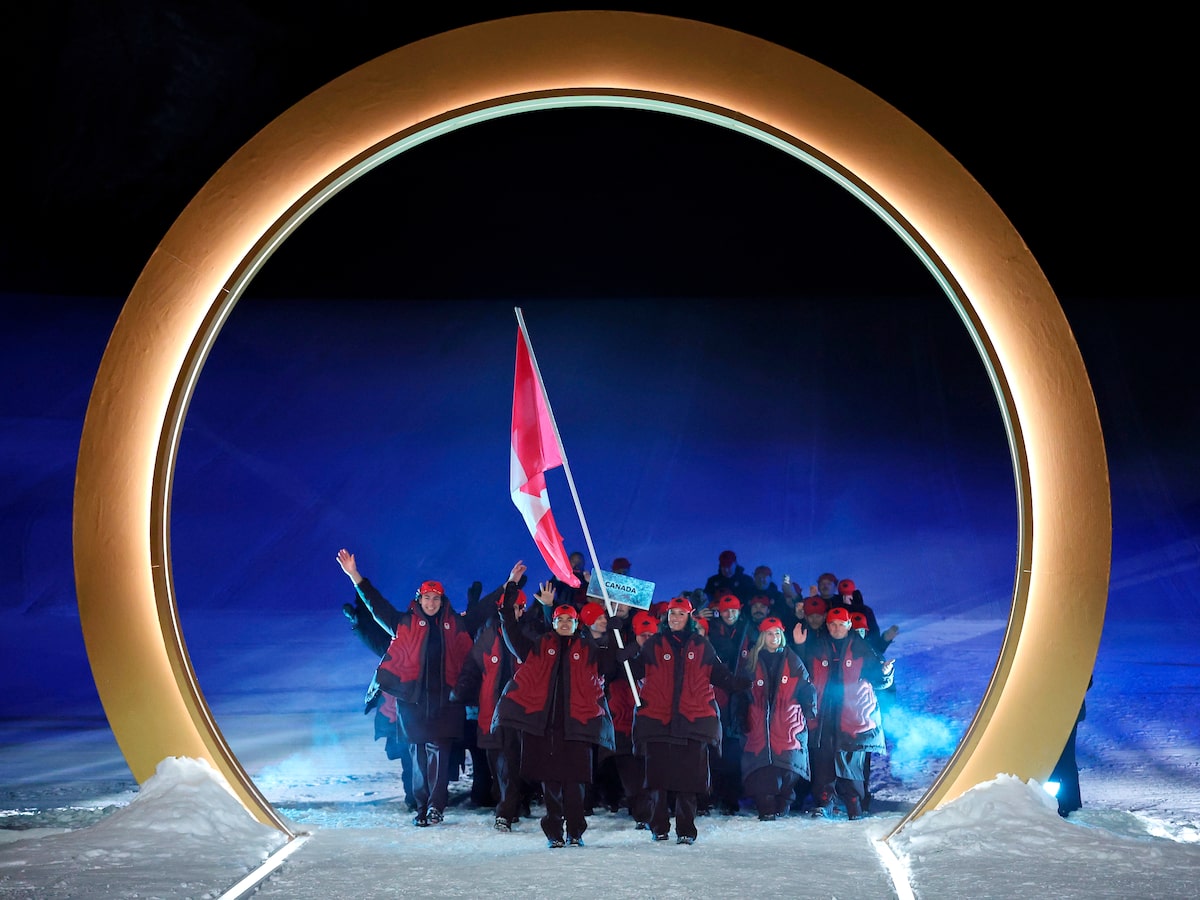
That pride was reinforced on Thursday with the silvers won by Kingsbury, who is virtually a household name in Canada and was the flag-bearer at the Olympic opening ceremonies, Grondin and bronze medalist speed skater Courtney Sarault. “I’m very proud to be Canadian,” Kingsbury told reporters after his moguls competition. “I had chills in the Olympic opening ceremonies when I was holding the flag.”
Follow our live daily coverage of the Winter Games.