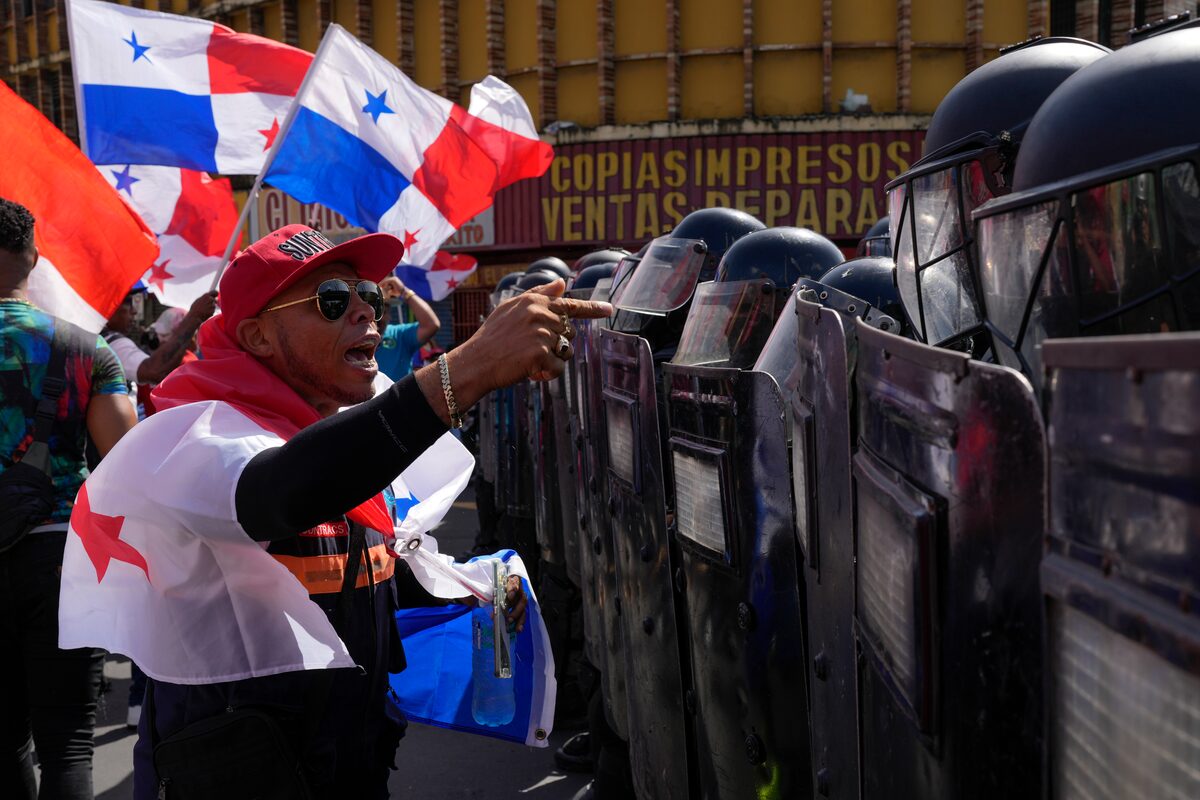
During his first overseas trip as top diplomat of the United States, Secretary of State Marco Rubio reiterated President Donald Trump’s claims that China has effective control over the Panama Canal, warning Panamanian officials on Sunday that the U.S. would “take measures necessary” to protect its interests.
Mr. Trump has called for the canal – which the U.S. funded the creation of – to be returned to his country’s control. Mr. Trump and Mr. Rubio have pointed to Chinese business interests that own key ports on the international waterway as a key reason for U.S. concerns. Panamanian officials have repeatedly said negotiations over sovereignty are off the table and pushed back on any suggestions of foreign influence over the canal. However, on Monday, Mr. Trump said Panama had agreed to “some things.”
Speaking on Sirius XM’s The Megyn Kelly Show on Thursday, Mr. Rubio said a Hong Kong-based company that operates two ports at the canal’s Atlantic and Pacific entrances was a risk to U.S. interests because “they have to do whatever the [Chinese] government tells them.” “And if the government in China in a conflict tells them to shut down the Panama Canal, they will have to,” Mr. Rubio said. “And, in fact, I have zero doubt that they have contingency planning to do so. That is a direct threat.”

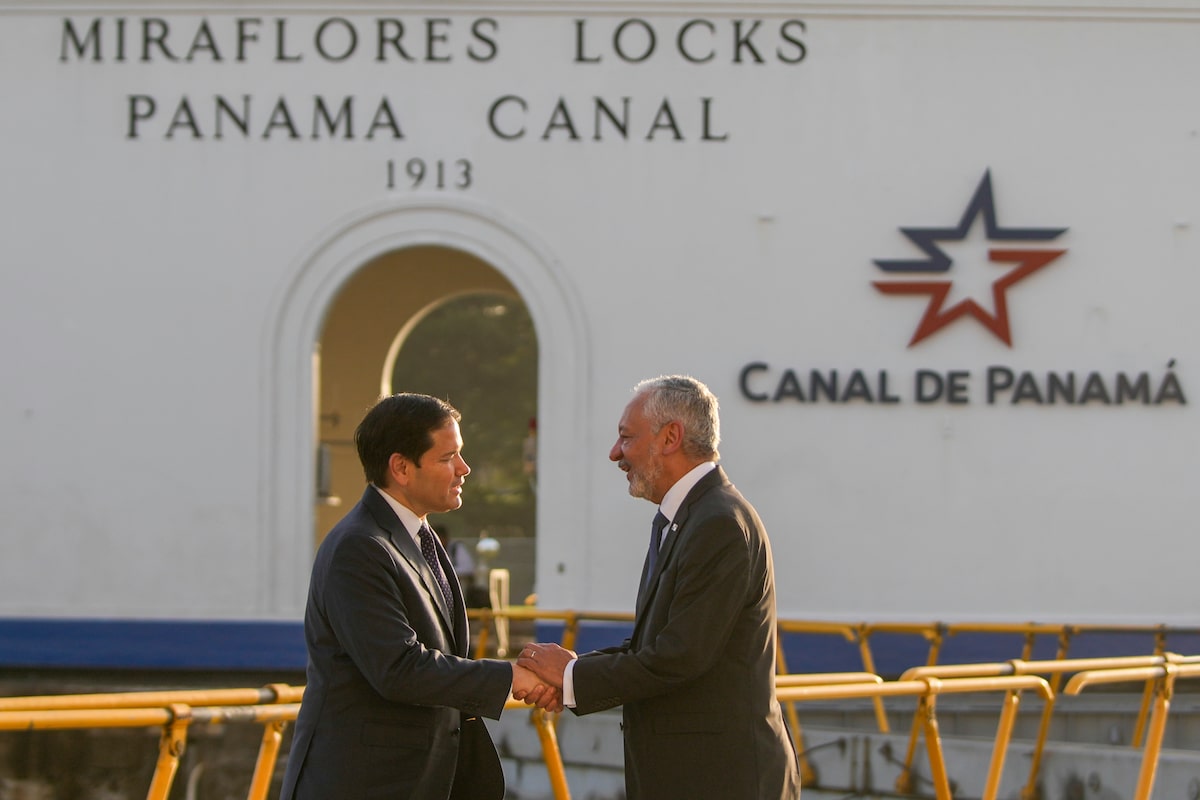
Panamanian President José Raul Mulino and U.S. Secretary of State Marco Rubio met in Panama City on Feb. 2. The State Department said Mr. Rubio told Panamanians to limit Chinese influence.Mark Schiefelbein/The Associated Press
Responding to similar claims by Mr. Trump, Panamanian President José Raul Mulino said in December the waterway “is not under any direct or indirect control from China, the European community, the United States or any other power.”
For its part, Beijing has also said it has no influence over the canal. Foreign ministry spokeswoman Mao Ning said last week it is a “permanently neutral international waterway.”
“We agree with what Panama’s President said, that the sovereignty and independence of Panama are not negotiable, and the Panama Canal is not under direct or indirect control by any power,” she added.
Critics of Beijing in the U.S. have pointed to growing Chinese economic and political ties to Central America as a reason for concerns over the Panama Canal. In 2017, Panama cut diplomatic ties with Taiwan to instead officially recognize Beijing, endorsing China’s territorial claims to the self-ruled island.

Chinese residents of Panama City visit the Yang Wo temple this week to light candles for Lunar New Year. Panama has the largest Chinese diaspora in Central America.MARTIN BERNETTI/AFP via Getty Images
The company Mr. Rubio is concerned about, a subsidiary of Hong Kong-based CK Hutchison Holdings, has managed the two ports since 1997, two years before the canal was fully handed over by the U.S. to the local government.
In pushing back against the criticism from Mr. Trump and others, CK Hutchison has pointed to its nearly 30-year presence on the canal. The company’s Panamanian arm says it is co-operating with an investigation being carried out by Panama in response to Mr. Trump’s statements, noting previous audits carried out in 2020 and 2021 found the company had “demonstrated full compliance with our contractual obligations.”
CK Hutchison did not immediately respond to a request for comment regarding allegations of Chinese influence. Most Hong Kong businesses are closed this week owing to the Lunar New Year holiday.

CK Hutchison's subsidiary and other firms are responsible for shipping billions of dollars of goods through the canal each year.Matias Delacroix/The Associated Press
Registered in the Cayman Islands, CK Hutchison has a market cap of around HK$150-billion ($27-billion) and assets worth HK$1.158-trillion ($214-billion). Its core businesses are retail and telecoms, which account for almost 60 per cent of annual revenue.
That includes a number of major international businesses, including the mobile phone network 3 Hong Kong, which also operates in Europe; TPG Telecom, Australia’s second-largest wireless carrier; rail and power companies in Britain and Australia; full or partial interests in 53 ports in 24 countries; and Park’N Fly, which operates airport parking in Toronto, Vancouver, Ottawa and several other Canadian cities.
CK Hutchison traces its history to the mid-19th century, and the establishment of the British colony of Hong Kong. Over the years, through innumerable mergers and buyouts, the company has grown into a sprawling multinational, largely controlled by the family of Li Ka-shing, Hong Kong’s richest person and one of the richest billionaires in the world.
Chinese control over Hong Kong has increased significantly under President Xi Jinping, and the Li family – several senior members of which hold Canadian citizenship – has business, family and political ties to China, all of which could hypothetically give Beijing some influence over the company’s decision-making.
However, CK Hutchison is not a Chinese state-owned company, or even a private company such as Huawei with much stronger ties to the Communist Party and Chinese military.
The conglomerate is much more akin to other global multinationals such as Nestle or Johnson & Johnson, with holdings and interests all over the globe, ones that would be at risk if the company were clearly acting at Beijing’s direction.

Hong Kong tycoon Li Ka-shing and his family have built CK Hutchison into a large global trading business.Kin Cheung/The Associated Press
Mr. Li’s immense wealth has also allowed him to take a more independent position over the years than many other Hong Kong tycoons. During anti-government unrest in 2019, when pressure was immense for businesses to show their patriotism, Mr. Li made an ambiguous call for an end to the growing violence, while also seeming to offer tacit support for the pro-democracy aims of the protests themselves.
Speaking to news agency AFP, Euclides Tapia, a professor of international relations at the University of Panama, said Mr. Trump’s real goal was “for Panama to reduce its relations with China to a minimum.”
Will Freeman, a fellow for Latin America Studies at the Council on Foreign Relations, an American think tank, agreed, saying last month that “Trump seems to be making an example out of Panama with the goal of getting other regional leaders to think twice before they take any bold steps to deepen ties with Beijing.
With reports from Reuters and the Associated Press

Enea Lebrun/Reuters
Trump vs. the world: More from The Globe and Mail
China vows retaliation as Trump tariffs pile on more economic stress