
Deep in the Amazon jungle, a pregnant woman needs help.
Her baby is about to come, and a drought has parched the rivers that connect her community to the nearest hospital.
Enter Tabita dos Santos Moraes, one of the hundreds of traditional midwives who deliver babies in the remote villages of the world’s largest rainforest.
The hot afternoon sun shines through the timber-plank walls in the living room, where Mayleane Melo, 22, kneels to ease the pain of contractions. Ms. dos Santos Moraes kneels beside her.
“Relax,” says Ms. dos Santos Moraes, smiling. “We will give birth together, the two of us.”

To help mothers-to-be like Mayleane Melo, right, Tabita draws on knowledge passed down from her great-grandmother. She does not charge the women for these services, since families are often unable to pay.

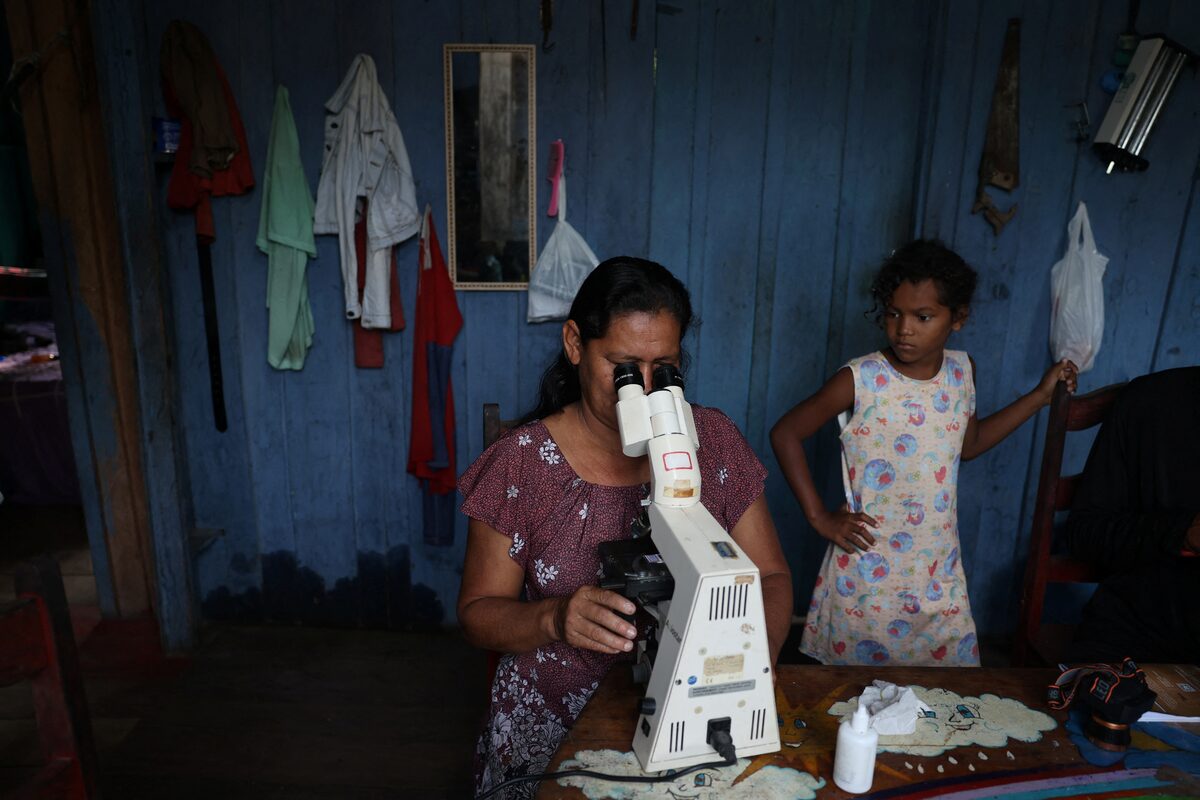
At 51, Ms. dos Santos Moraes calls herself the “umbilical mother” of more than 180 babies she has brought into the world. Her great-grandmother taught midwifery to her aunts, who taught her mother, who taught her, starting at the age of 15.
Although Ms. dos Santos Moraes is passing on the ancient trade to her own daughter, many young women prefer other paths. Amazon midwives are aging, and are often not being replaced. Many communities now have no midwives.
But as hospitals become unreachable, traditional midwives are in demand.
Years of extreme droughts in the Amazon rainforest that studies have attributed to climate change have made river journeys to and from remote communities perilous and added to the challenge of providing health care to riverine communities.
“When people can’t leave their communities, who else will take care of them?” said Julio Cesar Schweickardt, who studies traditional midwives for Fiocruz, a Brazilian public-health research institute. “In these moments, midwives are important.”

These banks of the Solimões River, near Tefé city, were an impassable, sandy expanse by late October, when this photo was taken. Climate change is making such seasons more common.
When there is enough water in the rivers, it takes about four hours to go from Deus É Pai, the community where Ms. dos Santos Moraes and Ms. Melo live, to the hospital in Tefé, the closest city.
But two years of record-breaking drought have turned many of the Amazon’s rivers into meagre streams. Now the trip to Tefé can take more than a day – if the river isn’t entirely impassable.
Like most Brazilian women, Ms. Melo planned to have her baby in a hospital, where any complications could be more easily dealt with than at home.
She travelled to Tefé in early October, at the height of the dry season, weeks before she was due, to avoid the risk of going into labour while stuck on a dry riverbank. She was following the local government’s advice, part of an emergency plan to deal with the consequences of the drought.
But after a few days, she realized she could not afford to spend so much time away from home. She was staying with strangers and missing her family, who were unable to visit because the trip was so difficult. So she returned.
“You need money and more support to stay there,” Ms. Melo said, sitting on her doorstep on a recent afternoon. “Here, we don’t have to spend anything.”


More than one in 15 women in the state of Amazonas have their babies outside of hospitals, about four times the national average, according to government statistics. Maternal mortality is also higher in the Amazon region.
Although public-health officials have not analyzed how droughts or floods affect those statistics, midwives say women have cancelled trips to the city to give birth because of the river conditions. One, Ms. dos Santos Moraes recalled, had a baby on the way to the hospital because the journey took longer than expected. “That’s why having a midwife in the community is so important,” she said.
Public-health officials say they need midwives to support women they can’t reach. Sandra Cavalcante, an official from the Amazonas state health department, said that after 28 years in the region she is still amazed by its vastness on every flight over the forest. “I keep thinking: my God, how do you provide health care in a territory like this?” she said from her office in Manaus. What she has learned, she added, is that “wherever there is a traditional midwife, women don’t die in childbirth.”
Still, the government does not pay traditional midwives unless they complete formal training recognized by the medical establishment.
Most midwives in Amazonas state live on less than the minimum wage, often relying on government cash transfers to the poor, according to a 2023 survey. Ms. dos Santos Moraes said her work is voluntary, as she knows the families she helps have no money to pay. Her youngest daughter, 14-year-old Mariene, is eager to carry on the work of her mother and the ancestors who came before her.
“I’m very proud of them,” she said, smiling. “I’m also trying to follow their lead.”


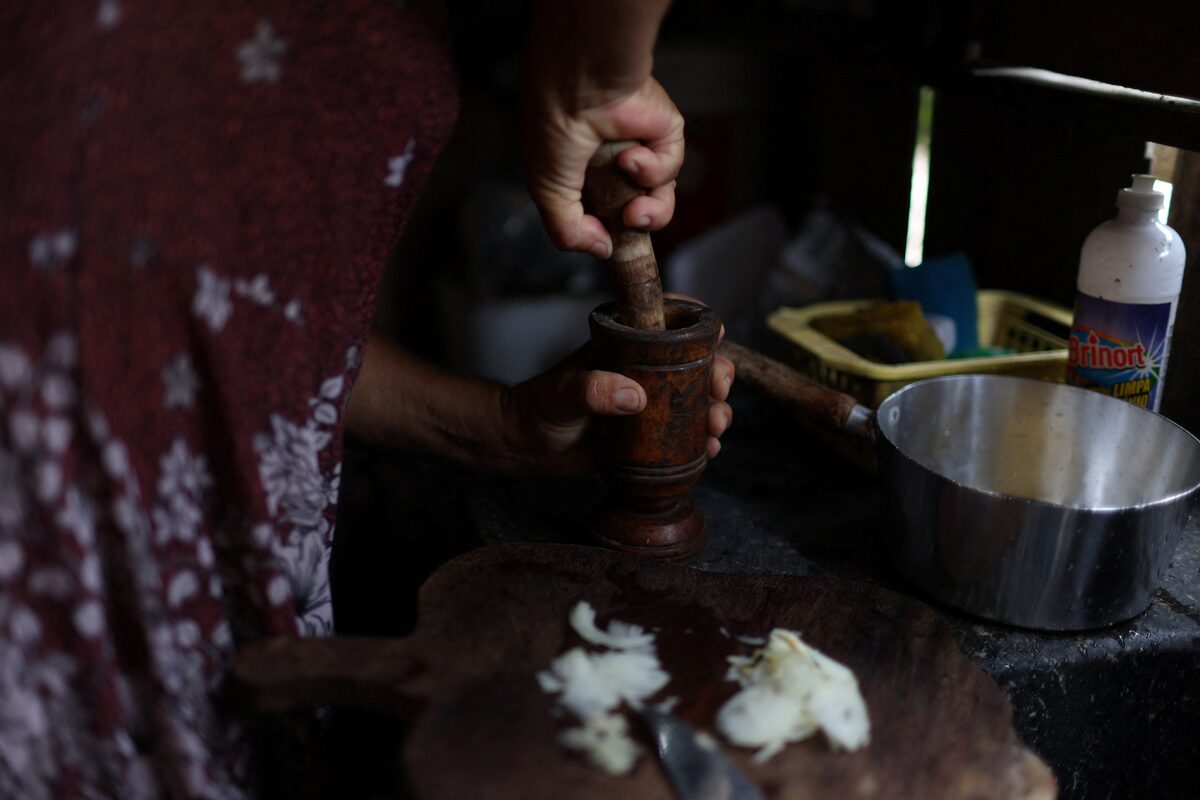

Ms. dos Santos Moraes was having breakfast one Saturday morning when Ms. Melo showed up; she had been in pain for some hours. Ms. dos Santos Moraes felt her belly for a few minutes and told her, “It’s time.”
She sent Ms. Melo back home. It was time for the midwife to make the “charity broth,” a soup that would give her patient strength and calm. The base was flour from the manioc root that she and her husband grow, one of their main sources of income. She added a pinch of pepper, some salt, garlic and onions. “It’s only tasty with butter,” she said, adding the finishing touch.
The “charity broth” is one of many traditions used by Amazon midwives.
They make tea with a native purple cotton, to ease swelling, as well as many other ailments. Boiling milk with wormseed, known as epazote in Mexico, is used to treat colic. And a paste of shredded manioc is applied on breasts to ease inflammation for women struggling to feed their newborns.
To help take a placenta out after birth, Maria Delaide Pontes Cevalho, a 72-year-old midwife in Tefé, said she will shake the belly twice, twist the cord, blow and recite a rhyming verse in Portuguese: “Saint Margaret, I’m not pregnant or about to give birth. I want you to take this dead meat out of my belly.” The placenta is buried outside.
A few hours after having the soup, Ms. Melo lay on a mattress on the floor. Her hair was drenched with sweat as she contorted in search of comfort. Ms. dos Santos Moraes watched her for a while, then grabbed her hand.
“Look inside my eyes and say: I will be able to push,” she said. “Now is the time for your baby to be born.”
As Ms. dos Santos Moraes gave encouragement, Ms. Melo pushed until her baby emerged in the midwife’s hands. As she placed baby William on his mother’s stomach, he started to cry.
William do Nascimento Rodrigues is one of the babies who owe their first breaths to midwives such as Tabita. Watch this mini-documentary to see more of his journey.
Reuters