

Oiapoque is still a small enough town that you can hear a rooster call out in the lavender dawn. Where men continue the trade they learned from their fathers. And a sacred tree looms large in a clearing in the forest.
A serpentine river, a great connector and giver of life in the Amazon, laps along a borderland rich in biodiversity, Indigenous cultures and forests that form part of the lungs of the Earth.
But Oiapoque is changing. The new frontier of petroleum production is here, the most north you can get in Brazil, and offshore in an area known as the Equatorial Margin. Like the illegal gold mining rush that transformed this once tiny fishing village more than 20 years ago into a dynamic small town, the forces of speculation, promise and pursuit of prosperity are at work again.
Last month, Ibama, the Brazilian Institute of Environment and Renewable Natural Resources, greenlit exploratory drilling for the first deep-sea offshore well in the mouth of the Amazon basin, a parcel known as Block 59. Petrobras, the Brazilian state oil company, has already started drilling in waters about 175 kilometres from Oiapoque and 500 kilometres from the mouth of the Amazon river.


“The Oiapoque of yesterday is not the Oiapoque of tomorrow,” said Fernando Preto, who commands a small boat taking people and goods between Brazil and its neighbour, French Guiana.
It is a point of inflection that is steeped in symbolism and high stakes, as people battle climate change in a deeply unequal world. At a time when countries need to accelerate their transition away from fossil fuels, Brazil is doubling down, seeking to climb from eighth to fourth-largest oil producer by the end of the decade.
For President Luiz Inácio (Lula) da Silva, oil is a key. His administration has sought to reclaim the country’s environmental prestige by driving down deforestation that ran wild during the government of Jair Bolsonaro by more than half, and resetting the relationship with Indigenous communities. It has committed to a more aggressive decarbonization plan that would slash emissions between 59 and 67 per cent below 2005 levels by 2035, and has pledged to raise US$125-billion for tropical forest conservation. The proceeds of more petroleum production will help the country achieve its energy transition, Mr. da Silva argues.

Brazil’s president Luiz Inácio (Lula) da Silva claims the proceeds of more petroleum production will help the country achieve its energy transition and improve the lives of its citizens.PABLO PORCIUNCULA/AFP/Getty Images
“As long as the world needs it, Brazil will not throw away a wealth that can improve the lives of the Brazilian people,” the President said after the permit decision. “It’s easy to talk about the end of fossil fuels, but it’s difficult to say who is in a position to free themselves from them today. Nobody is.”
The contradiction is not lost on observers, including Brazil’s own environment minister, who acknowledged it during a recent television interview. Drilling for oil in the mouth of the Amazon basin carries with it the weight of the largest biome on the planet, on which we all depend. It is home to Indigenous and traditional communities, fishing colonies, and a belt of mangrove forests that provide habitat and nursery for fish, crustaceans and mollusks. “The mouth of the Amazon sedimentary basin is very fragile,” said Suely Araújo, a former president of Ibama. “This region must be kept without any kind of oil exploration.”
“So far, we haven’t seen anything positive about the project,” said Cacique Edmilson dos Santos Oliveira, who represents all 68 Indigenous chiefs of the Oiapoque region. “It’s as if we don’t exist. They’re not seeing the Indigenous peoples.”

The battle looms large over COP30, the annual United Nations conference on climate change that begins in the Amazon this week. Held in Belém, the capital of the state of Pará, the visceral contrasts of the modern era are on display. New bike lanes course around decaying colonial buildings, and people living in extreme poverty.
COP30 has been billed as a different kind of climate conference. Mr. da Silva has refused to “embellish” Belém, or move those sleeping on the street out for the event.
“In Belém, the world will see the reality of the Amazon,” Mr. da Silva said during a speech before the UN General Assembly in September. To eradicate deforestation in the region, he noted, “we must ensure dignified living conditions for its millions of inhabitants.”
These are the complex social, economic and environmental realities confronting many parts of the planet. They weave through Oiapoque, like the river that Junior Jonas has navigated for 15 years. He understands its currents, how it rises and falls. Its predictable unpredictability.

Junior Jonas, a water taxi driver, sees the oil project off the Oiapoque coast as an opportunity for more education and work.
Mr. Jonas, 50, learned the water taxi business from his father. The red aluminum speedboat he steers along the Oiapoque River is his – he considers himself lucky that way. But he hopes for something else for his son. And that’s why he looks upon the potential of oil off the Oiapoque coast as another blessing.
“It will increase our chances of more work and education,” said Mr. Jonas, fraying lifejacket on, sitting at the stern of his boat.
This is one of the main selling points emanating from government officials, and Petrobras. The mouth of the Amazon basin is one of five offshore oil fields in the Equatorial Margin, an area that stretches from the northern Amapá state to Rio Grande do Norte. Government officials have estimated there are more than 30 billion barrels of oil reserves in this area. The five-month exploratory process is meant to determine the economic viability of oil reserves, the company said. The discovery of deep-sea petroleum along a nearby flank of South America turned Guiana into the fastest growing economy in the world.
“The Equatorial Margin has the potential to ensure Brazil’s energy security for the coming decades, meeting the growing demand for energy while also creating jobs and driving regional and national development,” Petrobras said in a statement on its website. (The company declined a request for an interview.)

Petrobras is investing in infrastructure in Oiapoque, such as the wildlife rehabilitation centre close to the drilling site.
Petrobras is already investing in infrastructure, such as the expansion of a small airport in Oiapoque that it uses. Its first bid for a drilling application was denied by Ibama in 2023, largely owing to questions about its ability to respond to an accident. So, it built a second wildlife rehabilitation and de-oiling centre, this time closer to the drilling site, in Oiapoque. That proved key. Ibama said it approved the licence after improvements to Petrobras’ 2023 proposal, particularly for its emergency response structure.
For Ms. Araújo, the decision carries grave risks. She is now the public policy co-ordinator at Observatório do Clima, which is part of a coalition of environmental and Indigenous organizations that launched a lawsuit seeking to halt the exploratory drilling. They identify three key flaws in the process: a failure to properly consult with Indigenous and traditional communities; the use of outdated hydrodynamic data in a modelling study on the possible impact of an oil spill; and a failure to consider the climate impact of more oil exploration.
When Ms. Araújo was president of Ibama, she rejected drilling permits for five blocks controlled by French conglomerate TotalEnergies, located very close to Block 59. “They are neighbours,” she said. “In my opinion, in this region this kind of activity is unacceptable.”
For her, this is a “political decision.” Mr. da Silva has been vocal about the need to proceed with exploration in the region, and had criticized Ibama for dragging out the process.
More than anything, Ms. Araújo said authorizing Block 59 acts like the “opening of the door” for drilling in the region. The licensing process for five other Equatorial Margin blocks controlled by Petrobras is already under way. “It will be very hard for Ibama to say no to other blocks,” Ms. Araújo said.
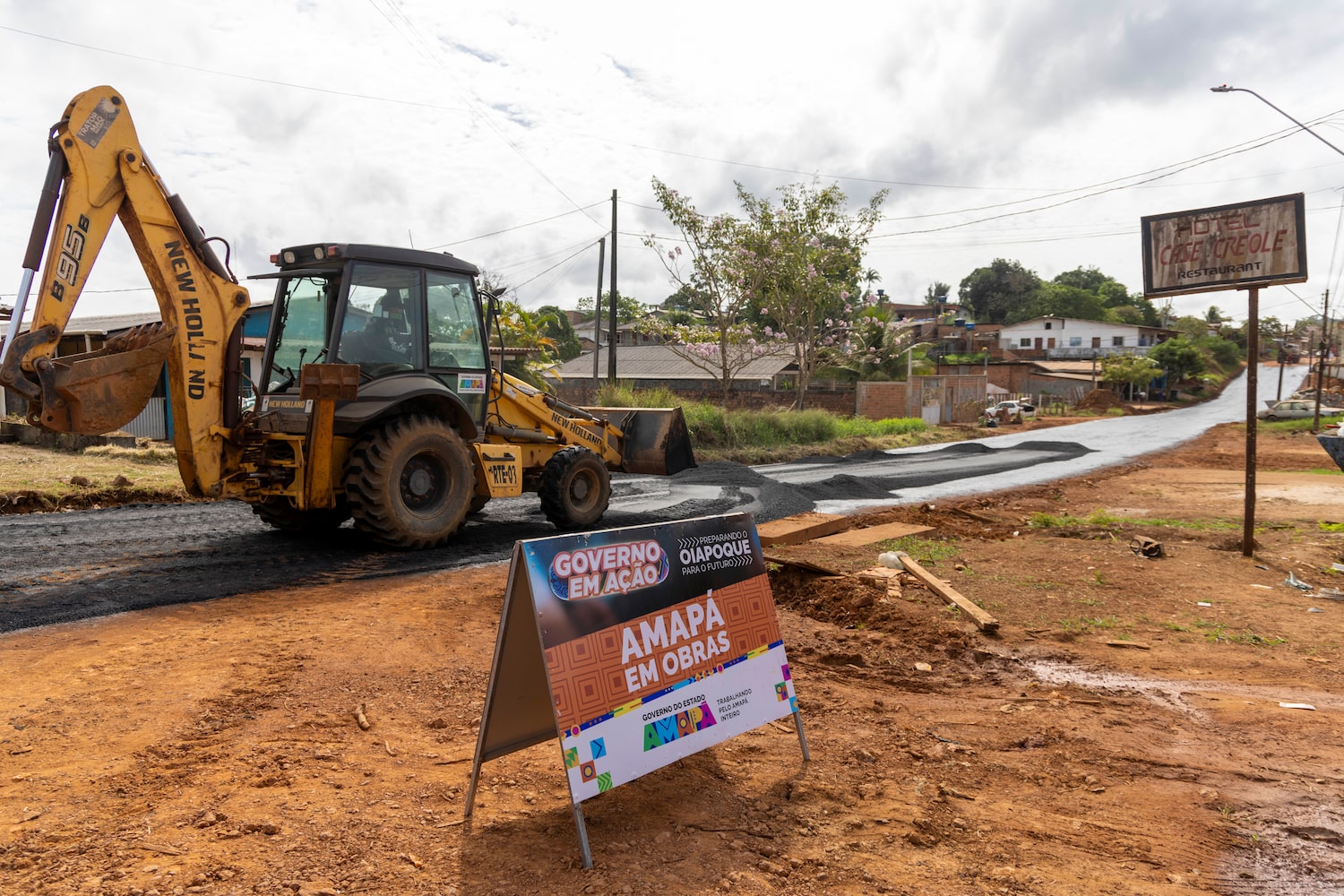
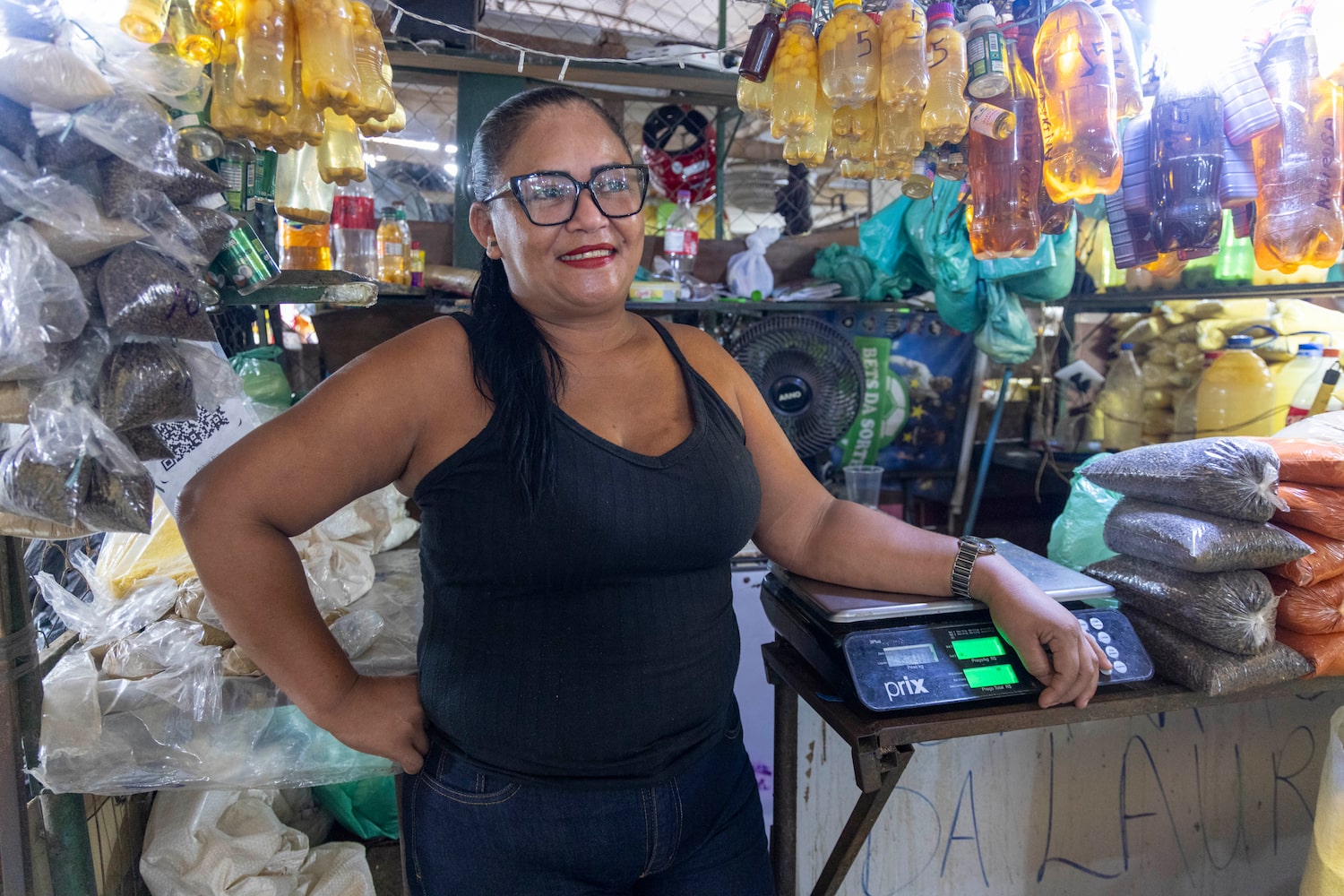
In Oiapoque, the promise of an oil boom is already functioning as a magnet. Several hotels are under construction, colourful balloons mark the grand opening of new shops, and dirt roads are turning into asphalt. In the bustling central market, cassava flour sellers like Laura Cruz, eagerly await the flow of more customers, and improvements to a cityscape that still lacks basic infrastructure.
“The expectations of Petrobras sped up our plans,” said Benicio Freitas, 45, who opened a new optical shop a month ago near the city centre.
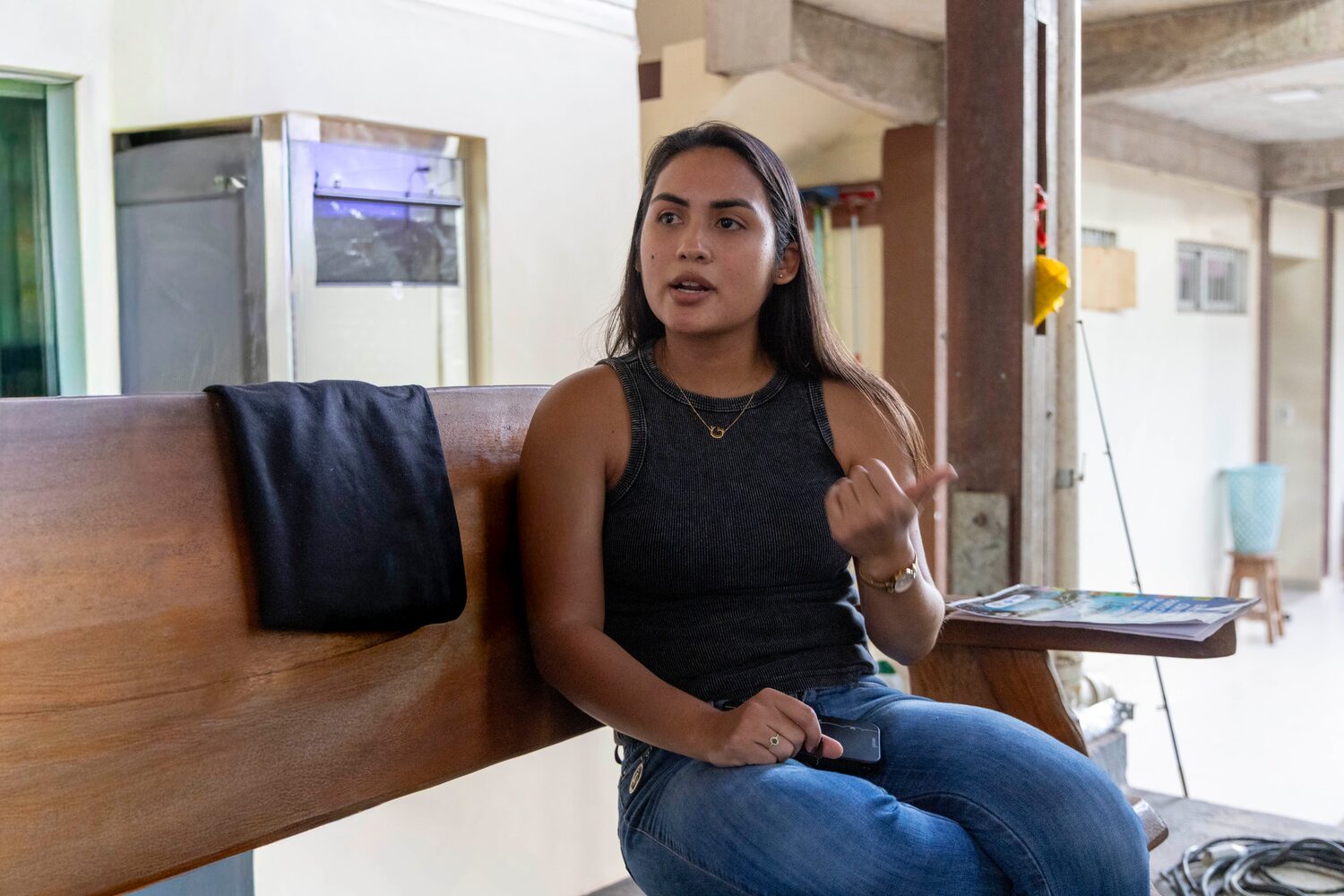
“New people are arriving every day,” added Gabriela Paixao, a doctor who works in a primary care unit. The newcomers typically come from neighbouring states, but increasingly from further south, said Dr. Paixao, 30. “They are looking for work. It used to be for gold, but now it’s for oil. It’s an explosion.”
Audeci Melo de Olivera has lived in Oiapoque for years. He is typically on the water, pulling in meagre earnings as an artisanal fisherman competing against big trawlers. But now, he’s resting his forearms on an upright shovel in front of the house he is building for his family, brick by brick. The 49-year-old father of eight is in a sort of no man’s land of Oiapoque, although there are plenty of humans here now. Vast tracts of forest were razed, by whom it is not entirely clear, and now ramshackle homesteads of wood and sheet metal dot the desolate landscape.


Local artisanal fisherman depend on the river and its ecosystem to survive, including Audeci Melo de Olivera, who competes against big trawlers for his livelihood.
These “invasiones” or occupations of territory, are evidence of the kind of pressure that builds when masses flood an area looking for opportunity, and others try to cash in on real estate speculation. The problem has been exacerbated by oil prospects.
“You can research it; seven more neighbourhoods were created in less than a year,” said Claudia Ñeveu. “And these seven neighbourhoods were created with the total deforestation of water springs, of places that previously had fauna and flora.”
Ms. Ñeveu is in her kitchen, setting the table for a creamy pasta dish she just prepared. She’s a teacher, who is closely observing the fast pace of change in her community. “I’m not against people looking for a place to live, but it should be done in an orderly way,” she added.

Claudia Ñeveu, a local teacher, has seen her community and the environment it occupies change drastically in recent years.
As such, she has been working with a local councilman who spearheaded a municipal commission to ensure the city sets itself up for success.
Ms. Ñeveu said training is the biggest problem – people who do not have the education or skillset to participate in whatever new economy springs up. “People from the south are coming in droves, and especially Venezuelans, Haitians, people who are at war in other countries and are coming to Brazil, thinking, ‘Oh, it’s going to be an oil boom,’ and then you walk around and you see these people in misery.” For the first time, people are sleeping on the street in Oiapoque.
Ms. Ñeveu’s friend, Benoît Waddy Many, a French Guianese writer, fears that most inhabitants don’t understand that they are about to be pushed out of their own community because it will become too expensive.
“The population is not ready,” he lamented. “They just don’t know how they will be expelled.”
Chief dos Santos Oliveira is already feeling that sense of expulsion. There are neighbourhoods where he will not walk alone on foot, because of the verbal threats he’s received from other community members for speaking publicly against the drilling. “They started swearing, saying I’m going to get him. I just lowered my head and walked quickly,” he said of one interaction.

Cacique Edmilson dos Santos Oliveira, who represents all 68 Indigenous chiefs of the Oiapoque region, says their primary concern relates to the potential consequences of an oil spill.
But speaking out is their right. “We’re Brazilians too,” said Chief dos Santos Oliveira. He is Karipuna. He said about 12,000 people from Karipuna, Galibi Marworno, Galibi Kali’na and Palikur-Arukwayene communities live in nearby Indigenous territories. And a major concern has to do with what will happen in the event of a spill. “If that happens, it will certainly enter our waterways,” he said.
Above all, the leaders he represents are adamant that proper consultation must take place. “Prior, free, informed, and good-faith consultation,” he said, which did not occur. “The company is saying that it will only consult after the exploration process,” he said. “The consultation has to start now, at the beginning. Because if they find something, they’ll want to move forward.”
In a clearing in the forest, not far from the city centre of Oiapoque, stands a sacred Samaúma tree. It’s one of the largest tree species in the Amazon, with an enormous trunk that looks like billowing folds of fabric, and roots stretching out, toward the community that surrounds it. There’s an elevated tomb in front, with a modest blue cross. Here lies Benedito Anunciação Furtado. He founded this settlement, one of thousands of quilombola communities, made up of Afro-descendent Brazilians whose ancestors escaped slavery.

Now, it comprises roughly 60 people, half adults and half children, who live in wooden and brick homes that circle the tree. The leadership of this quilombola has passed on to Mr. Furtado’s son, Mauriano Almeida, a 31-year-old who works as a security guard and projects an aura of calmness.
He expressed opposition to the petroleum project for environmental reasons, and said his community is already employing strategies to guard against possible effects, such as the arrival of more people to the area. They have built houses deeper into the forest, to ensure the land remains occupied by them. Meanwhile, they continue to wait on local authorities to provide basic services. “Electricity, schools for our children, and health posts,” he said.
Stewards of the Cabo Orange National Park are also bracing for impact. The 6,500 square kilometre reserve faces the ocean and is south of Block 59. During a meeting of the park’s advisory council last month, Ricardo Motta Pires, its white-bearded warden, gestured grandly across a map of the Equatorial Margin that was projected on the wall.

Ricardo Motta Pires, a warden at Cabo Orange National Park, is concerned about the potential effects an oil spill could have on the ecosystem.
Mr. Pires is worried that Petrobras doesn’t understand the maritime currents that surround the area. Although the company has stated that in the event of an oil spill the slick would move toward French Guiana, there are two documented cases, said Mr. Pires, of objects having travelled in the opposite direction – toward the park, and highly sensitive mangroves.
“The mangrove has pores that allow it to breathe through the roots,” Mr. Pires said. “We won’t be able to save them if the oil reaches them. They’re gone, it’s over.”

Charly Sanches, a deputy secretary with the state government of Amapá, says the Petrobas project is an opportunity to attract investment in the area.
Charly Sanches, a deputy secretary with the state government of Amapá, believes the Petrobras project can be a force for good. “It is about attracting ventures and activities to the state of Amapá that no other sector has yet managed to attract.” He said that 80 per cent of the state is “protected” as conservation or Indigenous lands, leaving economic and urban development to the fraction that remains.
Back at Ms. Ñeveu’s kitchen table, she discussed her own mixed feelings about what may be on the horizon.
“It’s not just about the arrival of oil,” she said. “It’s about the quality of life of Indigenous populations, of riverside communities, Afro-descendants, of people who come here and need our help.”