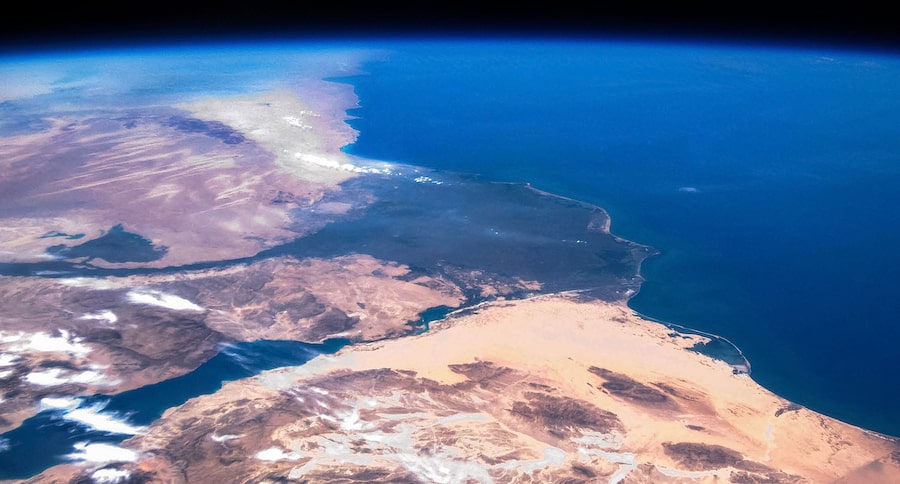
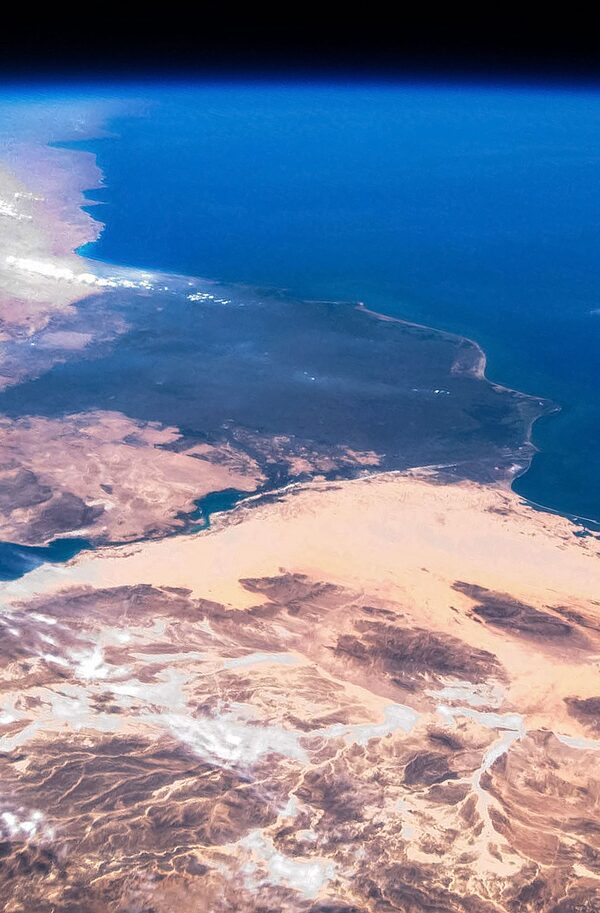
Egypt is building up its military presence in the Sinai in what appears to be a precautionary effort to prevent the war in Gaza from spilling into Egyptian territory.
Recent unofficial photos carried by Middle East media show tanks, armoured personnel carriers and trucks making their way over the desert sands. The armour is not part of routine military manoeuvres. The Egyptian government said as much in a statement released on Sept. 21.
“The forces in Sinai primarily aim to secure the Egyptian borders against all risks, including terrorism and smuggling,” said the statement, which went on to establish an implicit link between the military presence and Israel’s effort, backed by U.S. President Donald Trump, to push two million Palestinians out of Gaza. “Egypt reiterates its absolute rejection of the expanding military operations in Gaza and the displacement of Palestinians from their land.”

Egyptian soldiers keep watch on the Rafah crossing into Gaza, which for much of this war has been the only place to get Palestinians out or aid in. The strip's other land and sea borders are blockaded by Israel.Amr Abdallah Dalsh/Reuters
As the war in Gaza enters its third year – it began on Oct. 7, 2023, when Hamas militants attacked Israel, killing 1,200 people and seizing 250 hostages – the Sinai could emerge as the next flashpoint, political analysts say. It may threaten the increasingly fragile peace agreement between Egypt and Israel. That agreement, the first peace treaty between Israel and its Arab neighbours, emerged from the Camp David Accords, overseen by then American president Jimmy Carter, and came into effect in 1979.
“The buildup is only the latest sign that, nearly five decades after Camp David, the Egypt-Israel peace treaty faces its most serious test,” H.A. Hellyer, a Middle East security expert at the Royal United Services Institute in London and the Center for American Progress in Washington, said. “Cairo and Tel Aviv are deeply divided over the Gaza war, Israeli strikes on Qatar and other countries in the region, like Lebanon, and the circulation of proposals to forcibly displace Palestinians into Egypt’s Sinai.”
The Egyptian leadership and its current and former associates, including retired ambassadors and generals, have made it clear that the country will not absorb the surviving Palestinians from largely destroyed Gaza.

Conditions on the Palestinian side of Rafah are dire after nearly two years of Israeli bombardment.AFP via Getty Images
Stay up to date on Gaza and the Israel-Hamas war, including the ground offensive, ceasefire talks and the continuing famine.
A White House plan to create a “Gaza Riviera,” largely devoid of Palestinians, was leaked to the Washington Post in late August. The plan, which called for the “temporary relocation of all of Gaza’s more than two million population,” was widely condemned by human rights groups as a blueprint for “ethnic cleansing” and came several months after Mr. Trump said he wanted to “clean out” the strip.
Israeli Prime Minister Benjamin Netanyahu has fully endorsed the plan. In July, at a visit to the White House, he said “I think we’re getting close to finding several countries” that would take the Gazans. Those countries reportedly include Egypt – primarily, given its border with Gaza – Libya, Somalia, Somaliland, South Sudan, Ethiopia and Indonesia. There is no indication that any of these countries is willing to accept Palestinians, all the more so since some are either war zones, as Sudan is, or have severe security problems.
There is also the moral issue, former Egyptian diplomats say. No Muslim country would risk being labelled as accessory to ethnic cleansing. “There would be a curse on any Muslim country that accepted the Palestinians,” Mohamed El-Oraby, a former Egyptian foreign affairs minister and ex-ambassador to Germany, told The Globe and Mail.
On Saturday, Prime Minister Mark Carney told reporters during a visit to the United Kingdom that a Gaza peace plan led by the U.S., Egypt, Jordan and the Gulf states was coming together. Details are not clear. Egypt earlier this year proposed a US$53-billion plan to rebuild the largely flattened strip. A technocratic government would be in charge, and an international peacekeeping force under a UN mandate would oversee security. Gazans would stay in Gaza.


The Israel-Hamas war is not the first time that Israel has tried to push Palestinians into the Sinai from Gaza.
As early as 2004, Israeli general Giora Eiland wanted Egypt to cede parts of the Sinai to absorb Palestinians, Mr. Hellyer said. (In the current war, the now-retired general publicly urged a siege of northern Gaza to make it impossible for Palestinians, including Hamas fighters, to live there.)
In 2010, during Mr. Netanyahu’s second term as President, Israel floated the idea to then Egyptian president Hosni Mubarak of a Palestinian “population transfer” to the Sinai as part of a land-swap deal. Mr. Mubarak outright rejected the proposal.
Another came from Israeli minister Ayoob Kara, who, in 2017, floated the idea of creating what he called a “Palestinian state” in the Sinai. It too was rejected by Egypt.
Retired Egyptian diplomats and generals say that Egyptian President Abdel Fattah el-Sisi would never resettle large numbers of Palestinians in the Sinai even if an estimated 100,000 Gazans, many of them wounded, managed to secure visas to enter Egypt in the last two years.
“He does not want to go down in history as the leader who eliminated the Palestinian cause,” Mr. Oraby said.

Egypt has focused its efforts for Palestinians on diplomacy and humanitarian relief, such as this aid convoy through Rafah in 2023, a few weeks into the war.Mahmoud Khaled/Getty Images
Mustapha Kamel Al-Sayyid, professor emeritus of political science at Cairo University, says doing so would potentially pose a grave security risk, since, inevitably, Hamas fighters (who don’t wear uniforms) would join the exodus. “If they were in the Sinai, they could launch attacks against Israel or even Egypt, since they would be angry that Egypt took them from their homes,” he said.
As Egypt’s expanded military presence in the Sinai was making headlines in the Middle East, relations between Israel and Egypt were tense. Various Israeli and Arab media outlets reported that Israel complained to Mr. Trump that the buildup violated the terms of the 1979 peace agreement, although Egypt denied it.
But Mr. Sisi was clearly rattled by the American and Israeli effort to push the Palestinians out of Gaza. At an Arab summit in Doha on Sept. 16, days after Israel attacked the Qatari capital in a failed attempt to kill Hamas ceasefire negotiators, he said “I warn that Israel’s uncontrolled behaviour will exacerbate the conflict and destabilize the region. I say to the people of Israel that what is happening now is sabotaging the existing agreements, and the consequences will be dire.”
No one is talking about war between the two countries but retired Egyptian generals say that all bets are off if the Israeli military actually pushes into the Sinai in an attempt to drive the Palestinians from Gaza.
“If Israel tries to touch one inch of our land, we will fight,” said retired major general Samir Farage, who held a senior position in Egyptian military intelligence and was head of the army’s Moral Affairs Department until 1999.
War in Gaza: More from The Globe and Mail
Living at a refugee camp in Gaza, freelance journalist Hasan Jaber is never certain where his next drink of water will come from. He spoke with The Decibel in late July about the famine and what he believes the world can do to help Palestinians. Subscribe for more episodes.
From our correspondents
Netanyahu broadcast his UN speech to Gaza, but most residents couldn’t hear it
Civilians fleeing Gaza City deem Israel’s temporary evacuation route too risky
Editor’s note: This article has been updated to correct the title of Israeli Prime Minister Benjamin Netanyahu.