While much of the world grew darker this year – politically, economically, environmentally – some places celebrated historic improvements in quality of life

We probably won’t be looking back on 2024 as one of history’s better years. Beneath all the gloom and backsliding, though, life got better for a lot of people around the world – and for a number of countries.

In a surprising variety of places, citizens are ending 2024 with celebrations of improvements in their quality of life, in their freedom and happiness, in national accomplishments and in the triumph of empowered majorities over adversity and subjugation. Here are eight countries where good things happened this year.

Indonesia

It is rare for both poverty and inequality to decline. The factors that cause people to rise out of poverty, such as economic growth, usually raise inequality. This year, Indonesia became one of few exceptions.

The southeast Asian country’s poverty rate fell to a historic record low of 9 per cent (albeit with a poverty threshold of only about $50 a month), and also a record-low inequality score, suggesting that incomes of the poor rose further than those of the wealthy. Although Indonesia remains a very unequal country whose democratic stability eroded this year, strong economic growth and resource exports, combined with a fairly robust suite of social-assistance programs, led a majority of Indonesians to a measurably better place.
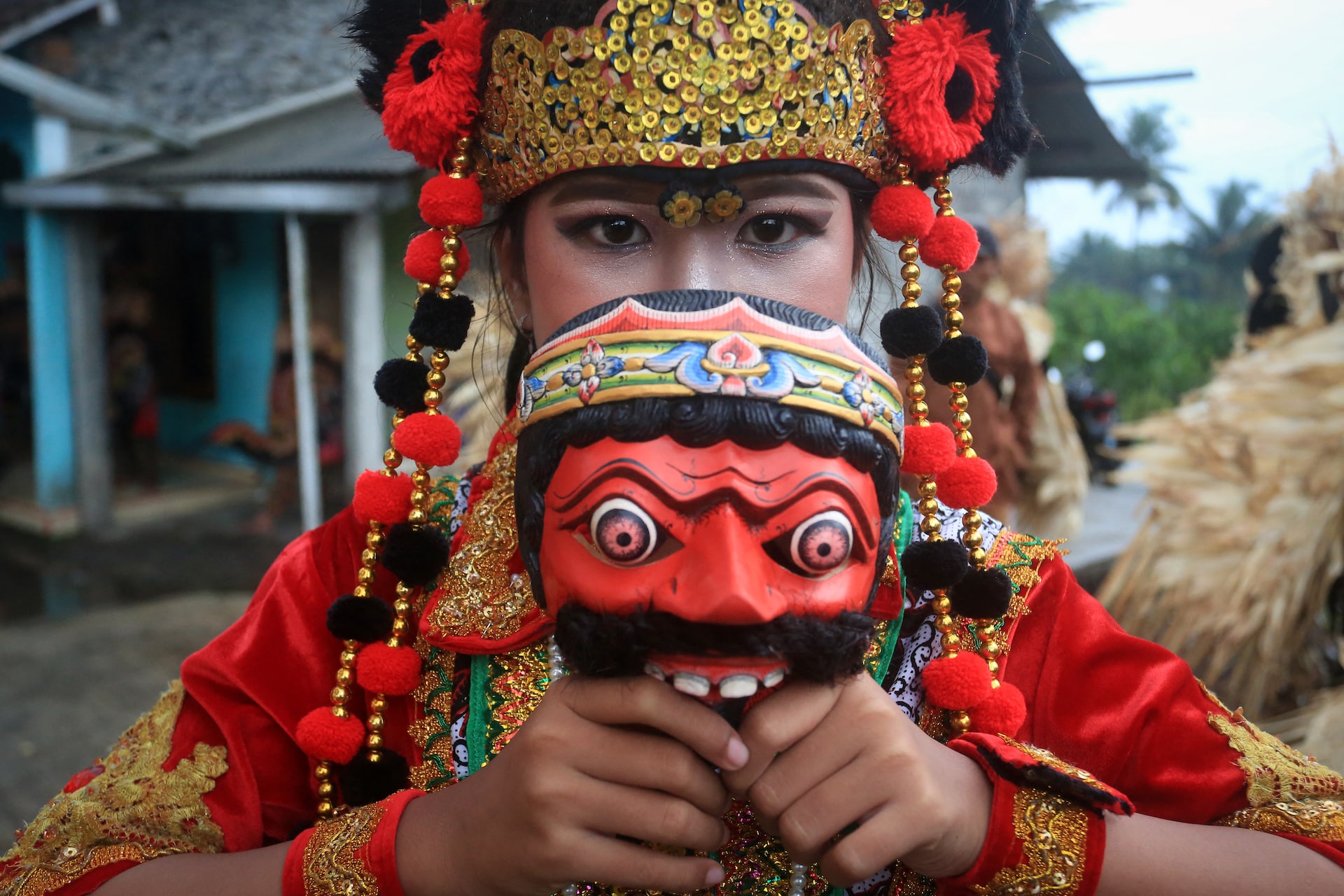
This dancer is ready for the stage at September’s Lima Gunung folk festival, which farmers in Central Java finance themselves, without sponsors that might influence traditional arts. The gap between rich and poor Indonesians is vast, though rural poverty has lessened significantly over time. Devi Rahman/AFP via Getty Images
This was a general election year in Indonesia, a feat of logistics in a country with more than 17,000 islands and 204 million eligible voters. These poll workers used motorbikes to bring materials to rural Lampung, one of the provinces that ended up backing Prabowo Subianto for the presidency. Perdiansyah/AFP via Getty Images
In Banda Aceh, the province hit hardest by 2004’s tsunami, 2024 was a time to reflect on what’s been built since. Qurrata Ayuni, whose parents died in the disaster, last year opened a café staffed by and catering to women in this socially conservative region. She says she wants to use her grief to help others. Zikri Maulana/AFP via Getty Images

Poland

It was a year of rebuilding for Poland, after a dramatic late-2023 election. For the eight years prior, the country had been ruled by the far-right Law and Justice party, which manipulated courts, threatened European institutions and eliminated fundamental rights. The election united many parties and sectors of society to remove this entrenched authoritarianism.

A year after Prime Minister Donald Tusk promised to restore Poland, it was named 2024’s most-improved country on the World Justice Project’s Rule of Law Index. Its score for checks and balances on government powers improved 14 per cent, and for open government by 11 per cent – and it was one of the few countries this year to see improvements in fundamental rights of citizens.

“Progress is often slow” against authoritarianism, said Elizabeth Andersen, the project’s executive director, “but Poland now offers the world’s top example that positive change is possible.”

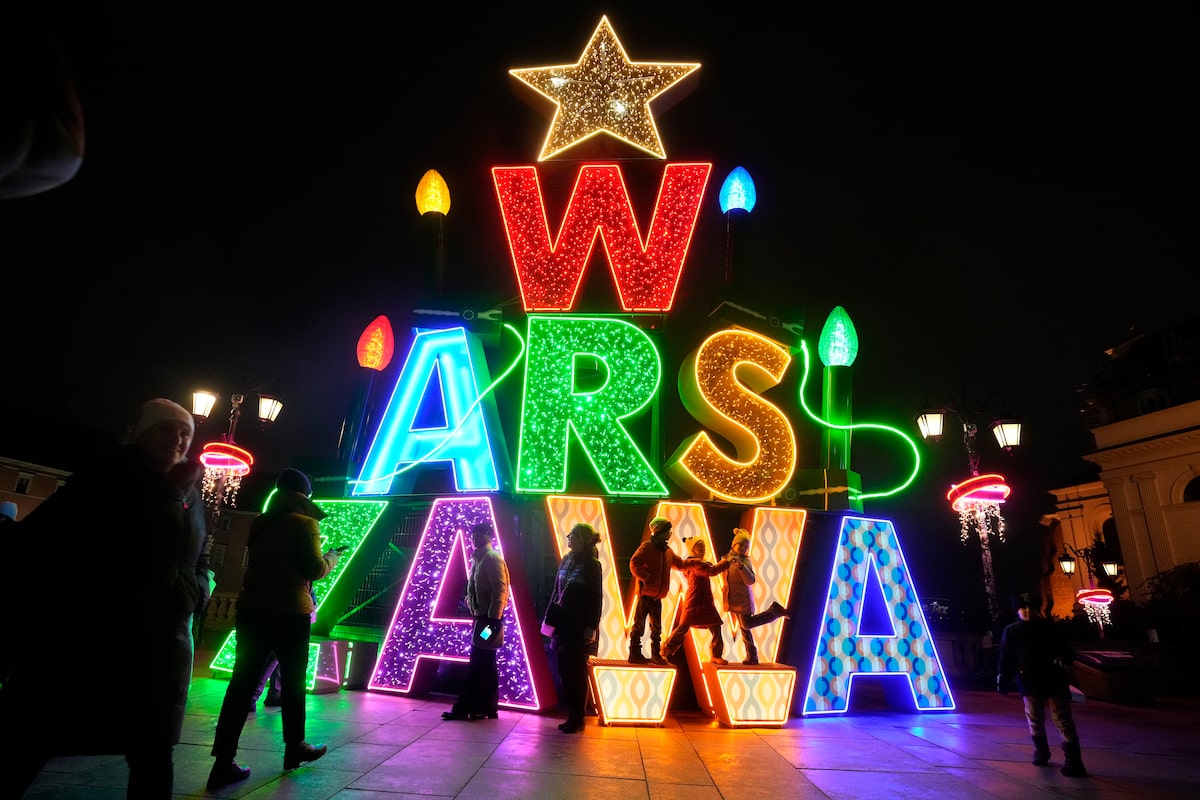
At a fall drag show in Warsaw, Poles raised money to open the first abortion clinic in a country with some of Europe’s strictest reproductive laws. Prime Minister Donald Tusk promised to change that when he unseated the Law and Justice (PiS) party last year, but reforms have stalled in the legislature. Wojtek Radwanski/AFP via Getty Images
Poland is a mostly Catholic country that once enjoyed a progressive reputation in Europe. That began to change after a PiS victory in 2015 brought socially conservative policies and autocratic methods for achieving them. Mr. Tusk, who formally took office last December, has set out to undo that. Czarek Sokolowski/The Associated Press
Mr. Tusk has had a bumpy ride with President Andrzej Duda, an ally of PiS. Next spring could shake things up: Mr. Tusk’s party hopes their presidential candidate for 2025, Rafal Trzaskowski, will beat PiS’s Karol Nawrocki to take the top job. Omar Marques/Getty Images

Thailand

In a move that surprised outsiders, Thailand’s King signed a newly-passed bill legalizing same sex marriage in September, a move that many hoped would improve the country’s important tourism industry – but also reflected new hope for basic freedoms there.

After returning to democracy in 2019, Thailand has struggled with a military that banned the leading opposition party, but this year saw promising election results that caused it to move from “Not Free” to “Partly Free” in the Freedom House ranking of democracies.

Thais celebrate in Bangkok on Sept. 25 after King Maha Vajiralongkorn assented to the legalization of same-sex marriage, a first in Southeast Asia. Taiwan and Nepal are the only other Asian nations with similar laws. Bangkok Pride is planning a mass wedding on Jan. 22, when the law takes effect. Chalinee Thirasupa/Reuters
The Thai tourism trade spent 2024 working to get back to prepandemic levels. In Lopburi, that meant a big push to capture thousands of monkeys – accustomed to food from visitors – that turned aggressive after lockdowns ended. At this year’s Monkey Buffet Festival, they got their meals inside a new cage. Patipat Janthong/Reuters
One of Thailand’s claims to fame in 2024 was Moo Deng, a pygmy hippo whose sweet but unruly demeanour made her a global celebrity within weeks of her birth. Visits quadrupled at the zoo and parts of surrounding Chonburi province, and branding deals alone have yielded more than 150 million baht. Lauren DeCicca/Getty Images

Brazil

One of the world’s most successful comeback stories is Brazil, whose strong economic growth was shared impressively well by its people.

Two years after Brazilians threw out the authoritarian-right regime of Jair Bolsonaro, the combination of economic liberalism and redistribution under President Luiz Inácio Lula da Silva produced dramatic results on both social and economic measures. Brazil reported a 40-per-cent drop in extreme poverty (a difference of 3.1 million people) as well as a 20-per-cent drop in unemployment and an 8.3-per-cent increase in average after-inflation income. Though inflation and debt remain risks, Brazil showed that a return to “normal” politics is a fast way to improve quality of life.

In character as Santa Claus – or Papai Noel, in Portuguese – Rodrigo Franca embraces the children at an NGO-organized Christmas event in Cidade de Deus, a Rio de Janeiro slum. Favelas like these are home to some of the poorest Brazilians, and this year the country took new steps to improve their lot in life. Pilar Olivares/Reuters
Rio was the host city for November’s G20 summit, where President Luiz Inacio Lula da Silva unveiled a new global alliance to combat hunger and poverty. Eighty-two countries, including Canada, have signed on. ‘This is essential for building more prosperous societies and a world of peace,’ the President said. Pilar Olivares/Reuters
Activist Txai Surui was at Botafogo beach on Nov. 17, newly declared as World Conservation Day, to advocate for the Amazon during the G20 summit. Brazil touted progress this year in protecting the Amazon, where deforestation rates fell by 30.6 per cent in 2024. Tita Barros/Reuters

Bangladesh

This summer, the people of Bangladesh took to the streets and ousted prime minister Sheikh Hasina, a matriarch who had ruled for 15 years (as well as five years in the late 1990s), starting out as an elected reformer from a dynasty of Bangladeshi rulers but becoming increasingly authoritarian. This culminated in January’s election, in which Ms. Hasina effectively banned all opposition parties, giving her a largely uncontested re-election with a 10-per-cent voter turnout.

After weeks of mainly peaceful protests, Ms. Hasina stepped down and fled. Bureaucrats chose the widely respected Muhammad Yunus, the country’s most famous economist, as an interim administrator, with an election likely scheduled for late 2025 or early 2026.

Ten days after the ouster of Sheikh Hasina, protesters in Dhaka marched to the house of her late father, Bangladesh’s founding president, to pre-empt rallies by her Awami League. Earlier, the house had been looted and burned in a summer uprising initially sparked by anger with government hiring practices. Luis Tato/AFP via Getty Images
Bangladesh is not a wealthy nation – many rely on state-subsidized grocery services like this one – but poverty rates are less than half what they were in 2000. New leader Muhammad Yunus won a Nobel Prize for his pioneering work on microcredit, a form of lending that many other countries now emulate. Mohammad Ponir Hossain/Reuters
The fate of Bangladeshi Hindus – here celebrating the Rakher Upobash festival in November – is now a point of friction between the Muslim-majority nation and India, Ms. Hasina’s former patron. Despite some attacks on Hindu leaders, Mr. Yunus says New Delhi’s allegations of widespread violence are exaggerated. Abdul Goni/AFP via Getty Images

Moldova

This Eastern European country has fallen into the sights of Russian President Vladimir Putin, who lists it along with Ukraine and Georgia as a target for takeover or influence. But its people, like Ukrainians, generally hold pro-European and democratic sentiments. So its national election in October was a showdown between Moscow and Western democratic values, pitting pro-European Prime Minister Maia Sandu against a slate of Kremlin-backed challengers. It also included a referendum on European Union membership.

After a dirty campaign dominated by Russian money and influence, both Ms. Sandu and the referendum were triumphs, securing the country’s future in Europe.
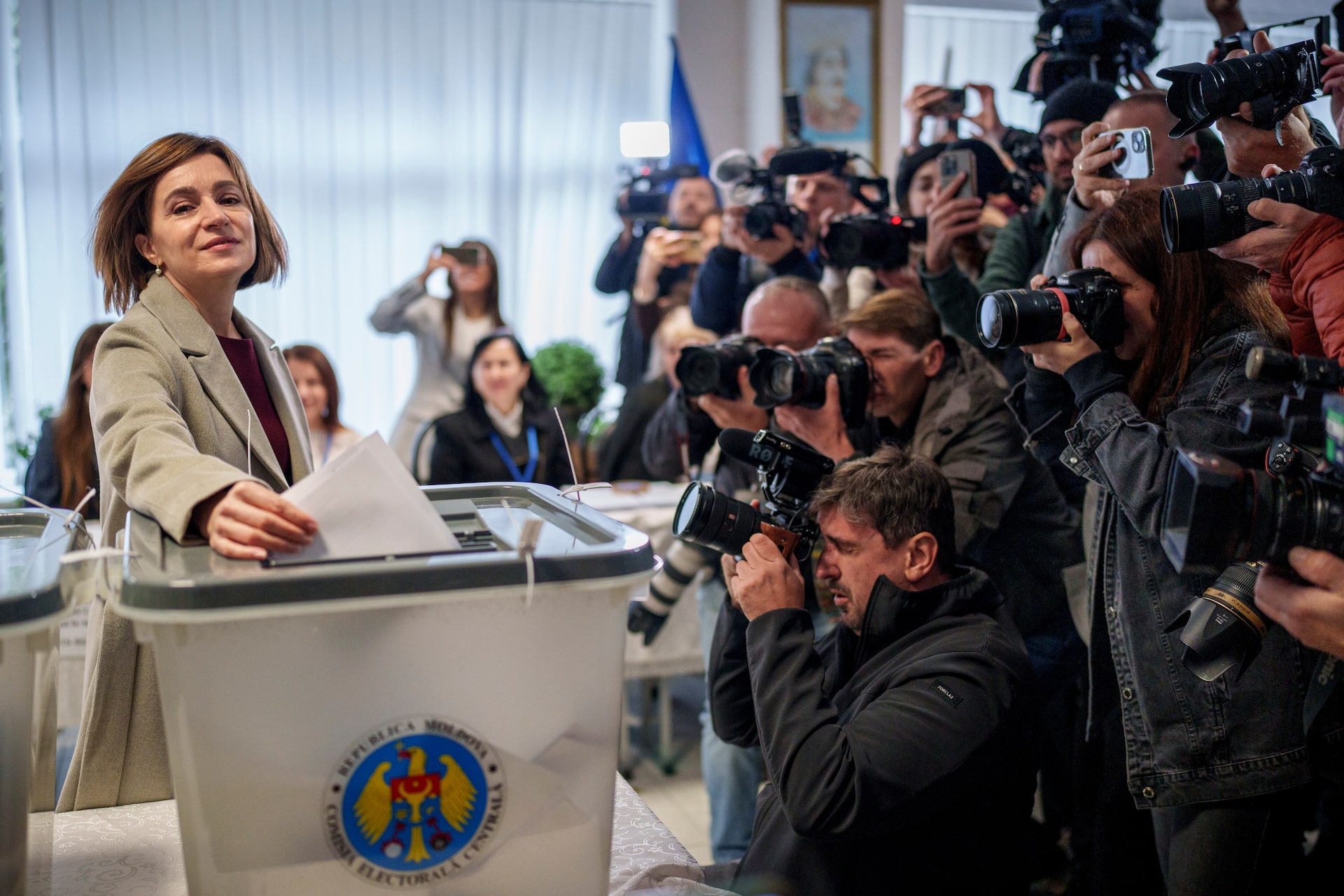
When Maia Sandu voted in Chisinau on Oct. 20, her presidency was not the only thing at stake. Moldovans decided whether the constitution should commit Moldova to a future with Europe. She and the Yes side won on Nov. 4: ‘Today, you have saved Moldova!’ she said in her victory speech. Vadim Ghirda/The Associated Press
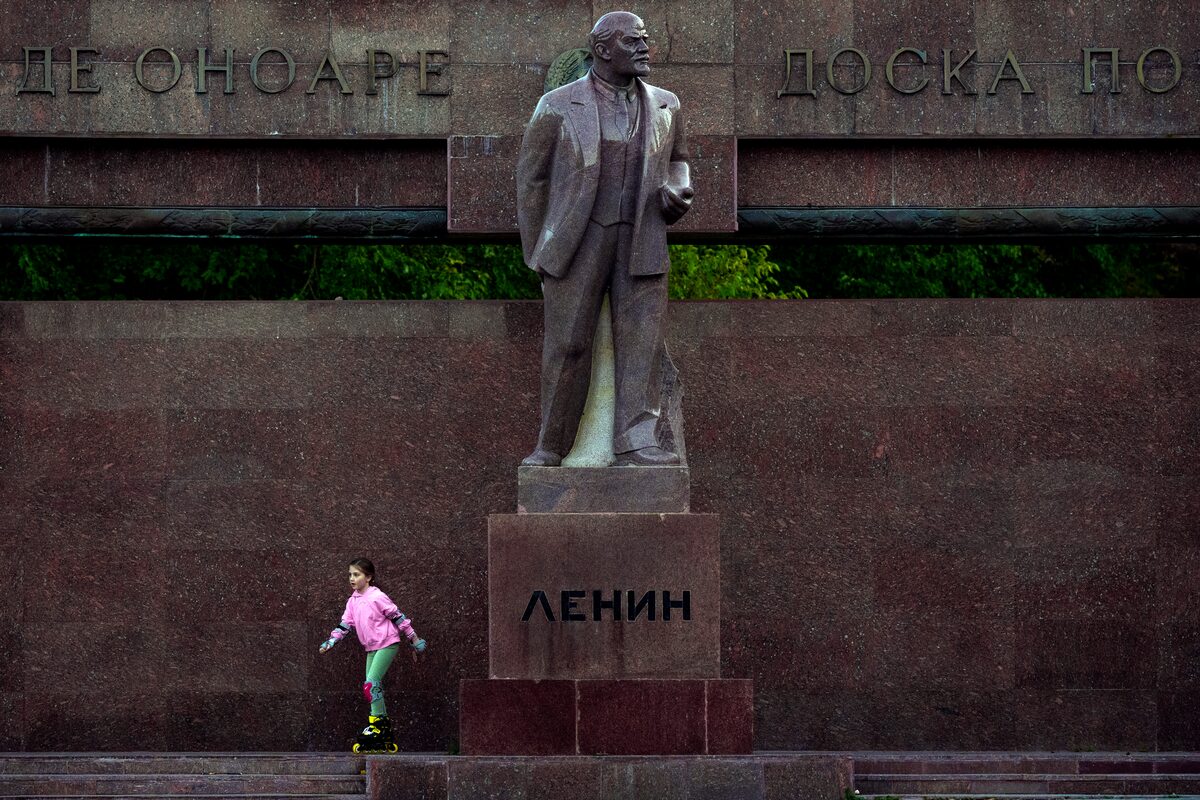
Romania and Russia – whose languages are on this Lenin monument in Chisinau – ruled Moldova for decades until the Soviet collapse of 1991. Ms. Sandu accuses Moscow of trying to control Moldovans’ fate again through disinformation and vote-suppression campaigns in the EU referendum. Vadim Ghirda/The Associated Press
Moldovan plums played an important role in Ms. Sandu’s case for Europe. Growers once largely relied on Russia, but when the invasion of Ukraine severed those ties, the EU temporarily dropped customs duties on Moldovan fruit to help. Within a year, the country was the No. 1 plum exporter to the EU. Daniel Mihailescu/AFP via Getty Images

Botswana

The Botswana Democratic Party had continuously led this resource-rich southern African country for 58 years, since independence in 1966. It became increasingly corrupt and vicious during this century, paralyzing living standards and driving up unemployment.

On Oct. 30, the people of Botswana threw out the BDP for the youthful Umbrella for Democratic Change party and its leader Duma Boko. Equally important was the phone call made to Mr. Boko by outgoing prime minister Mokgweetsi Masisi, who conceded that his party “had it wrong big time” and pledged to “participate in a smooth transition process” – a rare occurrence in sub-Saharan Africa.

Duma Boko, inaugurated in Gaborone on Nov. 8, is the first opposition leader to win the presidency from the Botswana Democratic Party, which steered the country into independence in 1966. Liberation parties have been faring poorly across Africa in recent years as anti-incumbency sentiments take hold. Thalefang Charles/Reuters
When Botswanans went to the polls on Oct. 30, Mr. Boko told supporters to be vigilant for vote-rigging by the incumbent, Mokgweetsi Masisi, but all sides ended up accepting the result as free and fair. Phill Magakoe/AFP via Getty Images
One of Botswana’s other causes for celebration in 2024 was Letsile Tebogo’s gold-medal win at the Olympics, the country’s first, and the first time an African runner won the men’s 200-metre final. Fabrizio Bensch/Reuters

France

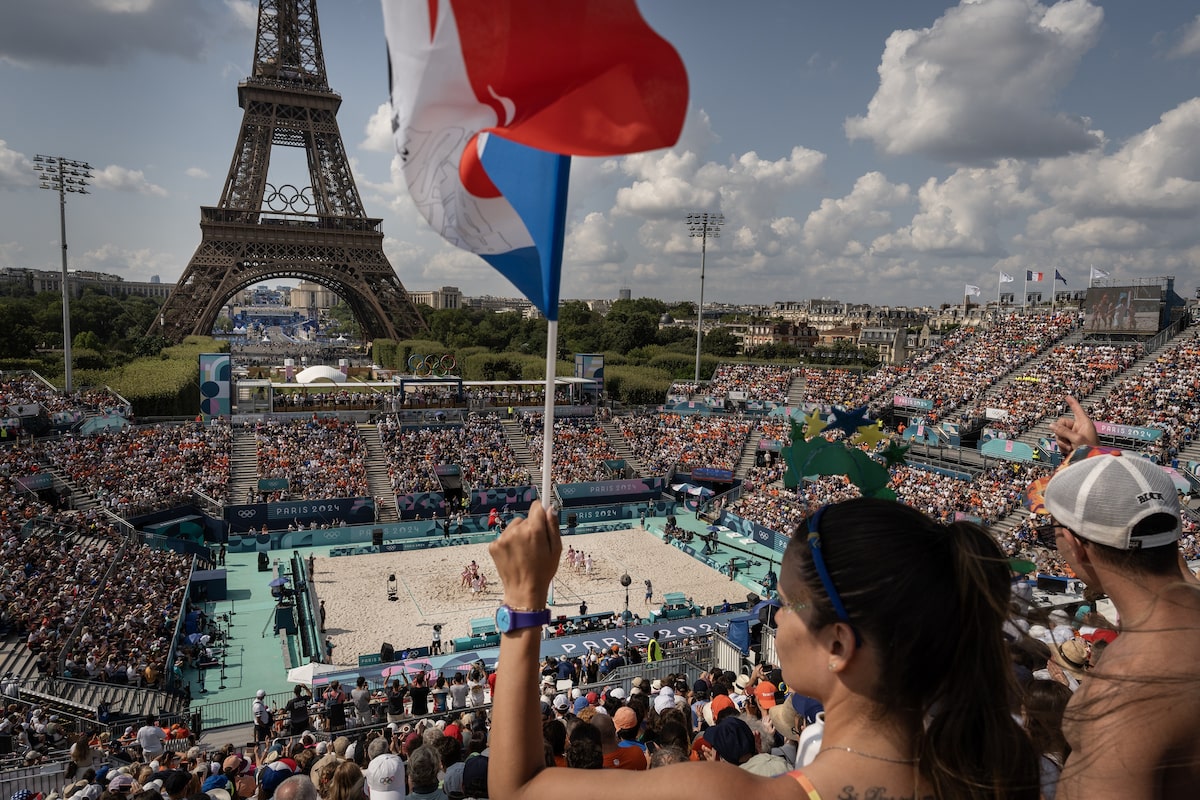
In a year when everything seemed to be going up in flames, France managed a couple of dramatic recoveries that made everything look cool. The reconstruction of Notre-Dame Cathedral, an epic task that left the world riveted, reached a triumphant conclusion at year’s end. It was preceded by a feel-good Olympics with a fantastic opening ceremony showcasing a Paris that has been transformed into a green exemplar.

This set of uniting accomplishments helped counteract the political instability that rocked France’s government through 2024. On the level of national symbols and quality of life, at least, the country had a successful and celebratory year.

A public Mass on Dec. 8 reintroduced Parisians to their most famous house of worship, Notre-Dame Cathedral, for the first time since its near-destruction in a 2019 fire. Archibishop Laurent Ulrich consecrated the new altar at an earlier Mass for dignitaries, including the French President and his counterparts from around the world. Christian Hartmann/Reuters
Through the summer, familiar french landmarks such as the Eiffel Tower turned into Olympic venues and party zones. At the Tuileries Garden, a cauldron and its simulated flames rose over the city at sunset on a balloon. Petitioners pressed the city to keep it permanently. Siegfried Modola/The Globe and Mail
At the top of this article, you saw the Olympic flagbearers marching over models of the continents at Aug. 11’s closing ceremonies. Here’s a wider view of that scene. In his speech at the festivities, IOC president Thomas Bach acknowledged 2024 had been a rocky year, but in Paris, ‘you created a culture of peace,’ he said, thanking Olympians for ‘making us believe in a better world for everyone.’ Andy Chua/Reuters

Follow related authors and topics

Authors and topics you follow will be added to your personal news feed in Following.

Interact with The Globe

Trending