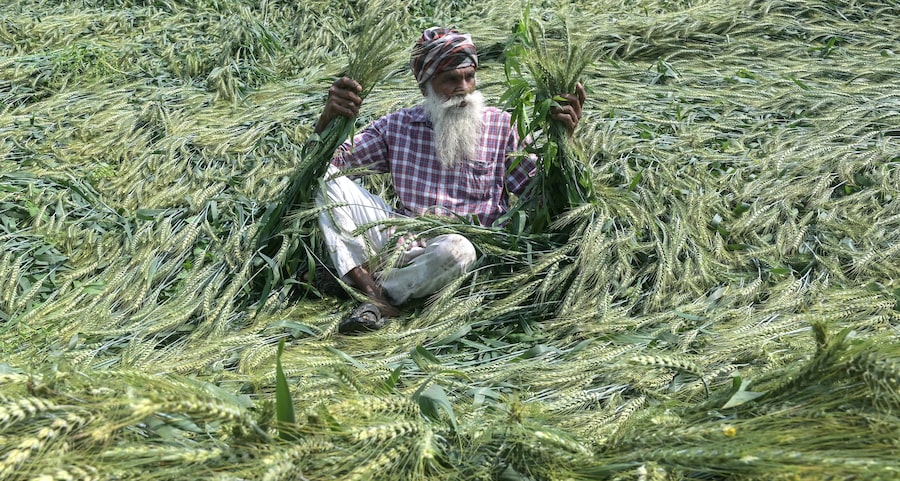
It’s planting season across much of Asia, but many farmers are not sowing seeds because there is no fertilizer for their crops.
That could spell disaster for millions of people down the line, with food shortages compounding a fuel crisis and rampant inflation caused by the U.S.-Israeli war on Iran.
About a third of the world’s supply of fertilizer passes through the Strait of Hormuz, the key international waterway that has been essentially closed for months owing to the ongoing attacks and threats from both Iran and the U.S. against ships that try to sail through the passage.
The problem is not just shipping-related: Natural gas is a key input for the production of many nitrogen-based fertilizers such as urea and ammonia, and liquefied natural gas supplies have been massively disrupted not only by the closure of strait but also by strikes on gas fields in Qatar and Iran.
“The most dangerous misconception is that energy and food are separate silos. In reality, they are a single, connected system. In the rice-farming heartlands of Cambodia, Myanmar, and Vietnam, energy is food,” Nischal Dhungel, a fellow at the Nepal Institute for Policy Research, wrote last week. “Diesel powers the irrigation pumps and the tractors; natural gas is the primary feedstock for urea and ammonia fertilizers.”

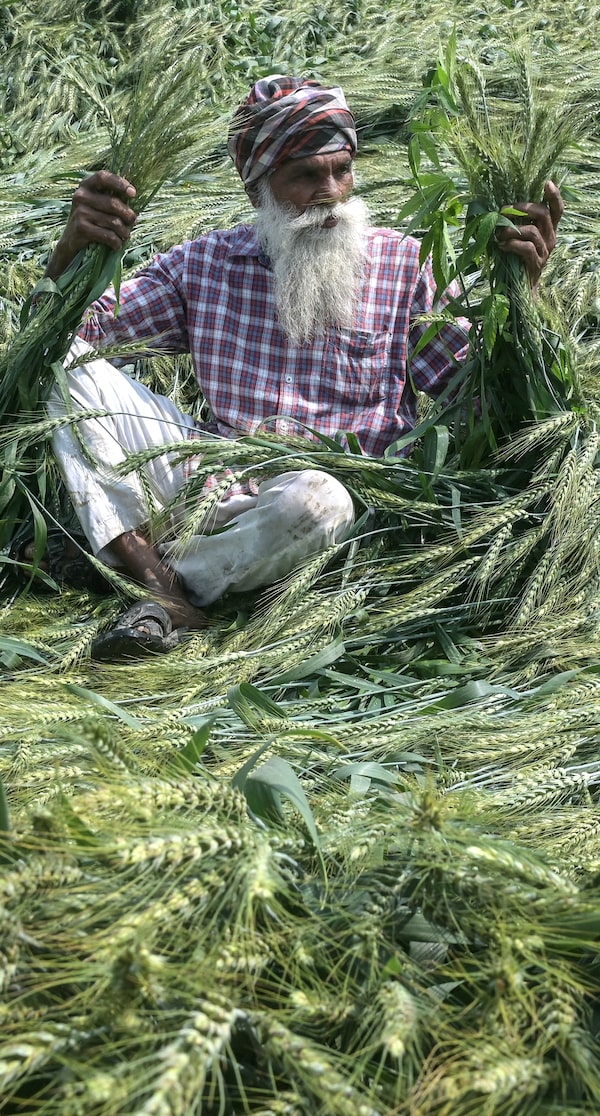
A farmer casts urea on her mustard field in the northern Indian city of Allahabad in January, 2015.Jitendra Prakash/Reuters
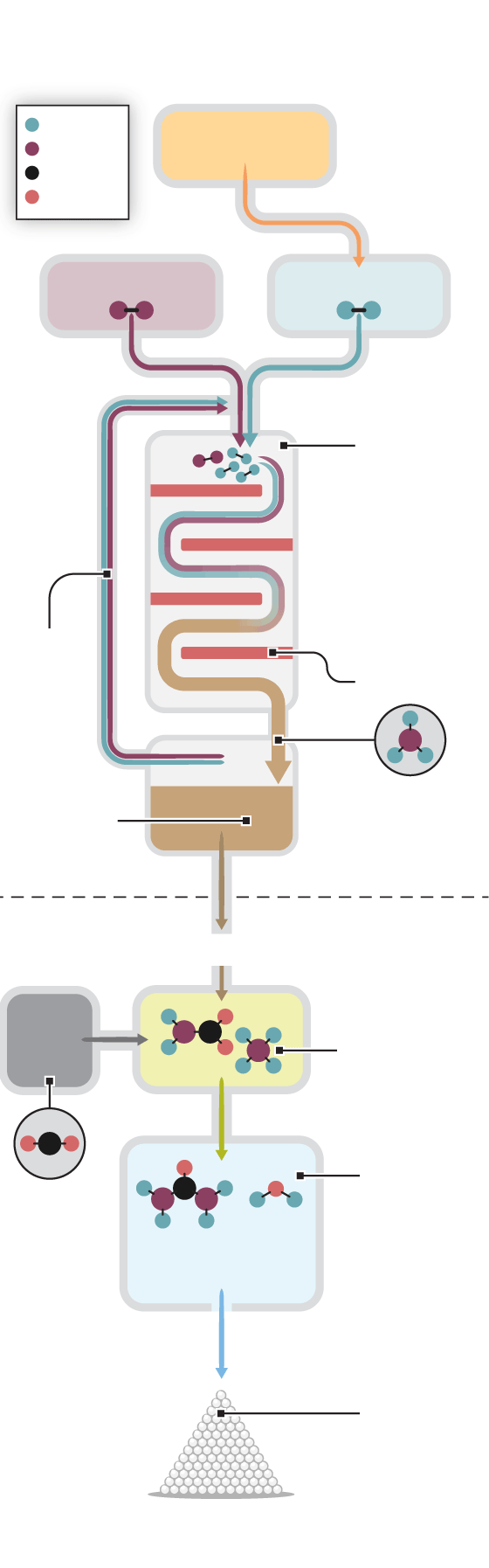
How urea is made
STEP 1: HABER-BOSCH PROCESS
Hydrogen
Natural gas
Nitrogen
Carbon
Oxygen
Nitrogen gas (N2)
Hydrogen gas (H2)
The gases,
combined in a
1 to 3 ratio, are
heated to 450°C and
pressurised to 200
atmospheres, where
they react with
aniron catalyst to
form ammonia
Unreacted gases are recycled
Iron catalyst
Cooled ammonia gas becomes liquid
Ammonia
(NH3)
STEP 2: UREA SYNTHESIS
Inside a reactor, ammonia and CO2 form ammonium carbamate
(NH2COONH4)
Carbon
dioxide
(CO2)
Ammonium carbamate is decomposed to produce urea and water
Urea
(NH2CONH2)
Water
(H2O)
Note: Process has been greatly simplified for illustration purposes.
The water is evaporated and the urea is solidified, then granulated
THE GLOBE AND MAIL, SOURCE: NEW ZEALAND INSTITUTE OF CHEMISTRY; CHEMGUIDE; PUBCHEM
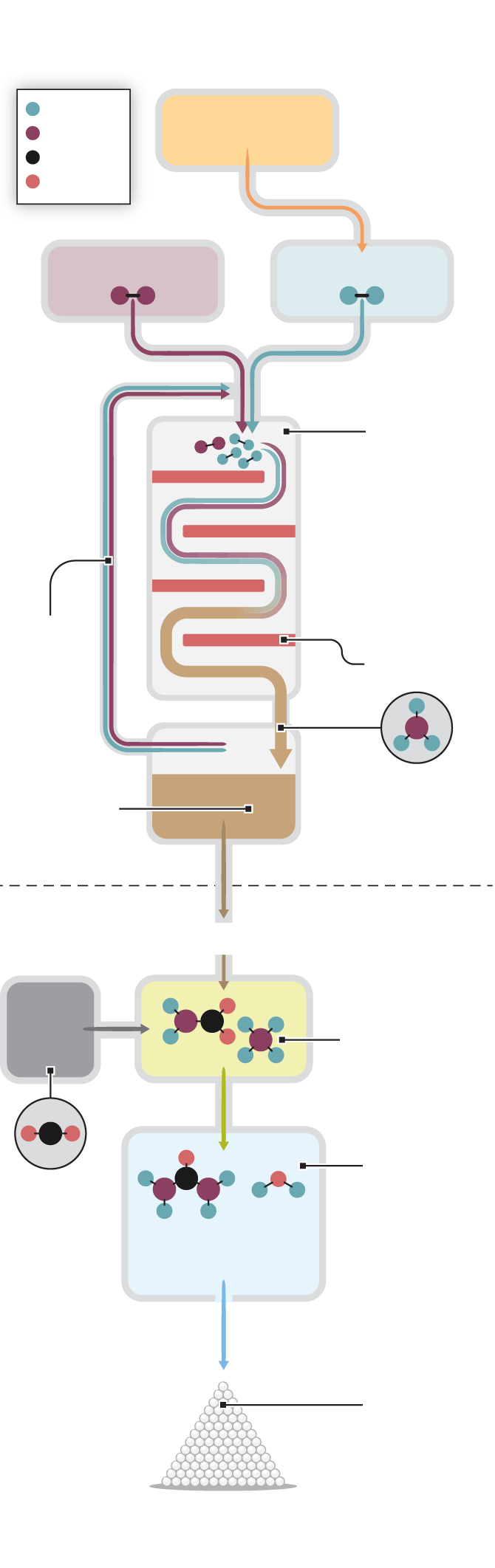
How urea is made
STEP 1: HABER-BOSCH PROCESS
Hydrogen
Natural gas
Nitrogen
Carbon
Oxygen
Nitrogen gas (N2)
Hydrogen gas (H2)
The gases,
combined in a
1 to 3 ratio, are
heated to 450°C and
pressurised to 200
atmospheres, where
they react with
aniron catalyst to
form ammonia
Unreacted gases are recycled
Iron catalyst
Cooled ammonia gas becomes liquid
Ammonia
(NH3)
STEP 2: UREA SYNTHESIS
Inside a reactor, ammonia and CO2 form ammonium carbamate
(NH2COONH4)
Carbon
dioxide
(CO2)
Ammonium carbamate is decomposed to produce urea and water
Urea
(NH2CONH2)
Water
(H2O)
Note: Process has been greatly simplified for illustration purposes.
The water is evaporated and the urea is solidified, then granulated
THE GLOBE AND MAIL, SOURCE: NEW ZEALAND INSTITUTE OF CHEMISTRY; CHEMGUIDE; PUBCHEM
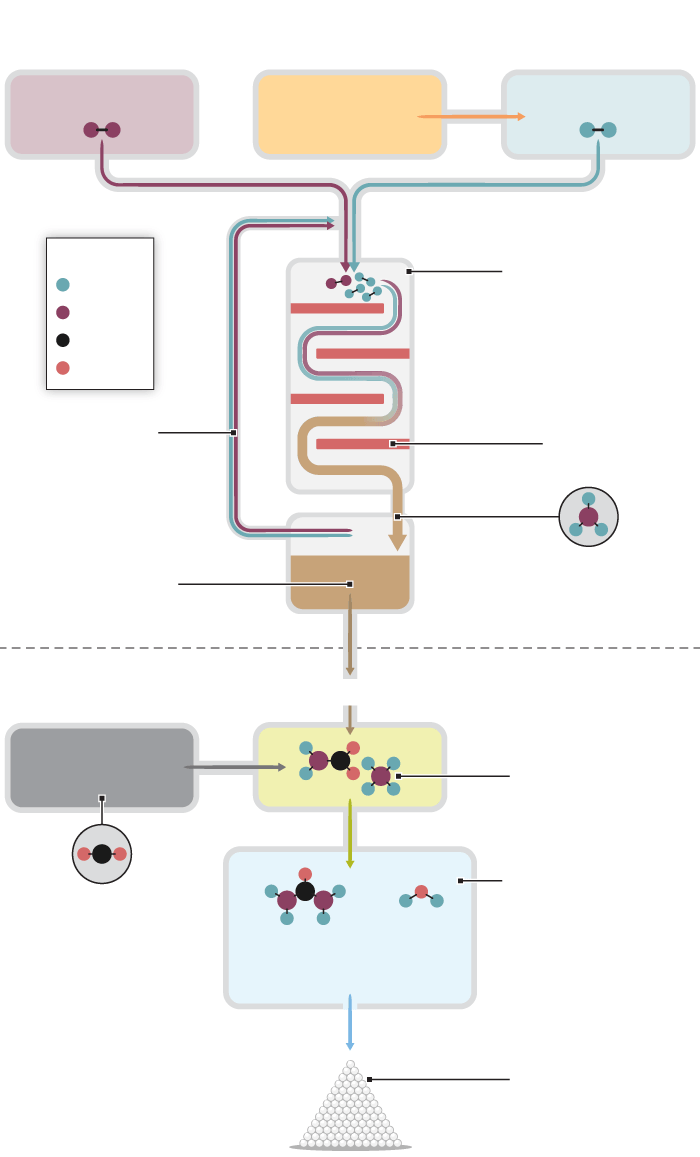
How urea is made
STEP 1: HABER-BOSCH PROCESS
Nitrogen gas (N2)
Hydrogen gas (H2)
Natural gas
Legend
The gases, combined in a 1 to 3 ratio, are heated to 450°C and pressurised to 200 atmospheres, where they react with an iron catalyst to form ammonia
Hydrogen
Nitrogen
Carbon
Oxygen
Unreacted gases are recycled
Iron catalyst
Ammonia
(NH3)
Cooled ammonia gas becomes liquid
STEP 2: UREA SYNTHESIS
Inside a reactor, ammonia and carbon dioxide form ammonium carbamate
(NH2COONH4)
Carbon dioxide
(CO2)
Ammonium carbamate is decomposed to produce urea and water
Urea
(NH2CONH2)
Water
(H2O)
Note: Process has been greatly simplified for illustration purposes.
The water is evaporated and the urea is solidified, then granulated
THE GLOBE AND MAIL, SOURCE: NEW ZEALAND INSTITUTE OF CHEMISTRY; CHEMGUIDE; PUBCHEM
The problem was compounded for many Asian countries in March when China, the world’s single-largest fertilizer producer, restricted exports of many products in order to protect its own agricultural sector. Fertilizer imports are down more than 50 per cent in Vietnam alone, according to customs data, threatening rice supplies for much of Southeast Asia.
Alex Holmes, regional director for Asia-Pacific at the Economist Intelligence Unit, said there “continues to be a noticeable contrast between global food commodity prices and prices of fertilizers such as urea.”
“The latter shows a vertical takeoff, but the former has only crept up,” he said, warning that potential disruptions to growing cycles may not have been fully priced in yet.
One exception can be seen in the Philippines, with new inflation data released this week showing a sharp spike in food prices − 6 per cent year-over-year.
The Southeast Asian country is heavily dependent on China for fertilizer and imports almost 75 per cent of its rice supplies from Vietnam and Thailand, both of which are also grappling with shortages.

Manila's street vendors have had to increase their prices in recent months to deal with the higher costs of liquefied natural gas, and the downstream effects of fertilizer shortages in other Asian countries.Jam Sta Rosa/AFP via Getty Images
In March, the World Food Programme warned that an additional 9.1 million people “could be pushed into acute food insecurity” across Asia as a result of food and fuel shortages caused by the Iran war, an increase of 24 per cent.
Opening the Strait of Hormuz could still help avoid a major supply issue, said Maximo Torero, chief economist at the UN Food and Agriculture Organization, but “if we don’t reopen this in the next two to three weeks, the situation is going to get pretty serious.”
The situation could be even worse if a potential “super El Niño” emerges in the coming weeks. The natural climate phenomenon, which can last as long as a year, is characterized by a warming of ocean surface temperatures in parts of the Pacific and has been linked to crop failures, wildfires, droughts and floods.
With files from Reuters

Food for thought: More from The Globe and Mail
The Decibel podcast
Persian Gulf oil supplies many of the world’s farmers with nitrogen, but Saskatchewan potash provides another vital nutrient for crops. Agricultural and food policy reporter Kate Helmore spoke with The Decibel about Canada’s “pink gold” and an Australian company’s plan to develop it. Subscribe for more episodes.
Commentary
Asim Biswas: How Canada can protect its food system in an increasingly uncertain world