
This explainer is no longer being updated. For news as it happens, subscribe to alerts from our Israel-Hamas war topic page.
State of the ceasefire on Dec. 3
- Remains that militants in Gaza handed to Israel as part of the first phase of the ceasefire deal were those of a Thai agricultural worker, Israeli and Thai officials said Thursday. The return of Sudthisak Rinthalak’s remains leaves just one more hostage to be returned under the agreement.
- Israel said it launched an air strike on a Hamas militant in southern Gaza late Wednesday in retaliation for an attack earlier in the day.
- Israeli security forces shot two Palestinian men on Nov. 27 who appeared to be surrendering and unarmed during a raid in the Israeli-occupied West Bank, Palestine TV news footage showed.
What’s happening in Gaza
Status of the ceasefire
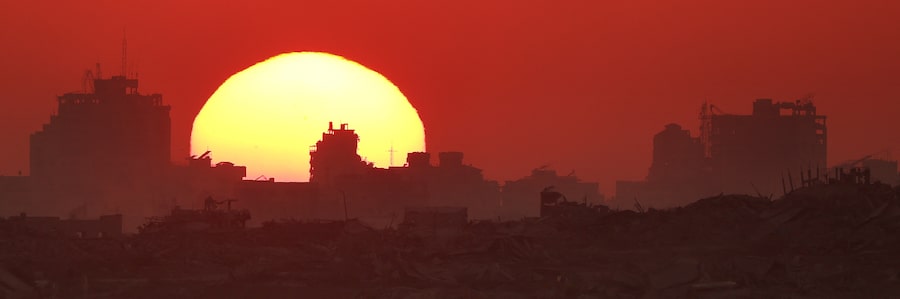
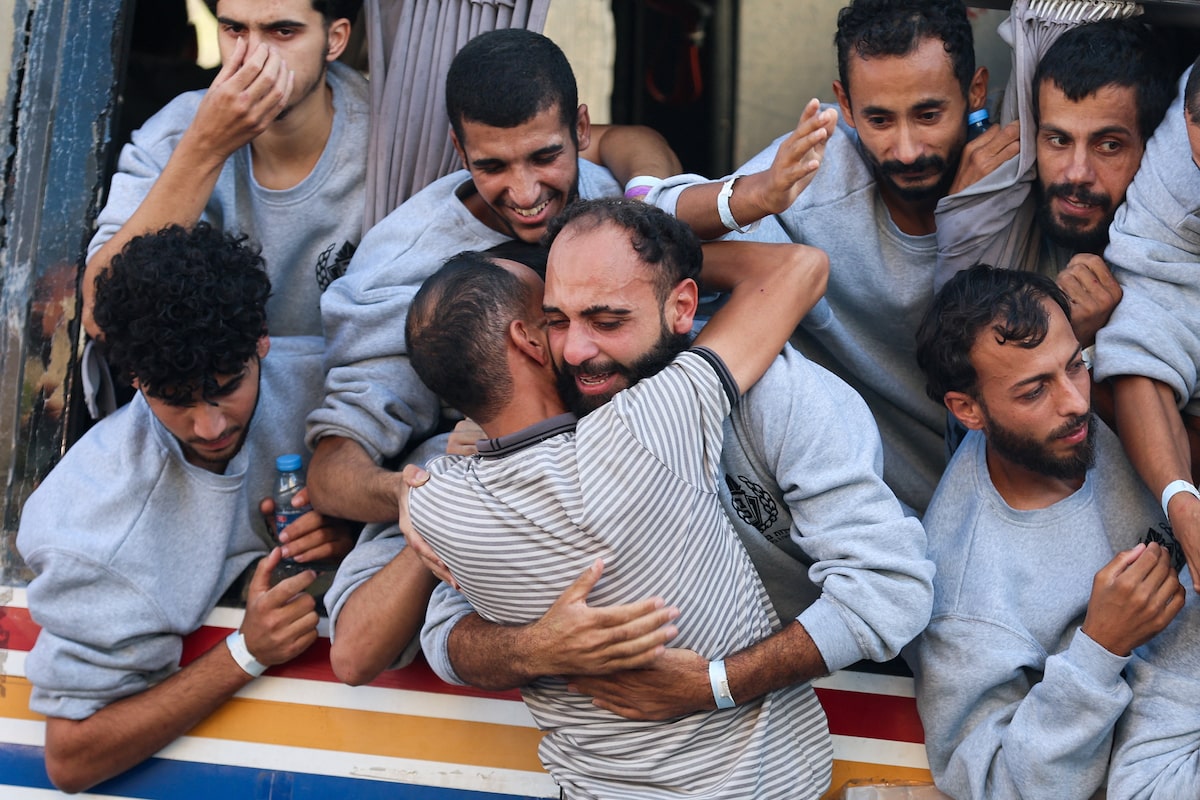
An exchange of Israeli hostages and Palestinian prisoners signalled the first phase of U.S. President Donald Trump’s peace plan, agreed to by Israel and Hamas. Under the deal, fighting ceases and Israel partly withdraws from Gaza, while trucks carrying food and medical aid are allowed to enter the besieged enclave.
Israeli strikes haven’t entirely stopped since the ceasefire took effect. Gaza’s Health Ministry, which doesn’t distinguish between civilians and combatants, has reported more than 300 deaths since the truce began, and each side has accused the other of violating its terms.
Further details in Trump’s 20-point plan have yet to be discussed by both sides, including how the Gaza Strip will be governed after the war, and what will happen to Hamas, which so far has rejected demands by Israel to disarm. Trump’s initial plan called for an international security force to move into Gaza, along with Palestinian police trained in consultation with Egypt and Jordan. The international body would hold most power while overseeing the administration of Palestinian technocrats running day-to-day affairs, and would direct reconstruction in Gaza. Hamas has so far not agreed to this, saying Gaza’s government should be worked out among Palestinians. On Nov. 17, the UN Security Council approved a U.S. resolution on Gaza that endorses the 20-point plan.
During a visit to Israel, U.S. Vice-President JD Vance announced the opening of a civilian military co-ordination centre in southern Israel where some 200 U.S. troops are working alongside the Israeli military and delegations from other countries planning the stabilization and reconstruction of Gaza.
The Palestinian death toll
More than 70,000 Palestinians have been killed since the Oct. 7 attacks in 2023, the Palestinian Health Ministry says. The United Nations and many independent experts consider the ministry’s figures to be the most reliable estimate; Israel disputes its toll but has not provided its own. The ministry doesn’t differentiate between civilians and combatants in its count, but says women and children make up around half the dead.
The death toll of journalists so far
At least 249 reporters, photographers and other media workers have died in the conflict since Oct. 7, 2023, the U.S.-based Committee to Protect Journalists estimates. The majority – 206 – were Palestinians killed in Gaza. Many endured the same hardships they reported on – hunger, lost homes, lost loved ones – before Israeli air strikes hit them at home or while out on assignment. In one case, Israeli rockets “double-tapped” a Khan Younis hospital where many reporters were based.
The hostages
Militants from Gaza originally captured 251 people, and killed about 1,200, in the Oct. 7 attacks. When the ceasefire came into effect, 48 hostages remained, 20 of whom were alive. Those 20 were released by Hamas on Oct. 13.

Which countries recognize a Palestinian state, and why?
Faced with public outrage over Israel’s actions, western countries that have held back for decades on recognizing the state of Palestine recently changed their minds. Canada, Britain and Australia recognized the state on Sept. 21. Prime Minister Mark Carney’s statement singled out Israel for “working methodically to prevent the prospect of a Palestinian state from ever being established.”
The recognition comes with caveats: The Carney government has said it won’t fully normalize diplomatic relations with Palestine until Hamas – still designated a terrorist organization – disarms, releases Israeli hostages and forfeits any future role in the government. Nevertheless, the policy shift puts Israel and its main military ally, the United States, further apart from the rest of the world on the question of Palestinian self-governance.
Gazans greeted news of the diplomatic shift on Palestinian statehood with cautious optimism. However, political scientists and former ambassadors in the Middle East said that recognition alone isn’t enough.
Israeli Prime Minister Benjamin Netanyahu spoke to the United Nations General Assembly on Sept. 26, telling fellow world leaders that his nation “must finish the job” against Hamas in Gaza. Responding to countries’ recent decisions to recognize Palestinian statehood, Netanyahu said: “Your disgraceful decision will encourage terrorism against Jews and against innocent people everywhere.”
In November, ahead of a U.N. Security Council vote on a U.S.-drafted Gaza resolution, Netanyahu reiterated he will oppose any attempt to establish a Palestinian state.
Settlements and the West Bank
Canada and other advocates of a two-state solution are also pushing back at Israel’s settlement plans for the West Bank, which are advancing in Parliament. More than 700,000 Israeli settlers now live in the West Bank and East Jerusalem, but the latter is expected to be the capital of a future Palestinian state. Under the new plan, Israel would erect more settlements in a zone east of Jerusalem, called E1, which links the major West Bank cities of Ramallah in the north to Bethlehem in the south.
The international community largely considers West Bank settlements to be illegal under international law and an obstacle to the peace process. Israel seized the West Bank in 1967. The right-wing settler movement has argued that, because Israelite kingdoms ruled there in antiquity, it belongs within a Jewish state today. This latest project is designed to make it impossible for a Palestinian state to exist there, says Israeli Finance Minister Bezalel Smotrich, who vowed to double the settler population of the West Bank. “The Palestinian state is being erased from the table, not with slogans but with actions,” he said on Aug. 20.
In Ottawa, the Carney government has said the plan is one of the signs that “prospects for a two-state solution have been steadily and gravely eroded.” But in Washington, the Trump administration isn’t pushing back at this E1 scheme as the United States has done in the past.
On Oct. 22, Israel’s parliament narrowly passed a symbolic preliminary vote in support of annexing the occupied West Bank while U.S. Vice-President JD Vance was in the country. Vance criticized the vote, saying it went against the Trump administration’s efforts to ensure the ceasefire holds.

UN bodies say genocide and famine are taking place in Gaza. What does that mean?
“Genocide,” a term coined during the Second World War, entered international law as the world learned about Nazi atrocities against Jews, and sought to stop similar horrors in the future. The 1948 Genocide Convention defines a genocide as the targeted killing of an ethnic group, policies designed to do serious harm to that group or prevent births within it, and “deliberately inflicting on the group conditions of life calculated to bring about its physical destruction in whole or in part.” A UN commission of inquiry ruled on Sept. 16 that Israel’s actions are “a genocidal campaign” orchestrated by top officials to “destroy the Palestinian group in Gaza.” The Netanyahu government disputes those findings.
Mass starvation is one factor that the UN body considered as it tried to define the crisis in Gaza. A food emergency has to meet three criteria before it’s a famine in the eyes of the Integrated Food Security Phase Classification, the leading global authority on food crises: Gazans have hit all three, the IPC reported in August. All members of the UN Security Council, except the United States, agreed that this was a “man-made crisis,” the result of Israeli policies to block aid deliveries to Gaza.
Editor’s note: This article has been updated to clarify that East Jerusalem is expected to be the capital of a future Palestinian state, and that the international community largely considers West Bank settlements to be illegal under international law. The update also clarifies that Israel seized the West Bank in 1967. (Dec. 9, 2025) This article has been updated to correct details of U.S. President Donald Trump's 20-point peace plan, as well as the subhead describing the current situation in Gaza and to correct a reference to the 1948 Genocide Convention.
Compiled by Globe staff
With reports from Hasan Jaber, The Associated Press and Reuters
The Gaza crisis: More from The Globe and Mail
The Decibel podcast
The Israel-Hamas ceasefire is holding, for now. Where will it lead? Freelance journalist Hasan Jaber gave The Decibel an update from Gaza on the regional mood and the return of Palestinians to their homes. Subscribe for more episodes.
On the effort to rebuild Gaza
Palestinians fear rebuilding Gaza from the ground up is not enough
Loss of Gaza heritage sites threatens to erase symbols of Palestinian identity
Commentary
Raja Khouri: As a Palestinian, this is what I wish the Jewish community could hear
Marsha Lederman: Two years after the Oct. 7 attacks, the road between us is more volatile than ever
Doug Saunders: For those caught in the middle, the path to Middle East peace is a long one
Editorial: How Canada can help build a path to peace in the Middle East