
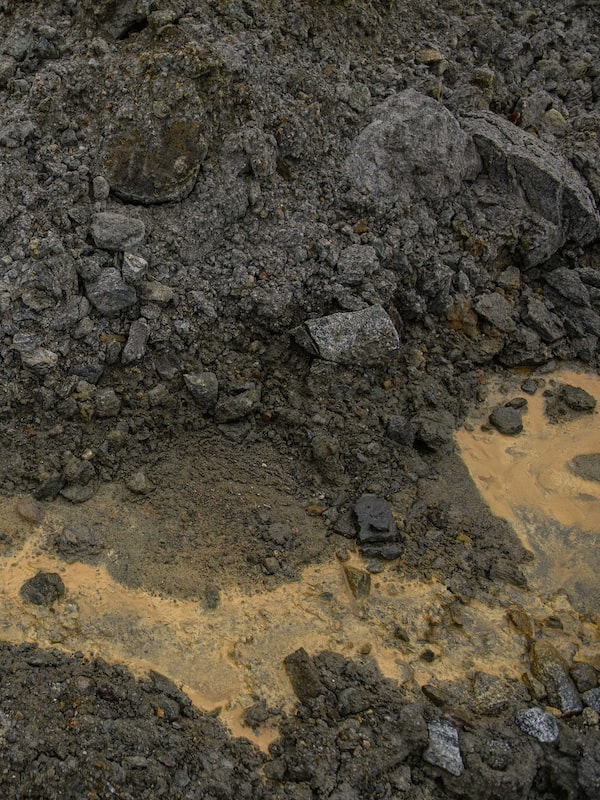
Mining engineer Valerii Kharkovets walked carefully along a gravel path at the bottom of a giant quarry in central Ukraine, stopping to pick up a small rock. It was filled with glittering grey specks of graphite, a key ingredient in batteries that’s in high demand around the world – including in the White House.
Mr. Kharkovets is the chief engineer at the Zavallivsky Graphite Mine, a sprawling open-pit complex roughly 300 kilometres south of Kyiv that sits on one of the largest graphite deposits in Europe.
The mine has been in operation for nearly a century – before its use in batteries, graphite was mostly used for pencils – and its deep quarry is lined with dirt roads that snake along walls of pink rock that’s rich in graphite.

Chief engineer Valerii Kharkovets helps ensure that Zavallivsky can dig up precious graphite, but says more investment is needed to keep up with produers abroad.
This vast deposit is one of the reasons why U.S. President Donald Trump has been so eager to push Kyiv into signing a mineral agreement.
No deal has been signed yet. Washington is trying to broaden the terms of the agreement to include other assets such as Ukraine’s nuclear power plants, the Financial Times reported on Friday. Ukrainian officials told the newspaper that they are concerned about being pressed to make a deal unfavourable to Ukraine, especially after the U.S. temporarily suspended intelligence sharing and weapons deliveries earlier this month.
According to the U.S. Geological Survey, Ukraine contains some of the world’s largest deposits of critical minerals such as graphite, lithium and titanium. Geologists also believe there’s a smattering of rare earth elements, which are used in the production of cellphones, electric vehicles and other modern products.
“We tell Ukraine that they have very valuable rare earth minerals. I want Ukraine to provide us with its rare earth resources,” Mr. Trump said last month. His proposed deal would see Ukraine contribute 50 per cent of its mining proceeds into a development fund for the country’s mining sector, while the U.S. invests in infrastructure, which could include the power grid.

Graphite powder might look familiar if you've sharpened a pencil, but its more valuable use is in the anodes that allow lithium-ion batteries to function.
Much of Ukraine’s mineral wealth stems from a 2.6-billion-year-old geological feature known as the Ukraine Shield, which stretches across the country. According to Munira Raji, a geoscientist at the University of Plymouth in Britain, the shield went through a long process of metamorphism that transformed rock sediment into high-carbon minerals. “Graphite is an example of that,” she said. “So that’s why Ukraine graphite is one of the purest in the world.”
Along with graphite, Dr. Raji said, Ukraine has 22 of 34 minerals identified by the European Union as strategically important.
But getting them out of the ground in a cost-effective way isn’t easy. And the Zavallivsky mine illustrates the scale of the challenge.

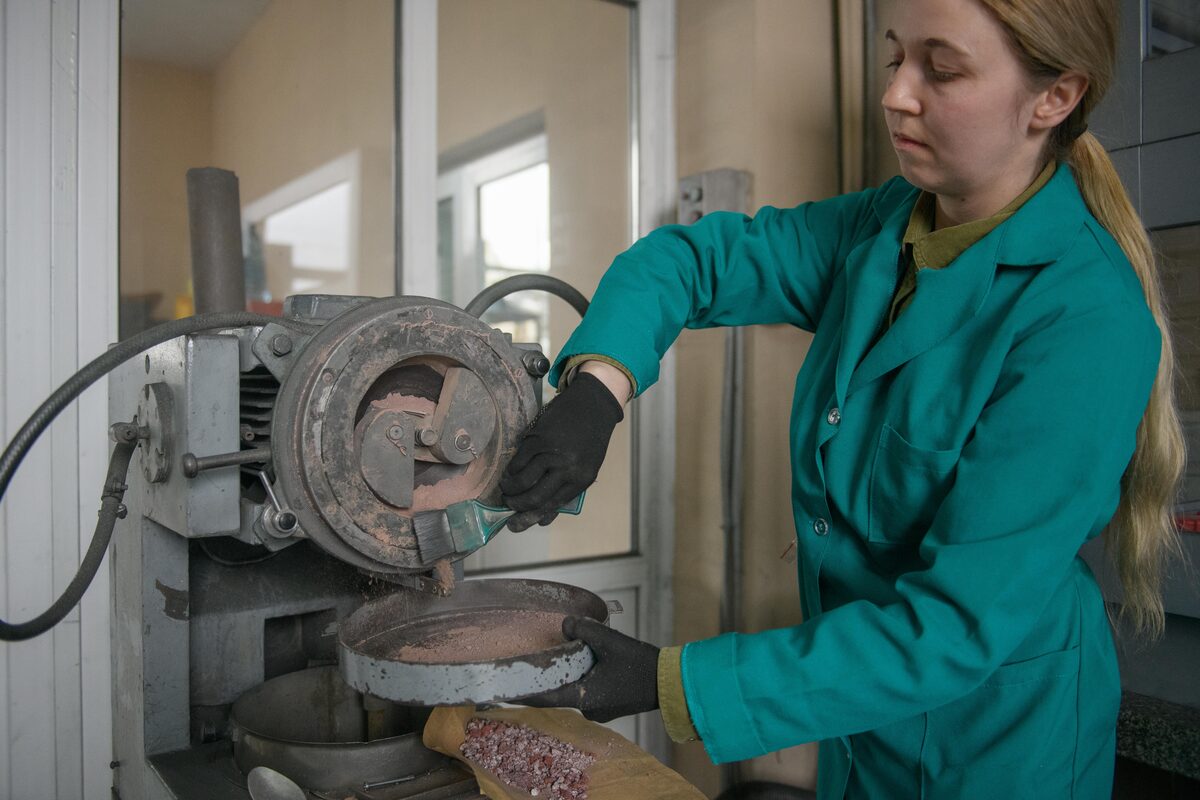
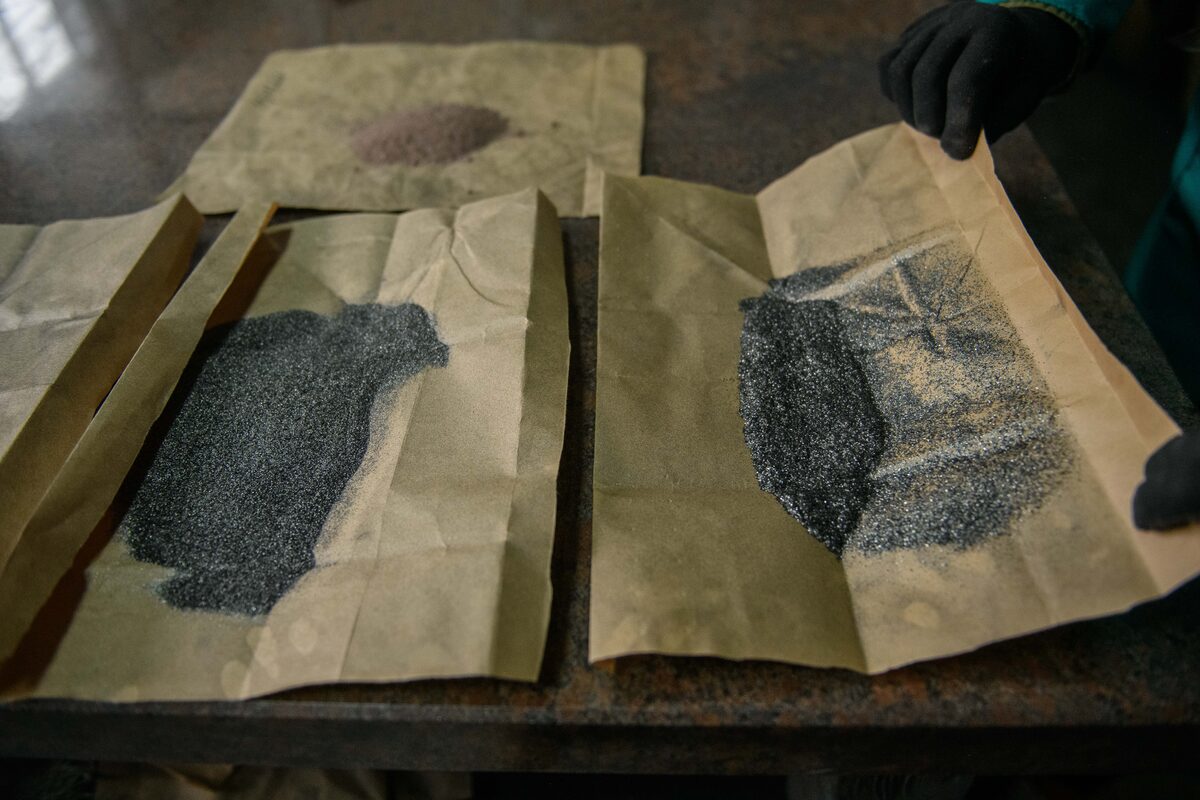

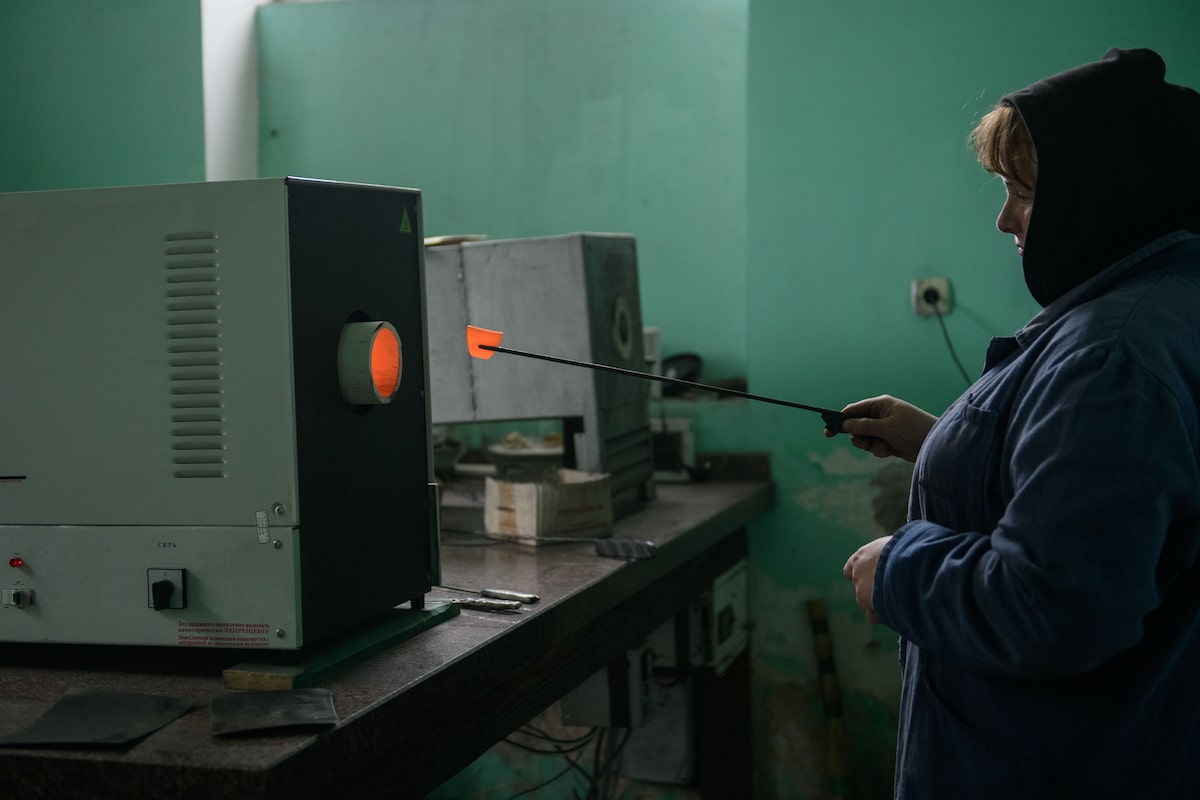
The mine dates back to 1934 and remains the only graphite producer in the country. It has a production capacity of 30,000 tonnes a year but managed only a third of that in the years leading up to Russia’s full-scale invasion in 2022. Since then, its output has fallen sharply because of soaring costs and a shortage of workers.
Mr. Kharkovets said the site contains around six million tonnes of graphite, but the mine needs major improvements to compete with Chinese producers, which dominate the market.
Nearly all of the Zavallivsky mine’s equipment dates back to the Soviet era, and the property is littered with abandoned buildings. The three giant diggers are 40 years old, and the milling machines were built in the 1960s. Mr. Kharkovets said the company also needs better pumps to remove the giant pool of water that has formed at the bottom of the quarry because of years of excavation.

The water that’s pooled in the quarry is heavy and hard to move without a more powerful system of pumps, the chief engineer says.
In 2021, Australia’s Volt Resources Ltd. bought 70 per cent of the mine for US$7.6-million, but late last year the company halted further funding for operations “until profitable sales are forthcoming.”
Today, Zavallivsky’s quarry operates just one month a year. The company is still refining and selling graphite it mined months ago, but only a handful of employees remain on site, and the power has been cut to the main milling machine. “To launch the enterprise at full capacity, it is practically impossible to gather [all employees],” Mr. Kharkovets said.
He isn’t sure what the future holds for the mine. Volt still holds out hope that when the war ends, Zavallivsky will be perfectly positioned to serve European markets with high-grade graphite – up to 99.5-per-cent pure. Mr. Kharkovets welcomed talk of a mineral deal with the U.S., saying it would rejuvenate the country’s mining sector. “The mineral agreement is very useful for the state. Because the opening of new enterprises and quarries means jobs, people and direct tax revenues,” he said.


Zavallivsky's graphite could be worth a lot, but President Donald Trump's estimates of its value draw on questionable, decades-old data.
Others in the mining sector are more cautious. Ukraine’s National Association of Mining Industries has played down estimates by the Trump administration that Ukraine could possess US$2-trillion worth of rare earth elements and other minerals. The association said in a news release last month that the best estimate is about US$775-billion. It also noted that, in 2024, Ukraine’s mineral exports totalled less than US$100-million.
Part of the problem with the estimates cited by Mr. Trump and others is that they are based on dubious Soviet-era data, when geologists had an incentive to inflate resource amounts to impress their superiors in Moscow. Some data for strategic minerals is also still classified by Ukraine’s State Security Service. “That’s why when you see on paper a very big number of potential rare earth deposits, it should be confirmed using modern methods,” said George Popov, a research analyst at the mining association. “The main problem is that Trump, if he truly believes in Ukraine’s rare earth potential, he’s operating on wrong numbers.”
The association is helping Ukrainian mining companies bring their data up to Western standards, and Mr. Popov said reliable figures have confirmed that Ukraine has some of Europe’s largest reserves of critical minerals such as titanium, lithium and graphite – but not the rare earth elements frequently cited by Mr. Trump.
Mr. Popov said an investment deal with the U.S. would help modernize Ukraine’s mining industry and push the government to remove barriers such as access to classified data and regulatory red tape. However, he said the current deal did not appear to include security guarantees, which would be important given that many of Ukraine’s top deposits are near the front line.
He also chuckled at Mr. Trump’s original proposal, which called for Ukraine to contribute US$500-billion from mining revenues as repayment for U.S. military aid. Based on current levels of production, Mr. Popov estimated that it would take Ukraine around 440 years to pay that amount. “That makes me smile,” he said.
With reports from Kateryna Hatsenko