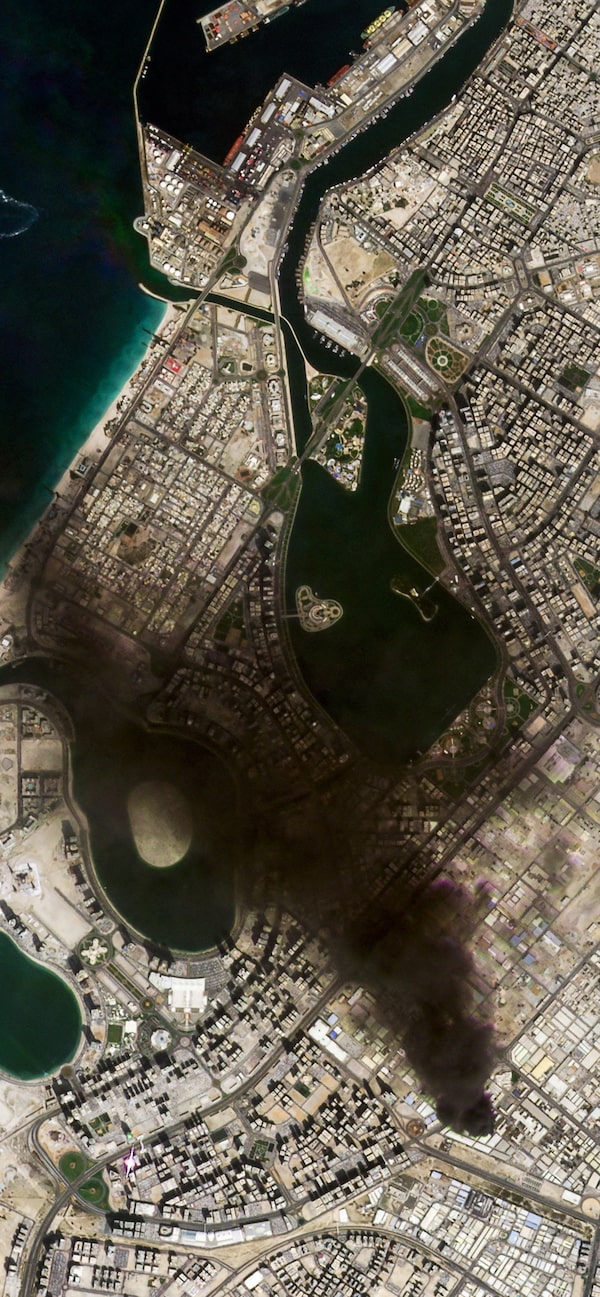
Dubai, where smoke was billowing over an industrial area on March 1, is one of the Persian Gulf cities to be hit by Iranian missiles since the U.S. and Israeli attacks on Tehran. Dubai and Abu Dhabi's international airports were also damaged, hobbling busy air routes through the United Arab Emirates.
Explainer

The gulf widens

Where Iran, the U.S. and Israel’s air attacks have hit so far

The Globe and Mail
Dubai, where smoke was billowing over an industrial area on March 1, is one of the Persian Gulf cities to be hit by Iranian missiles since the U.S. and Israeli attacks on Tehran. Dubai and Abu Dhabi's international airports were also damaged, hobbling busy air routes through the United Arab Emirates.
Planet Labs PBC via Reuters
Dubai, where smoke was billowing over an industrial area on March 1, is one of the Persian Gulf cities to be hit by Iranian missiles since the U.S. and Israeli attacks on Tehran. Dubai and Abu Dhabi's international airports were also damaged, hobbling busy air routes through the United Arab Emirates.
Planet Labs PBC via Reuters

The war in the Middle East began on Feb. 28 when the United States and Israel struck Iran. Since then, the conflict has spread across the region.

According to the Iranian Red Crescent, at least 1,230 people have been killed so far in Iran. At least six U.S. soldiers are dead. Reuters has counted 77 deaths in Lebanon, 13 in Iraq, 10 in Israel, four in Syria, three in the United Arab Emirates and Kuwait and one each in Bahrain and Oman.

Iran is striking back at Washington’s allies in the Persian Gulf and the wider Middle East, including Israel, with drones and missiles.

Here’s an overview of which countries have been attacked so far. Zoom in to learn more about the civilian and military sites affected.


Iran’s arsenal at a glance

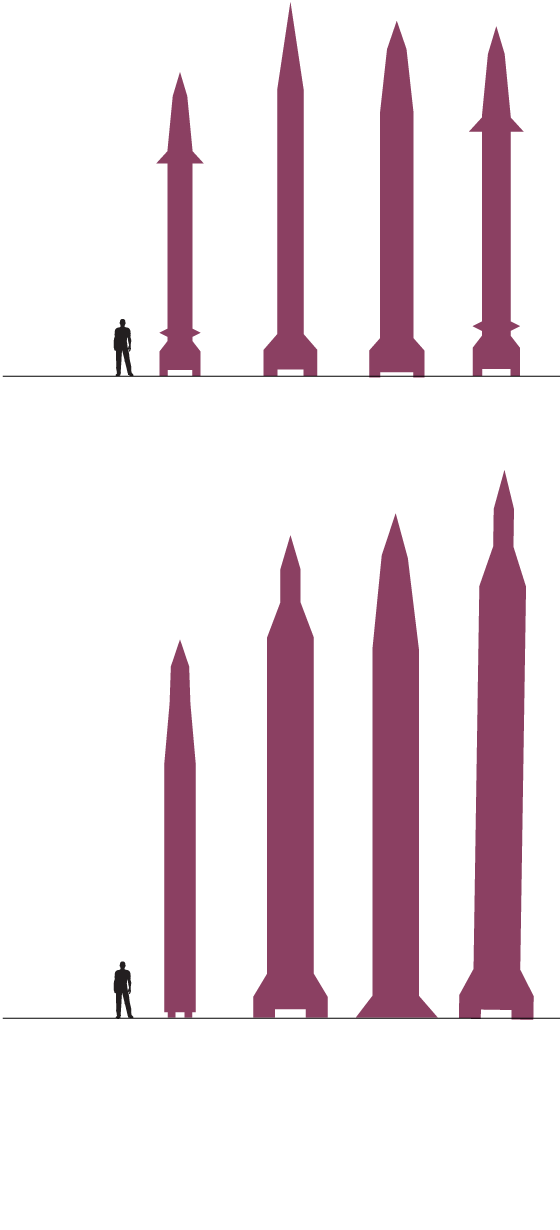
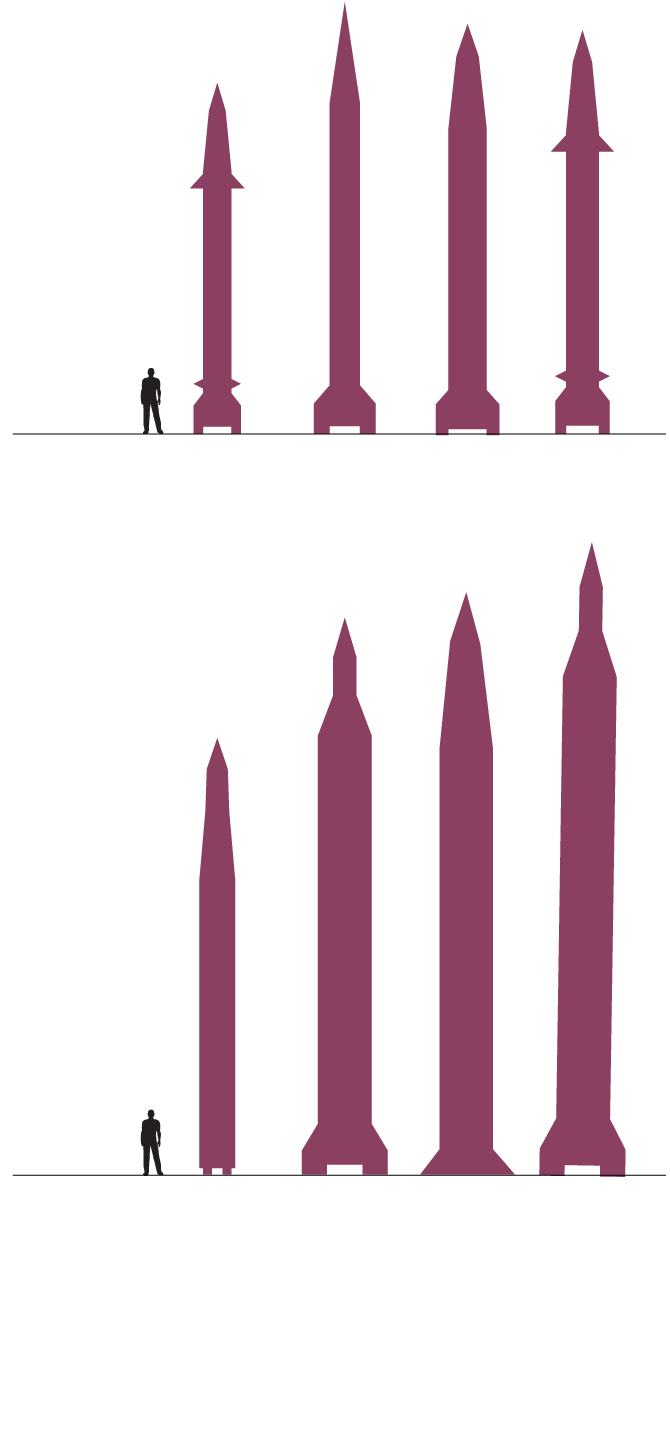
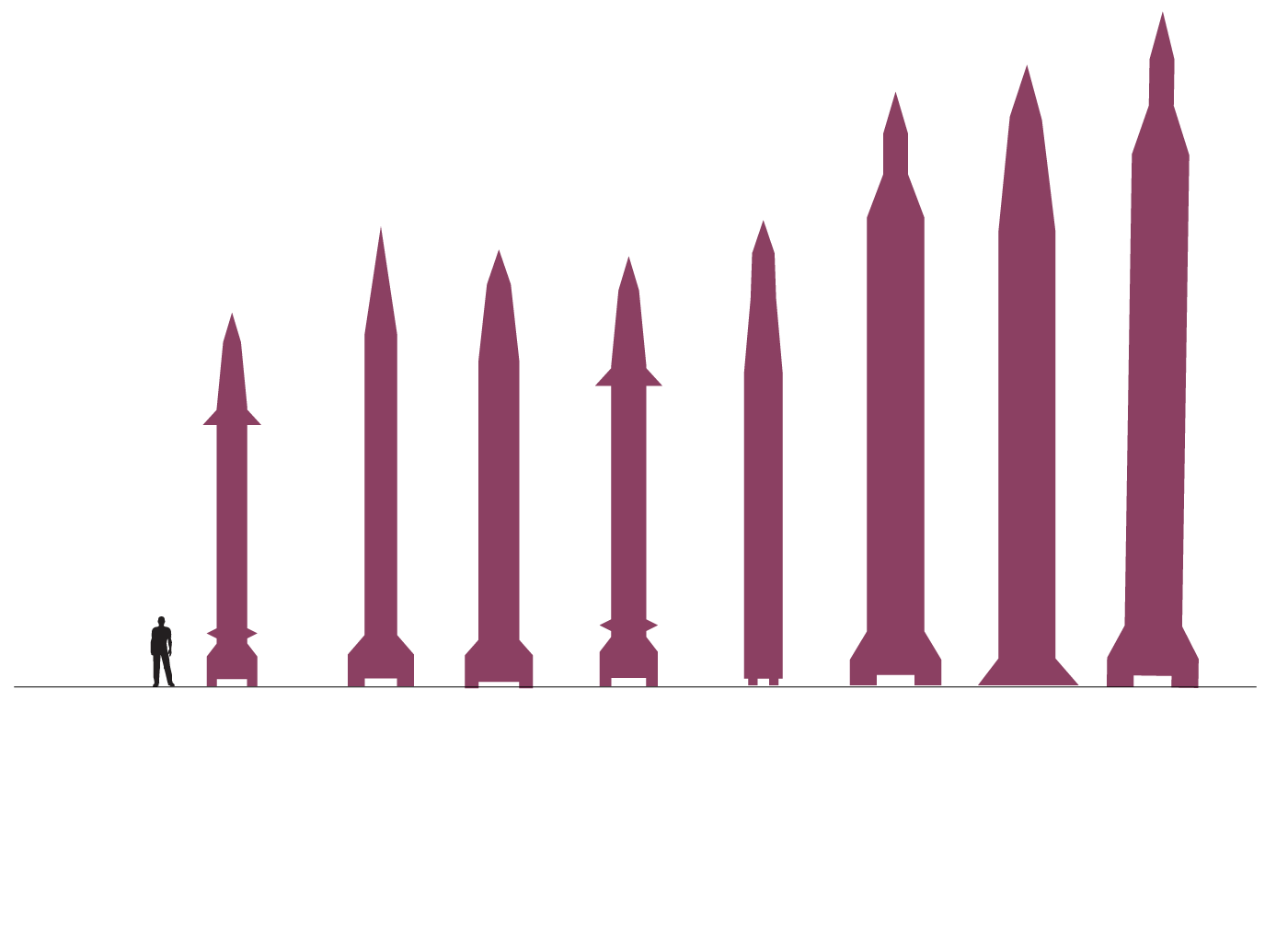
Iran’s long-range weapons can get as far as Eastern Europe or western India, but not the United States. However, the U.S. military has bases in Persian Gulf states such as Kuwait, Saudi Arabia and UAE that are within reach of Iran’s shorter-range arsenal, as is Israel.


Selected Iranian

ballistic missiles

Fateh-110 SRBM

(and variants)

Shahab 2

SRBM

Zolfaghar

SRBM

Shahab 1

SRBM

System

300–500

300

500

700

Max. range

(km)

Qiam-1

SRBM

Shahab 3

MRBM

Emad-1

MRBM

Sejjil (Ashura)

MRBM

System

Max. range

(km)

At least

Up to

Up to

2,000

750

2,000

2,000

Note: This chart does not include all systems in development.

All ranges are approximate.

the globe and mail, Source: U.S. Defense intelligence

agency, ‘Iran military power’ 2019; graphic news
Selected Iranian

ballistic missiles

Fateh-110 SRBM

(and variants)

Shahab 2

SRBM

Zolfaghar

SRBM

Shahab 1

SRBM

System

300–500

300

500

700

Max. range

(km)

Qiam-1

SRBM

Shahab 3

MRBM

Emad-1

MRBM

Sejjil (Ashura)

MRBM

System

Max. range

(km)

At least

Up to

Up to

2,000

750

2,000

2,000

Note: This chart does not include all systems in development.

All ranges are approximate.

the globe and mail, Source: U.S. Defense intelligence

agency, ‘Iran military power’ 2019; graphic news
Selected Iranian ballistic missiles

Fateh-110 SRBM

(and variants)

Shahab 2

SRBM

Zolfaghar

SRBM

Shahab 1

SRBM

Qiam-1

SRBM

Shahab 3

MRBM

Emad-1

MRBM

Sejjil (Ashura)

MRBM

System

Max. range

(km)

300–500

300

500

700

At least

Up to

Up to

2,000

750

2,000

2,000

Note: This chart does not include all systems in development. All ranges are approximate.

the globe and mail, Source: U.S. Defense intelligence agency,’Iran military power’ 2019;

graphic news

The impact in Iran

From Tehran, a city of nearly 10 million people, to missile bases in the distant countryside, Iran has taken heavy fire in the U.S. and Israeli attacks.

The plume of smoke over the Ayatollah’s Tehran compound on Feb. 28 gave Iranians some idea that these U.S. air strikes would be different than last year’s. The regime later confirmed the Supreme Leader had died alongside several members of his family. Pleiades Neo (c) Airbus DS 2026 via Reuters
Tehran's Gandhi Hotel Hospital was in ruins on March 2 after attacks on a nearby state TV communications tower. The World Health Organization said patients had been evacuated. Hossein Esmaeili/The Globe and Mail
Satellite companies pored over old images of Iranian bases, such as this naval installation on the Strait of Hormuz, to see what the air strikes damaged on Feb. 28. Airbus/Vantor
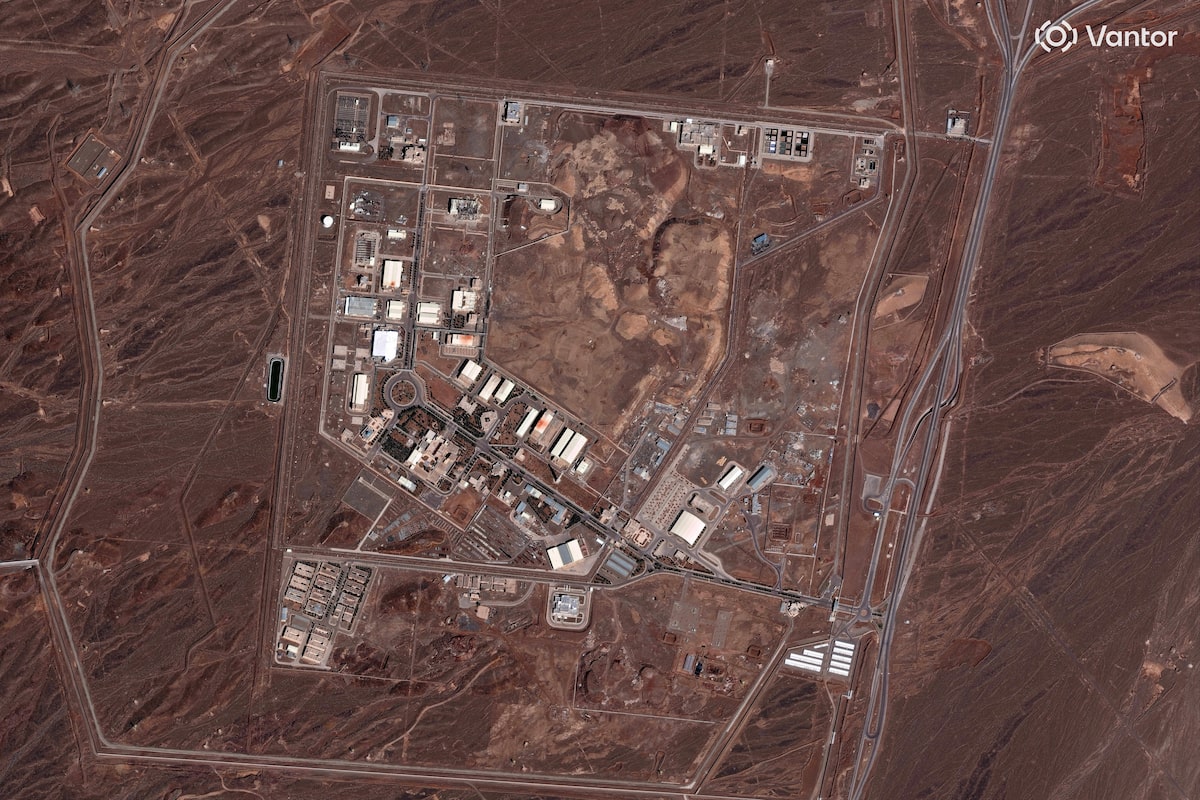
By March 2, the Natanz nuclear facility showed signs of damage to its entrance buildings. The International Atomic Energy Agency predicted ‘no radiological consequence’ at Natanz. Vantor via AP

The impact in the Gulf, Iraq and Syria

Missiles from across the narrow Persian Gulf have hit Qatar, Bahrain, the United Arab Emirates and Saudi Arabia. Iran’s neighbour Iraq has also taken fire.
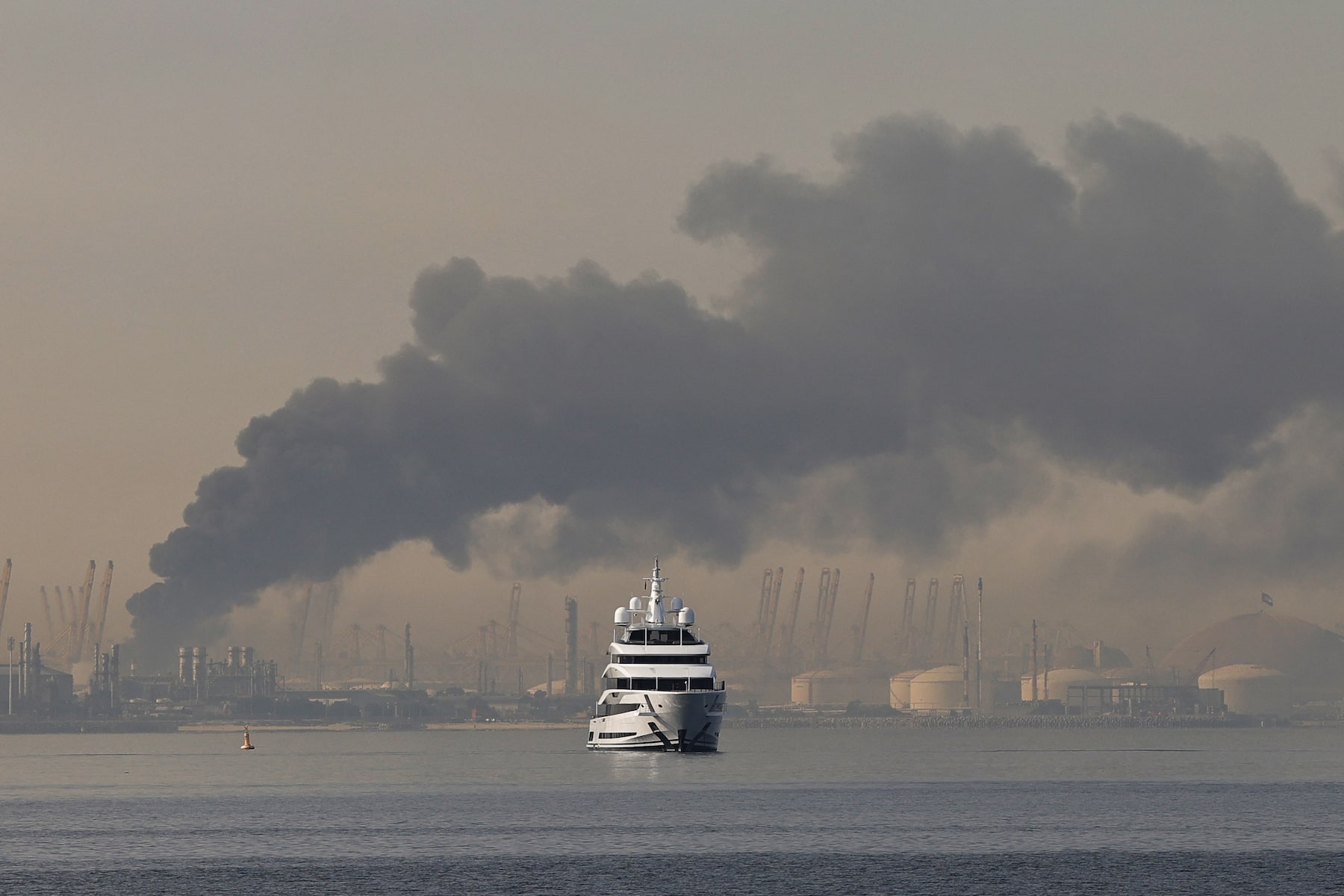
The Emirati port of Jebel Ali was mired in smoke on March 1 after a series of strikes on Dubai and Abu Dhabi that morning. Fadel Senna/AFP via Getty Images
Bahrain’s capital, Manama, had no casualties in the first day of the Iranian barrage, which hit the U.S. Navy’s 5th Fleet headquarters. Fadhel Madan/AFP via Getty Images
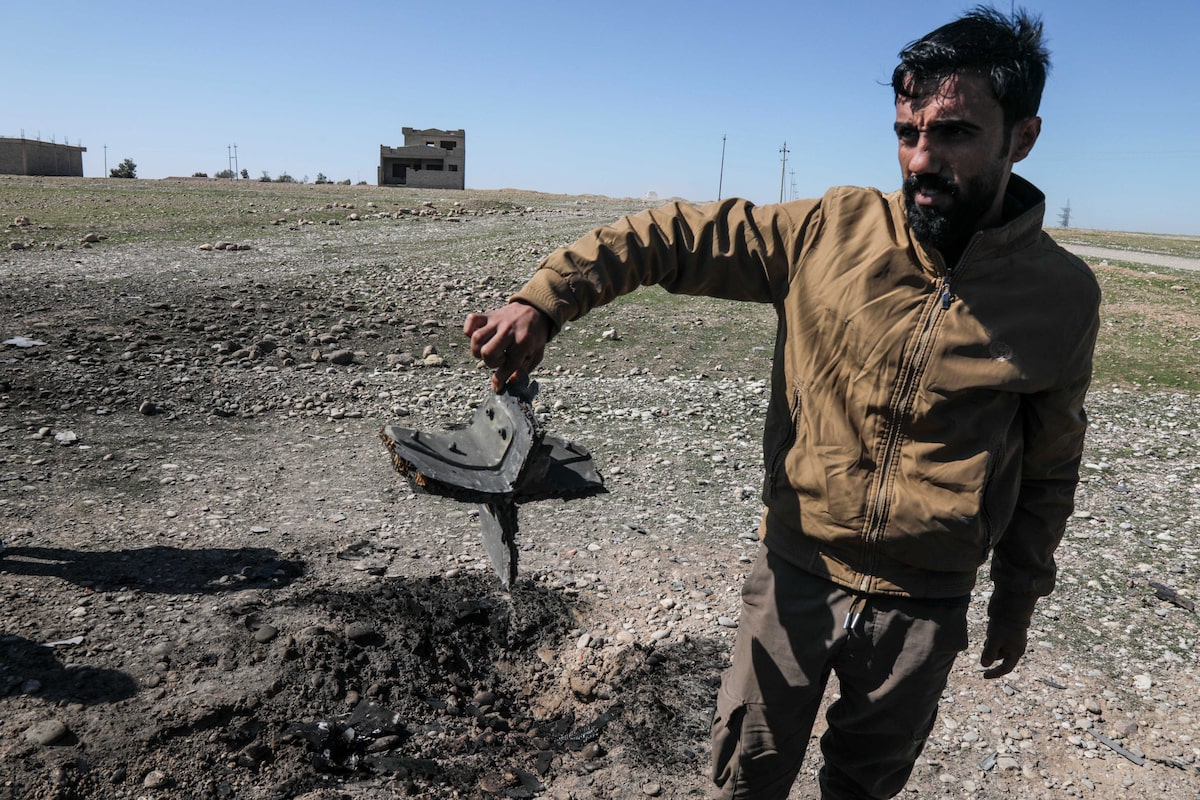
This debris was what remained of an Iranian drone in Erbil, the Kurdish capital in northern Iraq. U.S. forces have a base in the city. Safin Hamid/AFP via Getty Images

The impact in Israel and Lebanon

Israel is fighting multiple fronts. In addition to Iran and Lebanon, it has been fighting in Gaza since October, 2023.

Israel’s air defences have struck down many of the missiles from Iran, but not in Beit Shemesh, west of Jerusalem. A March 1 air strike killed nine people there. Leo Correa/The Associated Press
While Israeli ground troops advanced into southern Lebanon, the country’s air strikes took aim at Dahiyeh, a suburb of Beirut. Mourners in the Hezbollah stronghold had turned out in support of Iran after the attacks there. Hassan Ammar and Hussein Malla/AP

Follow related authors and topics

Authors and topics you follow will be added to your personal news feed in Following.

Interact with The Globe

Trending