
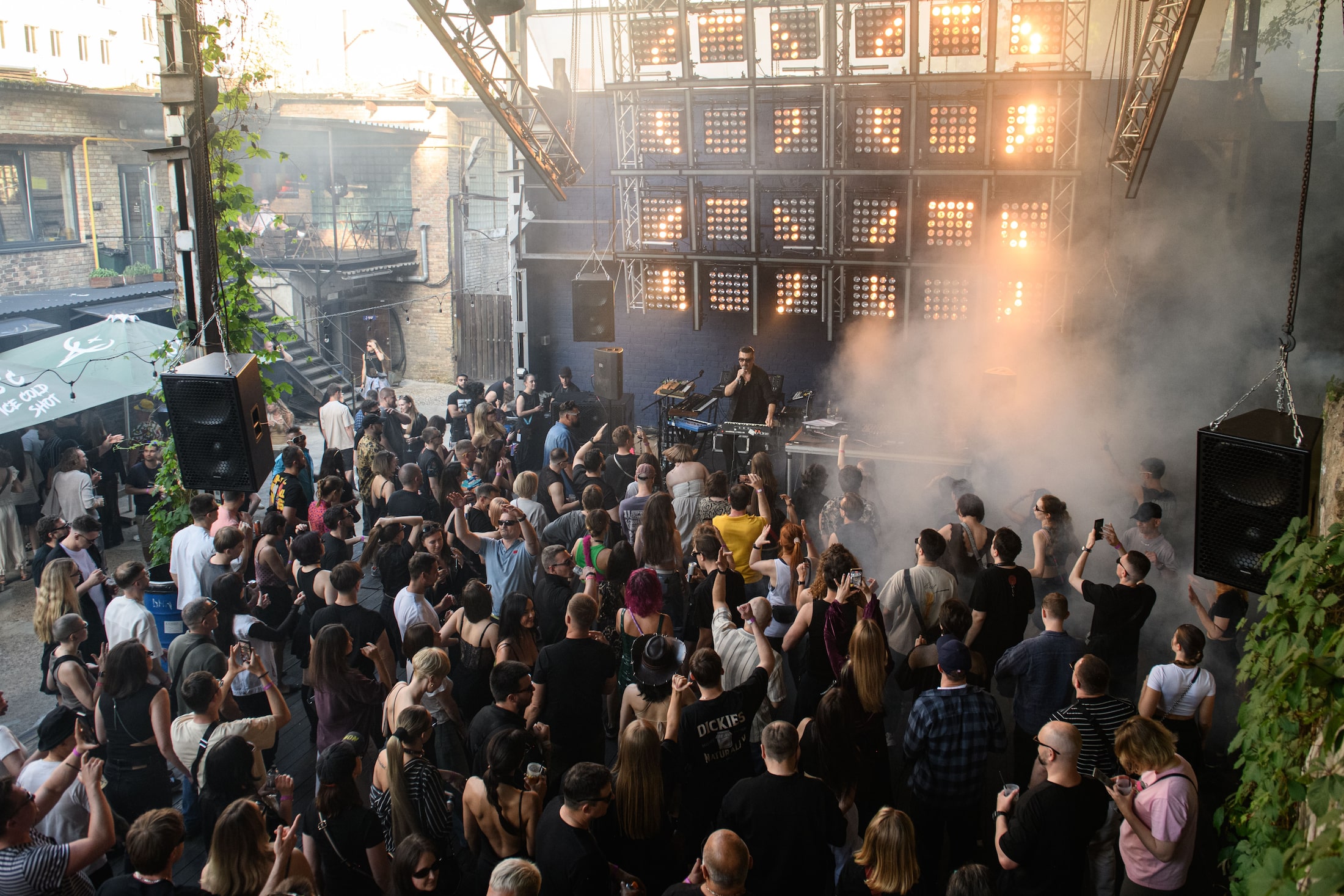
On Saturday night in Kyiv, you could hear the beat of techno music coming from behind the thick line of trees along a busy road as an air-raid siren wailed, warning of a possible attack.
A path winding through the wooded area led to an open-air industrial site where people danced in the fog of artificial smoke to a DJ performing on a stage that flashed red and gold lights. It was only 6:30 p.m. – the whole party being held under a bright blue sky.
With a midnight curfew in place, clubbing, sipping wine and cocktails and going out for dinner means getting the evening started much earlier. (Most bars and restaurants close around 10 p.m. or shortly after, to give customers and staff enough time to get home.) But neither the curfew, the threat of missile and drone attacks nor the fatigue after a night of bombardment stops people here from going out and living life as fully as possible. For many, it’s part of the fight.

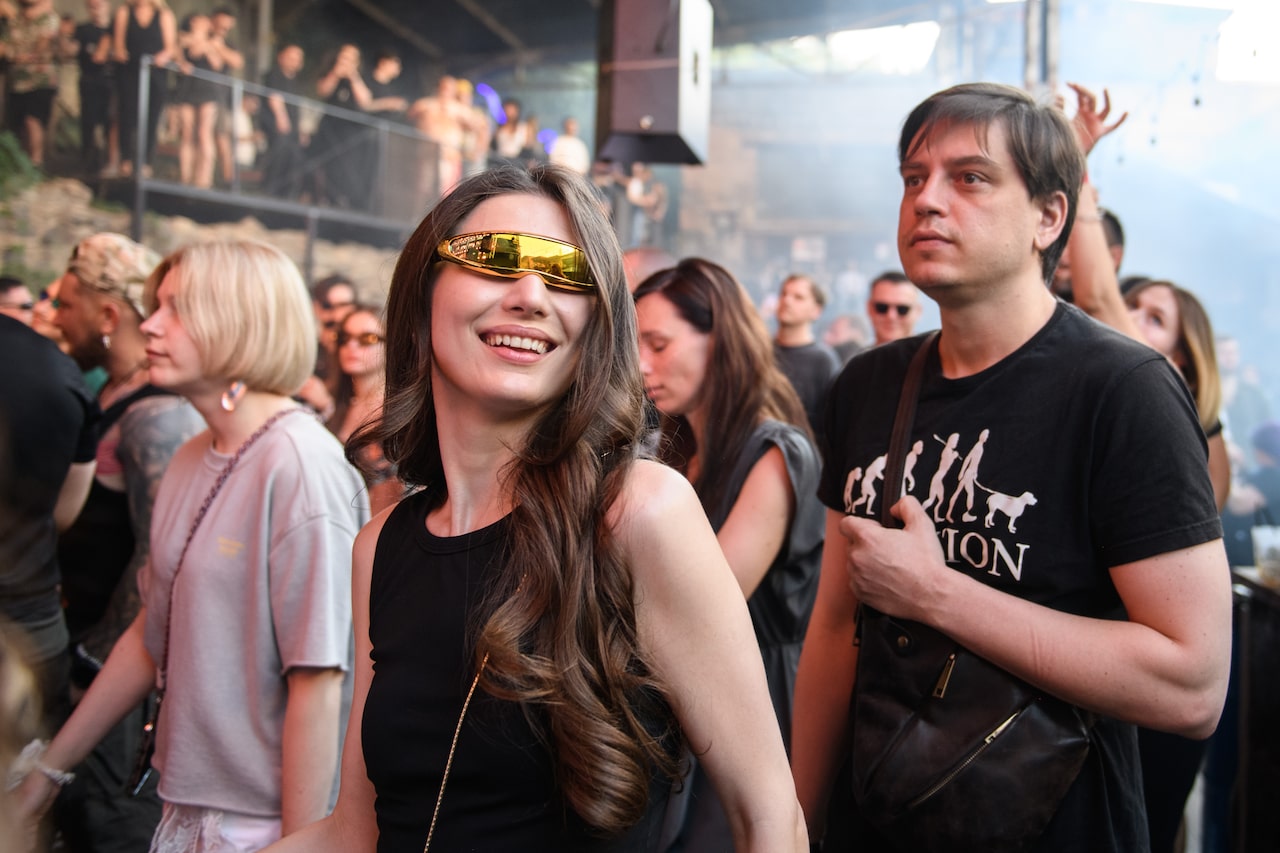
Artist Tetiana Kremen, 47, dances during a DJ set at Keller Bar in Kyiv. She says enjoying life while living under the threat of attack is a form of resistance.
“I think that the fact that we all live here is an act of resistance − not only partying, but going to restaurants, living our own life, falling in love, separating, driving our cars, enjoying our life. Enjoying our life is a kind of, yes, I would call it the best form of fighting,” said Tetiana Kremen, a 47-year-old artist, while taking a break from dancing.
Ms. Kremen didn’t go out during the first year of the full-scale Russian invasion. She believed she couldn’t allow herself to. But she soon realized she had to get on with things because it’s not clear when the war will end.
In a frigid Pilates studio, Ukrainians keep moving after Russian attacks leave them without power
“You don’t know when you are going to die because nobody knows when they’re going to die, but we have a little bit more chances,” she said. A recent attack near her building resulted in her windows breaking and her frightened cats fleeing (they have since returned). The next day, she said, she felt happy to be alive.

With a midnight curfew in place, going out to experience local nightlife means getting the evening started much earlier.
She acknowledged that an attack could come at any moment – there are drones constantly flying over her home. “We have a very nice night show,” she said of Ukraine’s air-defence systems shooting them down.
“We are tired of being scared,” she said. “We never forget about the war, we just know how to live with it.”
Since last week, Ukrainian officials have been warning that Russia is preparing another large-scale attack. While some people who were out Saturday night said they are used to large Russian attacks, others admitted they’re still fearful.
Aleksandra Kulakova, 27, said people come to this club to relax and calm down, even if it’s only for a few hours. But, she added, she hopes she can sleep peacefully after it ends. “We can do both – dance and defend our country,” she added.
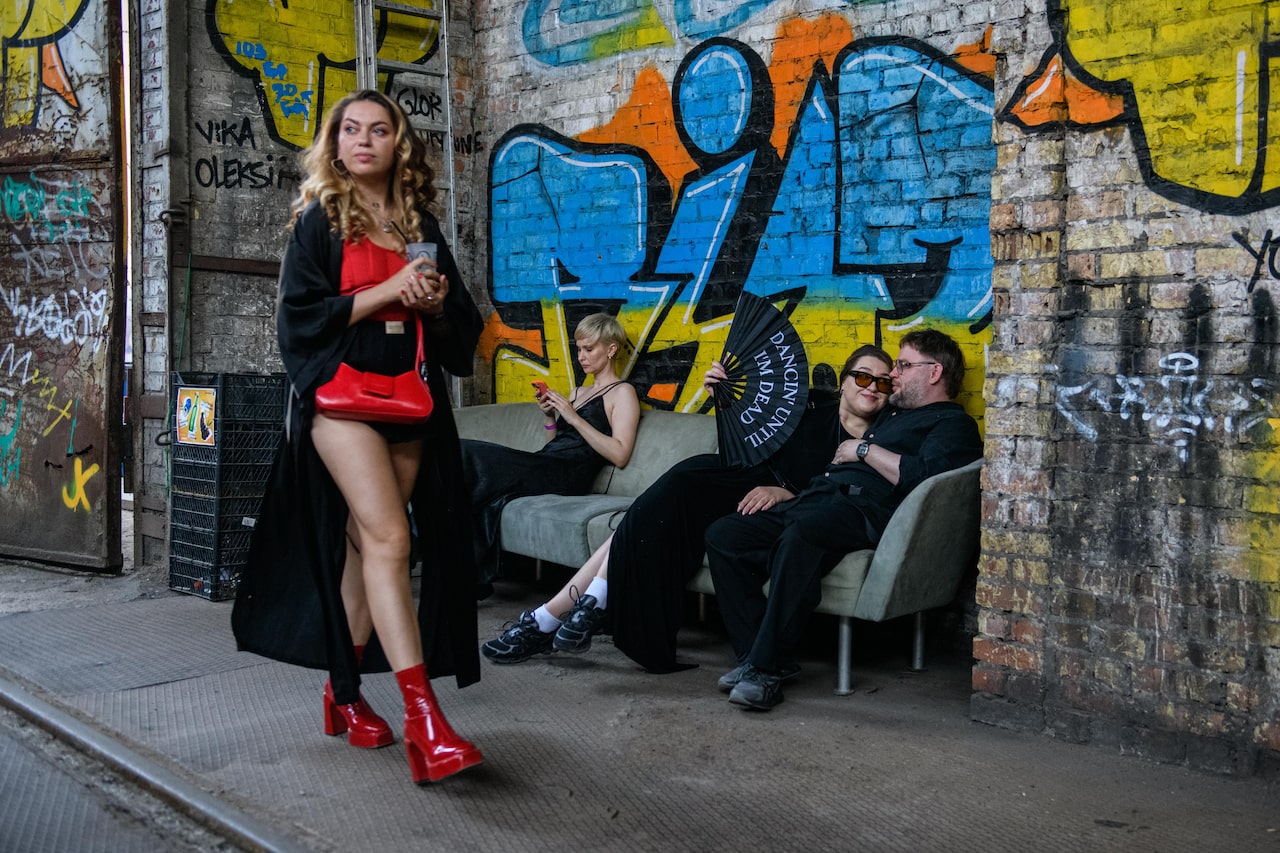
While initially it was hard switching to partying during the day, 34-year-old Artem Kuznetsov said it has now become the norm. Going home for curfew is another story, because that’s when attacks could begin.
“It’s crazy stuff … because you’re hearing this ‘boom, boom, boom’ and you don’t know what you want to do. You want to sleep, stay in your bed. Or you need to go somewhere to hide from the bombs. Every time it’s a new decision, it’s a new attack and it’s a new fear.”
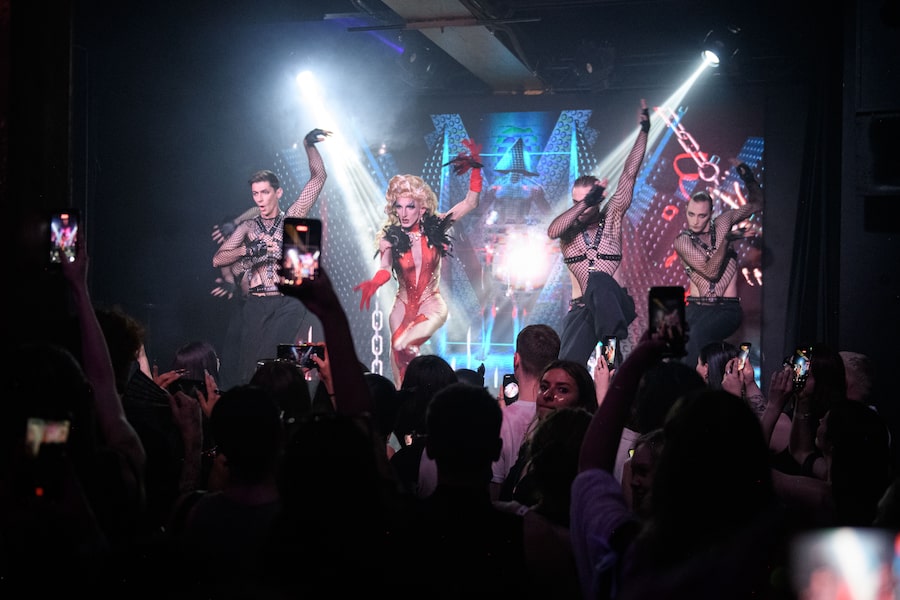
Not far from the open-air techno club, a set of stairs illuminated by a deep red light led to an underground club where fuchsia lights danced around the walls as the Spice Girls’ hit Wannabe blasted through the sound system. A 10-second countdown flashed on a screen, and the crowd cheered as a group of drag queens emerged on stage.

Drag queens take to the stage for the Saturday night show at the underground Portum Club in Kyiv.

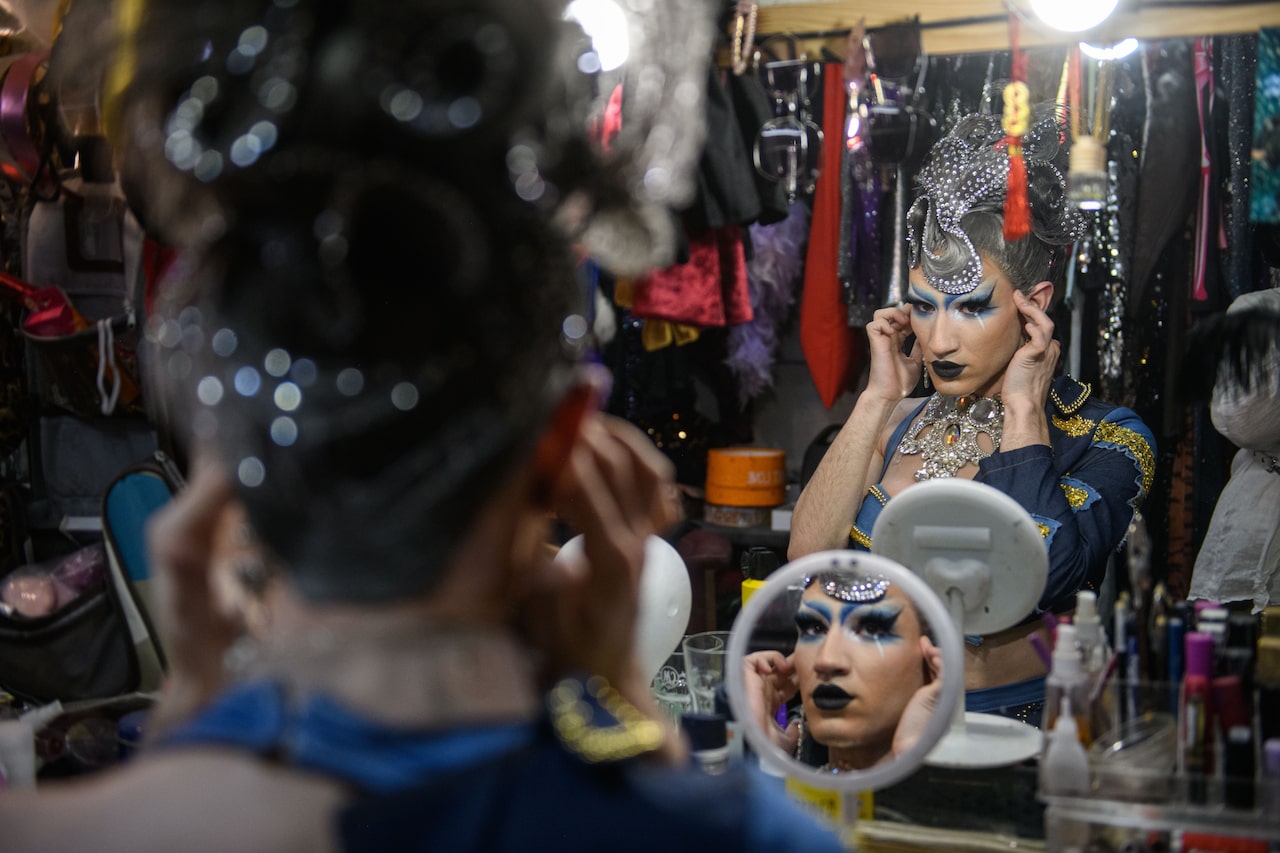
In the dressing room, performer Vladyslav Hanzha, 25, gets ready for the show. He recently lost a friend and fellow drag performer, Dmytro Pavelko, in a Russian strike.
Ahead of the show, Vladyslav Hanzha, one of the divas, said that in a war it’s important to provide people with moral support. He said he recently lost a friend and fellow drag performer, Dmytro Pavelko, who was killed when a Russian missile hit their apartment last month.
“One day a missile can take your life, so you should try to live your life vividly each day,” the 25-year-old said. He added, though, that they cancel shows after massive attacks to pay tribute to those who were killed.
When he goes home at night, he said, and the air-raid sirens start, he gets anxious but keeps going because he believes in destiny. “If I wasn’t killed by a Russian missile yet, it means my mission hasn’t ended yet.”
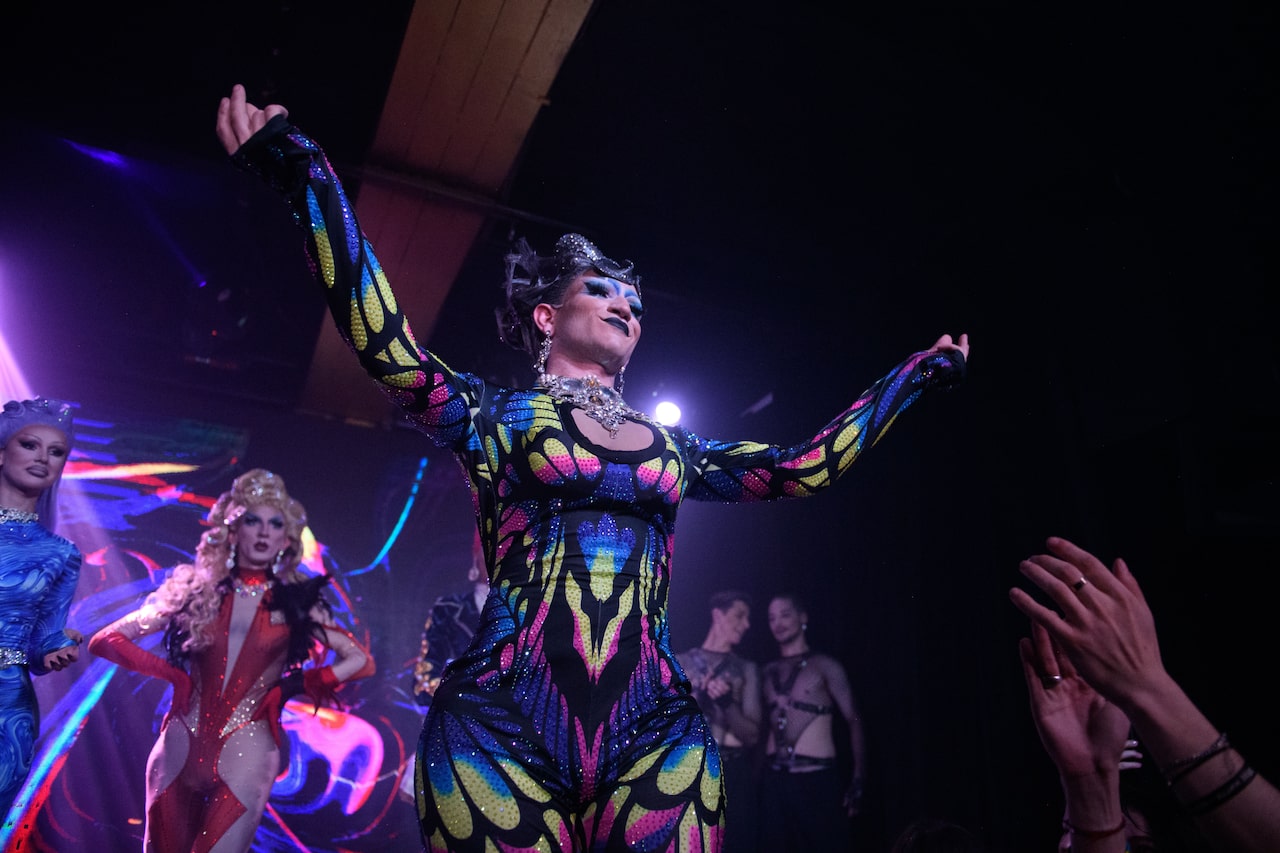
Despite everything, Dmytro Dvorchin, a fellow drag queen, stays focused on his goal: making drag culture popular in Ukraine. He said that night’s performance was a tribute to American drag queens who have achieved that kind of success.
“Such shows help people feel alive,” said Mr. Dvorchin, 25, adding that the shows have become a “curtain from all the risks and all the threats from outside.”
“So as not to cry, I laughed,” he said, quoting Ukrainian poet Lesya Ukrainka.
But techno music and clubs are not for everyone. Outside an old pub, Dmytro Anastasiev, 30, his wife, Zhanna Ostapenko, 30, and their friend Arina Chikalova, 28, sat together at a picnic table under a string of lights and sipped drinks as cars passed. Mr. Anastasiev said a missile had struck near their home and he believed nothing would change.
“We have to live here and now because tomorrow may not come,” Ms. Ostapenko said.

From right, Dmytro Anastasiev, his wife, Zhanna Ostapenko, and their friend Arina Chikalova share a drink in Kyiv.
With reports from Kateryna Hatsenko