
Soldiers loyal to Burkina Faso's coup leader Capt. Ibrahim Traore, in Oct., 2022. More than half of all insurgent-related deaths in the Sahel region have occurred in Burkina Faso, the Armed Conflict Location and Event Data project says.Kilaye Bationo/The Associated Press
The heavily armed Islamist rebels, some with grenade launchers or bandoliers of ammunition strapped across their chests, assembled in a vast column of motorcycles on the grasslands of central Mali. Then they roared off. Their target: a nearby military base.
Within hours, the insurgents had captured the base, seizing an arsenal of machine guns and army vehicles. Video clips, posted by the militants later, showed smoke billowing from fires across the base as they celebrated their victory.
The assault on Farabougou army base on Aug. 19 was just the latest in a relentless wave of Islamist attacks across the Sahel region of West Africa in recent months. Jihadist groups have conquered a huge swath of territory in Mali, Burkina Faso and Niger, pushing closer to the capital cities and exposing the weaknesses of the military juntas in each country.
When army officers seized power in a series of coups across the Sahel over the past five years, they pledged to defeat the insurgencies and provide the security that their populations have desperately sought.
So far, their promises have come to nothing. The rebellions are expanding, chaos is spreading, and the Islamists have become increasingly well-equipped with sophisticated new weapons, including drones for surveillance and air strikes.
The military regimes have entrenched their rule by postponing elections, arresting dissidents and clamping down on opposition parties and media outlets. But protests have continued, signalling a growing discontent with the failures of the juntas.
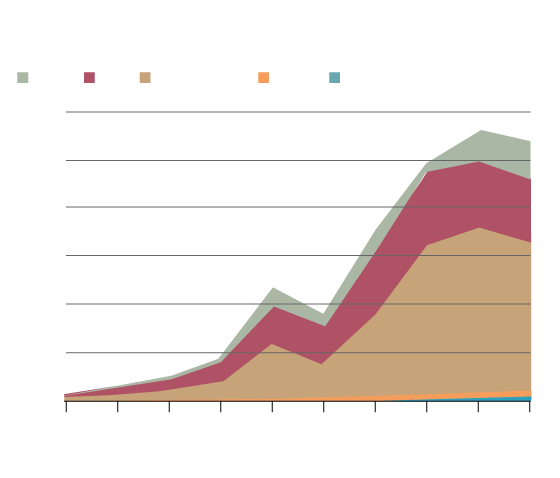
Sahelian militant Islamist-linked fatalaties
By country
Niger
Mali
Burkina Faso
Benin
Togo
12,000
10,000
8,000
6,000
4,000
2,000
0
2016
2017
2018
2019
2020
2021
2022
2023
2024
2025
the globe and mail, Source: africacenter.org
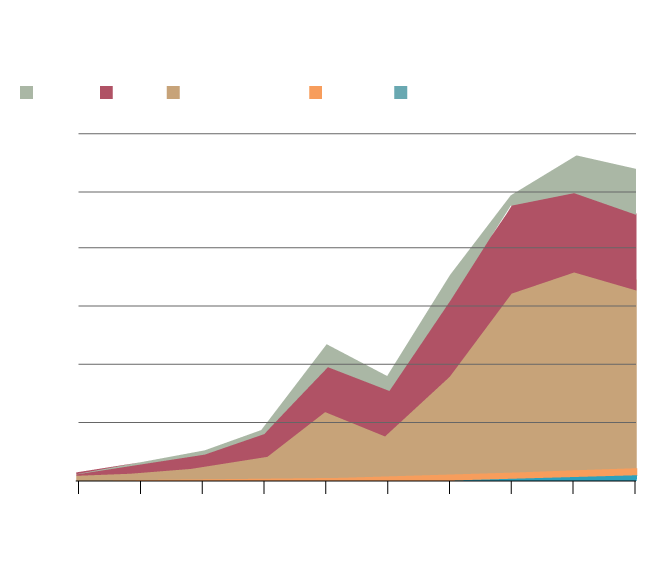
Sahelian militant Islamist-linked fatalaties
By country
Niger
Mali
Burkina Faso
Benin
Togo
12,000
10,000
8,000
6,000
4,000
2,000
0
2016
2017
2018
2019
2020
2021
2022
2023
2024
2025
the globe and mail, Source: africacenter.org
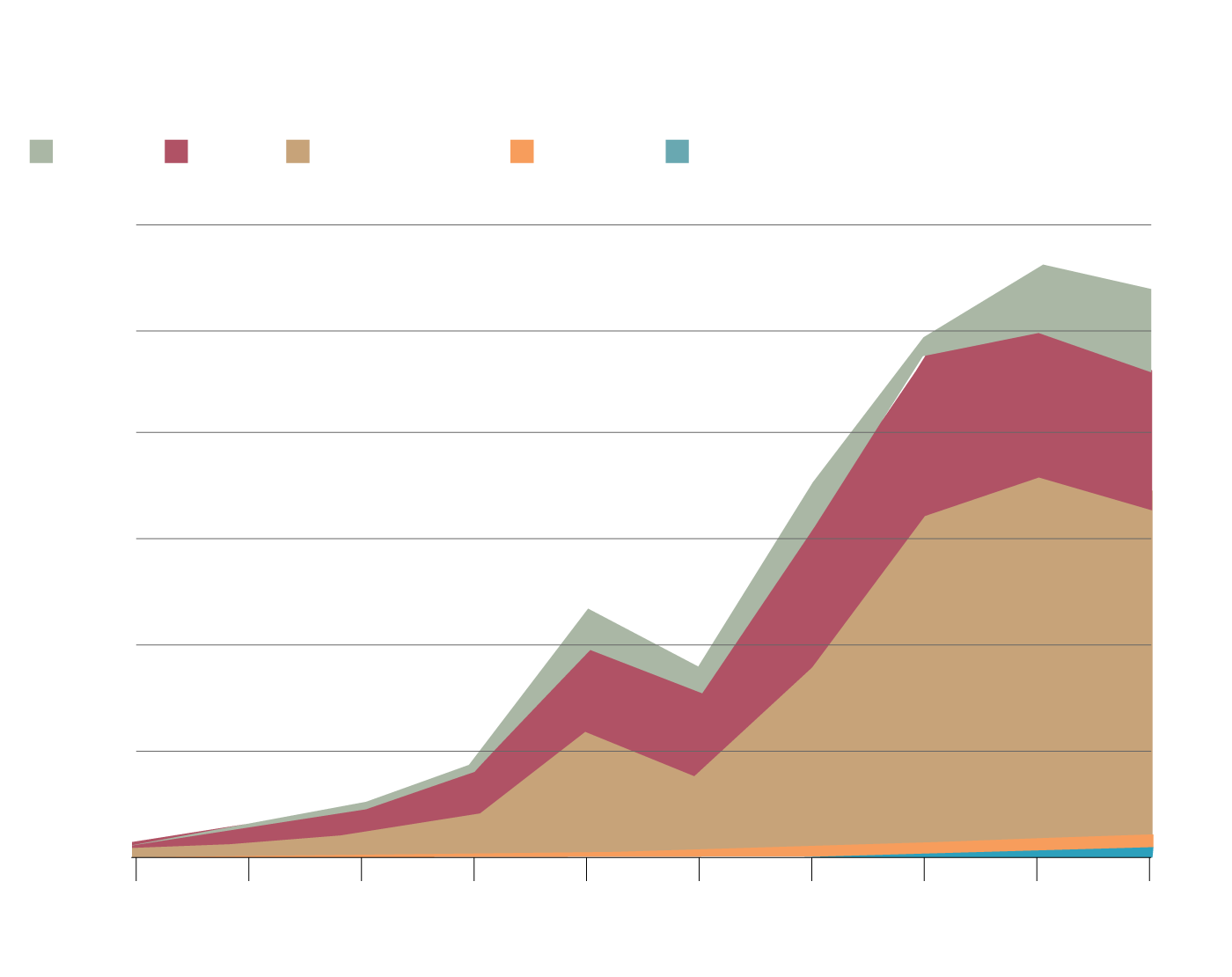
Sahelian militant Islamist-linked fatalaties
By country
Niger
Mali
Burkina Faso
Benin
Togo
12,000
10,000
8,000
6,000
4,000
2,000
0
2016
2017
2018
2019
2020
2021
2022
2023
2024
2025
the globe and mail, Source: africacenter.org
Over the past three years, more than 10,000 people have been killed annually in jihadist attacks in the Sahel region, according to the Armed Conflict Location and Event Data project (ACLED), an independent monitoring group. This toll is more than double the average annual deaths in the previous three years, and a sevenfold increase since 2019, it said in a recent report.
“The pace and scale of violence in the Sahel is likely even higher than reported, given that the military juntas that seized power in Mali, Burkina Faso and Niger have restricted media access within the region, which is the main source of conflict data,” the report said.
In Mali, the Islamist groups were once confined largely to the deserts of the north. But recent attacks have reached towns within 40 kilometres of the capital, Bamako, and there are growing fears that the capital will be encircled.
In Burkina Faso, the regime controls only about 40 per cent of the country, the ACLED report said. More than half of all insurgent-related deaths in the Sahel region have occurred in Burkina Faso, it said.
In Niger, fatalities linked to militant Islamists have quadrupled since the coup in 2023, including a 49-per-cent spike over the past year, the report said. And the insurgency has spilled across borders to other West African countries such as Benin and Togo, where deaths have also been reported.
Most of the violence is linked to a coalition of Islamist groups, known as JNIM, which has an estimated 6,000 to 7,000 fighters in its ranks. Another group, Islamic State, is also active in the region.
A report by a panel of United Nations experts said the deteriorating situation is “deeply concerning.” The JNIM network is continuing to expand its territorial control in the region, it said.
“JNIM reached a new level of operational capability to conduct complex attacks with drones, improvised explosive devices and large numbers of fighters against well-defended barracks,” the experts said in their report to the UN Security Council in July.
“The group increasingly positioned itself as a governing actor, seeking to control territory, establish rudimentary governance and gain local support.”
They said the group’s core ambition is to create an emirate, with sharia law, forcing the military juntas to cede authority. In the Farabougou district of Mali, after capturing the military base last month, JNIM immediately banned music and alcohol and ordered unaccompanied women to stay home.
Siege grows deadlier as Sudanese city faces expanding assault and looming starvation
The expanding insurgencies are provoking political tensions. Mali’s ruling junta, fearing an uprising or a coup, has arrested dozens of high-level politicians and military officers in recent weeks. It had earlier dissolved all political parties and postponed its promised elections after anti-government protesters took to the streets in May to demand democracy.
In Burkina Faso, hundreds of villagers in the district of Barini held a demonstration this week to protest against the lack of protection from insurgent attacks. Security forces reportedly fired at the protesters, killing at least two of them. Videos on social media showed women and children fleeing from what sounds like gunfire.
The military regime in Mali has tried to battle the Islamist insurgency by recruiting thousands of Russian mercenaries from the Wagner Group to assist it, but this has allegedly led to further atrocities, provoking more discontent.
Human Rights Watch says the Russian and Malian troops have killed and kidnapped dozens of civilians since January after accusing them of collaborating with JNIM.
“The Wagner Group has become more reactive and violent − allowing the very terrorist groups they were hired to neutralize to gain more control and increase recruitment in Mali,” investigative research group The Sentry said in a report last month.