

Should metro stations, many built with bathroom-like tiles, low ceilings and harsh lighting, strive only for functionality and efficiency? Or can they double as public, immersive art spaces that add a little bit of aesthetic cheer – and civic pride – to the daily commute?
That was the question asked in the early 1990s by prominent Italian contemporary art critic Achille Bonito Oliva. No surprise – he thought that stations that looked like oversized toilets were demoralizing to commuters and a lost opportunity for artists and architects.
Why not make them “catacombs of beauty,” as he would later call them?
He selected about 100 local and international artists – Michelangelo Pistoletto and William Kentridge among them – and integrated their works into several metro stations in Naples, the capital of Campania, the southern Italian region where he was born and raised.
The concept caught the imagination of planners of the Naples metro system, as well as municipal politicians, who were trying to cast their chaotic, crime-ridden, though vivacious, city in a new, welcoming light. In 1995, the city launched the Stazioni Dell’Arte project, which would see a dozen stations, with more to come, open in the subsequent decades.


Monte Sant’Angelo, which opened in November, was designed by Anish Kapoor, the British artist who also made Chicago’s now-iconic ‘Bean’ sculpture (more properly known as Cloud Gate).
The newest station, Monte Sant’Angelo, combines sleek, airy interior design with bold, otherworldly exterior architecture, a break from the other metro stops whose street-level entrances look entirely normal, sometimes grubby.
It opened on Nov. 10 and was designed by Anish Kapoor, the Turner Prize-winning, Mumbai-born British sculptor who takes on public commissions and whose major artworks go for millions of dollars.
There is no direct equivalent in Europe or North America to the Naples project, though a few stations in those regions feature stained glass, murals and sculptures. The Naples art stations seem particularly Italian, combining artistry with function throughout.
“The art stations appeal to the souls of Neapolitans and their search for beauty,” said Fiorentino Borrello, director of new investments for EAV, the public transport authority for Campania.
The stations have received international praise. CNN and London’s Daily Telegraph newspaper have called the deep, city-centre Toledo station, whose glittering tiles and “periscope” to the surface make commuters feel they are under the sea in a magical coral garden, “the most beautiful metro station in Europe.”

Dante was from Florence, not Naples, but Mr. Kapoor says the 14th-century Italian poet gave him food for thought to design his own descent into the underworld.
Monte Sant’Angelo has two monumental entrances. One is a lustrous aluminum tube; the other, even more dramatic, blurs the line between art and architecture. It is made of Corten, or weathered, steel and takes on a curving, bulbous, sensual form as it rises 19 metres from the earth.
Some critics have called the entrance and the long, sloping tube that takes commuters almost 50 metres underground through Naples’s volcanic rock a “descent into hell.” Mr. Kapoor has not quite embraced the “hell” description. But when the metro opened, he did say, “In the city of Mount Vesuvius and Dante’s mythical entrance to the inferno, I found it important to try and deal with what it really means to go underground.”
The metro stop has received international praise, including a November cover story in the Franco-German Arte magazine.
Building the station was certainly hellish. The project started more than 20 years ago and ran into endless problems – funding, legal, bureaucratic and technical – that put the station years behind schedule.
“It was all complex and challenging,” said Carlo Di Costanzo, the Naples metro project manager for Webuild, the Italian construction giant that has built eight art metro stops in Naples and two new “museum” stations in Rome. “It was challenging but extremely interesting work.”
In a sense, the station became a European project. The steel panels designed by Mr. Kapoor were made in the Netherlands and shipped to Naples at great expense. Mr. Kapoor worked with Future Systems, a now closed London architecture firm, to design the entrances and interior. The whole project, including the train tracks leading to the immediate next stations, cost about €140-million ($226-million) – about triple the amount for a regular station.

While the Monte Sant’ Angelo station is Naples’s artistic flavour-of-the month, Neapolitans are also fans of their many other art stations.
The Toledo station, designed by Spanish architect Oscar Tusquets Blanca, with its surreal lighting and mosaics made from blue and violet glass tiles, is a perennial favourite.
Several others also offer unique artistic experiences.
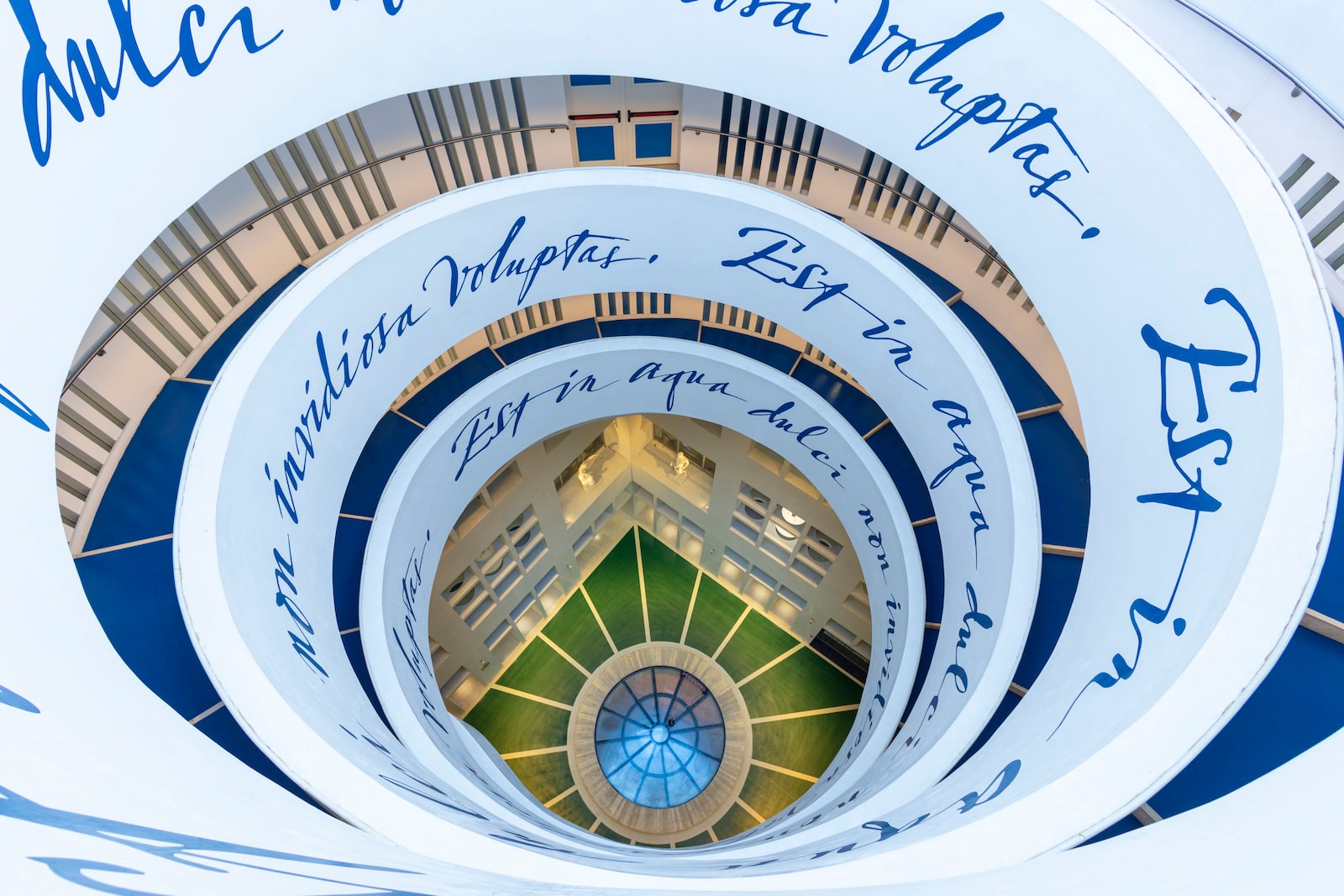
The Chiaia-Monte di Dio station was built as an architectural promenade, with a spiral staircase – inspired by the ramp of Manhattan’s Guggenheim Museum – connecting the upper and lower parts of the city.
The San Pasquale station, designed by the postmodernist Italian-Slovak architect Boris Podrecca, was created to resemble a sunken ship and features wall art that gives the appearance of ocean waves. Mr. Podrecca called his creation a “dizzying descent into the sea.”
The Museo station, located beneath the National Archeological Museum of Naples, presents a thematic extension of the institution above, with ancient statues and, in parts, walls inspired by the rich, red plaster found in nearby Pompeii.


Rome's Colosseo station, displaying the artifacts unearthed in its construction, gives commuters a look at their city's imperial past.Remo Casilli/Reuters
Rome is taking Naples’ art concept and giving it a twist. On Dec. 16, the Colosseo (Colosseum) metro station on the city’s C line opened to the public and dazzled commuters. The station, also built by Webuild, took 20 years to complete, in good part because the digging machines kept uncovering ancient ruins. Among the discoveries were a thermal bath with a plunge pool, 28 stone-lined water wells, human skeletons and hundreds of artifacts, including bronze jugs and bone hairpins.
Instead of reburying the items, or placing them in an established archeological museum, Rome turned the cavernous station into an underground historical gallery. One recent afternoon, Romans and tourists alike were taking short breaks from their travels to view the objects in their cases. Antonello Guerrera, a journalist for Italy’s La Repubblica newspaper, called it “the coolest underground station in the world.”
Whether the Naples’ art stations or Rome’s museum stations (a second one, filled with ancient mosaics, is to open in the early spring), will inspire other cities to turn their metro stops into aesthetic marvels is an open question. But there is no doubt that Neapolitans and Romans approve of the ones they have.
“The stops are no longer simple places of transit, but open-air galleries,” the news site Il Sud24 said in a comment piece after the Kapoor-inspired station opened. “The heart of the Stazioni dell’arte Napoli project is not just aesthetic, but social. The idea was to bring beauty where degradation often lurks.”

Beauty and the streets: More from The Globe and Mail
City Space podcast
What if Calgary had been built like Paris, with beauty at its core? Englishman Thomas Mawson had a plan to do just that, but his project became a casualty of the First World War. The City Space podcast explains how.
Commentary from Alex Bozikovic
Parks should be made for people. Why does such an obvious idea elude us?
A dense, urban Canada? It’s possible
Toronto’s Old City Hall is a chance to think big, but timid bureaucracy is stifling its potential