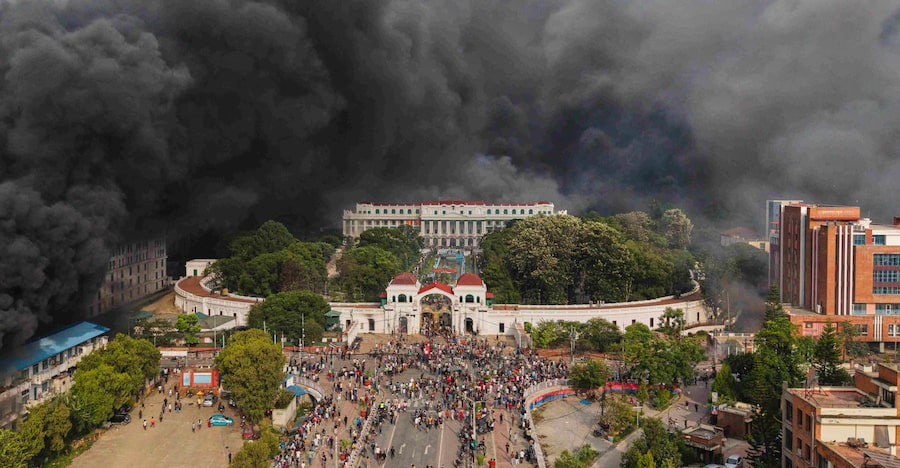

Protesters storming government buildings and setting them ablaze. Young people marching in the streets against corruption. Soldiers imposing martial law. Politicians fleeing the country.
Dramatic scenes coming out of Nepal this week strongly echo similar uprisings in Sri Lanka and Bangladesh in the last three years.
In all three countries, what began as protests turned into political revolutions, turfing out elites who had overstayed their welcome and causing repercussions still being felt across South Asia.
“There are a lot of similarities in the collapse of the governments in Nepal, Bangladesh and Sri Lanka,” said Kalyani Honrao, an analyst at the Economist Intelligence Unit based in India. Prior to the unrest, governments in all three countries had struggled with high inflation and unemployment, as well as widespread accusations of cronyism and graft.
“People came out to demand good governance, and an end to corruption,” said Binay Kumar Mishra, a professor of public policy at Nepal’s Kathmandu University. “It’s a common theme in all these South Asian countries.”

Sri Lankan soldiers came out in force in Colombo three years ago when protests against president Gotabaya Rajapaksa, brought on by a worsening economic crisis, dragged on for weeks.ISHARA S. KODIKARA/AFP via Getty Images

By July, the protesters occupied Mr. Rajapaksa's Colombo mansion; days later, he formally resigned.Dinuka Liyanawatte/Reuters
In Sri Lanka, where a post-civil war, tourism-led economic boom faltered in the wake of terrorist attacks and the COVID pandemic, protesters took to the streets in March, 2022, to demand the resignation of Gotabaya Rajapaksa, whose family had dominated politics on the island nation for almost two decades.
As the largely youth-led protests swelled, Colombo tried to crack down, deploying the military and restricting access to social media. But this backfired, and the unrest grew, eventually forcing Mr. Rajapaksa first to resign and then to flee the country altogether after protesters stormed his official residence.
Last year, Sri Lankans elected Marxist outsider Anura Kumara Dissanayake as the country’s President and gave his leftist coalition a massive parliamentary majority in legislative polls months later. Mr. Dissanayake described the elections as a “critical turning point for Sri Lanka,” and vowed to crack down on corruption and reduce the powers of the presidency, which he blamed for past abuses.

When Sri Lankans elected Anura Kumara Dissanayake nearly a year ago, the president said he would scale down his powers to prevent future corruption.Reuters
As Mr. Dissanayake was riding a wave of popular support to power last year, another South Asian leader was on the way out. Sheikh Hasina, whose 15 years as prime minister of Bangladesh had seen a marked shift toward authoritarianism, was overthrown by student-led protests that grew into a national uprising eventually forcing Ms. Hasina, like Mr. Rajapaksa, to flee the country.
Ms. Hasina has described her removal as a coup, and condemned the ongoing crackdown on her political party, the Awami League, about which human rights groups have also raised concerns. In the wake of her removal, Bangladeshi entrepreneur and Nobel Peace Prize laureate Muhammad Yunus took the helm of an interim government. Elections are due to be held in February.


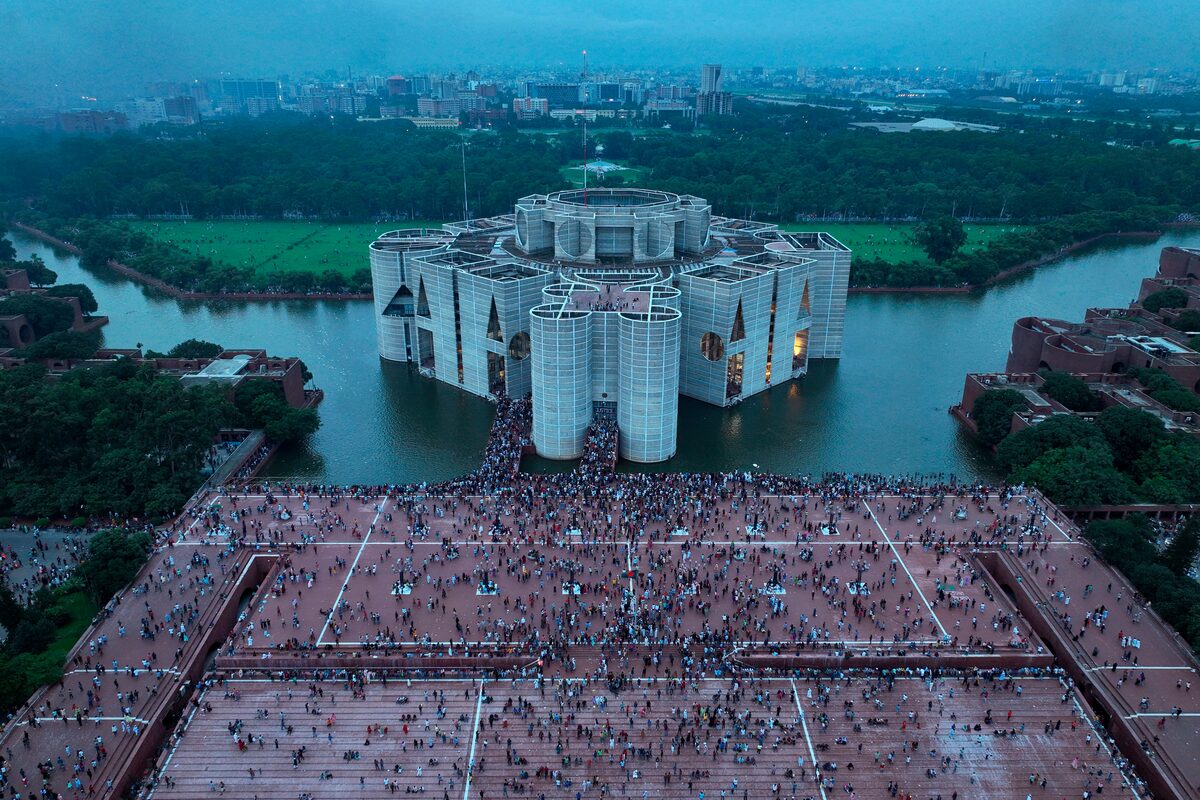
So far, the situation in Nepal has played out similarly to Sri Lanka and Bangladesh.
Simmering anger over corruption and economic issues exploded into street protests after the government tried to crack down on social media in response to young Nepalese spreading images online of children of the country’s elite.
Ms. Honrao said feelings of “economic disenfranchisement” drove a campaign highlighting “nepo kids” on social media, “which worsened feelings of inequality and drove even more anger towards the political class.”
“We can see similar issues with Bangladesh, given that the capitulation of Sheikh Hasina’s government was sparked by the tightening of quotas for government jobs – a measure that youth protestors saw as unfairly benefitting the political class,” she said.
Prof. Mishra said there were also key differences between Bangladesh and the situation in Nepal, not least the latter country’s commitment to “democratic values,” compared to years of democratic backsliding under Ms. Hasina.
On Tuesday, Nepalese Prime Minister K. P. Sharma Oli, along with several other key officials, resigned and fled the country. Mr. Oli, who is the chairman of one of the country’s largest political parties, has served multiple stints as premier of Nepal since 2015.

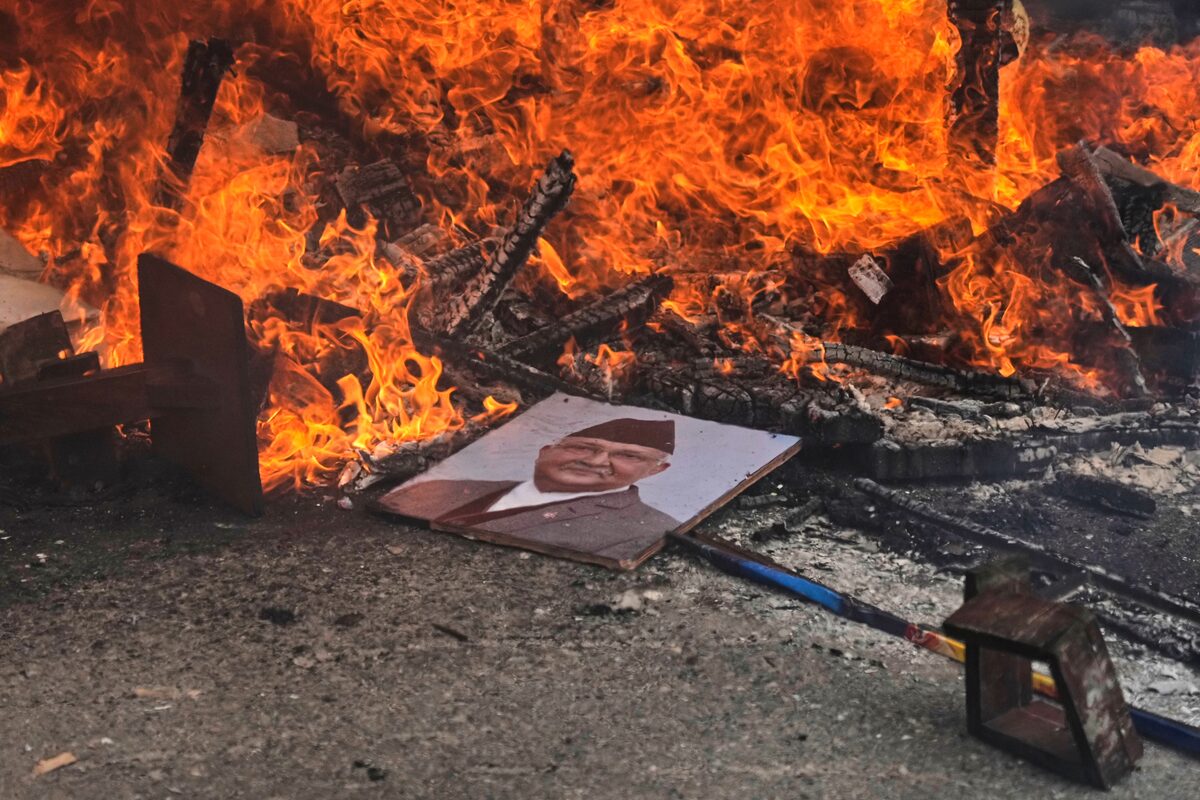
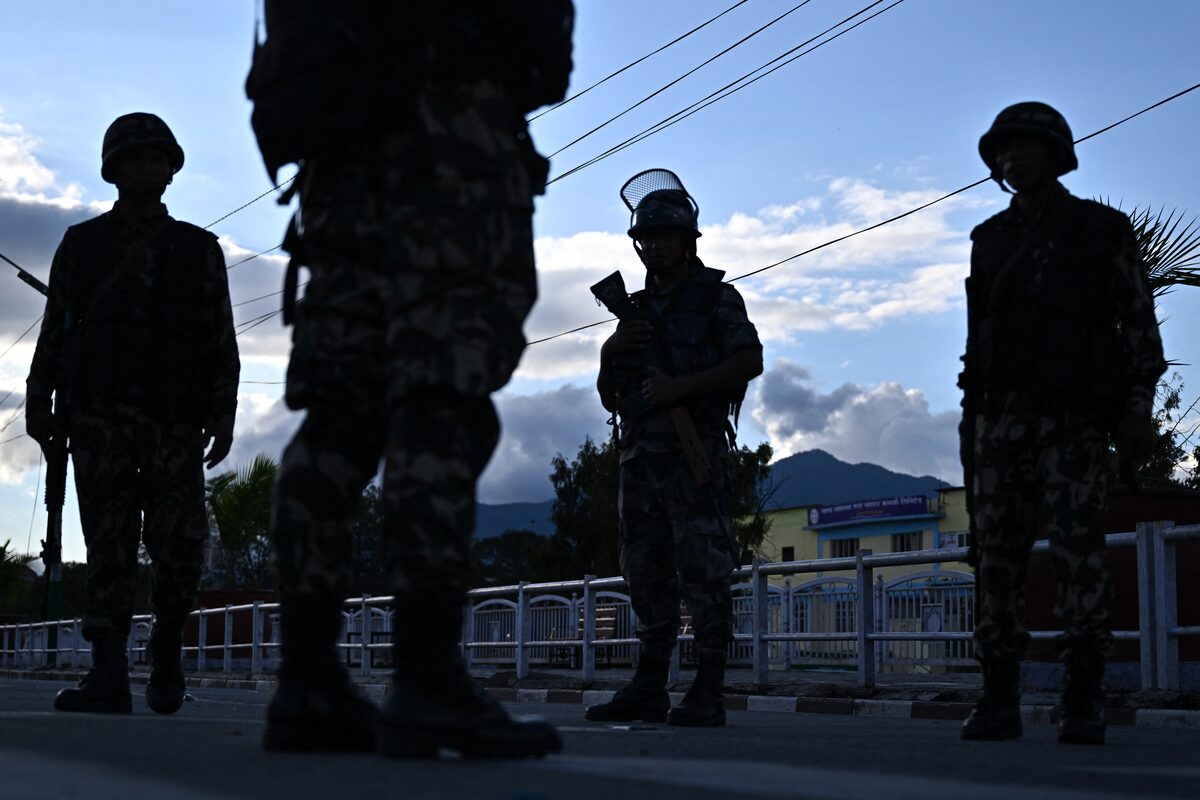

After days of violent protests and a crackdown that left at least 22 people dead, the military began enforcing a strict curfew in Kathmandu and other cities, which largely stopped the unrest.
After negotiations with army chief Gen. Ashok Raj Sigdel, protest leaders proposed Sushila Karki, a former chief justice of Nepal’s Supreme Court and the first woman to hold that role, as head of an interim government. On Friday, the country’s President Ram Chandra Poudel appointed Ms. Karki as interim prime minister, the first woman to head the Himalayan nation’s government.
It was a similar arrangement to what was hashed out in Bangladesh. There, the military stepped in, sparking fears of a coup, but after restoring order it retreated in favour of the administration led by Mr. Yunus, who like Ms. Karki was seen as a politically neutral, technocratic figure.
“Deepening anger around economic injustice has now sparked political shifts in two countries in just as many years. That raises concerns about political stability in South Asia, more generally, given the high levels of inequality present throughout the entire region,” Ms. Honrao said.
This is particularly true for New Delhi, which has in recent years faced a battle for influence across South Asia with China, at a time when tensions with Pakistan are higher than ever and boiled over into a brief and bloody border conflict earlier this year.
Under Mr. Oli, Nepal had shifted gradually toward China, and the Prime Minister attended a key political summit in Tianjin just weeks before his ouster. Bangladesh and Sri Lanka – traditional allies of India – have both built relations with Beijing in the wake of their protest movements. “Having a stable neighbourhood is critical for India. But right now, India’s backyard looks to be on fire,” Ms. Honrao said. “Nepal’s political turmoil will exacerbate Indian security concerns, given that the two share a largely open border spanning more than 1,750 kilometres.”
