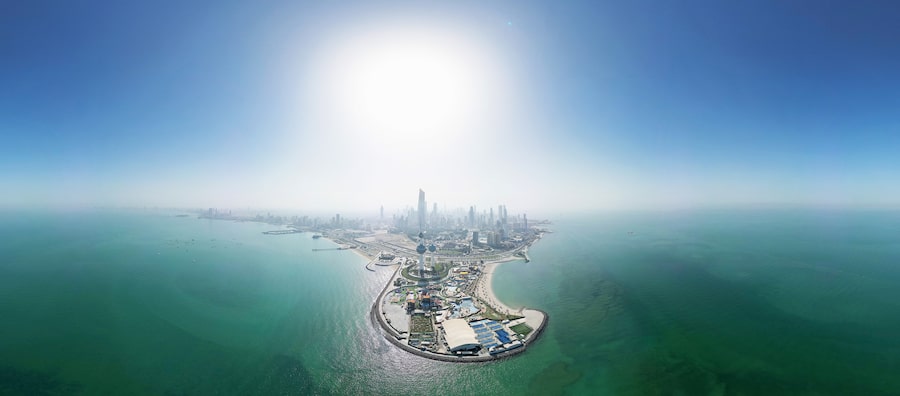
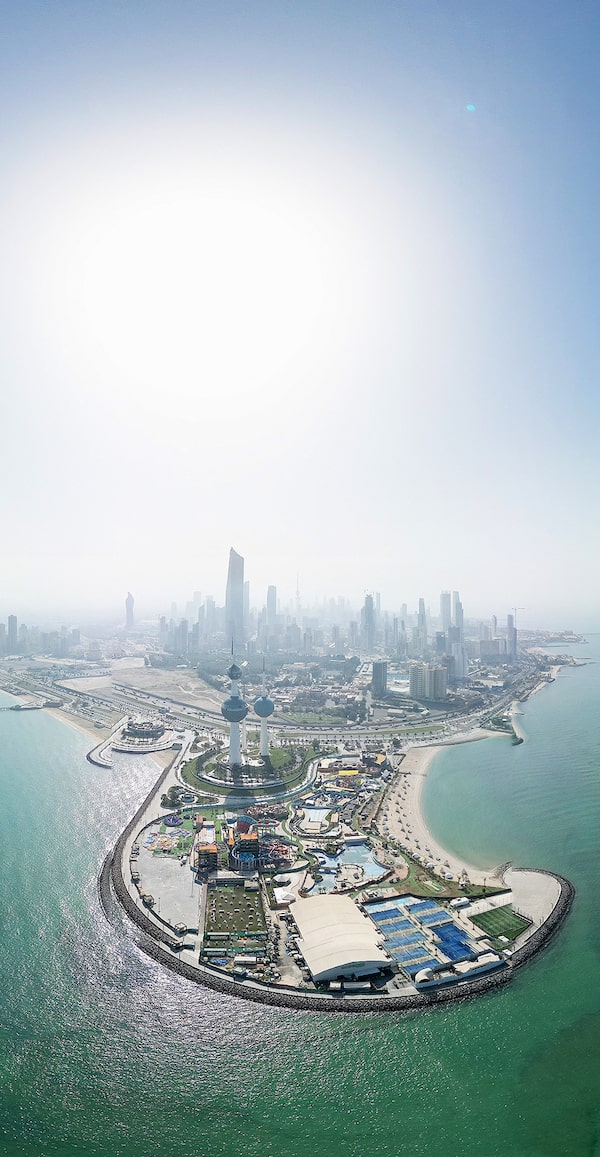
If Iranian drones and missiles had rained down upon the Gulf Arab countries 85 years ago, there would have been very little for them to hit. A village here, a small town there, a desert encampment, a fledgling port. Hardly any infrastructure to speak of. One word changed that − changed everything – starting in the late 1930s: oil.
On Jan. 14, 1940, the British political agent in Bahrain wrote to Sheikh Abdullah bin Qasim al Thani, the ruler of Qatar, to congratulate him “most heartily on the discovery of oil.”
“I earnestly hope that the future drilling which the Company will undertake will prove that Qatar possesses a valuable oil field.”
It did.
From all over the Persian Gulf – Arab states refer to it as the Arabian Gulf, this being the least of their disputes with Iran today – similar telegrams were dispatched across the world to announce the discovery of “black gold.”
On March 4, 1938, a “hopped up” Standard Oil of California executive sent a telegram from Dhahran to Riyadh and San Francisco confirming the discovery of oil in Saudi Arabia’s Eastern Province. “While ‘one swallow does not make a Spring,’” he wrote, “I am rather encouraged to feel that in this instance, one oil well will make an oil field.”
It did.

Saudi Arabia’s Shaybah oil field, near the border with the United Arab Emirates, is one of many that has made the national producer Saudi Aramco into a global energy powerhouse.BILAL QABALAN/AFP via Getty Images
Today, Saudi Arabia has 142 oil fields, including the monumental Ghawar, the world’s largest onshore field, with a capacity once estimated at more than 100 billion barrels of recoverable oil. Abu Dhabi struck oil later, in 1958, followed by Dubai in 1966. Among the region’s giant oil fields today are Kuwait’s Greater Burgan, Upper Zakum in the United Arab Emirates and Qatar’s Al Shaheen, together with its North Field gas reservoir, which Doha shares – uncomfortably now – with Iran.
In 2024, the six Gulf Cooperation Council countries – Saudi Arabia, Qatar, Oman, the UAE, Kuwait and Bahrain – produced 16.1 million barrels of oil a day, representing almost 22 per cent of global output and contributing a staggering US$561-billion to the regional economy in 2024.
Hence the dizzyingly high stakes as Tehran seeks to impose an unbearable cost on the world for the latest U.S.-led adventure in the Middle East. Since this war began on Feb. 28 – Trump called it an “excursion” – Iran has hit all the members of the GCC plus Iraq and Jordan for good measure with an assortment of drones and missiles. And by choking off the Strait of Hormuz, it has created a global energy crisis marked by panic and desperation.
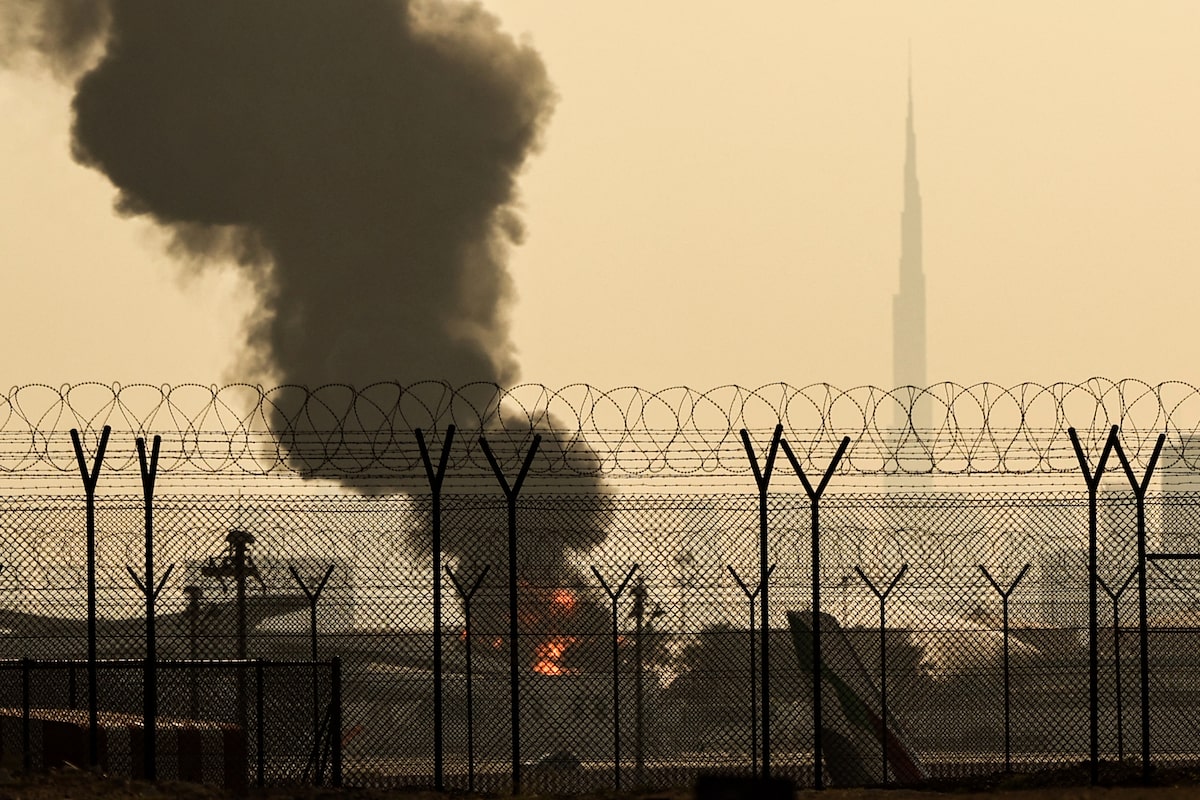

With the region now convulsed by one of the most devastating conflicts in years, it is worth reflecting on the impact oil has had on the Gulf, a geographically small but increasingly influential economic powerhouse.
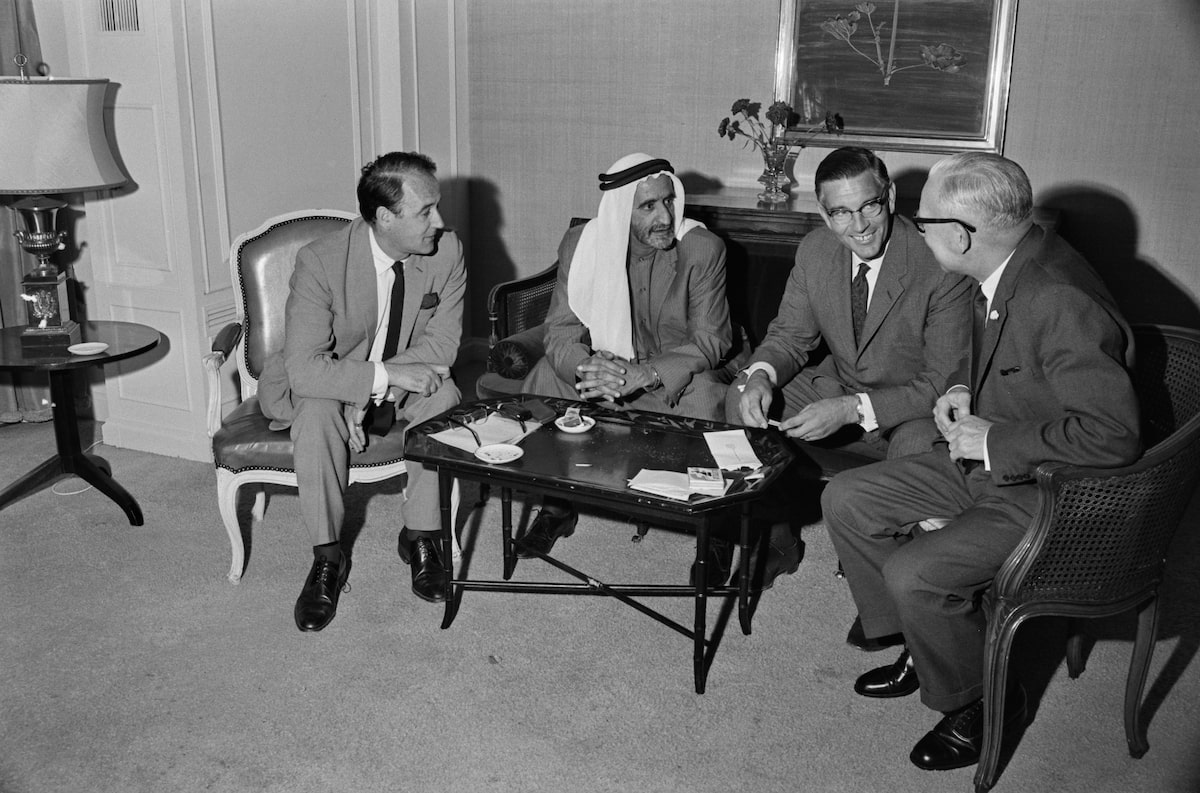
On the cusp of the Second World War, the correspondence between British officials, American oil executives and Gulf rulers marked a completely transformational moment in the history of the region.
Before oil, for as long as anyone could remember, Arab tribesmen and their families had been subjected either to the punishing rhythms of the desert, where they were regularly stricken with thirst and famine, or the sea, where they eked out a living sailing for fish and diving for pearls.
It was a hand-to-mouth existence within a subsistence economy that took no prisoners.
Within just a few decades, as oil revenues started to pour in right across the Gulf, life would be turned upside down.
Oil, and its fossil fuel bedfellow, natural gas, turned a nomadic, tent-based world of camels, goats and dates, fishing and pearling, into fully fledged independent states with glittering new cities, complete with ports, airports, multilane highways, hospitals, starchitect-designed skyscrapers, museums and art galleries.
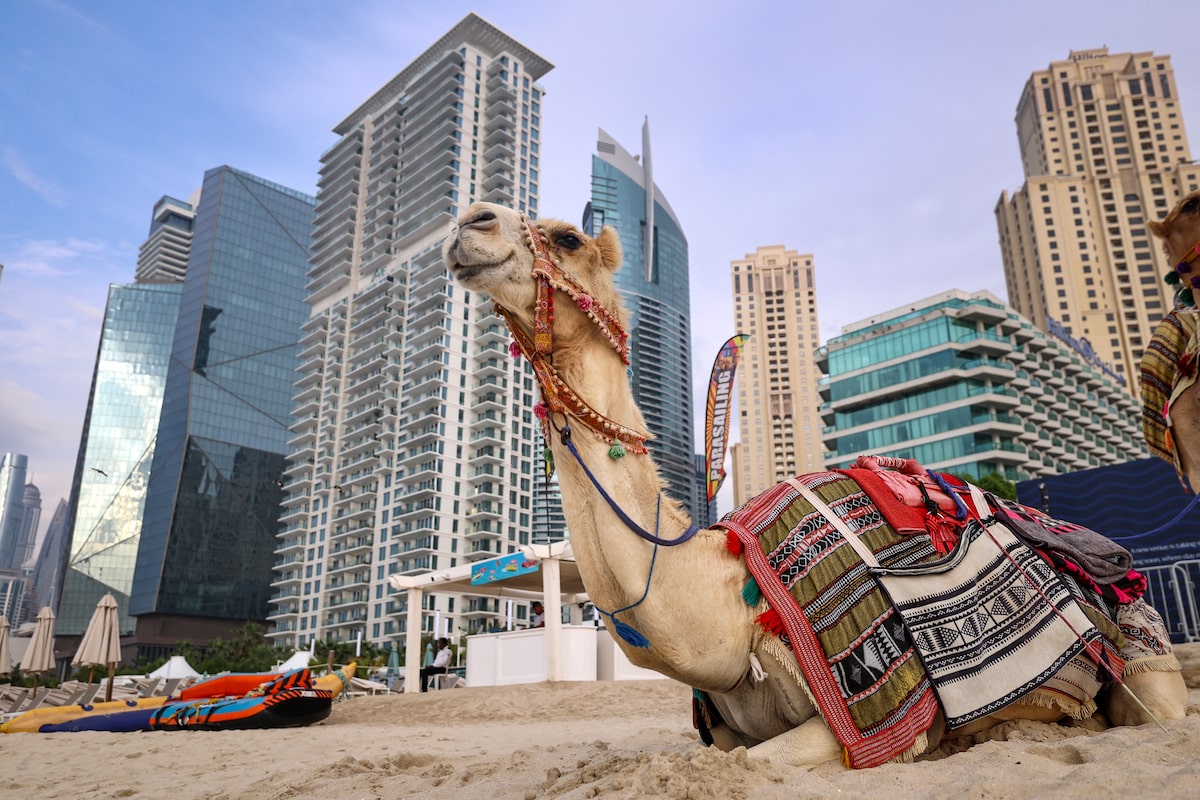
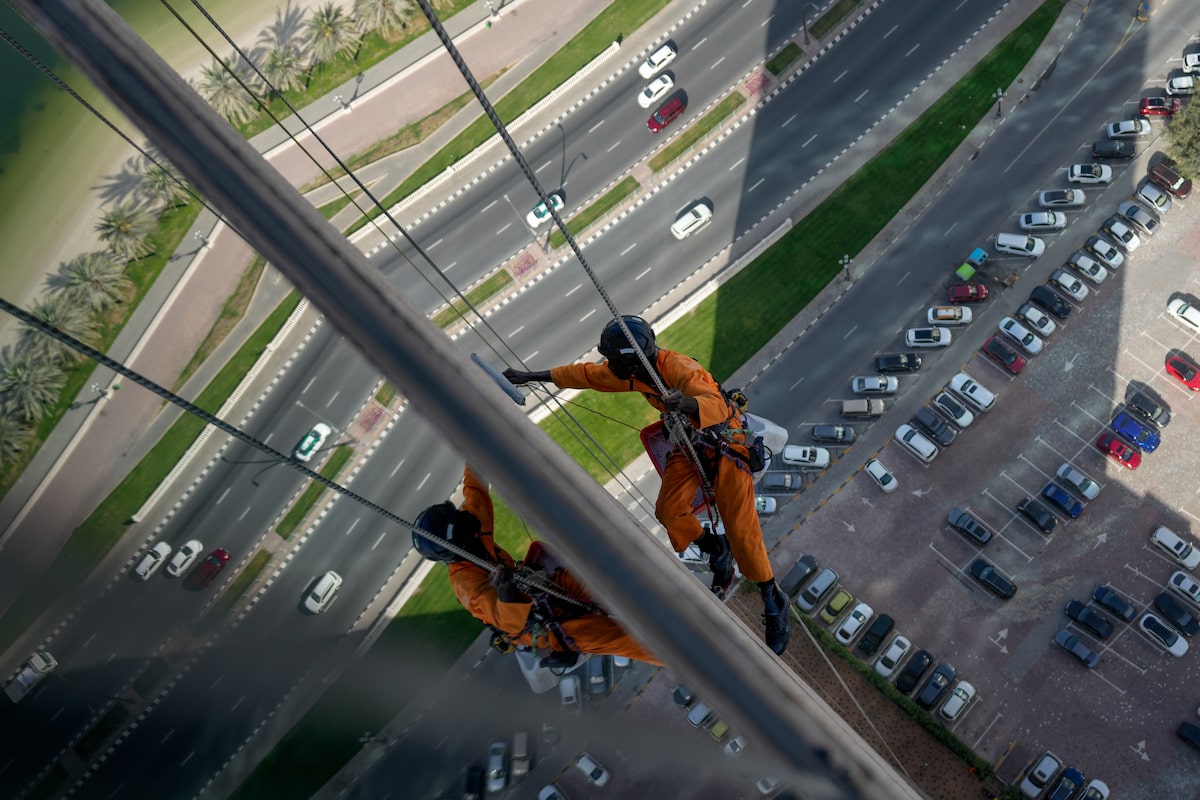

The fast-flowing spigot of cash brought unimaginable wealth to the royal families and some of their more fortunate or entrepreneurial subjects.
Just as 18th-century Englishmen and women plunged headlong into an emerging consumer society by flaunting everything from extravagant dresses and drinking mugs to periwigs and racehorses, so too, thanks to oil, conspicuous consumption in the Gulf has become the order of the day.
Where once-marauding Arab tribesmen raided each other’s encampments and stole wives, slaves and camels, today they compete to see who can build the tallest skyscraper (Burj Khalifa, UAE), buy the most successful football team in the world (Qatar’s Paris Saint-Germain, Saudi-owned Newcastle United, UAE’s Manchester City) and host major international events (Qatar’s 2022 World Cup, Saudi Arabia’s golf, boxing and Formula 1, the UAE’s Ultimate Fighting Championship, more golf and Dubai World Cup horse racing).

Dubai plays host to an annual World Cup of horse racing: The next one is scheduled for March 28.Fadel Senna/Getty Images
Camels are still prized today, but they were swiftly replaced by Fords, then Cadillacs and soon some of the world’s most expensive cars. In recent years, the Qatari royal family’s ever-changing collection of automobile exotica has included a one-off Pagani Zonda Uno, a special order Koenigsegg CCXR, a pair of US$2-million Lamborghini Murciélago LP670–4 Super Veloces, a Ferrari 599 GTB Fiorano and a purple, glow-in-the-dark Lamborghini Aventador.
There is a darker side to this oil-funded competition. In Sudan, Saudi Arabia supports the Sudanese Armed Forces while the UAE backs the rival Rapid Support Forces in one of the most ruinous and pointless conflicts on Earth. It has cost an estimated 150,000 lives and the displacement of as many as 25 million people.
In both Yemen and Libya, two more Arab countries immiserated by civil war, Riyadh and Abu Dhabi have also found themselves backing different sides. The death toll in Yemen is thought to be around 377,000 up to 2021, with tens of thousands killed in Libya.

Saudi-backed counterterrorism troops show their skills in Mukalla, Yemen, this past January. The Saudis and Emiratis entered Yemen's civil war in 2015 to fight the Houthis, a rebel group supported by Iran.Fadel Senna/AFP via Getty Images
While oil and gas wealth has brought stability, modern infrastructure, welfare, greater life expectancies and international influence, the abundance of vast natural resources across the region has also had far-reaching and less welcome political consequences.
Foremost among them is the emergence of the rentier state, in which the majority of national revenue comes from “renting” energy resources to foreign entities rather than direct taxation. As a result, the relationship between ruler and ruled is based not on political representation but rather financial distribution, entrenching both deference and autocracy. Rentier states typically rely on foreign labour and demonstrate low levels of productivity with little incentive to improve it.
For all the region’s much-discussed economic diversification plans, for all Mohammed bin Salman and Sheikh Tamim bin Hamad al Thani’s efforts to make Saudi Arabia and Qatar respectively into tourist destinations in their own right, it is oil and gas revenue above all else that has enabled this reimagining of the state and meteoric rise in living standards. Oil permeates everything. Whereas for most people in the West oil currently means spiralling prices at the pump, for Gulf Arabs it has become a core part of their identity.
Even where diversification has been pursued successfully and in earnest, economic vulnerabilities remain. Relying on energy revenues almost indefinitely, as oil-rich Abu Dhabi (with reserves of 92 billion barrels) and other Gulf monarchies were able to do, was never an option for Dubai. Most would now agree that this was a blessing. Peak production of 420,000 barrels per day was reached in 1991, then declined steadily. While oil once represented about two-thirds of Dubai’s economic output, today it accounts for less than two per cent. Yet when the global financial crisis arrived in late 2009, Dubai still required a US$10-billion bailout from oil-rich big brother Abu Dhabi, a stark reminder that even the most ambitious diversification efforts have their limits. Dubai said thank you by renaming the Burj Dubai skyscraper Burj Khalifa in honour of the UAE’s President Sheikh Khalifa bin Zayed Al Nahyan.

The Burj Khalifa, which ushered in 2026 with New Year's Eve fireworks, is currently the tallest building in the world.Fadel Senna/AFP via Getty Images
So how have the ordinary men and women of the Gulf experienced this whirlwind of oil-and-gas-based economic development?
“Where it’s going, I don’t know,” said Emirati poet Khaled al Bodour, who has had to force himself to accept the bewildering, ongoing reinvention of Dubai. “I live the moment and train myself not to live in the past and not worry about the future.”
The cultural consequences of rapid economic development and mass migration are still working themselves out. One of the many paradoxes of Dubai, for example, is that an Arab city has become so global and English-speaking that the Arabic language itself is under threat.
For many, these seismic changes can be disconcerting, especially when they occur largely without the rulers’ consultation of the ruled.
Yet equally there is enormous pride in the strides made. For Ruqaya al Bastaki, it has been “an amazing journey from what we were to what we have become.” In her mind, she lives in the best city in the world.
Opinions are equally polarized in Doha. On the one hand, you have men like Hussein Alfardan, the 93-year-old chairman of the eponymous Al Fardan Group, with an estimated net worth of US$1.8-billion in 2025. He remembers the hard times before gas turned the Qatari economy upside down. He says Qatar is fortunate to have “such great leaders,” that the former Emir Sheikh Hamad bin Khalifa al Thani, who ruled from 1995–2013, “made Qatar.” It is a ritual, though no less heartfelt, Arab tribute to the all-powerful leader. Power is mediated here through deference, not democracy.
But for every Qatari businessman enthusing about the far-sightedness and leadership of the Emir, another speaks of the dangers of breakneck development, the disorienting difficulties of being a minority of less than 12 per cent of the population and the proliferation of international architecture devoid of any semblance of Arab heritage.

Qatar's current Emir is Tamim bin Hamad al-Thani, who played host to Canada's Prime Minister in Doha this past January.Sean Kilpatrick/The Canadian Press
For some foreign observers, the discovery of oil in the Gulf was a catastrophe, an end to a materially poor but spiritually rich and noble way of life. Wilfred Thesiger, the English explorer and sometime spy, travelled by camel across the Arabian Peninsula in the late 1940s.
“It seemed to me tragic,” he wrote in Arabian Sands, that the Bedouin should become “a parasitic proletariat squatting around oil-fields in the fly-blown squalor of shanty towns in some of the most sterile country in the world.”
But this was the rose-tinted, patrician view of a wealthy Englishman who abhorred modern technology but was happy to hop on and off airplanes when he wanted to travel among the world’s “traditional peoples.”
Arabs are not the only ones to feel unsettled by the Gulf states’ rise. Western politicians have had to adapt, grappling first with Great Power rivalry, then the rise of Gulf countries as independent actors on the world stage.
Initially, Britain had it all its own way. From 1820 it negotiated treaties with the principal sheikhs along the Gulf coast to protect its commercial vessels from attack. In 1835, in return for the cessation of all hostilities at sea, Britain agreed to assume responsibility for the defence of the Trucial States (those that had agreed a truce) in a treaty that included the sheikhs of Abu Dhabi, Dubai, Ajman and the Qawasim rulers of Sharjah, Ras al Khaimah and Lingah in Iran. Similar arrangements were reached with Oman in 1829, Bahrain in 1861, Kuwait in 1899 and Qatar in 1916.
The British ascendancy didn’t last. Facing its own impoverishment in the aftermath of the Second World War, Britain was forced to make way for a new power. As the Conservative Party politician Enoch Powell warned the future prime minister Anthony Eden in the late 1940s, “in the Middle East our great enemies are the Americans.” One by one British possessions were lost as American military and economic might expanded.
All of which leaves today’s Gulf countries relying for their defence on expensive American weaponry and troops for their survival, and on the US security umbrella in the absence of effective armed forces. This plays to the rhetoric employed by the revolutionary regime in Iran. In an echo of 14th-century philosopher and historian Ibn Khaldun’s ruminations on the luxuries of civilization turning hardy Arab warriors of the desert into effete townsmen, Tehran routinely derides the Gulf countries as decadent, cowardly gas stations cowering beneath America’s skirt while glorifying Iran’s heroic sacrificial resistance.
For now, the Gulf countries are understandably focused on weathering the Iranian storm in the short term. Yet when the dust from this conflict eventually settles, they will still have to confront a nagging question overshadowing the region’s future: What will happen to them when the world finally shakes off its addiction to oil and gas?

Fatima Shbair/The Associated Press
The Middle East in context: More from The Globe and Mail
The Decibel podcast
Canada’s Iranian diasporas have been wrestling with complex emotions since the war began. Here’s what eight people told The Globe about their anxieties and hopes for the future. Subscribe for more episodes.
Impacts of war
The Iranian cultural sites damaged by war so far
Iran war threatens to cut off another key economic flow from the Gulf: remittances