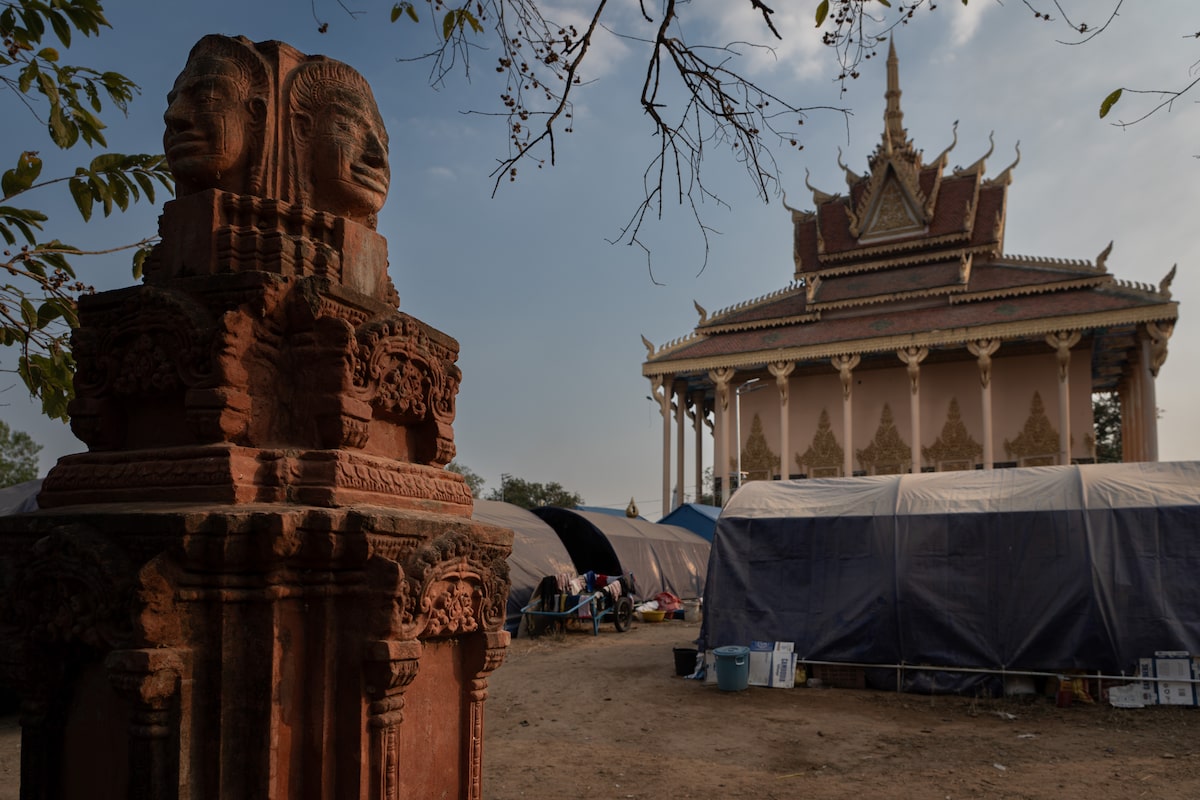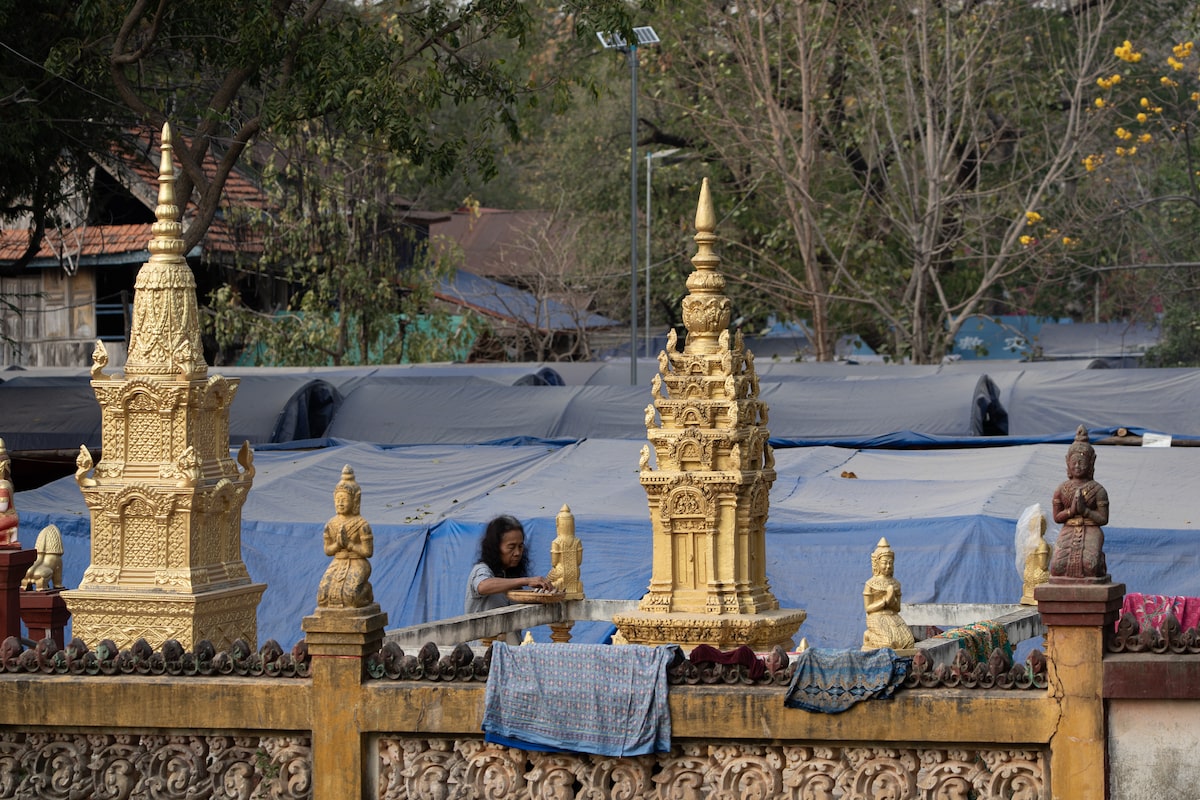
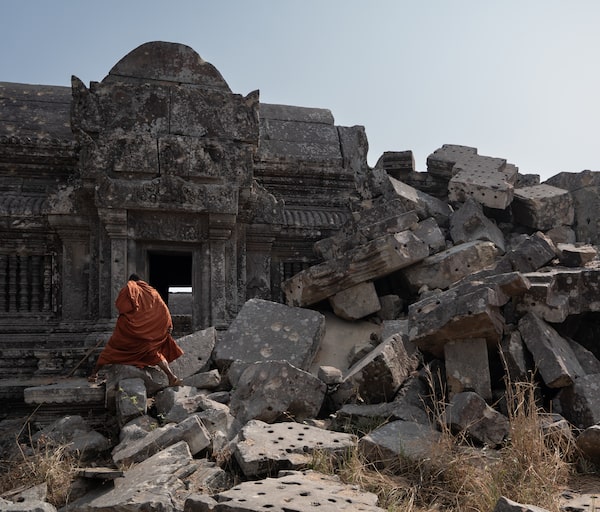
Preah Vihear, a temple complex on a hill overlooking a vast plain in northern Cambodia, is sacred to both Hindus and Buddhists. It was built by the Khmer Empire in the 11th century and dedicated to the Hindu deity Shiva, but as the empire gradually adopted Buddhism, religious practices at the site began to reflect that faith as well.
The temple is also a crucial lookout point for both the Thai and Cambodian armies, as it is just a few hundred metres from the border with Thailand. Since the beginning of the Thailand-Cambodia conflict last year – the result of a long-running border dispute and Cambodian claims of cultural appropriation – the Thai and Cambodian governments and international institutions have highlighted Preah Vihear as one of the triggers of the fighting, which has killed more than 100 people and displaced hundreds of thousands.
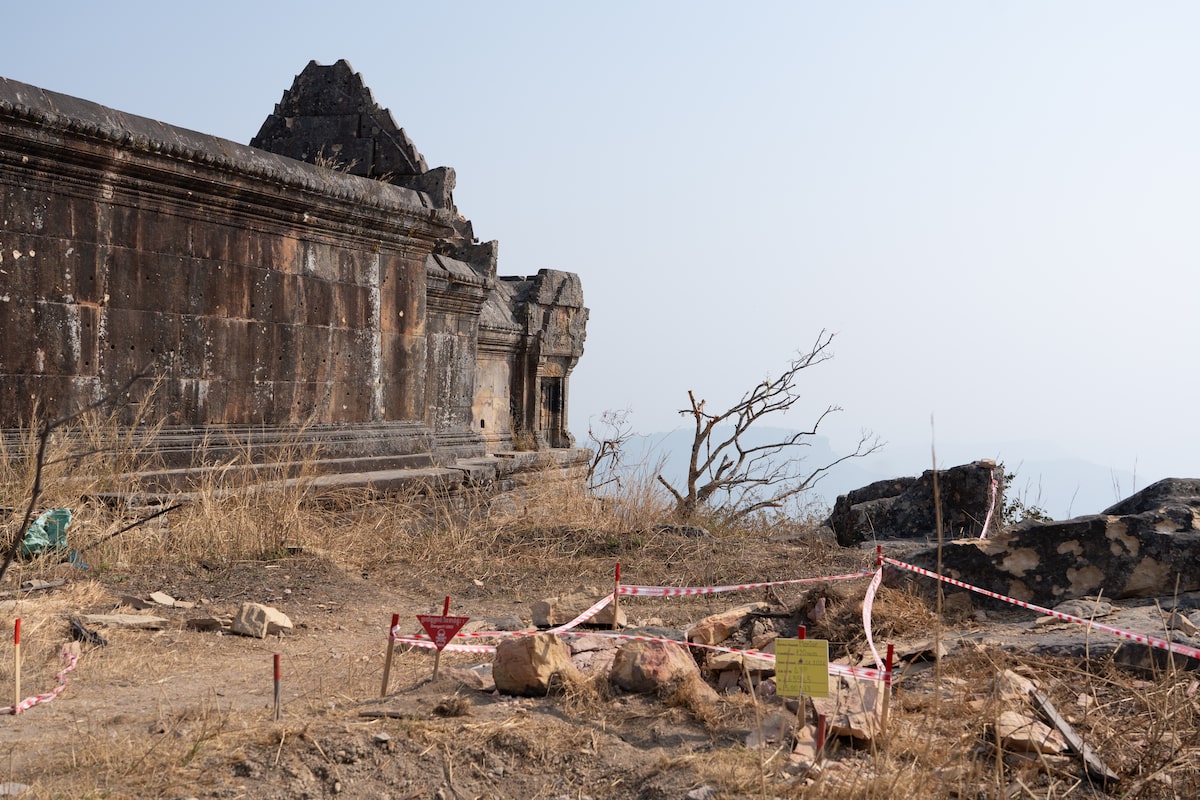
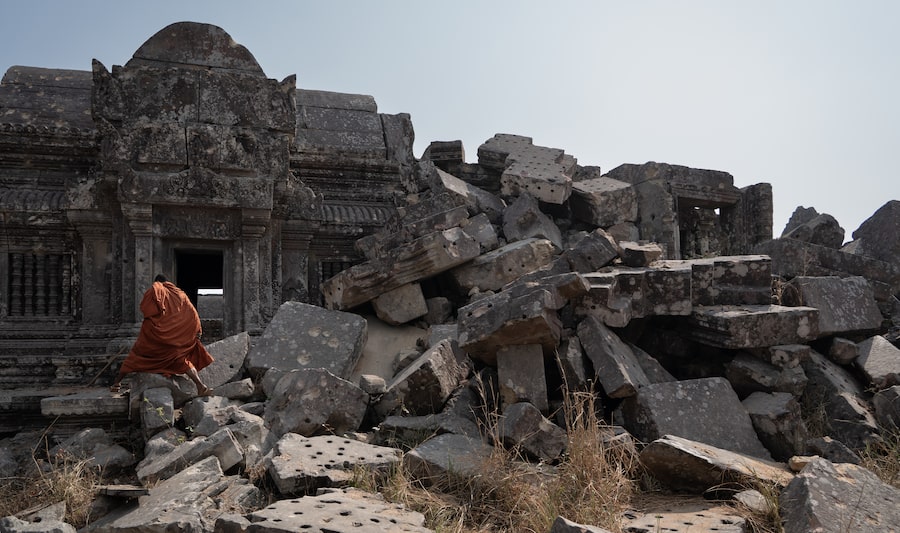
Cambodian officials say artillery fire and aerial bombardment by the Thai military have damaged hundreds of parts of the temple, leaving many of its sandstone structures pockmarked from shrapnel.

Toppled pagodas and broken Buddhas are some of the signs of recent violence at Preah Vihear. This monk, Sun Song, is holding the head of a statue destroyed in fighting on the Cambodian-Thai border.
Today, with a ceasefire in effect since Dec. 27, the hill is surrounded on three sides by Thai troops, who took control of a second hill overlooking the temple hill last year to keep it under fire and within range of snipers.
The temple has for years been of great interest to the Thai government, which seeks to seize control of it for spiritual and strategic reasons.
The Thai government first accepted the 1962 ruling of the International Court of Justice that said the temple belongs to Cambodia, only to later reject it, initiating a lengthy legal battle.
The temple’s status as a UNESCO World Heritage Site, granted in 2008, has given the Cambodian government an advantage, enabling it to assert the need to protect the temple.
For me, visiting the site was truly a deeply emotional experience. The words of the monk who accompanied me will forever remain in my mind.
“This is a place we should have protected and preserved for future generations, but instead we failed, and today almost nothing remains. These temples don’t belong to a government, but to all of humanity,” said Sun Sang, the temple’s spiritual leader. “The Thai people deny the accusations, but do you think we destroyed it ourselves?”