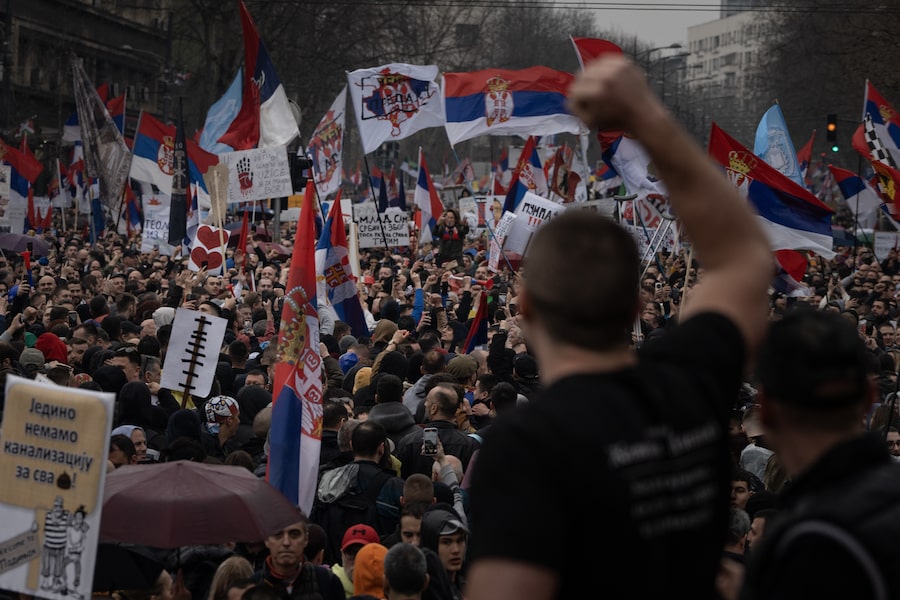
Tens of thousands of people flooded the streets of Belgrade Saturday to protest government corruption and demand accountability for the deaths of 15 people in a train station roof collapse.
The anti-government rally is the culmination of student-led protests that have taken place across Serbia since the deadly collapse of a newly renovated train station canopy in the city of Novi Sad last November.
The protests have since evolved into a nationwide movement against rampant government corruption, media control and political repression, threatening President Aleksandar Vucic’s firm grip on power.
Students have demanded full transparency on secret contracts related to the train station renovation, accountability for the 15 victims, prosecution of those responsible for the violent attacks against protesters, the release of those arrested during protests, and more funding for universities.
“We will not stop until our demands are met,” one student speaker said at the Saturday rally.

The anti-government rally is the culmination of student-led protests that have taken place across Serbia in recent months.
Another student denounced the state-controlled media’s treatment of the protests. “We are here because we will no longer allow lies to be spread about us,” she said. “We will not accept job dismissals over social media posts, as has happened to workers who supported us.”
The crowd chanted “Pump it Up,” a slogan adopted during the student-led protests. Some protesters carried banners that read, “He’s Finished!”
”I expect that this will shake his authority and that Vucic will realize that people are no longer for him,” said Milenko Kovacevic, a protester.
Police said the crowd reached 107,000 people at the peak of the protest, but Serbian independent media described the rally as the biggest ever in the country, saying the numbers were much higher.
In the days leading up to the rally, Mr. Vucic made frequent television appearances to warn of alleged plans for unrest and threaten arrests and harsh sentences for anyone involved in violent incidents.
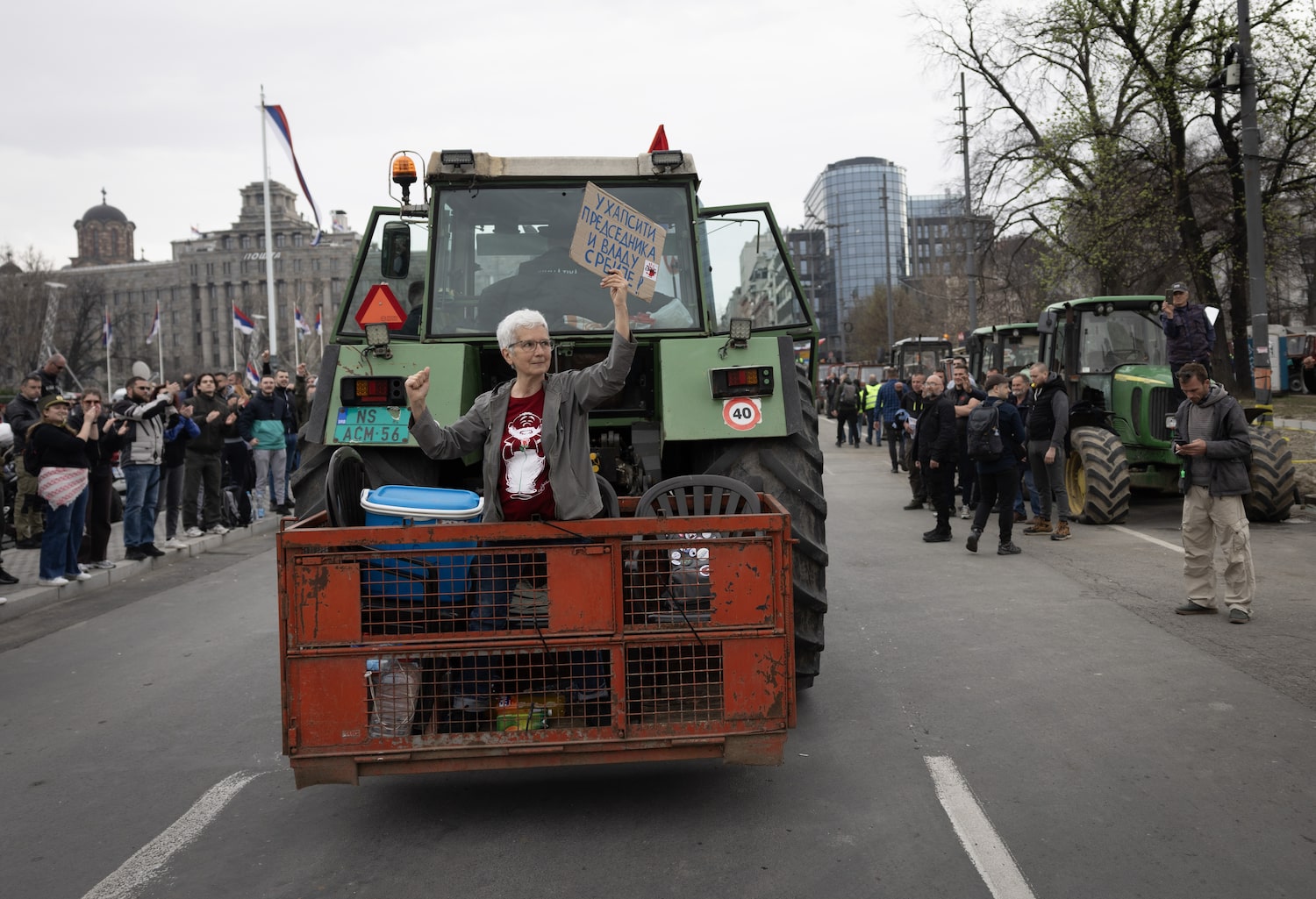
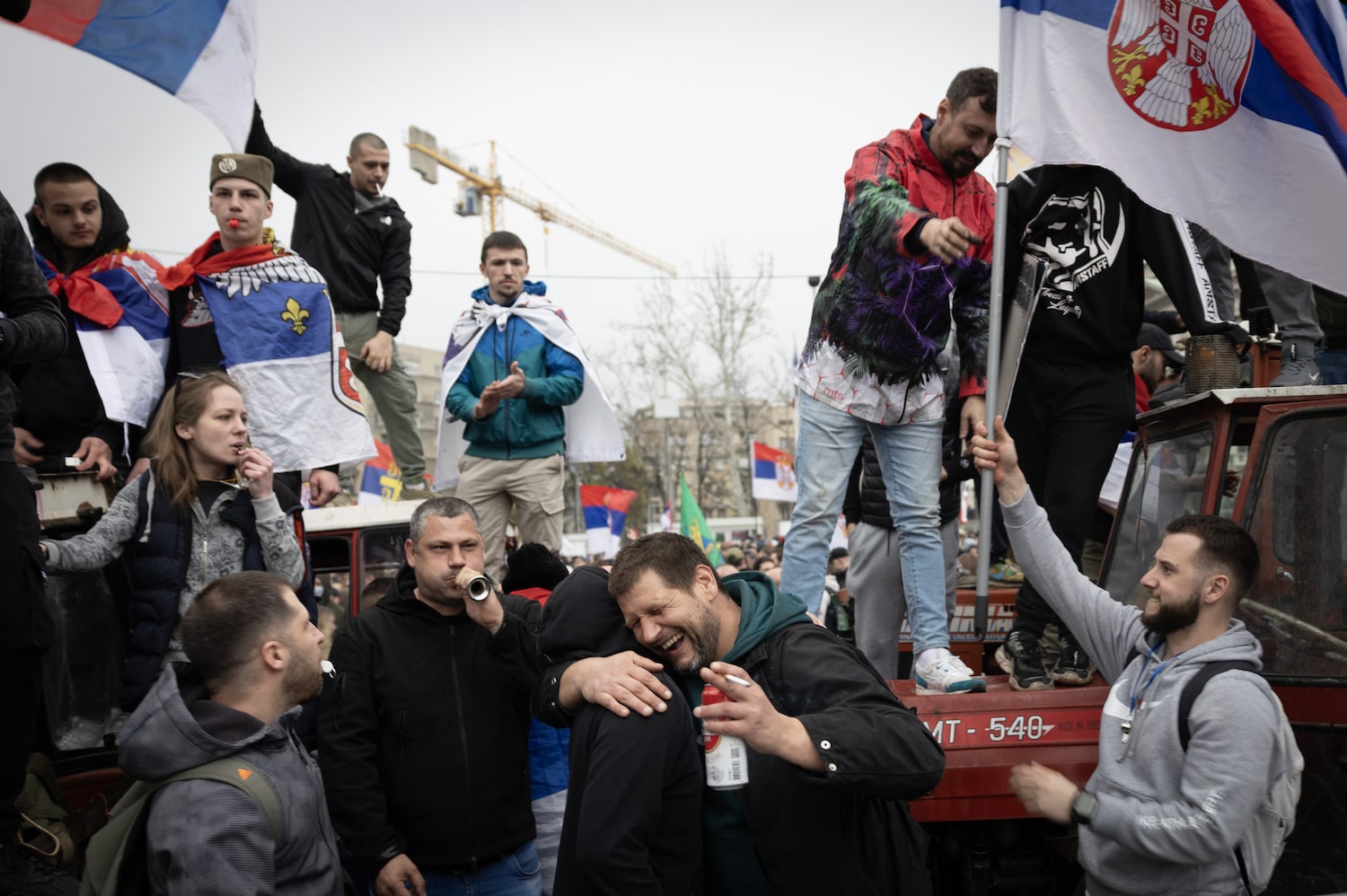
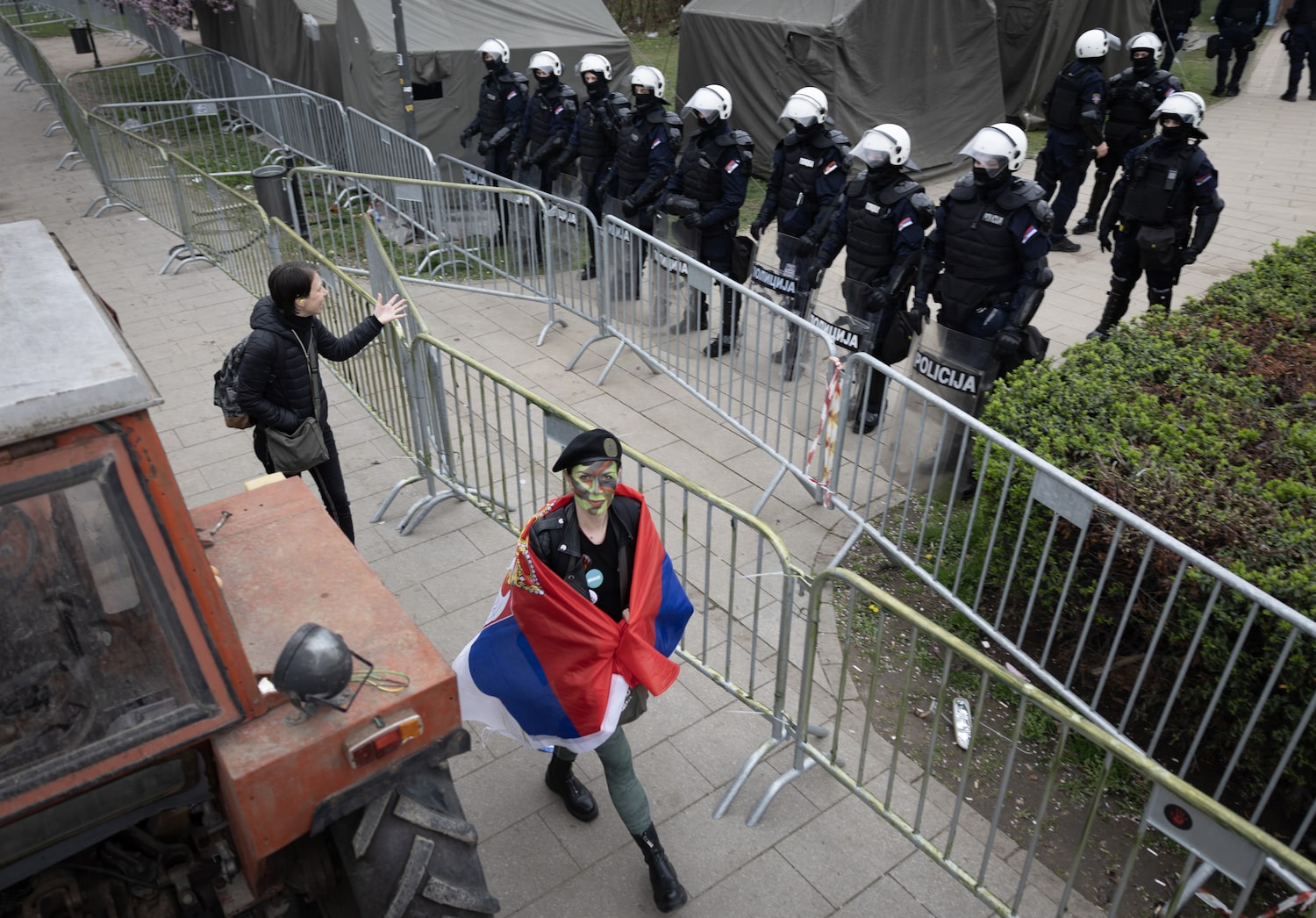
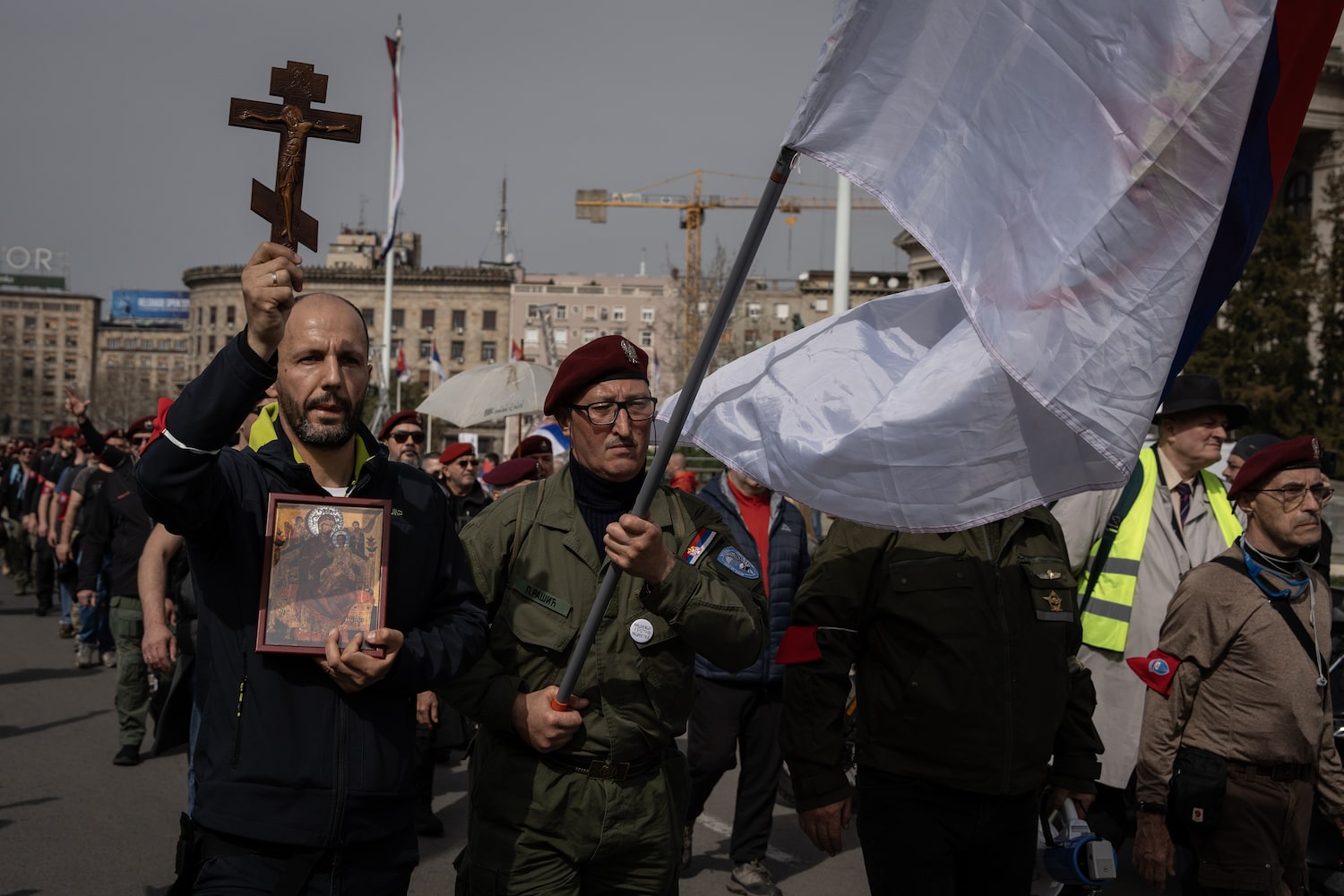
Pro-government counterprotesters, many of whom had been bussed in from Kosovo and Bosnia and Herzegovina, formed human shields around key government buildings. All public transport in the capital was canceled as protesters streamed into the city from various directions.
There were no confrontations between the two sides, and as the number of protesters in the downtown area grew, student leaders directed the crowd toward another part of the city, where poetry readings, choir performances, and speeches filled the air. Then, the crowd fell silent for 15 minutes in memory of the 15 victims.
The students’ calls for accountability have struck a chord across Serbia. In the past four months, protests have erupted in over 250 cities and towns, where many residents have opened their homes to marching students, offering them meals and shelter.
The government’s response has been heavy-handed. Authorities have arrested journalists and influencers, raided the homes of public figures who voiced support for the protests, and doubled down on state-controlled media’s portrayal of the movement as a threat to the nation.
Many Serbians, particularly in rural areas without internet access, have struggled to find information about the protests, with television networks aligned with Mr. Vucic refusing to cover them. Still, news has spread by word of mouth, reviving an old form of communication in a country where trust in state institutions has eroded.


The largely student-led protests have struck a chord across Serbia, leading to the eruption of demonstrations in over 250 cities and towns in the past four months. Serbian independent media have described the rally in Belgrade on Saturday as the largest in the country's history.
Over the past decade, Vucic has tightened his grip on the country’s institutions, taking cues from Hungary’s authoritarian and populist Prime Minister Viktor Orbán. Friends and allies of the Serbian president now dominate national airwaves, and critical voices in the media face increasing scrutiny and censorship.
At the same time, Mr. Vucic has courted foreign investors, presenting himself as a pragmatic leader balancing relationships between East and West. Major infrastructure and mining contracts have been handed to Chinese firms, while Russian influence remains entrenched in Serbia’s energy sector.
Last week, Donald Trump Jr. – the son of U.S. President Donald Trump – visited Belgrade to reportedly discuss a plan to redevelop the site of the bombed-out Serbian Army Headquarters, which was hit by NATO during the 1999 Balkan conflict – into a real estate complex.
While the government frames these deals as crucial for Serbia’s development, critics argue they benefit only a small elite.
Students have vowed to continue their protests until their demands are met. “This is no longer just about one tragedy,” said a student leader at the Belgrade rally. “This is about the future of our country.”
With a report from the Associated Press