
Ukrainian soldiers fire in the recently retaken city of Kupiansk, in the Kharkiv region, Ukraine on Sept. 23, 2022.Kostiantyn Liberov/The Associated Press
The world is heading into a new Cuban Missile Crisis now that Russia has threatened to use nuclear weapons against Ukraine, a top official in President Volodymyr Zelensky’s office has said.
Mykhailo Podolyak, a senior adviser to chief of staff Andriy Yermak, has compared Russia’s latest sabre-rattling to the Soviet Union’s deployment of nuclear weapons to Cuba in 1962. Mr. Podolyak is calling on the West to respond, just as it did then, by making it clear that it is also willing to use nuclear weapons if Russia does not back down.
“A new Caribbean Crisis is already developing, and the West needs to understand this,” Mr. Podolyak said in an interview inside the Presidential Administration building in Kyiv, which has sandbagged windows and is surrounded by checkpoints. “Like it was before, there is a moment when the club of nuclear states should make a hard decision against the Russian Federation, to underline that if they attack with weapons of mass destruction, they will receive a symmetrical reply.”

Mykhailo Podolyak, adviser to President Volodymyr Zelensky's chief of staff, speaks with The Globe and Mail in Kyiv.Anton Skyba/The Globe and Mail
Asked whether he thought the West was willing to risk nuclear war over Ukraine, Mr. Podolyak said that if Russian President Vladimir Putin’s nuclear blackmail were to succeed, the international system would crumble.
“Any unstable political regime or authoritarian regime will be able to use this technology, because there will be no rules any more.”
Mr. Putin raised the spectre of nuclear warfare Wednesday in a televised address in which he said Russia would “make use of all weapon systems available” to it to defend its territory, adding, “This is not a bluff.”
Ukraine appears to be taking Mr. Putin’s threat seriously.
Its top military commander, General Valery Zaluzhny, and the country’s Defence Intelligence Service have both warned of the possibility that Russia could use tactical nuclear weapons – so-called “battlefield nukes” – to reverse a recent string of defeats. On Friday Ukraine repeatedly tested a new emergency signal that sends a jarring alarm directly to every mobile phone in the country.
Ukraine gave up the nuclear weapons it inherited when the Soviet Union collapsed – then the third-largest nuclear arsenal in the world – by transferring its missiles to Russia in 1994, under the terms of the Budapest Memorandum, in exchange for security guarantees from the United States, Britain and Russia.
The treaty was supposed to ensure Ukraine’s sovereignty and included a promise that the signatories would never use nuclear arms against it.

World nuclear forces
As of January, 2022
= 10 warheads
Total 2022: 12,705
1986: 70,000
Russia: 5,977
Britain:
225
North
Korea:
20
U.S.: 5,428
Israel:
90
India: 160
France: 290
Pakistan: 165
China: 350
graphic news: Source: Stockholm International
Peace Research Institute

World nuclear forces
As of January, 2022
= 10 warheads
Total 2022: 12,705
1986: 70,000
Russia: 5,977
Britain:
225
North
Korea:
20
U.S.: 5,428
Israel:
90
India: 160
France: 290
Pakistan: 165
China: 350
graphic news: Source: Stockholm International
Peace Research Institute

World nuclear forces
= 10 warheads
As of January, 2022
Russia: 5,977
Total 2022: 12,705
1986: 70,000
Britain:
225
North
Korea:
20
U.S.: 5,428
Israel:
90
India: 160
France: 290
Pakistan: 165
China: 350
graphic news: Source: Stockholm International Peace Research Institute
Mr. Putin, who has also ordered a partial mobilization of Russia’s military reserves, delivered his address ahead of “referendums” being held in Russian-occupied areas of Ukraine. Moscow is widely expected to annex the territories after the stage-managed votes, so Mr. Putin’s threat to use nuclear weapons to defend Russian territory may soon apply to large parts of Ukraine, including areas where Ukrainian troops are currently on the offensive.
It’s not the first time he has hinted at using his country’s weapons of mass destruction. Russia’s nuclear forces have been on high alert since the first days of the invasion, which began Feb. 24.
But this week’s threats were remarkable in that Mr. Putin appeared to be altering Russia’s long-time strategic doctrine of using such weapons first only if the very existence of the state was threatened.
Former president Dmitry Medvedev, now deputy head of the country’s Security Council, put the warning in even starker terms Thursday when he said the four Ukrainian regions would be “accepted into Russia” after the referendums and that “any Russian weapons, including strategic nuclear weapons and weapons based on new principles, could be used” to protect those territories after annexation.
Friday saw the first votes cast in the Russian-occupied areas of the Donetsk and Luhansk, Zaporizhzhia and Kherson regions of Ukraine, even as fighting continued there. “Do you support the Zaporizhzhia oblast leaving the entity of Ukraine, creating an autonomous Zaporizhzhia oblast, and joining it to the Russian Federation, with the rights of a subject of the Russian Federation?” was the Yes or No question on ballots in that region.
It’s not clear whether Russia plans to annex only the areas currently under its military control or whether it will claim the entire regions. Ukrainian troops still control about 40 per cent of Donetsk and Zaporizhzhia, as well as smaller areas of Luhansk and Kherson.
Mr. Podolyak said the referendums – which he called a propaganda exercise – and any annexation announcements would have no effect on Ukraine’s plans to liberate all the territory currently under Russian occupation, including the Crimean Peninsula, which Russia annexed in 2014 after a referendum carried out under military occupation.

A service member of the self-proclaimed Luhansk People's Republic casts a ballot at a military unit in Luhansk on Sept. 23.Alexander Ermochenko/Reuters
Mr. Putin’s threats came after weeks of Ukrainian military advances that have liberated thousands of square kilometres of territory in the eastern Kharkiv region that had been under Russian control since shortly after the invasion began. The war enters its eighth month on Saturday.
“This is all just to justify the mobilization. You can’t tell your own people: ‘We’ve lost our army.’ So that’s why they try their nonsense referendums, so they can say, ‘There will be referendums, and we need to increase the numbers of force to protect the state,’” Mr. Podolyak said.
“It doesn’t adjust the goal of Russia, which is to destroy Ukraine, and it doesn’t adjust the goal of Ukraine, which is to protect itself from Russia.”
Russian Defence Minister Sergey Shoigu said 300,000 men with combat experience would initially be called up under the partial mobilization ordered by Mr. Putin. However, videos posted online in recent days appear to show a much wider recruitment drive, particularly in parts of Russia populated by ethnic minorities. Russia’s Novaya Gazeta newspaper, which now operates from exile to avoid criminal prosecution for its coverage of the war, reported that the real mobilization target was one million new recruits.

Russians arrive at Zvartnots airport in Yerevan, capital of Armenia, on Sept. 21.KAREN MINASYAN/AFP via Getty Images
Many Russian men are fleeing the country to avoid being called up. Flights from Moscow to countries such as Turkey, Armenia and the United Arab Emirates, where Russians can enter without visas, were booked up until at least the middle of next week, as prices skyrocketed for the few remaining seats on complex routes via multiple airports. Videos posted to social media showed kilometres-long lines of cars at crossings to Georgia and Mongolia.
In Ukraine, battlefield commanders said they were not worried about an influx of untrained, unmotivated Russian conscripts. “I do not think it will reflect on the front line at all … because, you know, quality matters, not amount,” said Lieutenant Mamuka Mamulashvili, the commander of the Georgian Legion, a unit of foreign fighters.
Lt. Mamulashvili echoed Mr. Podolyak’s call for the West to warn Mr. Putin against using nuclear weapons in the conflict. “If he tries to use them, he has to be bombed right in Russia. That’s the only way out of this situation. Otherwise, he might attack NATO countries afterwards.”
Visual guide: Russia’s mobilization and the Ukraine invasion
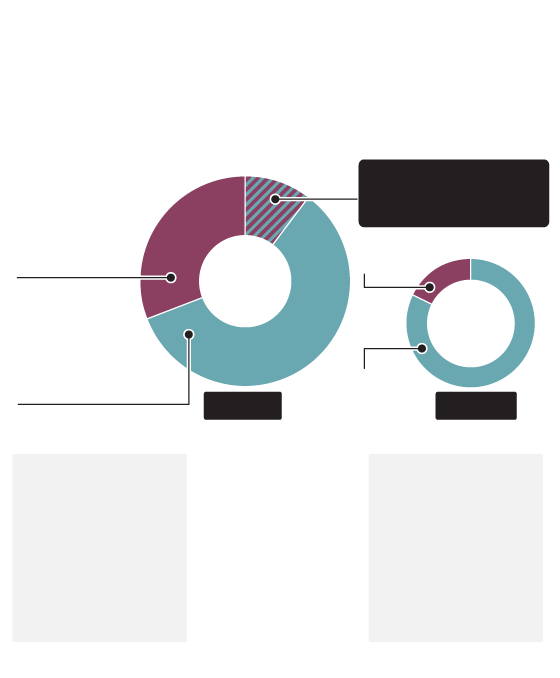
Russian President Vladimir Putin has announced a partial
mobilization of military reservists, as Moscow continues
to lose ground in Ukraine.
Military strength before Russia’s invasion of Ukraine
Sept. 21: Russia orders
partial mobilization of
300,000 reservists
900,000
Active personnel
(includes army,
navy and
air force)
Active personnel
196,600
Total
2,900,000
2 million
Total
1,096,600
Reserves –
people who have
completed their
military service*
Reserves
900,000
RUSSIA
UKRAINE
*All Russian men aged 18-27 are subject to conscription for one year of military service
Mobilization
Involves assembling
and preparing troops
for active service.
Russia’s call-up will
apply only to reserve
personnel with
previous military
experience
Deployment
Troops to be given
additional training
before being sent to
Ukraine. Mobilization
will not include
students and those
currently serving
as conscripts
Resources
Russia could in theory
call upon 25 million
people for military
service. Current partial
mobilization covers
about one per cent of
that number
graphic news: Source: BBC; Reuters
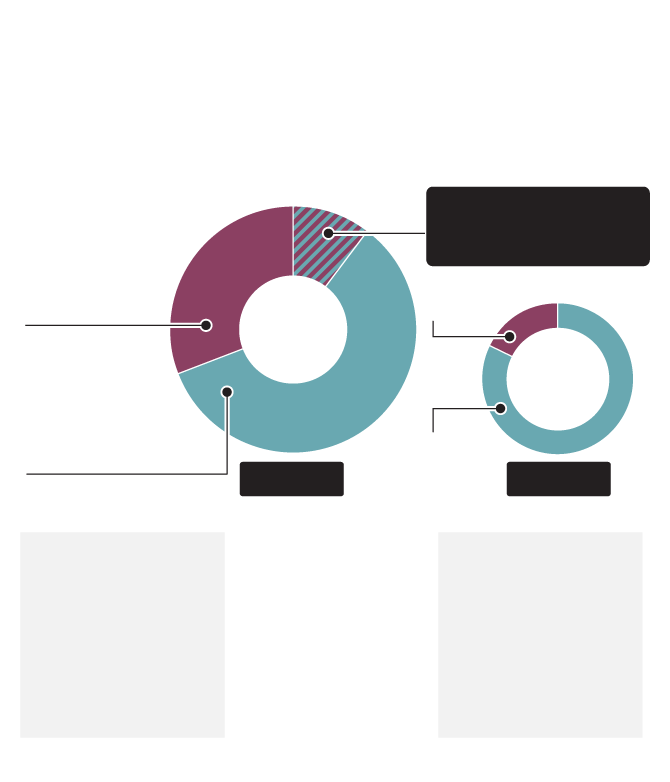
Russian President Vladimir Putin has announced a partial
mobilization of military reservists, as Moscow continues
to lose ground in Ukraine.
Military strength before Russia’s invasion of Ukraine
Sept. 21: Russia orders
partial mobilization of
300,000 reservists
900,000
Active personnel
(includes army,
navy and
air force)
Active personnel
196,600
Total
2,900,000
2 million
Total
1,096,600
Reserves –
people who have
completed their
military service*
Reserves
900,000
RUSSIA
UKRAINE
*All Russian men aged 18-27 are subject to conscription for one year of military service
Deployment
Troops to be given
additional training
before being sent to
Ukraine. Mobilization
will not include
students and those
currently serving
as conscripts
Mobilization
Involves assembling
and preparing troops
for active service.
Russia’s call-up will
apply only to reserve
personnel with
previous military
experience
Resources
Russia could in theory
call upon 25 million
people for military
service. Current partial
mobilization covers
about one per cent of
that number
graphic news: Source: BBC; Reuters
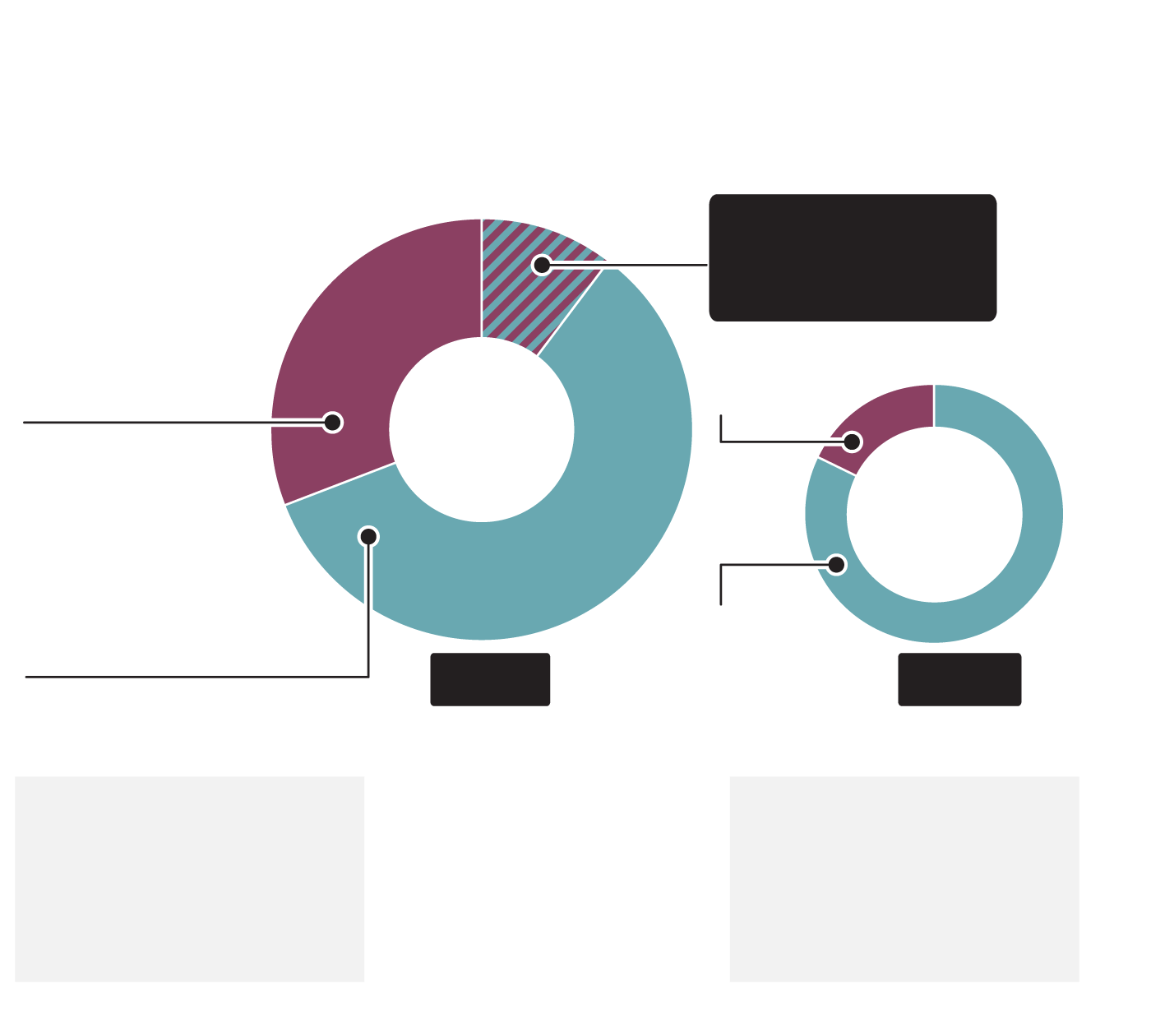
Russian President Vladimir Putin has announced a partial mobilization of military reservists,
as Moscow continues to lose ground in Ukraine.
Military strength before Russia’s invasion of Ukraine
Sept. 21: Russia orders
partial mobilization of
300,000 reservists
900,000
Active personnel
(includes army,
navy and air force)
Active personnel
196,600
Total
2,900,000
Total
1,096,600
2 million
Reserves –
people who have
completed their
military service*
Reserves
900,000
RUSSIA
UKRAINE
*All Russian men aged 18-27 are subject to conscription for one year of military service
Deployment
Troops to be given additional
trainingbefore being sent to
Ukraine. Mobilization will not
include students and those
currently serving as conscripts
Mobilization
Involves assembling and
preparing troops for active
service. Russia’s call-up will
apply only to reserve person-
nel with previous military
experience
Resources
Russia could in theory call
upon 25 million people for
military service. Current partial
mobilization covers about one
per cent of that number
graphic news: Source: BBC; Reuters
War in Ukraine: Latest on The Decibel
What could happen next in Ukraine after Russian President Vladimir Putin’s recent escalations? Senior foreign correspondent Mark MacKinnon explains on The Decibel. Subscribe for more episodes.