

Even on an overcast day, it is hot in the all-glass Palm House at London’s Kew Gardens. The clammy heat intensifies as you climb the spiral staircase in the graceful Victorian conservatory, up to the second-storey balcony, where you can overlook its jam-packed collection of tropical plants. You experience a different world up there, a pretechnological version of the now commonplace drone view, as your gaze rides over the tops of the arcing green palms. You’re looking down on a thicket of plants and history.
Just for the harrowing thrill of it, even if you’re not a gardener, imagine that you are in charge of renovating this, the most famous tropical greenhouse in the world – the 177-year-old glass and wrought-iron Palm House, the greenly glowing centrepiece of London’s Kew Gardens, one of the largest and most popular curated collections of tropical plants anywhere in the world (1,300 plants and 935 species in the glass house alone, a third of which are threatened), not to mention the living botanical record of the British Empire’s rise and fall.
To renovate the building, you first have to move all the vegetation out of the building. But very few of the rare and valuable tropical plants in the glass house can survive outside, even in England’s mild-but-getting-hotter climate.

The Palm House at Kew Gardens, opened in 1848, is a wrought-iron and glass contraption for simulating a tropical climate, insulated from the cold of London's winters.
You have to manoeuvre the exotics out of the Palm House – some of them are more than eight metres tall – and into warm, moist temporary quarters known as “decant houses.”
Then you have to strip and clean and repaint and refurbish and rethink the national treasure sometimes known as “the stove of Kew,” replacing its complicated heating and watering colonics and its 16,000 panes of glass.
In the course of doing that – and this is really important – you have to transform the Victorian relic into the prototype of the world’s first carbon-neutral glass conservatory, all without destroying its heritage as a symbol of Britain’s world domination. Then you have to move the plants back in.
All that will take five years. Oh, and you need to grow backups, in case the transplants don’t take.
This is why Will Spoelstra, the Palm House’s supervisor, has the wary look of a man trying to avoid being run over by a vehicle speeding in from an unforeseen direction. In addition to the usual sweaty overheating and hydration concerns of gardeners and botanists who specialize in “working under glass,” he has a lot on his mind.
Mr. Spoelstra has worked at Kew for more than a decade, and has been planning the logistics of the renovation for several years. But the physical transfer of the plants began only last fall.
So far, his team has identified plants whose roots can be containerized and moved by hand. That includes some specimens up to five metres in height. Larger plants will require a small gantry crane, but even then, the selection will be dictated by the height (eight metres) and space available in the temporary decant conservatories. As a result, many species will instead be propagated or regrown from seed, from cuttings or using “air layers,” where the stem of a tree is wounded and wrapped in damp moss to encourage new roots to form.

Supervisor Will Spoelstra and his team must prioritize which plants to move and which to regrow so the collection can be reassembled in the renovated space.
The building’s most famous residents are 175 species of palm that inspired centuries of exploitation as well as the Western world’s obsession with everything warm, exotic, fecund and forbidden. They present particular problems to Mr. Spoelstra because “palms you can only really propagate from seed. No one’s ever worked out how to do it otherwise.”
A visitor asks, with a tinge of panic in his voice, whether that means regrowing them.
“We’ve known this is likely to happen for a while, so we’ve been propagating for a while,” the ever-sanguine Mr. Spoelstra replies.
Several species are impossible to move because they are upholstered in piercing spines – such as Aiphanes eggersii, a pinnate palm that produced fruit at Kew for the first time this year. The conservatory’s pine-like cycads – the most common plant on the planet back when dinosaurs roamed the Earth – are a whole other category of concern.
The oldest cycad in the Palm Palace at Kew is Encephalartos altensteinii, first collected from South Africa in 1775. That’s not a plant you want to accidentally kill.
It looks like a giant earthworm (the trunk) in a spritzy party hat (the foliage). Its 30-centimetre-thick, 5.5 metre-long trunk is growing horizontally and is held up off the ground by metal braces. Mr. Spoelstra will have to clear an avenue in the Palm House to get it out and into temporary storage via wheeled scaffolding. The decant houses are already one-third full, and the physical renovation doesn’t begin until 2027. Experts who specialize in moving large works of art have been advising Mr. Spoelstra.
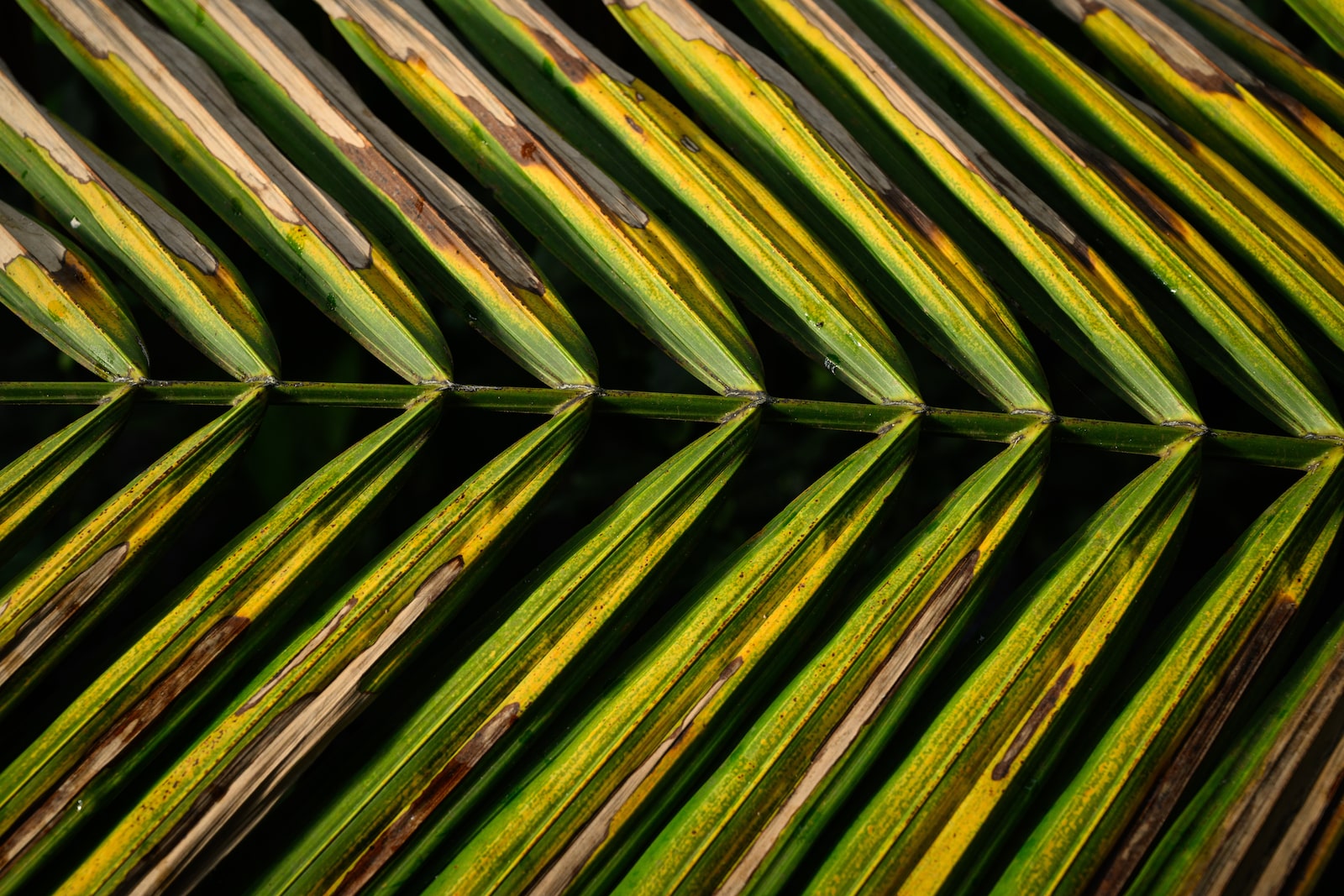

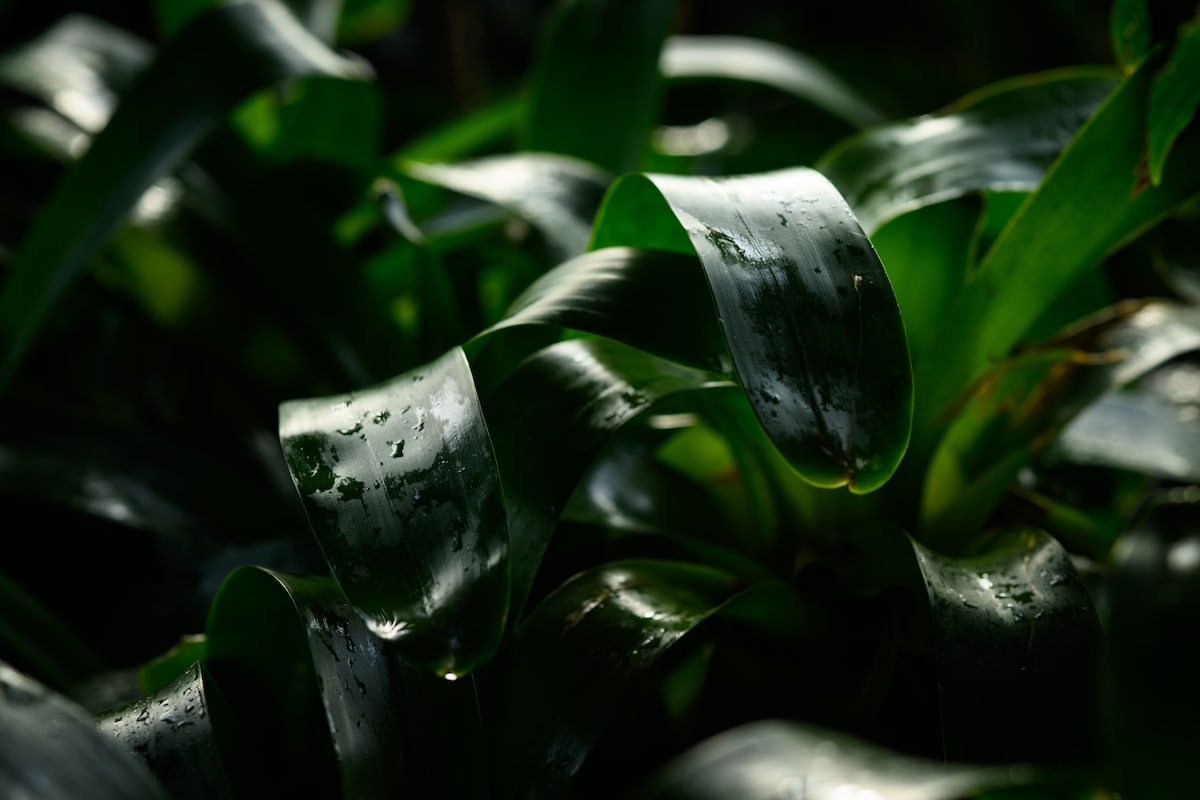
Or there’s the diabolical case of the ivory nut palm. Ivory nut palms can grow 25 metres tall, and are nearly impossible to move. A new one will have to be regrown for the renovated Palm House. But for that to happen, Kew’s female ivory nut palm − nut palms are dioecious, that is, they come in male and female plants – has to produce some seed. For the palm to produce some seeds, you have to fertilize its flowers with some pollen from a male ivory nut palm. Kew, alas, does not have a male ivory nut palm.
“Can’t you find a male?” the visitor asks.
“They’re not that easy to find,” Mr. Spoelstra mutters. Kew has, however, managed to cadge some male ivory-nut-palm pollen from a botanical centre in Singapore, with which Kew’s gardeners will then manually pollinate their female. Please sigh contentedly here.
Once the plants are relocated, the physical renovation of the storied edifice can begin. The Palm House, a shimmering example of the kind of Victorian architecture that later inspired the modernists, was almost demolished after the Second World War (the government didn’t want to pay for its upkeep), and has endured two major renovations. The last one was in 1987, and shut the Palm House for three years.

Rust and algae are nuisances around the complex, but unavoidable in an environment this moist and hot.
The building’s famous swanny two-storey wrought-iron structure is still structurally sound. (It was one of the first prefabricated edifices ever built.) But rust and algae and peeling, and especially its energy inefficiency, require constant attention. Its aforementioned 16,000 panes of glass (which revitalized the British glass industry when they were first designed specifically for Kew in the 1840s) have to be replaced with infinitely more energy-efficient glass that nevertheless doesn’t interfere with the tropical plants’ lust for light and heat. The glass is cleaned every two years on the outside by professional window washers and two to three times more a year on the inside by staff. Palms that have burst through the glass roof have had to be felled. Some of the trees that have to be cut down for the renovation will be saved for scientific research; most will be composted.
The conservatory’s soil will have to be tested and repacked; a new humidifying system, new rainwater tanks and a costly reverse-osmosis system will be installed. (The plants are watered every day.) The greenhouse’s famous heating system – staunch hot-water pipes that run under its iron grille floors and keep the all-glass Palm House no cooler than 19 degrees at night and preferably under 30 during the day – will be replaced. (Temperatures in London reached 40 C in 2022.) So will its notorious gas-fired boilers (which replaced their coal-fired cousins) located roughly 180 metres away, via underground tunnel, under a chimney and water tank disguised as a Romanesque campanile. The refurbished Palm House will henceforth stay hot via complicated new air-source heat pumps.

The goal of the renovations is to lighten the energy load enough that it is a net consumer of carbon dioxide.
When Queen Victoria declared the Palm House open in 1848, it was touted all over the world as a pinnacle of British engineering: the glass, the wrought iron, the lightweight construction, to say nothing of what it housed and kept alive, and how. The hope is that, postrenovation, the Palm House will be revered once again – not just carbon-neutral but carbon-negative, and therefore climate positive, by 2030.
“If we can make a huge glass house in London net zero at 28 degrees constant year round, anyone can,” Rebecca Munro, Kew’s executive director of development, told me on one of my visits to the garden last October. Ms. Munro is fundraising the £60-million that the Palm House redesign is projected to cost, as well as the third of Kew’s £130-million annual budget that derives from philanthropic donations.
If it all works as planned, the Palm House will have been transformed from a monument to the glory of imperialism and empire, into an admonishment of the same – a practical, working example of what we can do to reverse the effects of our careless ambition.
Raoul Curtis-Machin, Kew’s new executive director of gardens, points out that discussions about the Palm House’s future have been wide-ranging. “Is it sustainable to be taking these tropical palms, putting them in a heated greenhouse, paying a fortune for piping and hot water?” He has a Scottish accent as thick as a Pringle sweater.
“It’s kind of crazy. But the flip side is that a big percentage of our population would never get the chance to see these plants. And when you want to talk about conservation, if people can see them, they make a direct link, and build a relationship and understand the need to conserve them. So if we can heat a palm house and still make that structure sustainable, it’s win-win.”
Ms. Munro and Mr. Curtis-Machin are now building a global network of glass conservatories awaiting the results of the experiment at Kew. (It’s too late for downtown Toronto: The interior of the gorgeous tropical conservatory at Allan Gardens was cleared of plants in 2022 and is now rented out as an empty space for weddings.)
The Palm House was recently listed as a World Heritage site. No wonder: Kew and its vast seed bank at its sister site at Wakehurst comprise 2.5 billion living seeds and 40,000 species of wild plant. A glass house is a surprisingly serious place, especially in London, where nothing happens without the past having something to say about it.


Dutch House, built as a silk merchant’s mansion in 1631, was here long before the Hanoverian Royal Family took a liking to this area and made it into Kew Palace.
The Palm House protects palms and tropical plants, but its most lasting stock has been fantasy. What became Kew Gardens – 130 hectares in the borough of Richmond in London’s west end, directly under the steadily roaring landing path of Heathrow airport – was first cobbled together from a string of royal properties in 1789. Capability Brown’s landscape garden movement was taking root nearby.
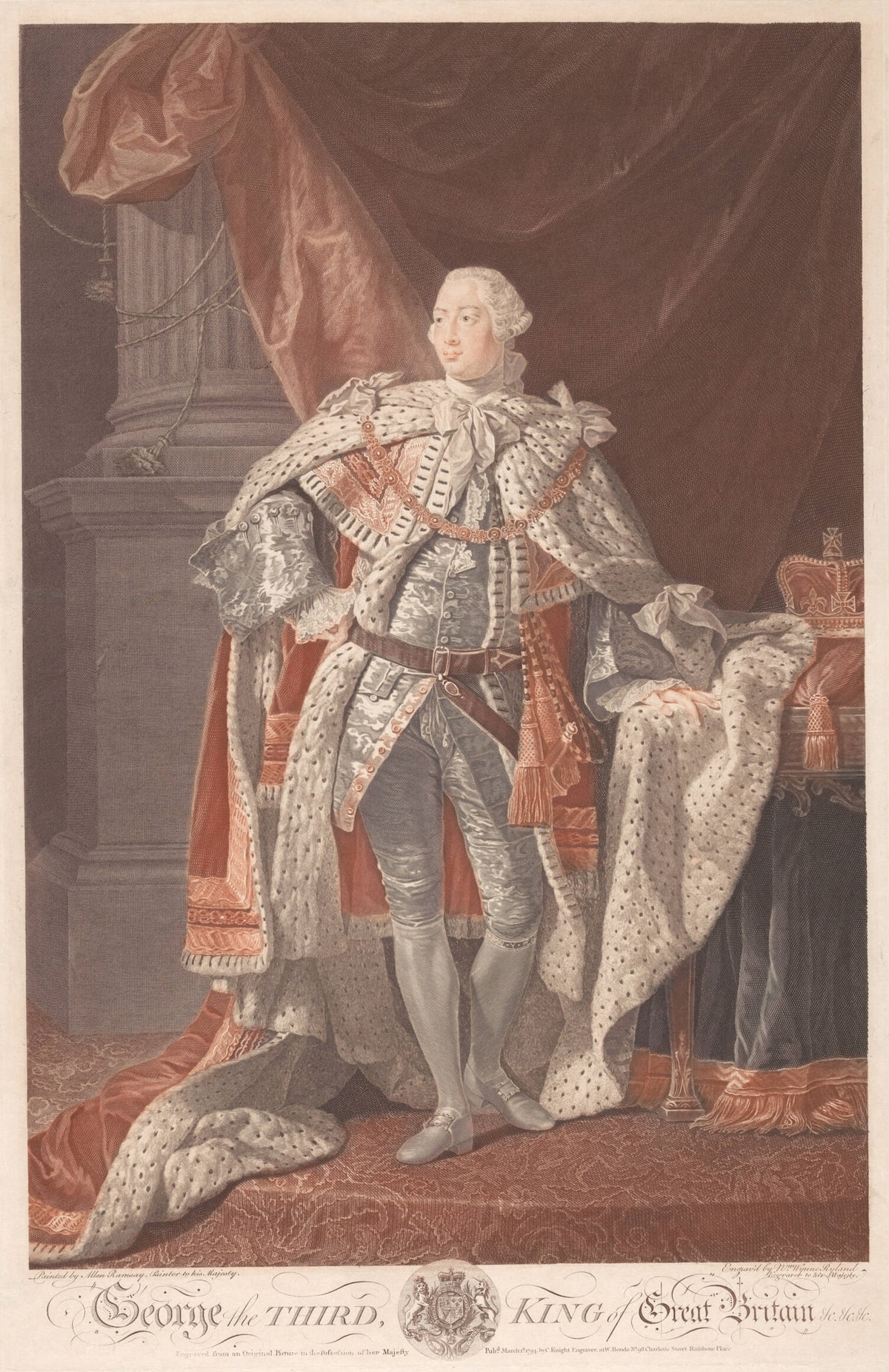
The acreage was further developed by Princess Augusta, the mother of George III, the so-called mad king. George used the royal pleasure grounds and what is now known as Kew Palace to recover from his bouts of illness, which may have been porphyria or bipolar disorder, or some combination thereof.
(How mad was George III? He certainly had bouts of mania. On the other hand, while I was visiting Kew, Donald Trump retweeted a meme of himself wearing a crown and piloting a jet that dumped tons of excrement on American protesters, so you be the judge.)
George built up Kew’s exotic plant collection with the help of his pal Sir Joseph Banks, the doyen of natural science in Great Britain: By 1768, Kew had collected 3,400 species. (It boasts 27,000 today – not bad, given that Brazil, the most biodiverse country on Earth, today supports 46,000 known plant species.)

But the gardens fell into disrepair after George’s death in 1820, and especially after the brutally cold winter of 1838, one of the rare years the Thames froze over. Kew’s future was also in peril as political factions fought for its dissolution. The issue, then as now, was money: Was it reasonable that the government should spend £35,000 on palm trees when impoverished and hungry Irish were flocking to London? Was preserving nature for future generations as important as the present?
It wasn’t until after young Queen Victoria took the throne in 1837 that Kew was spared. She was initially of a mind to dismantle the garden, until she was persuaded it would be a big hit with the public, thanks in part to the endless politicking and finagling of its first director, Sir Joseph Hooker. Hooker was one of a string of Scots who have run Kew since its earliest days. A perfect storm of influences made Kew a success – not least the fact that, while Edinburgh, Glasgow, Paris and Berlin had glass-housed botanical gardens, London didn’t, even though it was the hub of the British Empire, whose far-flung tropical colonies produced everything from rubber and ginger to pepper and the palm oil used to lubricate British railways.
Plus – as Kate Teltscher, the author of Palace of Palms, an exceptionally readable history of Kew, explained to me recently – “particularly in the 1850s, there is the development of suburbs and middle classes who want nice villas with gardens.” The new middle class’s longings were inflamed by a huge boom in gardening magazines, which in turn advertised Britain’s nascent plant nurseries.
The first visitors to the Palm House showed up in 1848. By 1851, half a million of them flocked through the gates every year, at a penny a person: A half day at Kew was considered a taste of the exotic and a healthful jaunt into the country, away from the filth and soot and tuberculosis of industrializing London. These days, 2.5 million people a year pay as much as £25 each to visit Kew and Wakehurst. Many of them swing by the Palm House.


The 2030s will also be the bicentennial of Victoria’s coronation, a turning point in Kew’s history. She had planned to dismantle it, until courtiers convinced her otherwise.Charles Robert Leslie, c. 1897/Library of Congress
The hot and humid second-storey balcony walk inside the Palm House was Queen Victoria’s favourite way to see it.
Unexpected details present themselves. For instance, looking down, you suddenly understand that most bald men in England shave their heads. Everything else you can see above and below and in front of you is a wall of variegated green leaves in a full catalogue of shapes and pointiness and widths. Some are pinnate spears, and some are fat palmate fingers. Some are like peninsulas, and some are like wild haircuts. They have exotic, difficult names, such as Heliconia bihai x spathocircinata “Cinnamon Twist.”
Voices float up as visitors below react to what they are seeing: “Banana,” someone will say, and then your mind reels through what the Palm House has taught you about bananas. They were unknown in Britain when the Palm House was built; today, Brits eat five billion bananas a year (about two a week, each), making them Britain’s favourite “healthy snack.”
Those, of course are Cavendish bananas, the only kind most of us eat; they have no seeds and can only be propagated from cuttings, which means they all have the same immune systems, which is why they are all vulnerable to the vein-throttling TR4 fungus, and why, last February, a new resistant strain, the QCAV-4, became the world’s first genetically modified banana approved for cultivation.

Specimens at Kew are not purely for show – studying them gives researchers new insights into plant biodiversity, flood mitigation and climate change.
You look down upon Arabica coffee plants and gorgeous, thick barkless bamboos – actually a grass that Kew researchers are studying for its flood-prevention attributes – that grow 2.5 metres every 16 days in the Palm House and reach 25 metres in the wild. And, of course, there are the palms, the princes of the plant kingdom as they were once called, ever beseeching and reaching toward you. No wonder the Christians considered them the tree of life and Jesus.
Everything is wet and dripping and moist and pinging. Sound is amplified. Every once in a while, you hear the song of a bird that has sneaked under the glass. Oh, look, a tamarind tree: Its fruit is the basis of Worcestershire sauce. It’s so hot and humid I am drenched after 35 minutes. My notebooks are disintegrating in my hands. In any event, the upper storey of Kew’s Palm House is where you feel the fantasy of the place, as it transports you instantly, and physically, beyond your culture, beyond where you are and who you are, beyond commerce, even, into the strange botanical Other.
The experience is unchanged since Victoria’s time, but its meaning is now more urgent. The Palm House was a monument to British national pride. These days, it’s an international call to climate-change action. (In the Amazon alone in 2024, fires attributed to climate change consumed an area larger than California.)
“Because the scale of climate change and biodiversity loss cut across national boundaries,” Kate Teltscher will tell you, “botanic gardens these days tend to be about saving the world from itself, from mankind.”
Up above it all, on the glassed-in walkway of the second storey of the world-famous building that first showed white Europeans what robust riches were waiting to be exploited in the steamy equatorial belly of the Earth, you can be both the villain and the hero, colonizer and victim. Up there, it is very easy to feel as if you are standing on the demarcation line between the two sides of the global debate over climate change and how seriously it threatens us.
Wherever you are in Kew Gardens, the stately Palm House draws you toward it, and makes you want to get inside, to feel the heat and experience the exotic and often endangered botanical otherness of the rest of the Earth. Half an hour later, you are just as eager to leave. You step outside, shuck your jacket off your shoulders to feel the cool outdoor air on your neck, and listen as the steady roar of overhead jets landing at nearby Heathrow rises in your ears. But as soon as you step outside, you ask yourself when you’ll be able to go back in again.
Editor’s note: This article has been updated to correct the title of Kate Teltscher’s book Palace of Palms.

In our nature: More from The Globe and Mail
City Space podcast
Coyotes, bats and pigeons, oh my: Canadian cities are full of wildlife. How can we better accommodate these species? City Space asked environmental studies professor Peter Alagona and ecologist Erica Spotswood for their ideas.
Ideas for your garden
Six tips for a climate-friendly garden
Food gardens take root on the front lawn
How three Canadian women helped save the rare Tibetan blue poppy