When the Russian invasion of Ukraine began, Shamil Lukozhev was sure he’d die. The Russian soldier feared he’d be shot because he wouldn’t be able to pull the trigger on his own gun. He couldn’t bring himself to kill someone who was defending their homeland.
More than 3½ years later, Mr. Lukozhev says he has no problem shooting at those he once served alongside. Those still fighting in Russian President Vladimir Putin’s army, he says, can’t be seen as innocent. They could have done as he did and deserted.
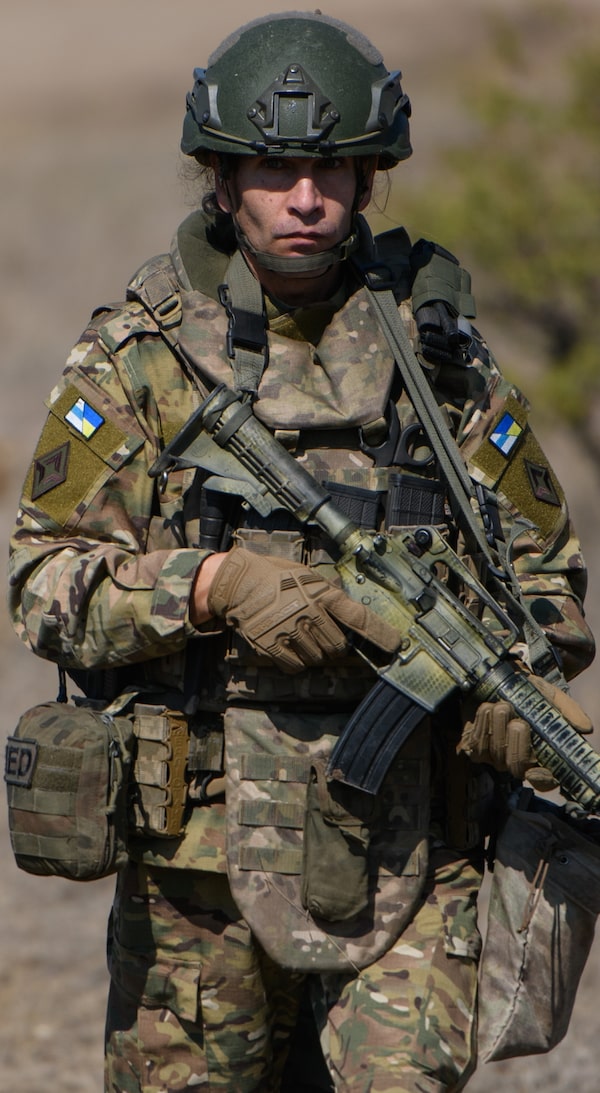
Mr. Lukozhev is now a drone operator in the Freedom of Russia Legion, a unit that has been helping defend Ukraine since shortly after Mr. Putin ordered a full-scale invasion of the country in February, 2022. The Legion, which is made up of Russian citizens fighting under the command of Ukrainian officers, has the ultimate goal of marching on Moscow and toppling Mr. Putin’s regime.

Shamil Lukozhev, who deserted from the Russian army nine days into the war, says he has no qualms firing back at people he once served with.
“We really believe in our mission. We believe that we can do it. It’s not easy. It will not be soon, maybe not next week, maybe not next year, but we will do it – it is just a question of time,” said the Legion’s deputy commander, Maximillian Andronnikov, a 51-year-old who was born in the Russian resort town of Sochi.
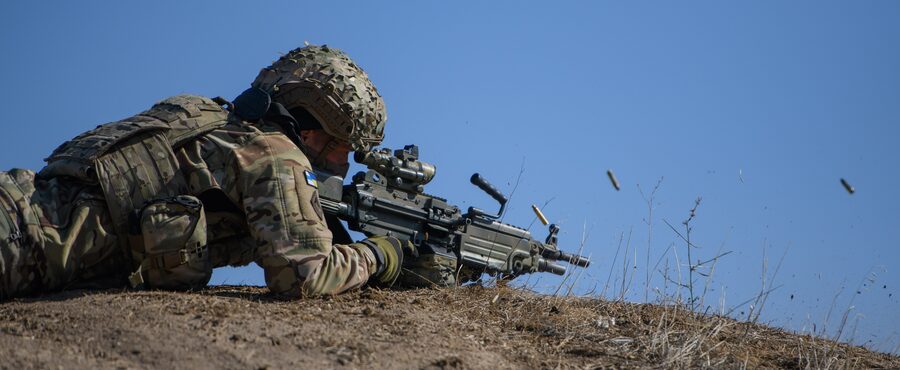
Mr. Andronnikov spoke from the southern Zaporizhzhia front, where the Freedom of Russia Legion is currently deployed. Machine-gun fire rattled behind him as Legion troops on rotation away from the front line conducted training exercises on a hilly pasture.
Mr. Andronnikov said the situation in the Zaporizhzhia oblast, which Mr. Putin claims to have annexed, even as Russian troops remain 25 kilometres from the regional capital city, was “hard, tough and heavy – but not so hard, tough and heavy as Russian propagandists try to show the world.” He said Russian troops had only advanced “one or two” kilometres over the past month, while taking heavy casualties.
The exact size of the Legion is a secret, but its officers say that ranks were filled early in the war with Russian citizens who travelled to Ukraine to volunteer. There are now an increasing number of cases like Mr. Lukozhev’s – Russian soldiers who initially took part in the invasion before switching sides. Often, they choose to fight for Ukraine after being captured and shown evidence, while held as prisoners of war, of the crimes committed by the Russian army.

‘We really believe in our mission. We believe that we can do it,’ says Maximillian Andronnikov, middle, deputy commander of the Freedom of Russia Legion.
Mr. Lukozhev said he joined the regular Russian army in 2021 because there were few other employment opportunities in his home region of North Ossetia-Alania. He didn’t expect to see active combat.
When his 503rd Motorized Regiment was deployed to occupied Crimea at the start of 2022, Mr. Lukozhev and his comrades were told it was just a drill. As they were sent deeper into Ukraine on the first day of the invasion – riding in their Russian armoured personnel carrier past burnt-out border posts and dead Ukrainian soldiers – Mr. Lukozhev began to feel sick.
“I’m a really good shot, but I didn’t want to kill anyone who spent decades building their home,” the soft-spoken 31-year-old said, sitting in a Zaporizhzhia park during a recent break from the front line. “I thought I would die because I would not shoot.”


Crimea in early 2022: Russian vehicles mobilize in Armyansk, and posters in Simferopol read ‘Russia does not start wars, it ends them.’Reuters; AFP via Getty Images
Mr. Lukozhev says he and six of his comrades had made a whispered agreement that each of them would try to desert as soon as they saw an opportunity. For him, that moment came on March 4, 2022 – the ninth day of the invasion.
He got up before dawn, put on civilian clothes and started walking toward the Ukrainian front line, leaving his weapon, passport and military documents behind. He had a Ukrainian girlfriend waiting for him in another part of the country, and she wanted to flee to Europe with him.
Mr. Lukozhev followed the Dnipro River north in the direction of Zaporizhzhia, passing through Russian checkpoints by telling them that he was a Ukrainian citizen heading to the city’s evacuation centre. By the next day, he had surrendered himself to Ukrainian troops.
The initial reception wasn’t warm. He was beaten by the first Ukrainians he came across, knocking out a tooth. Then he spent almost a year in a detention centre – where he watched Ukrainian television reports about the massacres committed by Russian troops in places such as Bucha – and was almost sent back to Russia as part of a prisoner exchange.

Bucha, a city near Kyiv, was occupied by Russian forces at the start of the war. By the time Ukrainian troops returned in April of 2022, Mr. Lukozhev had already made his break to their side.Rodrigo Abd/The Associated Press
But Mr. Lukozhev didn’t want to go back. Nor, to his now ex-girlfriend’s disappointment, did he want to join her in Germany. He was finally ready to fight – but for Ukraine.
(Mr. Lukozhev’s mother, who died in July, wrote on her Instagram page in 2022 that her son had been beaten and pressured into changing sides. Mr. Lukozhev, who would have remained a prisoner of war if he hadn’t joined the Legion, said his mother simply didn’t want him fighting on either side of the conflict.)
After a crash course in drone operation under the supervision of Ukraine’s HUR military intelligence service, Mr. Lukozhev joined the Freedom of Russia Legion. The unit is part of the larger International Legion for the Defence of Ukraine, which includes fighters from dozens of countries, such as Canada, who travelled to Ukraine to help fight off the Russian invasion.
Sometimes, the quadcopter drones that Mr. Lukozhev flies over the front lines drop food and other supplies to Legion members in their trenches. Often, they drop grenades on the Russian troops facing them, including the 503rd Motorized Regiment that he deserted, and which is still deployed on the front line south of Zaporizhzhia.
Mr. Lukozhev isn’t bothered by the possibility that he might be delivering deadly fire on those he once served with. “I found a way to escape. They’ve also had multiple chances to escape but didn’t do it,” he said, a New York Yankees ballcap pulled down low over his eyes.

Anti-drone nets give this road in Zaporizhzhia some protection from attacks like the ones the Freedom of Russia Legion dishes out against Russian targets.
The Freedom of Russia Legion has a murky reputation in Ukraine, and is held in suspicion by many Ukrainians who simply don’t trust Russians. They’ve also been accused of acting more as a propaganda tool than as a military force, even as its members have fought in ferocious conflicts such as the nine-month series of battles at Bakhmut and taken part in cross-border attacks on Russian territory.
Mr. Andronnikov says such direct confrontation is the only way to defeat Mr. Putin’s regime and thus bring about the end of the war.
Mr. Andronnikov’s own politics appear to have evolved with time. Once a member of the Russian Imperial Movement – a neo-Nazi group considered a “terrorist” organization by Canada, the United States and other Western governments – he now says that each of Russia’s multitudinous ethnic groups should be free in a post-Putin world to decide whether they want to remain part of the larger country or chart their own course.
But he scorns pro-democracy figures such as Yulia Navalnaya, Vladimir Kara-Murza and Ilya Yashin, the trio who recently wrote an open letter to Prime Minister Mark Carney asking Canada to grant asylum to anti-Putin dissidents at risk of being deported back to Moscow by the Trump administration.
The Legion has also severed its ties with former Russian MP Ilya Ponomarev, who previously served as the unit’s main spokesman and self-appointed political leader.
“They are afraid of military men. They think that we will bring another dictatorship to Russia,” Mr. Andronnikov said of the leaders of Russia’s peaceful opposition. “They think that somehow, without their help, Russian government will fall, and they will ride into Kremlin on white horses.”

Coming home to Russia now seems like a more distant prospect to Anastasia Vistorobskaya, who works with a Legion medical team.
Despite the bravado, there’s a sense in the battlefields of Zaporizhzhia that the collapse of Mr. Putin’s regime remains a long way off. Before, the Freedom of Russian Legion was fighting in the Belgorod and Bryansk regions of Russia – where Mr. Andronnikov said he kissed the ground in excitement – but now their positions in southern Ukraine are hundreds of kilometres further away from Moscow.
Anastasia Vistorobskaya, a 40-year-old who serves as the head of one of the Legion’s medical teams, admitted she’s losing the optimism and energy that fuelled her decision to travel to Ukraine last year and join the fight against the authoritarian system that she says destroyed Russia and brainwashed its people.
“It was my dream to see Red Square again,” said Ms. Vistorobskaya, who worked as a fashion designer in France before retraining as a combat medic. “Now, I just want to live long enough to see how it ends – or at least to live longer than Putin.”
With reports from Kateryna Hatsenko

War in Ukraine: More from The Globe and Mail
The Decibel podcast
Since the war began, Russia has been spiriting away young Ukrainians to training camps designed to turn them against their homeland. Reporter Mark MacKinnon spoke with The Decibel about a project, partly funded by Canada, that tracks the children so they can be brought home one day. Subscribe for more episodes.
From our correspondents
Canadian in Ukraine takes first steps to recovery and a return to the fight
Ukrainian journalist shares his story of survival in Russian captivity