For more than 30 years, veteran photographer Goran Tomasevic has travelled to countries broken by conflict including Haiti, Afghanistan and Syria but his most recent assignment hit close to home – to the Serbian neighbourhood in which he was born.
Mr. Tomasevic was watching the news one evening at his house in Zemun, which is on the bank of the Danube river in Belgrade, when he learned that student protesters were planning a three-hour blockade beginning at 7 a.m. The next morning, July 7, he walked over with his camera and began snapping the demonstrators.
They dragged tree trunks, old furniture and garbage cans to block the street. Many were university students, calling for Serbia’s President Aleksandar Vucic to hold early elections and end government corruption.


“The hardest thing is to cover stories in your own country,” Mr. Tomasevic said. “I went to the Middle East, seen wars there, and of course you care because people are suffering. But it’s different when it’s your own country.”
The scenes in Mr. Tomasevic’s neighbourhood that summer morning has become familiar to Serbians in recent months. Last November, the concrete canopy of a railway station collapsed in Novi Sad, Serbia’s second-largest city, famous for its music festival. Sixteen people were killed. The station had recently been renovated and alleged corruption leading to shoddy construction was suspected. Protests broke out and they haven’t stopped since.
At first, demonstrations called for justice for victims of the station tragedy. But demands have widened to include broad democratic reforms, government accountability and early elections. So far Mr. Vucic, who controls the judiciary, most of the press and police, has refused to call elections. To increase pressure on students, the government has cut salaries for protesting professors. Many state-run universities are closed.
Civil unrest has spread to about 150 towns and cities. Serbia is experiencing some of the largest demonstrations since Serbians threw out the late president Slobodan Milosevic in 2000 at the end of the Balkans war.

The terrible violence Mr. Tomasevic, 56, photographed in Serbia in the 1990s at the beginning of his career is not far from his mind as he watches the tense stand off between citizens and Mr. Vucic.
“I worry very much about a war like the 1990s happening again,” he said. “The government tries to kill our values – be smart, be honest, go to school. People are fed up with that.”
The turmoil Mr. Tomasevic witnessed over several days in June and July in Belgrade and Uzice, a town 200 kilometres south of the capital, unfolded in a pattern: A street is blocked to prevent cars and pedestrians from passing through. Police, often in riot gear, arrive to forcibly move protesters on and reopen the street, arresting and beating people as they go.
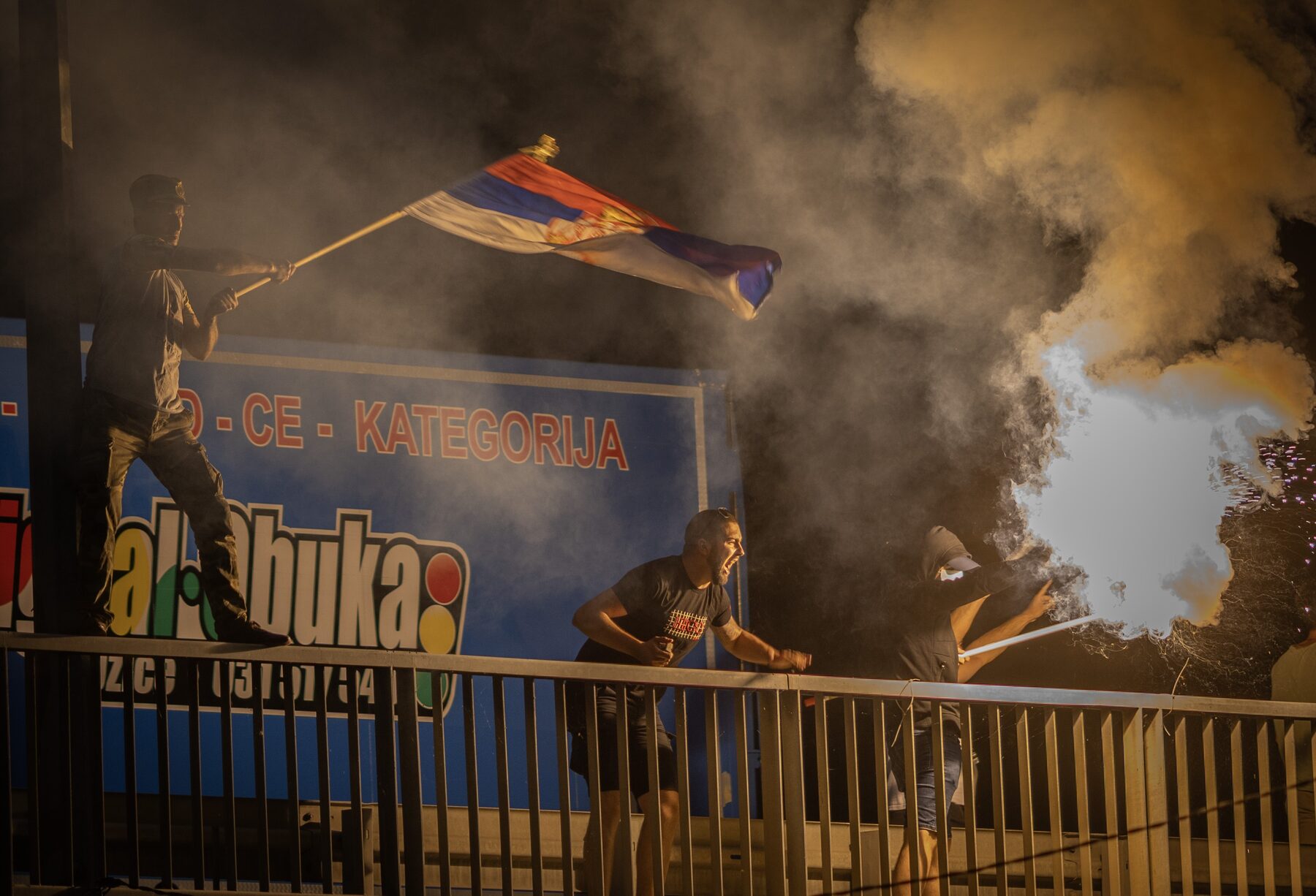
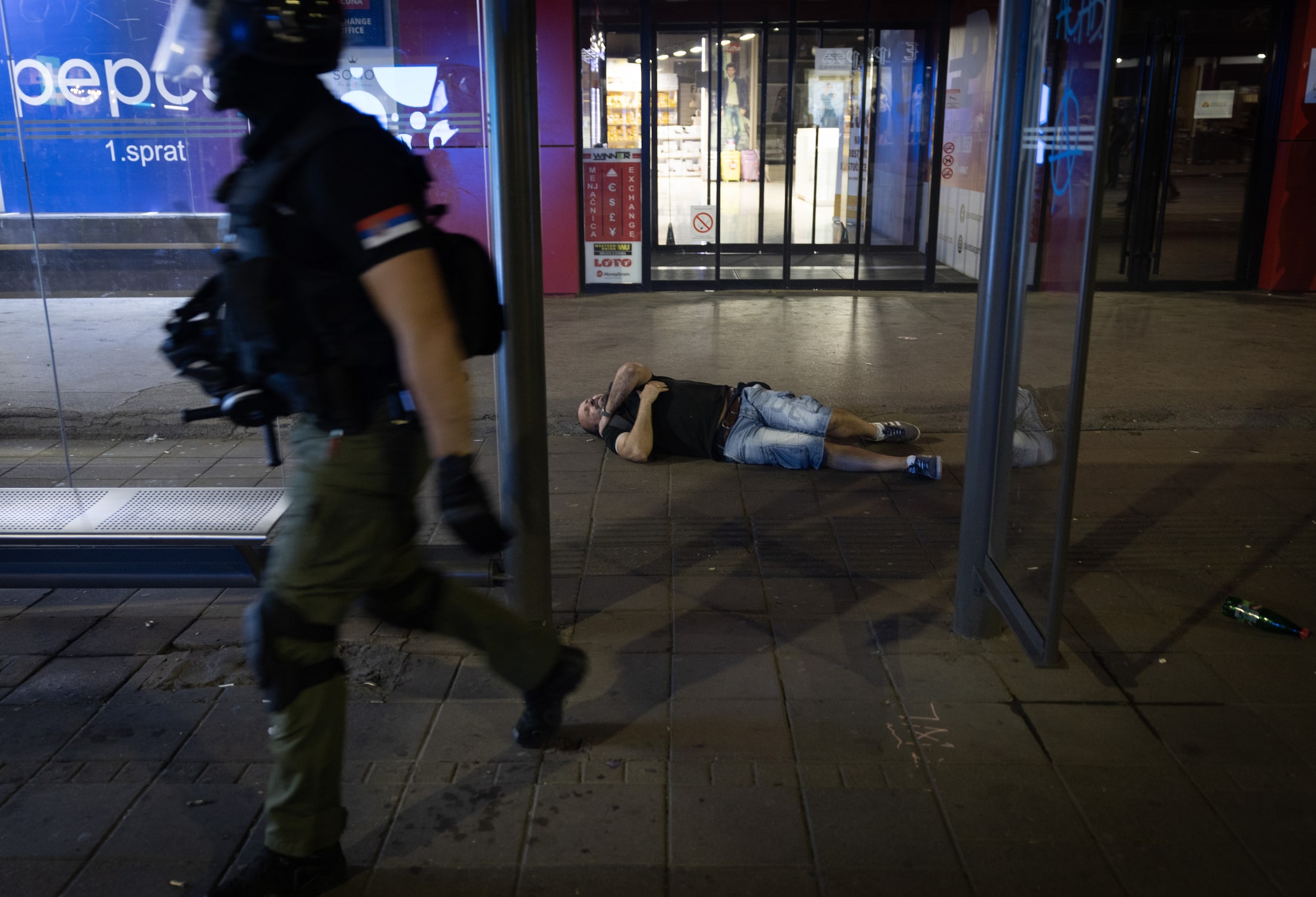

Protesters get around government controls on the press by organizing themselves on social media – its unruly, amorphous nature making it difficult for the government to shut them down.
Mr. Tomasevic said he was inspired by young Serbians and the “national movement” they have started for a better country.
“I am always touched by this young generation,” he said. “They don’t use violence. They do not insult other nationalities and religions when they go on the streets. They are polite, friendly when I show up and take pictures.”

A pair of students laugh and hug in front of the law university in Belgrade in July. On the tarmac ‘justice for students’ is scrawled. 'They were listening to music, shouting anti-government or anti-president slogans and explaining how stupid the government is,' said Tomasevic. 'When there is no police or anyone to attack them, it’s a friendly crowd.'
With reports from Reuters and Associated Press