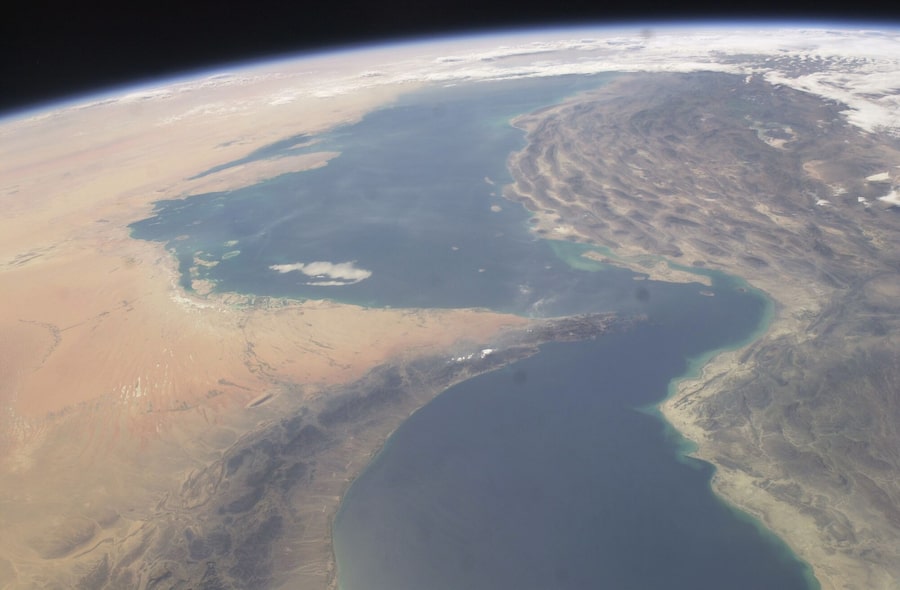
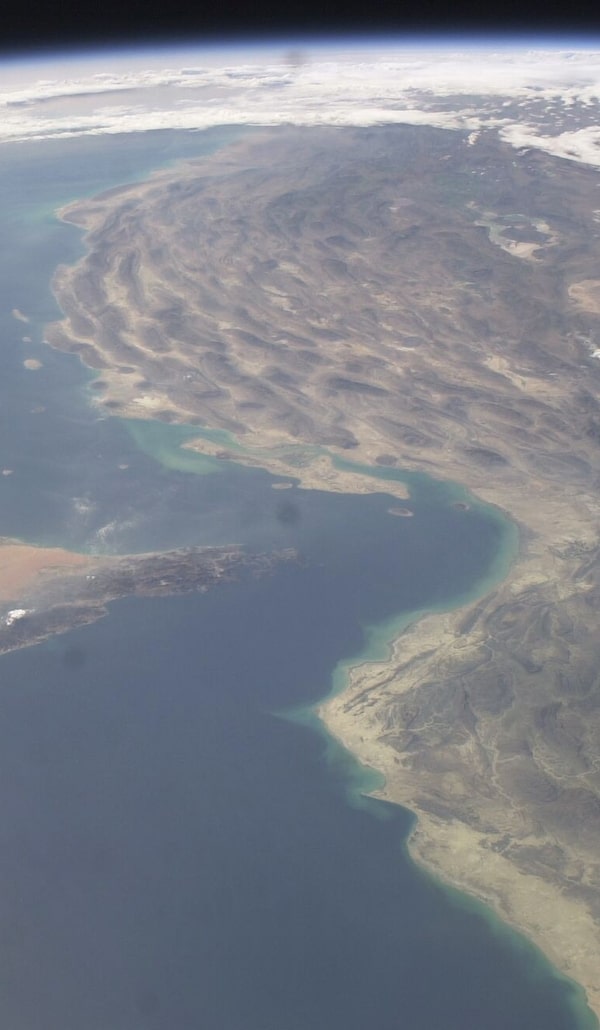
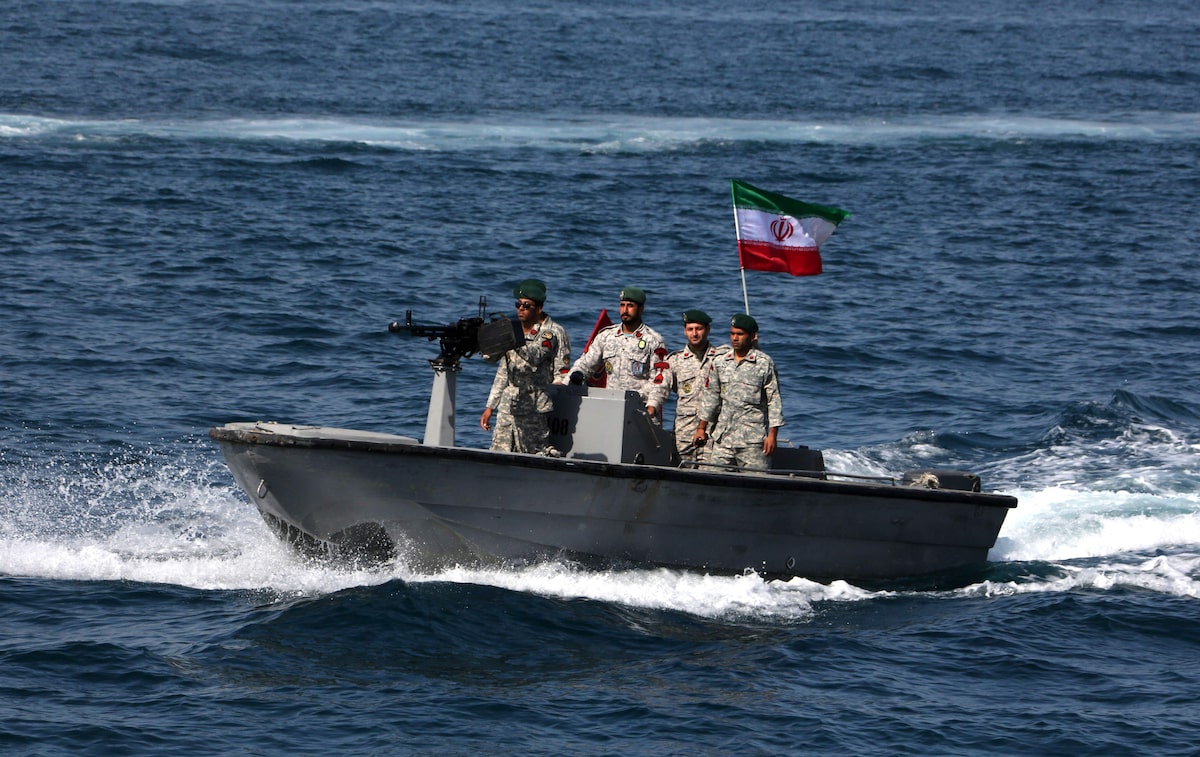
Tehran’s use of the Strait of Hormuz as a very physical chokepoint has not only sharply driven up worldwide prices of petroleum and natural gas, and thus threatened economy-wide inflation by raising the consumer prices of just about any product that is delivered by land or sea. It has also cut off supplies of fertilizer (a third of the world’s supply is made with natural gas from the Persian Gulf), threatening the entire harvest of important crops in several countries. It has potentially stalled the production of crucial medicines and pharmaceuticals in Asia that rely on Gulf petroleum products as precursors. And it has jeopardized semiconductor production that relies on the region’s shipments of helium.
The Iranian tactic of using the Strait of Hormuz to hold the world economy hostage has remained virtually unchanged over more than 1,800 years. Because of this outsized economic power, the Strait became renowned in literature and politics as a mythic symbol of diabolical power, civilizational schism and global wealth – in the words of Marco Polo, it is “the gem in the ring of the world,” or, in the words of a Portuguese viceroy in the sixteenth century, “the hand on the throat” of global commerce.
We ought to be asking why, after almost two millennia, we all remain so vulnerable to this simple strategy. The Strait’s enduring potency is a reminder of how little has really changed in the architecture and substance of global commerce, how much of our futuristic life of invisible, clean-looking technology remains rooted in a deeper movement of ancient, crude combustible resources passing through millennia-old sea channels between fortified cliffs.


Iranian leaders first discovered the power of the Strait of Hormuz around 224 AD, almost 500 years after Alexander the Great first charted it as a navigable shipping passage, when the Persian Sassanid Empire began its centuries of Middle Eastern dominance.
A new phenomenon known as global trade had recently emerged, and the flow of luxury goods from the Indian subcontinent was enriching the much more powerful Roman empire, making its capitals in Rome and then Constantinople dependent on flows of silk, spices and other high-end commodities. These imports became linchpins of Roman authority, and the favour-buying instruments of imperial expansion and conquest. All seaborne trade in such Asian goods had to pass through that narrow strait.
The Sassanids were the first Iranians to realize what a potent tool they possessed – in fact, the word Hormuz is derived from the holiest name of the god of their Zoroastrian faith. In the third century, they dumped funds into arming up the coastal fortifications along the Strait, and in the fourth century they used this arsenal to place a total trade embargo on Europe. (This was also possible because the Sassanids controlled most of the overland passages of the Silk Road.) Ships from India and China had to stop and unload, or face destruction from the powerful Sassanid naval fortifications, causing almost all East-West maritime trade to be intercepted.

Modern Iran still honours the Sassanid kings that dominated the Strait. Last year, the regime erected this statue in Tehran of Shapur I and his captive, the Roman emperor Valerian.Morteza Nikoubazl/NurPhoto via Reuters Connect
This had a devastating effect on the economy of the Roman empire, both by shutting down its exchange with Asia and by forcing it to purchase Eastern goods at highly inflated prices from the Persians, driving up worldwide market prices. This led to a severe fiscal crisis throughout Europe, as currency hemorrhaged into Persia in a crisis known as “the Drain of Gold,” creating a shortage of hard currency within Europe and turning the Persian Gulf-centred empire into an ultra-wealthy powerhouse.
The Byzantine emperor Justinian (ruled 527-565) responded to the mounting inflation and balance-of-payments crisis by imposing price controls and raising taxes, which further backfired by driving European merchants to move to Persia, deepening the crisis.

Oman’s Nizwa Fort was built in the 1600s, but stands on an older structure from the era of the Kingdom of Hormuz. Its Arab Muslim rulers grew wealthy by taxing trade through the strait.Giuseppe Cacace/AFP via Getty Images
After four centuries of this dominance, the Zoroastrian Persians were defeated by Muslim Arabs from across the Strait, who soon turned Hormuz into its own, spectacular kingdom, centred around the location of present-day Oman. The strategy of the Kingdom of Hormuz was not to intercept trade but to tax it heavily, and to distribute the revenues in its cities; this turned the kingdom into a lavishly wealthy land of many cultures and religions.
The Strait had now come to be seen by European observers as a portal between the Christian West and the alien Orient; the keepers of this gate were seen as otherworldly and diabolical. In his 17-century epic Paradise Lost, John Milton characterized Satan’s prideful position at the gates of Hell as a metaphorical Strait of Hormuz (or “Ormus,” as he spelled it): “High on a Throne of Royal State, which far/Outshon the wealth of Ormus and of Ind,/or where the gorgeous East with richest hand/Showrs on her Kings Barbaric Pearl and Gold,/Satan exalted sat…”

John Milton’s version of Satan, conferring with a council of fallen angels in this 18th-century etching, is likened in the poem to an eastern ruler, and Hell to Hormuz.J. Ireland after W. Hogarth/Wellcome Collection
So it was almost inevitable that the early Renaissance Europeans, with their drive to Christianize and control the Old and New Worlds, would seek to take control of Hormuz from its Islamic rulers. And that is exactly what the Portuguese Empire did in 1507. That year, the crusading military commander Afonso de Albuquerque violently seized control of the key East-West trade chokepoints, most notably Hormuz (as well as the gateways to the Bay of Bengal and to the Red Sea).
There he implemented the cartaz system of licensing – essentially a state-sanctioned protection racket for global trade, not only extracting hefty fees but directly controlling global supply chains – dictating which ports could be visited, what commodities could be carried and to whom they could be sold. This precipitated the economic decline of the competing Venetian empire.
The Portuguese were driven out in 1622 by the Persian Safavid Empire under Shah Abbas the Great, this time with the help of the British East India Company. A few decades later, control of the strait flipped into Arab hands again, as the Sultanate of Oman established control of the strait’s Musandam Peninsula.


Shah Abbas the Great, the Safavid ruler that drove out the Portuguese, would give his name to the port near Hormuz Island, Bandar Abbas. Today there is a naval base there that has taken damage in the recent air strikes.Bishandas, ca. 1618, via Freer Gallery of Art
That established the conditions that have largely lasted until today, with Arab kingdoms and Iranian regimes overseeing the strait from opposite sides, each able to shut down passage when they wanted to hold the world hostage.
The cargo being carried through the narrow strait and the primary direction of transit have changed since then, replaced in the 20th century by petroleum – more than a fifth of the world’s supply today – being shipped outward from the Persian Gulf states to the wider world economy.
That made Hormuz a key strategic asset in the Second World War, as the Allied forces were heavily dependent on Persian Gulf petroleum. The Nazis, knowing this, harassed the Strait with U-boats and tried to win the influence of neutral Iran, whose Shah was thought to be sympathetic to the fascist powers. This potential threat to the security of the Strait led to a British-Soviet mission in 1941, codenamed Operation Countenance, in which the Allied powers invaded Iran, expelled the Shah and directly governed the country until 1946, when his more pliable son Mohammad Reza Pahlavi succeeded him.

Reza Pahlavi, who became Shah in the 1940s, would wait to hold his lavish coronation until 1967 at the Golestan Palace.AFP via Getty Images

Golestan was damaged recently in the early days of U.S. and Israeli air strikes in Tehran.Hossein Esmaeili/The Globe and Mail
It appears that Mr. Trump and Israeli Prime Minister Benjamin Netanyahu were hoping for a similar outcome when they launched their own military assault on Iran in February – but they discounted the possibility that the Ayatollahs, unlike the elderly Shah, were prepared to pull the trigger on the Strait of Hormuz if backed into a corner.
The Americans seem to have disregarded more recent history, which has showed that both Arab and Iranian forces are capable of holding the world hostage over the Strait.
During the Iran-Iraq war in the 1980s, Saddam Hussein’s Iraqi dictatorship attempted to destroy the Iranian regime’s ability to export oil by launching air-to-ground and cruise-missile attacks on Tehran’s fleet and its oil infrastructure, striking 46 of its tankers. Iran’s Islamic regime, with a less sophisticated military, responded by attacking ships belonging to Iraq’s trading partners, damaging or sinking more than 200 tankers between 1981 and 1987.
This struck terror in the world’s financial capitals and provoked a very expensive coalition response from the U.S. military to keep the Strait open. But it failed as a blockade – dozens of vessels continued to navigate the Strait, and markets quickly recognized that Tehran was not going to fully shut it down as it would annihilate their own oil export economy, the one source of leverage they possessed.
That became an underlying assumption of Western powers – that Iran would use the Strait of Hormuz only as a negotiating threat, a geo-economic version of a nuclear deterrent. Tehran had threatened to use it before, most recently during nuclear-deal talks in the early 2010s. But actually triggering a full-scale Strait blockade would be an act of wild desperation, immolating Iran’s economy and doing terrible damage to the Arab kingdoms around the Persian Gulf, uniting them in enmity.
Only a moment of scorched-earth desperation could provoke such a dramatic act – exactly the sort of moment that is now occurring.

At Muscat’s Sultan Qaboos port, people celebrating the last day of Eid watch oil tankers in the distance. Shipping companies have been careful in recent weeks in case Iran follows through on threats to blockade the Strait of Hormuz.Elke Scholiers/Getty Images
The use of geographic features as force-multiplying instruments of economic warfare seemed to many like an anachronistic relic of a distant past. Many of history’s renowned topographic chokepoints, such as the Pass of Thermopylae, the Bosporus or the Strait of Gibraltar, have largely been bypassed by new technologies and lost much of their former strategic power, although a few human-created ones, such as the Suez and Panama canals, are still capable of paralyzing the world economy.
But when strategists have invoked “chokepoints” in recent years, they’ve strictly referred to the abstract economic tools used to hold rogue regimes in check. In fact, Chokepoints was the title of an acclaimed book on economic warfare published last year by Edward Fishman, an international-relations scholar and former Obama administration official, and it concerned itself almost entirely with the use of banking restrictions, sanctions, asset freezes and similar instruments to constrain Russia and Iran. The possibility of an 1,800-year-old physical chokepoint strategy being turned against the United States was beyond its imagination.
Interviewed on TV this week, Dr. Fishman seemed shocked that the Trump administration could fall into such a trap: “It really is a remarkable development,” he said, “and it shows that Iran’s strategy, which has been to retaliate by waging war on the global economy … can actually get the Trump administration to do wild things.” The Hormuz action has won Iran more relief from sanctions than it got in exchange for stopping uranium enrichment a decade ago, he observed.
The fact that it did illustrates a fundamental infrastructural weakness in the global economy today – we are still reliant on patterns of movement and fossil-fuel resource suppliers that make us vulnerable to a low-technology trap that would have been familiar to people almost 2,000 years ago.
Perhaps the revival of this ancient form of economic terror will finally provide an incentive to move our energy economy and our trade patterns into a more modern world.

War in the Middle East: More from The Globe and Mail
The Decibel podcast
War between Iran, the United States and Israel has hit especially hard in Asia, which depends on energy from the Gulf states. James Griffiths spoke with The Decibel about what that means and why China has found itself on the sidelines of this conflict. Subscribe for more episodes.
The conflict in context
From Ukraine to Iran to Pakistan, conflicts stoke fears of wider unrest
How oil built and defined the Gulf before disrupting it
The Iranian cultural sites damaged by war so far