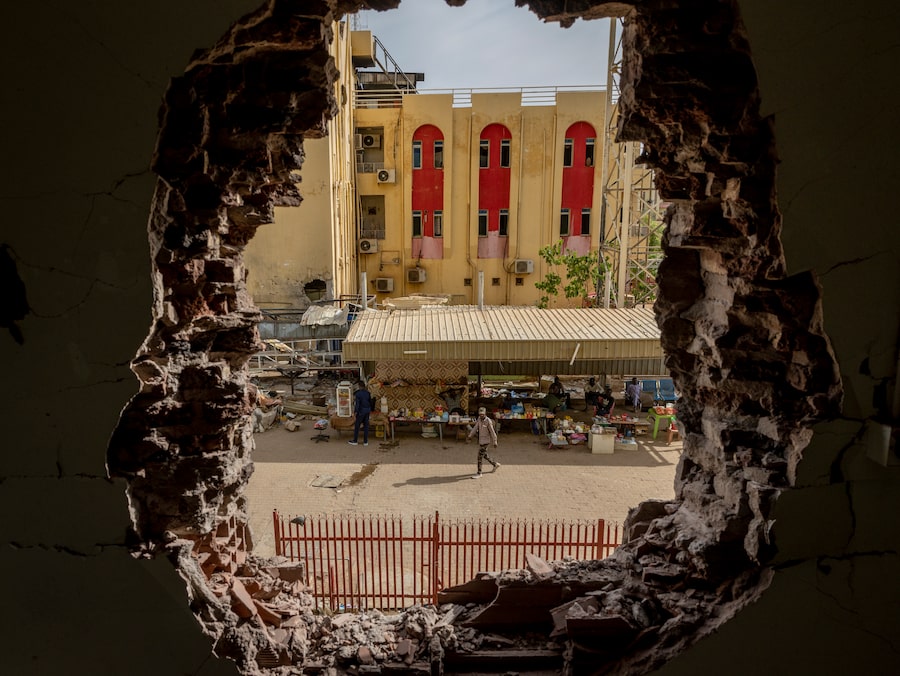
The catastrophic conflict in Sudan, now into its third year, is one of the deadliest in the world today.
The war has triggered the world’s biggest humanitarian crisis. With famine already under way in some parts of the country, and with 25 million Sudanese people in need of food aid, it is considered the world’s worst hunger crisis. It also the world’s biggest displacement crisis, forcing 12 million people to flee their homes. And it has huge geopolitical implications, drawing in fighters and weapons from across Africa and the Middle East.
The fighting erupted in Sudan on April 15, 2023, after weeks of tensions and feuding between the Sudanese Armed Forces and a powerful paramilitary group, the Rapid Support Forces.
Millions forced to flee from war
Refugees and internally displaced people in Sudan.Sources of
refugees (blue) and IDPs (red), by state, as of Aug. 31.
EGYPT
LIBYA
11 K
20 K
519 K
155 K
11 K
526 K
SUDAN
38 K
CHAD
19 K
111 K
319 K
96 K
1.7 M
13 K
ERITREA
6 K
214 K
129 K
300
358 K
62 K
2 K
402 K
446 K
92 K
539 K
3 K
34 K
975 K
396 K
36K
27 K
17 K
ETHIOPIA
380 K
390 K
41K
1.8 M
803 K
C.A.R.
S. SUDAN
Population movements from Sudan
Estimated new arrivals, as of Sept. 22
Egypt
1,500,000
S. Sudan
1,213,654
Chad
878,002
Libya
357,000
Uganda
86,947
Ethiopia
76,085
C. African Rep.
45,836
THE GLOBE AND Mail, source: unhcr

Millions forced to flee from war
Refugees and internally displaced people in Sudan .Sources of
refugees (blue) and IDPs (red), by state, as of Aug. 31.
EGYPT
LIBYA
11 K
20 K
519 K
155 K
11 K
526 K
SUDAN
38 K
CHAD
19 K
111 K
319 K
96 K
1.7 M
13 K
ERITREA
6 K
214 K
129 K
300
358 K
62 K
2 K
402 K
446 K
92 K
539 K
3 K
34 K
975 K
396 K
36K
27 K
17 K
ETHIOPIA
380 K
390 K
41K
1.8 M
803 K
C.A.R.
S. SUDAN
Population movements from Sudan
Estimated new arrivals, as of Sept. 22
Egypt
1,500,000
S. Sudan
1,213,654
Chad
878,002
Libya
357,000
Uganda
86,947
Ethiopia
76,085
C. African Rep.
45,836
THE GLOBE AND Mail, source: unhcr
Millions forced to flee from war
Refugees and internally displaced people in Sudan. Sources of refugees (blue) and IDPs (red), by state,
as of Aug. 31.
EGYPT
LIBYA
11 K
20 K
519 K
155 K
11 K
526 K
SUDAN
CHAD
38 K
111 K
19 K
319 K
ERITREA
96 K
1.7 M
13 K
6 K
214 K
129 K
300
62 K
358 K
2 K
446 K
402 K
92 K
539 K
3 K
34 K
975 K
396 K
41K
17 K
36K
27 K
1.8 M
803 K
ETHIOPIA
380 K
390 K
C.A.R.
SOUTH SUDAN
Population movements from Sudan
Estimated new arrivals, as of Sept. 22
Egypt
1,500,000
South Sudan
1,213,654
Chad
878,002
Libya
357,000
Uganda
86,947
Ethiopia
76,085
Central African Rep.
45,836
THE GLOBE AND Mail, source: unhcr
Since then, hundreds of thousands of civilians have died as a result of the conflict, spreading to dozens of towns and cities in most regions of Sudan. From the earliest weeks of the conflict, with artillery and tank fire crashing into Khartoum’s densely populated neighbourhoods, both sides have been destroying buildings and leaving hospitals crowded with dead and wounded.
Today, most of Sudan’s hospitals and clinics are in ruins or closed, hundreds of schools are shut down, aid supplies are largely blocked and mass hunger is growing.
Much of the worst suffering is in Darfur, a region of western Sudan, where massacres and other atrocities have proliferated. Human-rights activists and the U.S. government have described it as a genocide.
Widespread reports of massacres and other atrocities are now emerging from Darfur after a powerful Sudanese militia captured most of the famine-stricken city of El Fasher.
How did the conflict begin? Who are the central figures involved? What’s at stake? Here’s what to know about the current situation in Sudan.
Why is there conflict in Sudan and what led to the recent violence?

The two sides in the war are led by a career soldier and a former warlord – both of whom rose to power under former dictator Omar al-Bashir.
One side is the Sudanese Armed Forces, led by General Abdel Fattah al-Burhan.
The other warring party is the Rapid Support Forces, a paramilitary force led by General Mohamed Hamdan Dagalo.

General Abdel Fattah al-Burhan, leader of the Sudanese Armed Forces, signed a preliminary deal with General Mohammed Hamdan Dagalo to hand back power to a civilian-led government in December, 2022.Marwan Ali/The Associated Press
The Sudanese military and the RSF united to seize power in 2019 by toppling Mr. Bashir during a months-long wave of pro-democracy protests. They co-operated again in 2021 when they orchestrated another coup to block a planned transition to democratic elections. But then the two sides fell into a power struggle.
Under heavy pressure from the United Nations and Western governments, Gen. Dagalo and Gen. Burhan signed a preliminary deal in December, 2022, to hand back power to a civilian-led government. During negotiations on a final agreement, however, two main disputes emerged: how the RSF would be integrated into the military and who would have ultimate control over fighters and weapons.
On April 15, 2023, their feud exploded into violence. The Sudanese military denounced the RSF as “rebels,” while Gen. Dagalo declared that Gen. Burhan would be captured dead or alive.
Both of the warring parties have close links to military forces in other countries in Africa and the Middle East, fuelling tensions across both regions.
What are the Rapid Support Forces?

The RSF was officially created in 2013, but it had its roots in the notorious Janjaweed militia, which terrorized Darfur two decades ago. The Janjaweed, a name often translated as “devils on horseback,” were widely accused of massacres and other war crimes in Darfur in the early 2000s when Mr. Bashir deployed them to crush a rebellion in the region.
Gen. Dagalo, born in Darfur and known in Sudan by his nickname Hemedti (Little Mohamed), is the commander of the RSF. For years he thrived on alliances with Sudan’s army, ascending to become deputy leader of Sudan’s military regime.
“Bashir created something that neither he nor anyone else in the government, including the regular army, could control,” Nicholas Coghlan, a former Canadian senior diplomat in Sudan, told The Globe and Mail. “Hemedti grew in influence and power. He acquired gold-mining interests in Darfur, which – as the economy went into freefall – has given him even more clout.”
The RSF has since expanded its presence across the country and currently has an estimated 100,000 fighters in its ranks. It is widely reported to receive huge amounts of sophisticated weaponry and other support from its closest foreign ally, the United Arab Emirates, although the UAE denies this.
Where in Sudan is the fighting happening?

The fighting began in the centre of Khartoum, shutting down its main airport. The clashes quickly spread across the capital and the adjoining city of Omdurman, and then further south and west to Darfur and other places such as Kordofan region and Gezira state, which had previously been peaceful and is now on the verge of famine.
As the fighting expanded, many people have been forced to flee their homes multiple times. Camps for displaced people have been overrun or come under siege.

The situation in Sudan
As of Nov. 1
Map
key
Rapid Support Forces
and allied groups
Army and
allied groups
Other armed
groups
LIBYA
EGYPT
Nile
River
Red
Sea
SUDAN
CHAD
Khartoum
ERITREA
El Fasher
ETHIOPIA
C.A.R.
SOUTH SUDAN
300 km
the globe and mail, Source: thomas van linge; bbc; openstreetmap

The situation in Sudan
As of Nov. 1
Map
key
Rapid Support Forces
and allied groups
Army and
allied groups
Other armed
groups
LIBYA
EGYPT
Nile
River
Red
Sea
SUDAN
CHAD
Khartoum
ERITREA
El Fasher
ETHIOPIA
C.A.R.
SOUTH SUDAN
300 km
the globe and mail, Source: thomas van linge; bbc; openstreetmap

The situation in Sudan
As of Nov. 1
Map
key
Rapid Support Forces
and allied groups
Army and
allied groups
Other armed
groups
LIBYA
EGYPT
Nile
River
Red
Sea
SUDAN
CHAD
Khartoum
ERITREA
El Fasher
ETHIOPIA
C.A.R.
SOUTH SUDAN
300 km
the globe and mail, Source: thomas van linge; bbc; openstreetmap
Some of the worst surges of killing have been in Darfur, which had endured earlier massacres by the Janjaweed from 2003 to 2007, when an estimated 300,000 people were killed, leading to genocide charges at the International Criminal Court.
Thousands of people were killed in 2024 and 2025 when the RSF captured a series of refugee camps in Darfur, including the sprawling Zamzam camp, home to some 500,000 people, where famine had earlier been declared. Many more were killed when the RSF laid siege to North Darfur’s capital city, El Fasher, cutting off all outside supplies and battering the city with artillery and drone strikes, beginning in 2024.
After an 18-month siege, the RSF captured El Fasher on Oct. 26. Since then, the RSF has killed thousands of civilians in massacres and executions in the city, according to estimates from independent monitors and human-rights groups.
What has the human toll been so far?
The true death toll is impossible to calculate, but it is estimated in the hundreds of thousands. In early 2024, U.S. envoy Tom Perriello told a congressional committee that as many as 150,000 people may have been killed in Sudan by that point. Since then, the number of deaths has soared.
In November, 2024, the London School of Hygiene and Tropical Medicine estimated that more than 61,000 people died in the city of Khartoum alone in the first 14 months of the war, including 26,000 killed by violence. It estimated, however, that 90 per cent of all deaths are unrecorded. And that estimate was for single city, in a country with many such cities.

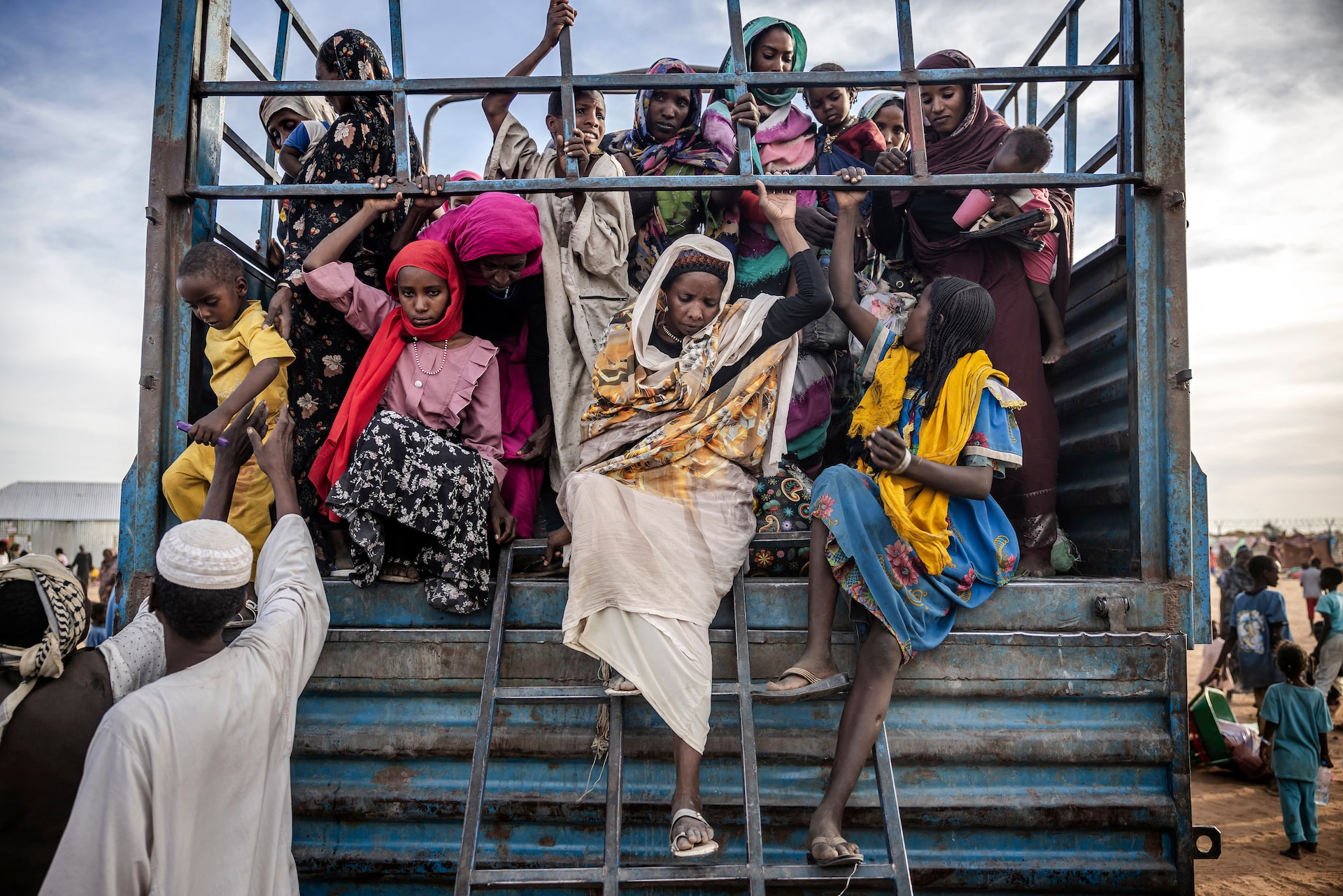
People who fled the Zamzam refugee camp after it fell under RSF control rest in a makeshift encampment near the town of Tawila, in the western Darfur region in April, 2025.AFP/Getty Images

Displaced people shelter in the Hasahisa Secondary School in Gezira State, which was transformed to house people fleeing violence in the war-torn country, in July, 2023.AFP/Getty Images
In 2023, a UN report estimated that 10,000 to 15,000 people had been massacred in a city in Darfur during a wave of ethnically targeted killings by the RSF and its allied militias.
Sexual violence, perpetrated by soldiers and paramilitary forces, is equally widespread. The UN has documented the abduction of hundreds of women and girls by soldiers and fighters, including many who were raped or kept in slave-like conditions. Some reports said women and girls abducted in Khartoum State were taken to Darfur, allegedly in chains in the back of trucks. In almost all cases, RSF elements or affiliated militia were implicated.
Opinion: In Sudan’s war, civilians – and democracy at large – are under siege
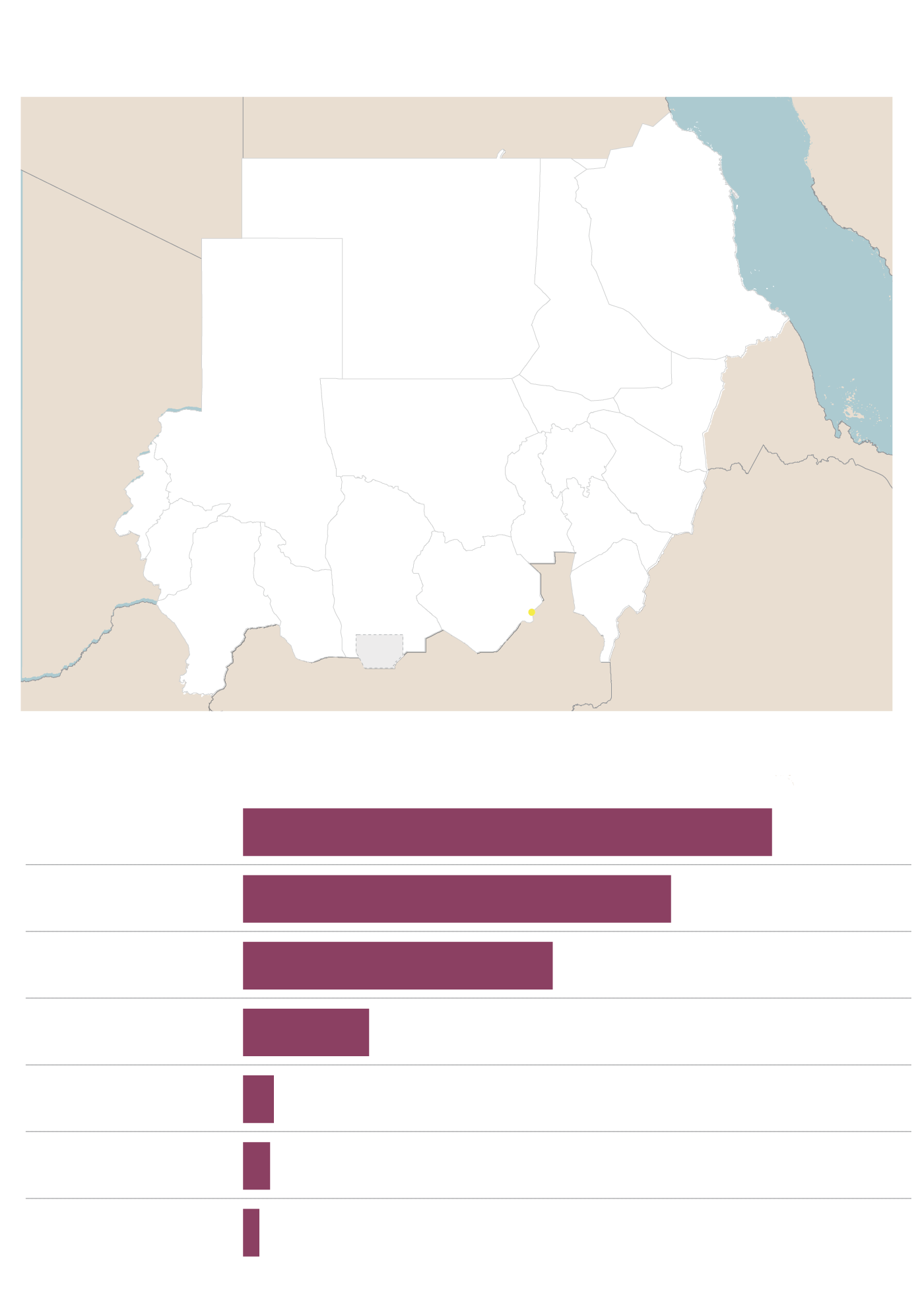
More than 14 million people across Sudan were forced to flee their homes in the first two years after the war began, including about four million who crossed borders to neighbouring countries, putting a huge burden on already fragile states.
In a small piece of good news, about two million displaced people returned to their homes in 2025, mainly because Khartoum became safer after the Sudanese army regained control of the capital.


Civilians are also suffering from hunger, malnutrition and lack of health care. About 25 million people – over half of Sudan’s population – are in need of emergency aid for acute hunger. Hundreds of children have already died of starvation in cities such as El Fasher.
Aid groups are finding it almost impossible to reach the worst-hit areas of the country, largely because of obstacles by the two warring sides. Sudan is one of the world’s most dangerous and difficult places to deliver aid, they say. Dozens of aid workers have been killed and many warehouses have been looted.
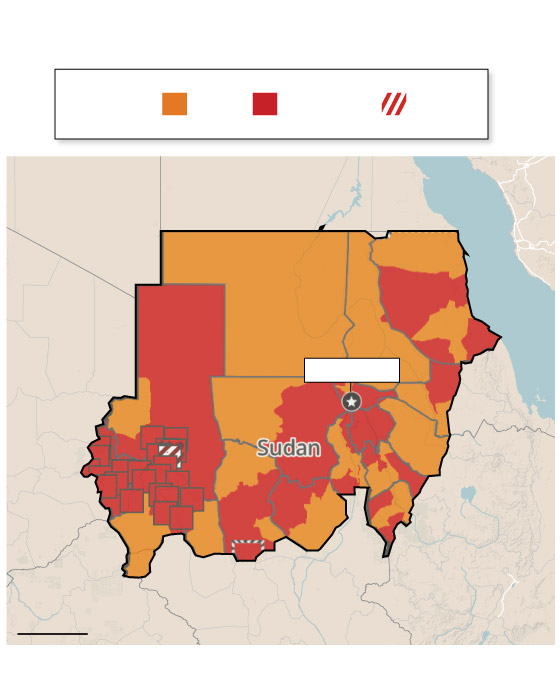
Sudan acute food insecurity
October 2024 – January 2025 outcomes
Famine
Crisis
Emergency
MAP KEY
LIBYA
EGYPT
Red
Sea
CHAD
Khartoum
ERITREA
SUDAN
ETHIOPIA
C.A.R
SOUTH SUDAN
300 KM
THE GLOBE AND MAIL, SOURCE: FEWS.NET
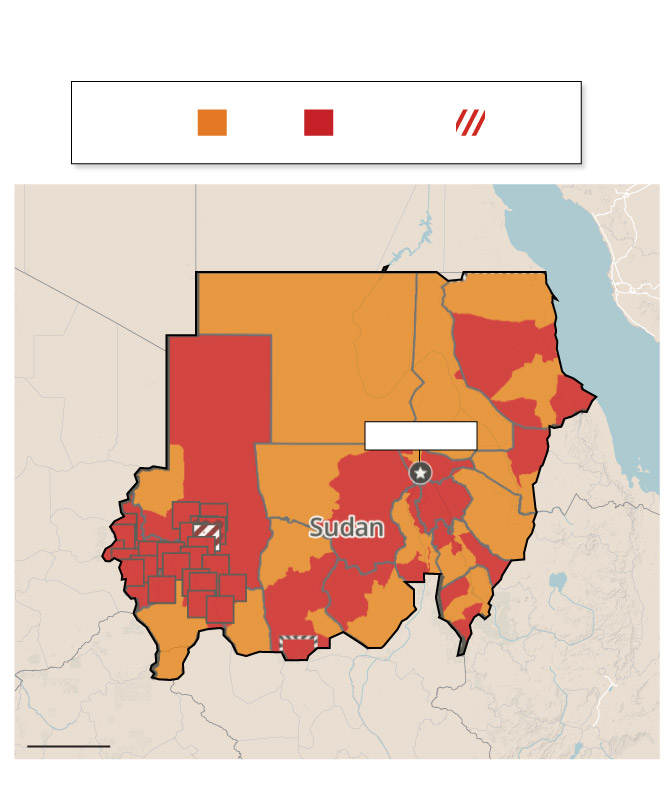
Sudan acute food insecurity
October 2024 – January 2025 outcomes
Famine
Crisis
Emergency
MAP KEY
LIBYA
EGYPT
Red
Sea
CHAD
Khartoum
ERITREA
SUDAN
ETHIOPIA
C.A.R
SOUTH SUDAN
300 KM
THE GLOBE AND MAIL, SOURCE: FEWS.NET
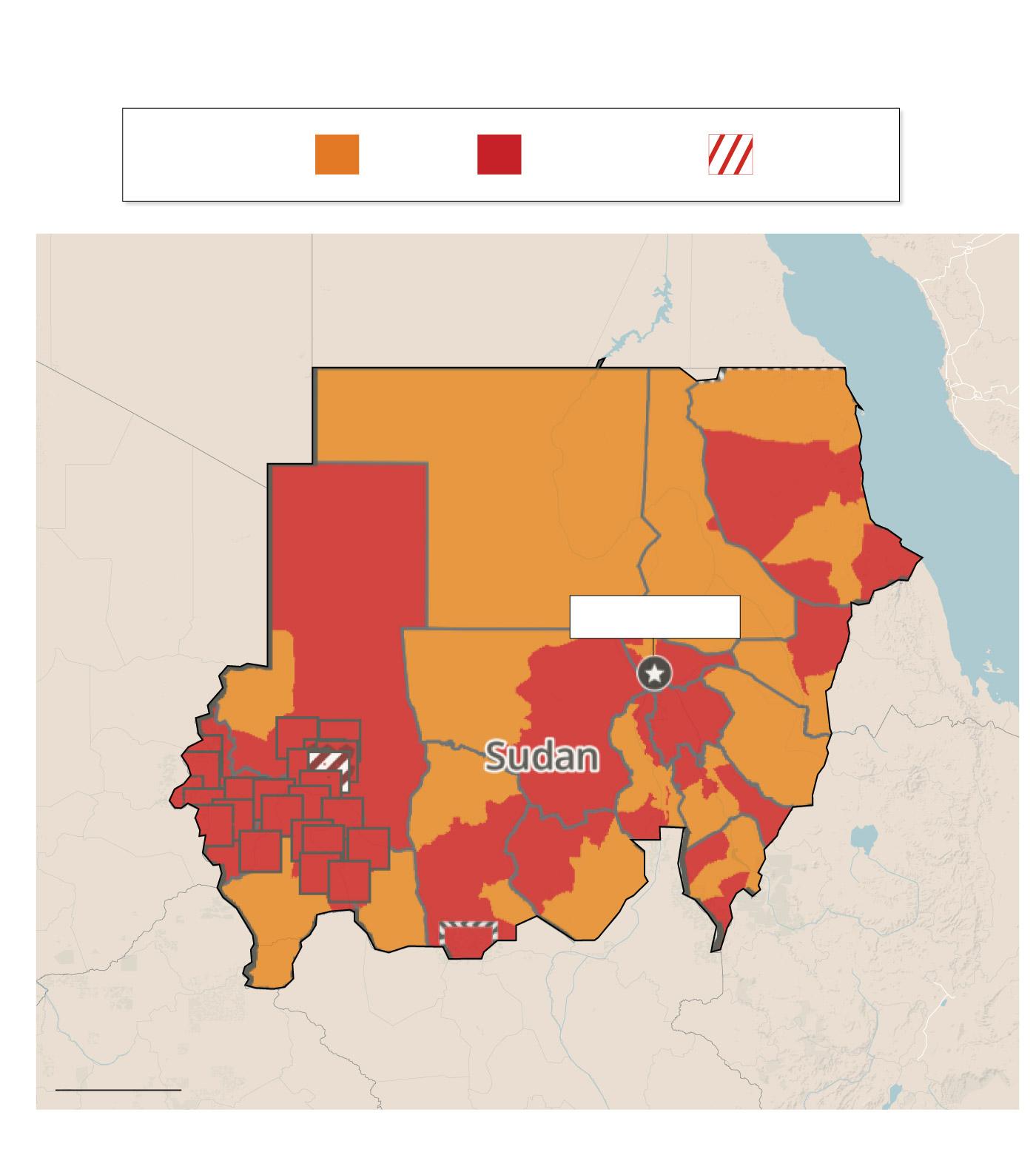
Sudan acute food insecurity
October 2024 – January 2025 outcomes
Famine
Crisis
Emergency
MAP KEY
LIBYA
EGYPT
Red
Sea
CHAD
Khartoum
ERITREA
SUDAN
ETHIOPIA
C.A.R
SOUTH SUDAN
300 KM
THE GLOBE AND MAIL, SOURCE: FEWS.NET
The UN has warned of a catastrophe for an entire generation of children. An estimated 19 million children were forced to leave school when the war erupted, and most have never been able to return.
The crisis is worsened by the collapse of Sudan’s health system. Only 20 to 30 per cent of the country’s hospitals and clinics are still functional. Many were looted or heavily damaged by fighters.
What kinds of ceasefire negotiations have taken place?
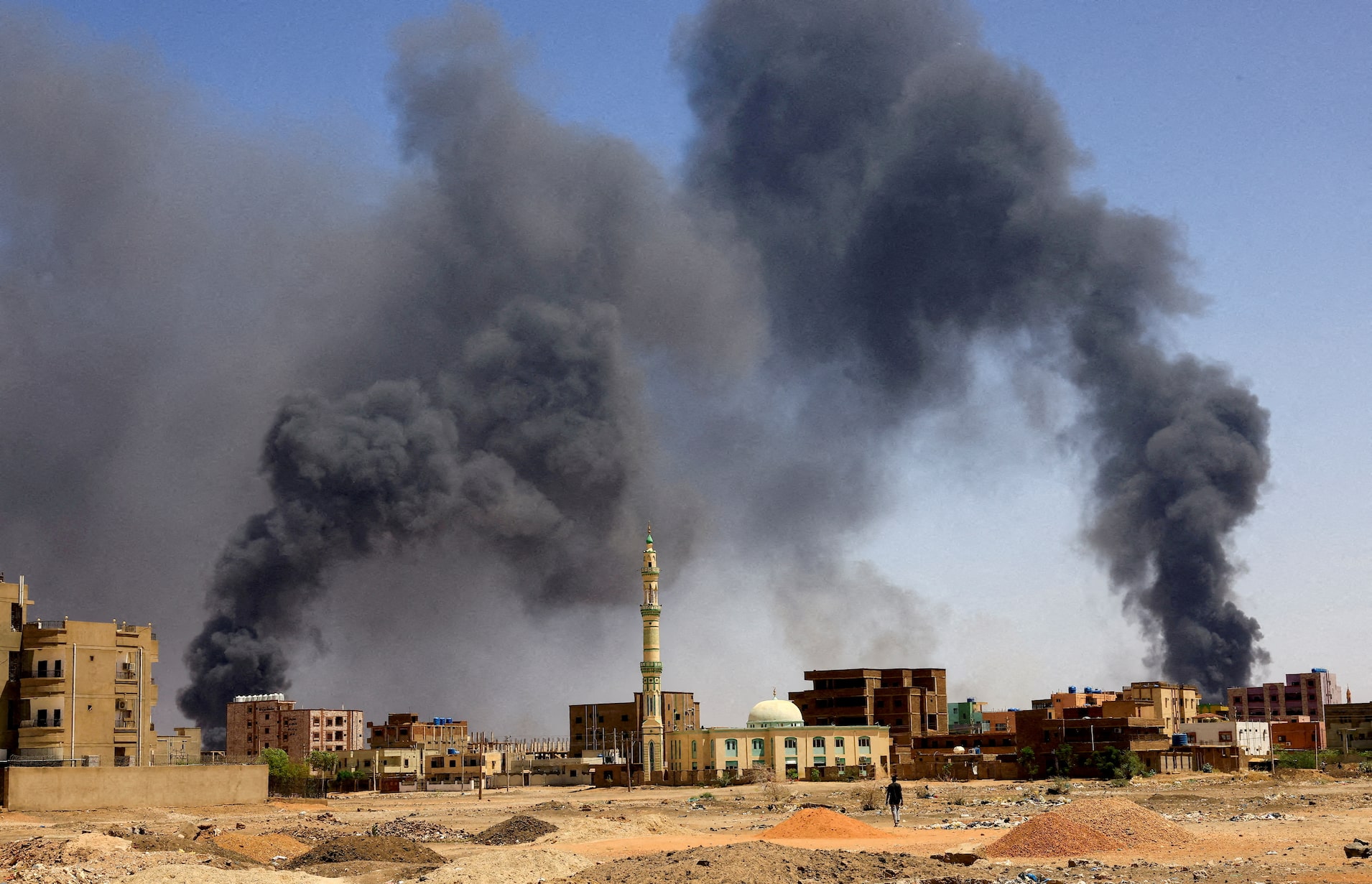
There have been many ceasefire attempts so far in Sudan, but all have been broken. The first ceasefire attempts were led by the United Nations in the early days of the war. Later rounds of negotiations were organized by the United States and Saudi Arabia. None has led to any significant reduction in the fighting.
There was another attempt at peace negotiations in Switzerland in August, 2024. But the Sudanese military did not even bother to accept the invitation to the talks, and there was no progress towards a ceasefire.
In September, 2025, the U.S. administration of President Donald Trump launched a new Sudan peace initiative, involving three of its regional allies: Egypt, Saudi Arabia and the UAE. The plan called for a three-month humanitarian truce in Sudan, to be followed by a permanent ceasefire and a nine-month transition to a civilian-led government. But the proposal was swiftly rejected by Sudan’s official government, while the RSF ignored it and pushed onward with its brutal offensive in Darfur.
What’s at stake for the region?
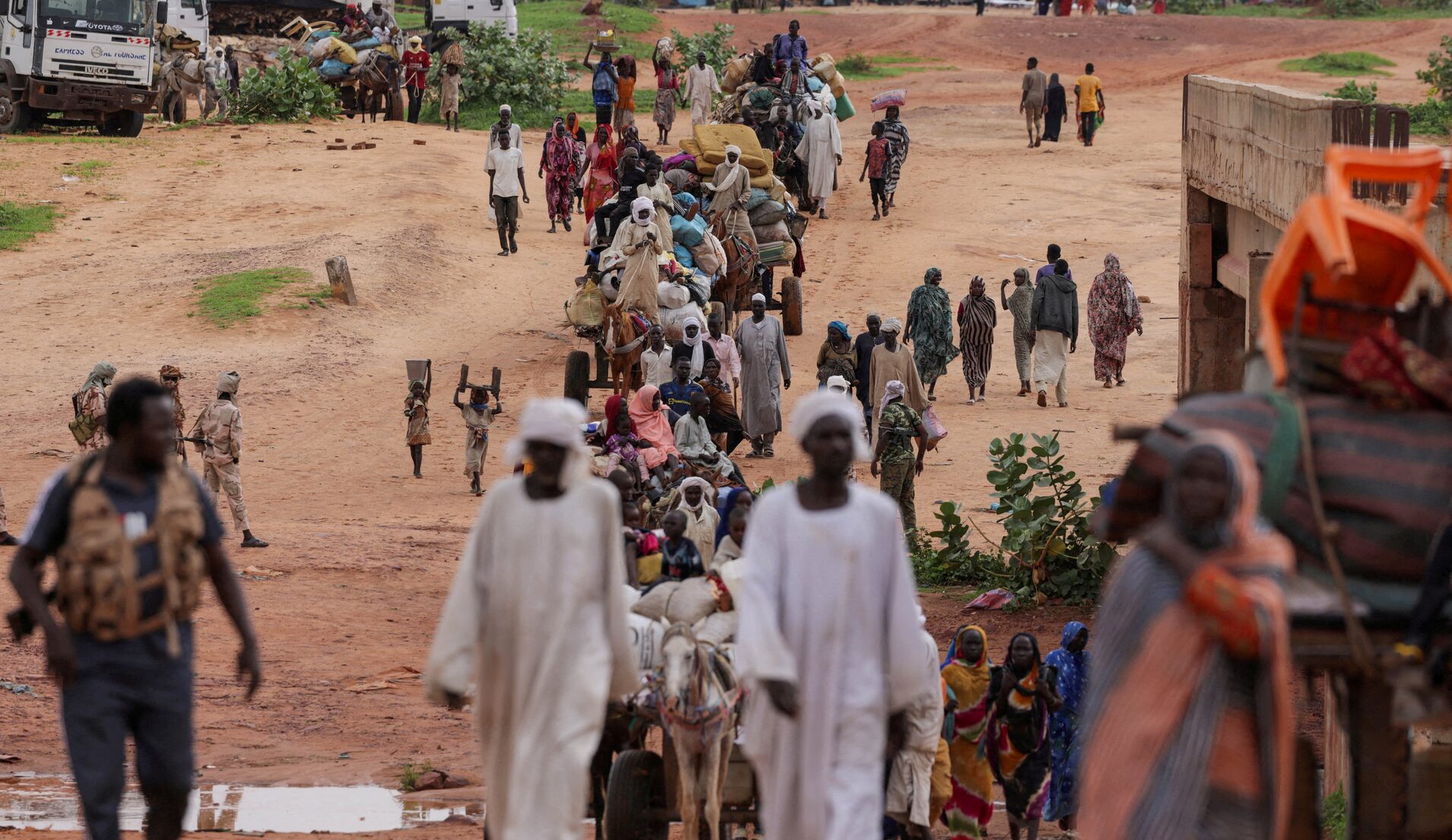
The war in Sudan has huge implications for Africa and the Middle East. The exodus of four million refugees from Sudan has had a major impact on several African countries, including Chad, South Sudan and Egypt. But the war has also been heavily influenced by geopolitical alliances across the region.
There is growing concern that the war is fuelled by deliveries of weapons from foreign suppliers – especially the UAE, which reportedly has close links to the RSF and is also the main recipient of gold exports from Sudan.
Weapons seizure in northern Darfur adds to fears foreign arms are fuelling Sudan war
Mercenaries are another factor. The RSF has recruited soldiers from Colombia and from several African countries, using supply routes through Libya.
The Sudanese military, for its part, is believed to receive military support from Iran, Egypt and Russia.
The fact that the two warring parties have sustained their combat for such a prolonged period “is in no small part thanks to the support they receive from outside of Sudan,” senior UN official Rosemary DiCarlo told the Security Council.
A UN fact-finding mission called for the existing arms embargo (covering only Darfur) to be expanded to the entire country, but the UN Security Council has been unable to agree on this.
What is Canada doing? What about other countries?
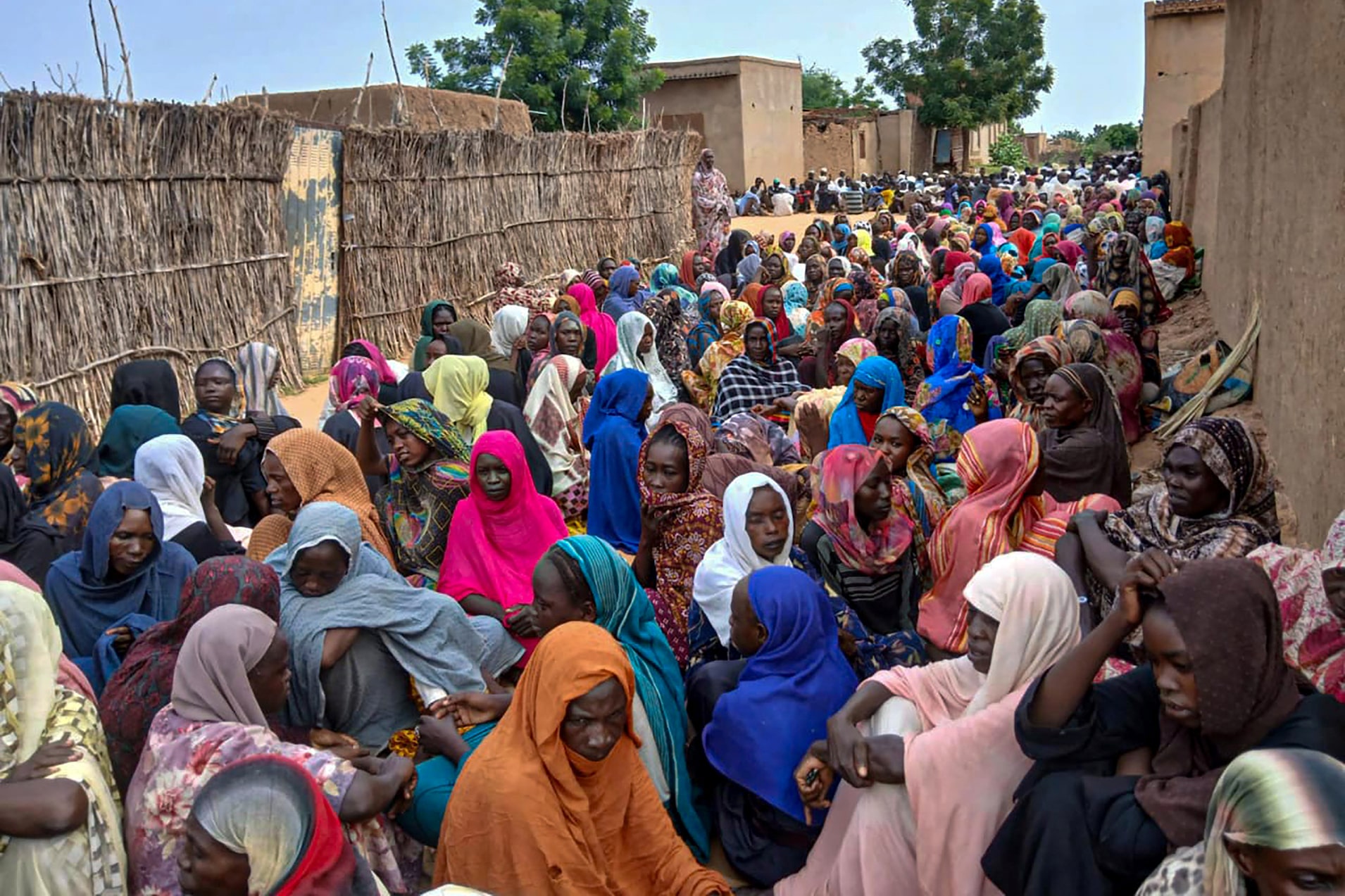
When the war first erupted, Western governments were focused mainly on evacuating their own citizens. For weeks, their main effort was to send airplanes into Sudan to get their citizens out.
Since then, besieged Sudanese citizens have criticized Western governments for failing to take stronger action to seek an end to the war. Aside from a few sanction announcements and failed ceasefire efforts, the West has taken few concrete steps to pressure the two sides.
In the early months of the war, the United States, Britain and the European Union moved quickly to impose sanctions on a handful of individuals and corporations with links to the two warring sides.
Canada was much slower to react. In April, 2024, the then-minister of foreign affairs, Mélanie Joly, finally unveiled Canada’s first sanctions in the Sudan war. Canada imposed sanction penalties – including asset freezes and visa bans – on six Sudanese individuals and companies that it blamed for undermining peace by providing support to the two warring sides.
Armoured vehicles from Canadian-owned company deployed in Sudan’s war zones
Canada and other countries have provided hundreds of millions of dollars to relief agencies operating in Sudan. But the funding has fallen far short of the needs in Sudan and the surrounding region. The UN has repeatedly failed to get anywhere close to its annual multibillion-dollar funding targets for its Sudan aid programs.
Recent aid cuts by the United States and other countries have worsened the situation, leading to severe reductions in many humanitarian programs in Sudan.
Canada has announced a family reunification plan to allow the entry of thousands of Sudanese who have family members in Canada, but the plan has been slow to get under way.
Hundreds of thousands of people under siege in the Sudanese army's last holdout in the western Darfur region are running out of food and coming under constant artillery and drone barrages, while those who flee risk cholera and violent attacks.
Reuters
With reports from Abigale Subdhan and Prapti Bamaniya