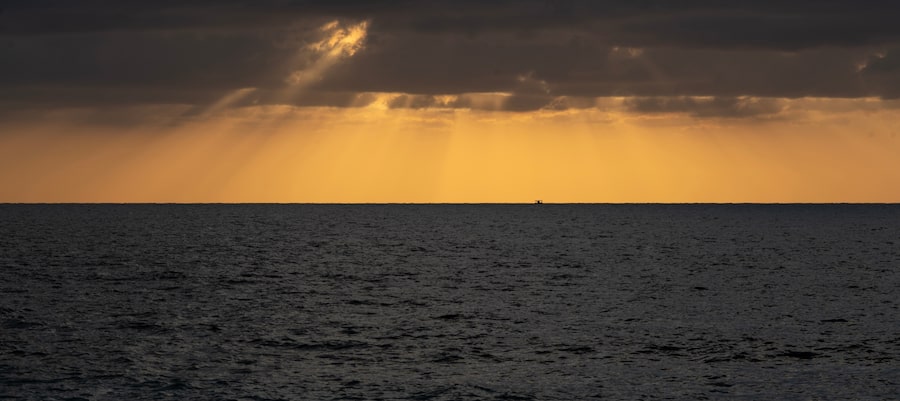

It was supposed to be a girls’ weekend at the beach. It became a nightmare that is whispered as a warning among Syrian women about their vulnerable new status in a country now run by former jihadists.
The four women – a 54-year-old journalist, her two nieces and one of their friends – had just retired to their rented cabin after a day at the idyllic beach at Wadi Qandil, on Syria’s Mediterranean coast, when gunmen burst through the door, shouting accusations that the women had been engaged in drug use and adultery.
Witnesses said some of the attackers were masked and all wore the black uniforms associated with both local police and the General Security Service of President Ahmed al-Sharaa’s new government.
The women – one of whom was covered only by a towel, having just emerged from the shower – were dragged from the cabin and thrown roughly on top of each other in the back of a pickup truck.
Mayssa, the journalist, said the gunmen repeatedly grabbed her 24-year-old niece’s breasts as they shoved the women into the vehicle. “We were assaulted,” she said of the Oct. 3 incident. “When I asked them who they were and what they were doing, one of them slapped me so hard that I saw stars.”


In all, 55 women and men were arrested that night at Wadi Qandil, according to a staff member at one of the three beach clubs that was raided. The Globe and Mail is not using Mayssa’s surname nor identifying the staff member and beach club out of concern they could be targeted for retribution.
The staff member confirmed Mayssa’s account and said his own 70-year-old mother had also been detained, with her wrists zip-tied, during the raid.
Witnesses said the gunmen also demanded to know whether a 17-year-old girl they arrested was a virgin. The girl’s brother was beaten badly when he told the men to leave his sister alone.
“They’re arresting people for going to the beach. Meanwhile, there are veiled women marching through the streets of Damascus shouting that more women should wear hijab, and that march is protected by General Security,” Mayssa said.
A secular Sunni Muslim – she met with The Globe wearing a flowered blouse and yellow slacks, a cigarette constantly burning between her fingers – Mayssa said she and her nieces weren’t conservative enough for those who now rule Syria. “They don’t consider me one of them because I don’t dress the part.”


The brutal dictatorship headed by Bashar al-Assad, which was toppled last Dec. 8 by Mr. al-Sharaa’s Islamist fighters, was responsible for the deaths and disappearances of tens of thousands of Syrians.
But the Assad regime, for all its crimes, was nominally secular, and Syrian women were allowed to dress and act as they wished – so long as they didn’t challenge the political order.
Under Mr. al-Sharaa, many Syrians have more freedom than they ever experienced under five decades of Assad family rule. It’s now possible, for instance, for Syrians to speak critically of the government without fearing immediate repercussions. But some Syrian women feel one form of repression has replaced another.

Ahmed al-Sharaa, visiting a polling station at last month's elections, is the interim president of a country still deciding who will rule it in the post-Assad era.LOUAI BESHARA/AFP via Getty Images
Before swapping his military fatigues for a business suit, Mr. al-Sharaa headed an Islamist militia, Hayat Tahrir al-Sham, that was listed as a “terrorist” organization by Canada, the United States and other Western countries.
HTS was initially an offshoot of al-Qaeda, though Mr. al-Sharaa later renounced those links.
While Mr. al-Sharaa, who installed himself as President after the fall of Mr. al-Assad, has promised to govern for all Syrians, his inner circle is dominated by ultra-conservatives.
Justice Minister Mazhar al-Wais, for instance, has no formal judicial training but is considered an expert in Islamic sharia law.
The country’s first post-Assad elections, held Oct. 5, saw women win just six of 122 contested seats in parliament.
(The elections were not a direct vote. MPs were selected by electoral colleges of 500 local residents. Another 72 MPs are to be appointed by Mr. al-Sharaa, who is expected to try to address the underrepresentation of women, as well as religious minorities.)

Hind Kabawat, the only female cabinet minister in Syria, thinks it’s unfair that so few women were elected this past October.
Social Affairs and Labour Minister Hind Kabawat – the lone woman in Mr. al-Sharaa’s cabinet – said the lack of women in positions of power was “the biggest mistake” the new government had made over its first 11 months in power. She called the Oct. 5 elections “ridiculous” and “a scandal” because of the small number of women who were elected.
“This is not fair for the women of Syria in general. I’m very disappointed that not one woman was elected from Aleppo, from Damascus or from Idlib,” she said in an interview, referring to Syria’s two biggest cities, as well as the northern region that was controlled by Mr. al-Sharaa and HTS for the past decade.
Ms. Kabawat, a dual Syrian-Canadian national, said there were “cultural” reasons why so few women were elected – “everybody wants to have his cousin or somebody he knows” in positions of power – and said the government should introduce a quota system to ensure a minimum number of women and minority MPs.

Muzna Dureid, who keeps photos of family members who were forcibly disappeared during the civil war, says it’s ‘scary’ there are so few women in authority now.
The direction the country has taken on women’s rights is worrisome enough that Muzna Dureid, a prominent Syrian-Canadian women’s rights activist, felt compelled to return to Damascus and join the fight. She arrived with her family in October, ending a 14-year exile.
A longtime opponent of the Assad regime – she fled the country after her uncle was assassinated early in the civil war – Ms. Dureid was nonetheless taken aback by the male-dominated face of Mr. al-Sharaa’s government. “If you look at the meetings of those who are ruling the country, they’re all men,” Ms. Dureid said in an interview in Damascus. “It’s scary, after all the sacrifices that we made to get here.”
A co-founder of the Syrian Women’s Political Movement, Ms. Dureid dismisses the idea that women were better off under the old regime – no one was safe under Mr. al-Assad – but says women’s rights are nonetheless eroding as the country’s all-male rulers focus on what they see as larger issues.
Meanwhile, French colonial-era laws, including one that requires women to seek their husbands’ permission to travel abroad, remain on the books. There’s also a gender bias against women in the workforce, Ms. Dureid said, that often leads to questions about why she uses child care for her young son instead of taking care of him herself.
She said the scarcity of women in leadership roles worldwide was making it easier for Syria’s men to sideline the country’s women. “The global environment, the rollback of women’s rights, is helping Syria to be a more male-dominated country.”
With few political representatives to fight for their rights, some Syrian women say they feel the only way to protect themselves is to change the way they act and dress, even though there are no new laws governing either issue.

This husband and wife had the beach mostly to themselves at Wadi Qandil after the recent raids nearby.
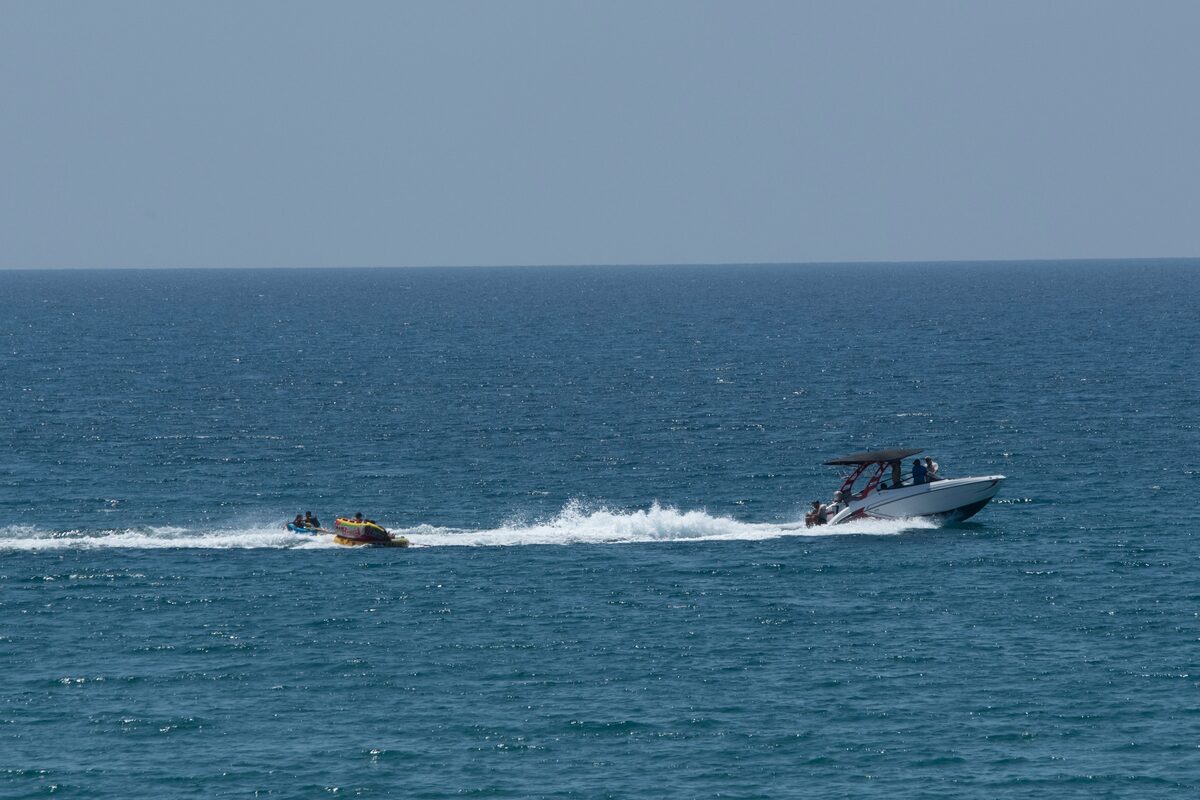
The beach at Wadi Qandil was eerily deserted on a recent afternoon, despite a cloudless sky and an afternoon temperature of 25 degrees. On a day locals said would normally have seen the beach crammed with hundreds of people, only a handful of visitors strolled on the white sand.
Among them were a trio of women. Despite the warm weather, all three were dressed in sweatshirts and jeans that covered everything but their faces and hands.
“Before, we would never come like this to the beach dressed like this. This is our village, but we’re scared that General Security could come at any minute,” said Ruweida Salim, a 42-year-old housewife, as she walked past a row of abandoned beach huts and disused paddleboats.
Ms. Salim said General Security troops returned to Wadi Qandil a few days after the Oct. 3 raid to hold military exercises. “They did this deliberately, to make sure people wouldn’t come back. It’s a message to women, for sure.”
She said many women feel unsafe travelling in the new Syria – especially in the coastal Lattakia region, which is populated largely by the country’s Alawite religious minority. Hundreds of Alawites were killed in a days-long rampage by pro-government gunmen earlier this year, and shootings and kidnappings remain commonplace.
The walk on the beach was a rare outing for Ms. Salim and her 23-year-old daughter, Nasan, who abandoned her legal studies earlier this year after her university brought in new lecturers who began teaching sharia, instead of civil, law.
“It’s all very disappointing,” Nasan said, as the sun began to set over the choppy Mediterranean. “How can we be happy?”

Nasan and Ruweida Salim would not normally dress this way for a warm day at the beach, but they say the message of the recent raids was clear.
The new Syria: More from The Globe and Mail
Damascus rave offers a chance to unwind, but regime ever present
Syrian MPs hold cautious hope for a democratic future
For Syrians, the race to rebuild collides with efforts to unearth the human toll of the civil war
There is hope in Syria, but also strife and skepticism of the new rulers