
It has been four years since the first air-raid siren sounded over Kyiv, four years since everyone in the city dashed into bomb shelters, not knowing how long we’d have to stay in them or what the world would look like when we re-emerged.
Back then, global attention was focused on Vladimir Putin’s full-scale invasion of Ukraine. As I sat on the concrete floor of the parking lot beneath the Radisson Hotel, scrolling social media for snippets of information about what was happening in the city above, the messages of support came pouring in.
“I’m crying looking at the footage and reading your tweets,” read one of hundreds of messages I received.
“Stay safe and get the truth out,” read another.
“I can’t believe I’m seeing this.”
Four years later, it’s all too believable. The sirens still scream, and the Russian attacks have become even deadlier.
What’s changed is that the world has become accustomed to the giant war raging in the heart of Europe. We’ve come to accept that things are never going back to the way they were before.
The old world order was definitively smashed on Feb. 24, 2022, the day Mr. Putin launched his invasion. The new world order, as we can see from Gaza to Venezuela to Greenland, is a place where the “rules-based international system” is long forgotten. Might makes right.
It’s a logic U.S. President Donald Trump has repeatedly pressed Ukrainian President Volodymyr Zelensky to accept: Russia is bigger and stronger, so give them what they want. Ukrainians have thus far refused to submit, even as the Russian army grinds forward and the drones and missiles continue to fly.
With the Olympics on, the Epstein files out – and Mr. Trump threatening trade wars and real ones against even his country’s allies – the spotlight has moved elsewhere. Ukraine’s tragedy has become tragically normal.


Every now and again, Mr. Putin manages to briefly grab our attention back. I was arriving once again in Kyiv on Jan. 8, just as news broke that Russia had launched one of its terrifying Oreshnik hypersonic missiles for only the second time in the war. The nuclear-capable Oreshniks, which can deliver as many as six warheads at a time, have thus far proven impossible for Ukraine’s air defences to intercept.
Serhiy Maistruk, The Globe and Mail’s driver, and I abandoned our vehicle on the highway and ran down ice-covered stairs into the nearest subway station. We spent the next five hours there trying to stay warm – and keep our devices charged – while listening to a mass drone-and-missile attack that left much of the capital without electricity, heat or running water for long periods over the next 10 days (while the Oreshnik struck a target near the western city of Lviv).
The early days of the war remain the scariest. My colleagues and I fled Kyiv for a countryside dacha – only to discover too late that our rented cottage was right beside a Ukrainian air base under almost-continuous Russian attack.
We spent the next 72 hours diving repeatedly to the ground as the sound of artillery and air strikes got closer and closer, until we were finally rescued by trusty Serhiy, driving a Land Rover we had just purchased over the internet.
But my most recent trip was perhaps the grimmest. There were several mornings where I had to “shower” with oversized wet wipes designed for soldiers in the trenches. It was so cold that I wore a jacket and scarf indoors as I typed.
And almost every night the sirens screamed.

While Ukrainians took stock of the damage in the Jan. 8 air strikes, news came that Russia had used another Oreshnik missile, feared for their potential to break through air defences.Mykola Myrnyi/The Associated Press
Making it harder is the sense that the world is no longer as interested in what happens to Ukraine as it once was. I took to social media during the Jan. 8 attack – just as I did on Feb. 24, 2022 – to document the effects of the Russian barrage in real time. This time, only a handful of people reacted. Greenland, Iran, Epstein, ICE, Trump. There was too much else going on.
It’s not just about social media or our collective attention span. Ukrainians – who had sought for two decades to join the NATO military alliance but were never allowed in – feel more alone than ever. And they are.
The delivery of U.S. weapons, which sustained Ukraine’s overmatched military through the first three years of the war, ground to an absolute halt as soon as Mr. Trump took office in January, 2025. There has been no direct U.S. military assistance to Ukraine since then.

Days after the war's fourth anniversary, it will be one year since the angry White House meeting between Volodymyr Zelensky and Donald Trump, a remarkably public spat between the Ukrainian and U.S. leaders.Saul Loeb/AFP via Getty Images
Other allies – notably the European Union and Canada – have tried to step in, providing more than €36-billion worth of military assistance to Ukraine last year, much of it U.S.-made weaponry purchased on behalf of Ukraine via a special NATO program. But figures compiled by the Kiel Institute for the World Economy show that allocated military support for Ukraine was down 13 per cent last year from the 2022 to 2024 average, hitting its lowest level since before the full-scale invasion.
And despite the U.S.-led negotiations in Abu Dhabi and Geneva, there’s little real hope that the fighting is about to come to an end. Instead, the war is getting more violent.
Russia launched more than 54,000 drones at Ukrainian cities in 2025, an amount almost five times higher than the previous year. With Ukraine running low on U.S.-made Patriot air defence missiles, more and more of the Russian projectiles got through to their targets, resulting in a 30-per-cent spike in the number of civilian casualties compared with 2024, with just over 2,500 confirmed deaths (a figure that does not include those killed in Russian-occupied areas or near the front line).


Russian troops, saluting at the funeral of a comrade in Orzhitsy this month, have by many estimates lost hundreds of thousands of men in the war.Anton Vaganov/Reuters
Nonetheless, Ukraine fights on, and a war that was supposed to be over in three days will soon surpass the First World War in length.
The shape of The Globe’s coverage has changed several times since February, 2022. After fleeing Kyiv in the first days of the invasion, we spent the next month based in the western city of Lviv, making opportunistic dashes back toward the capital and other parts of Ukraine whenever we could.
Then, in April, after the sudden Russian retreat from the Kyiv region – which exposed the atrocities committed in Bucha and elsewhere – we set up base in a three-room Airbnb overlooking the capital’s Bessarabsky Market. From there, a rotation of Globe correspondents lived through the air raids and blackouts with the rest of Kyiv.
As the war headed toward its second anniversary, and with the conflict becoming a battle of attrition that was largely confined to the southeastern Donbas region, we shifted back to staying in hotels and driving endless hours in the Land Rover. Ukraine, it’s often forgotten, is a country the size of Germany and Poland together – and it hasn’t had functioning airports since the start of the full-scale invasion.
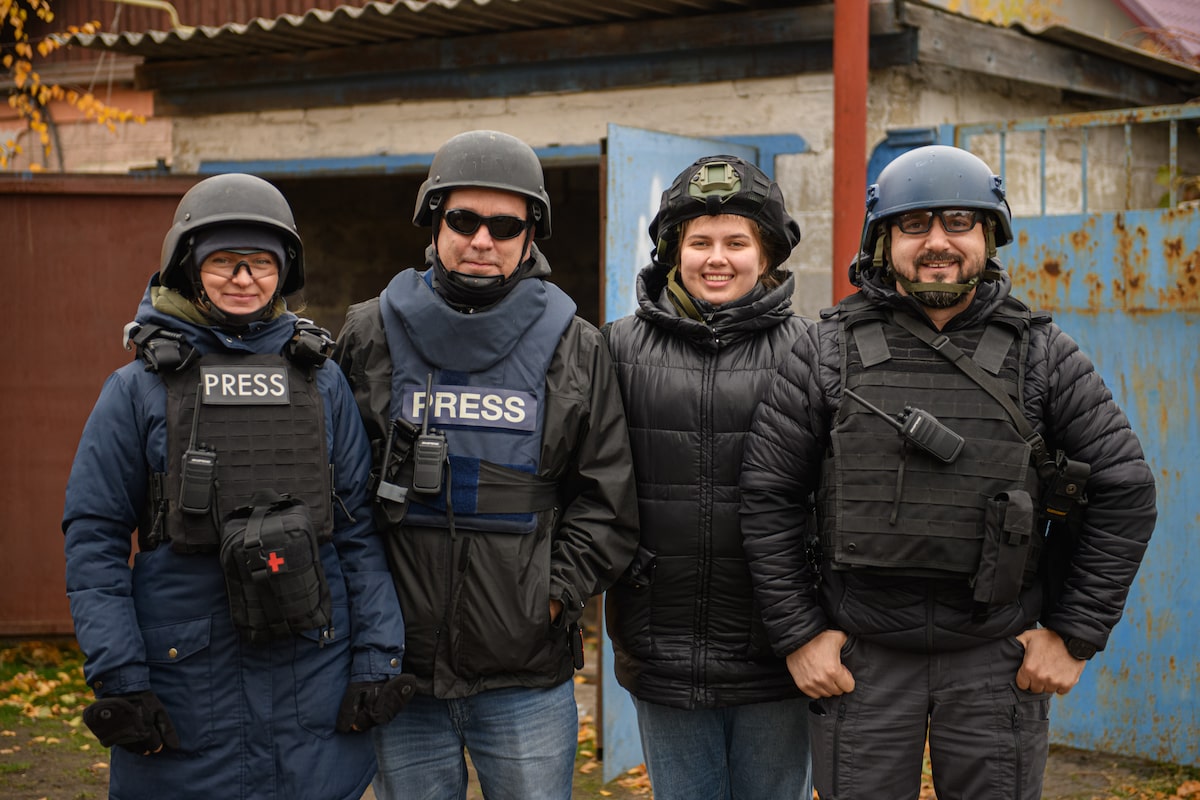
Over the past year, the shape of the war has shifted again with the rise of increasingly sophisticated killer drones. Where once it was reasonably safe to make quick trips to the front line – accepting that you never really knew where an artillery shell was going to land – that type of reporting has become almost foolhardy with the rise of FPV (first-person view) drones that allow a distant operator to hunt down targets as if they were playing a video game.
When we make trips anywhere near the front line now, we do so with a drone detector, a hand-held device that emits an alarm if there are drones above and even allows you to see what the drone operator sees via the drone’s camera. If you see yourself or your vehicle on the screen, that’s very bad.

Peace talks in Geneva, and the pro-Ukrainian protests around them, have so far not produced a lasting solution to the conflict.Pierre Albouy/Reuters
The question the Trump administration has posed to Mr. Zelensky is why keep fighting a war that you’re slowly losing? But ending the conflict is not a matter of whether or when the Ukrainians will concede Donbas to Russia.
The primary driver of the war has always been Mr. Putin’s desire to subjugate all of Ukraine – to make Kyiv once more deferential to Moscow, as it was before a pro-Western revolution in 2014. It’s about re-establishing Russia as an empire, and there’s no suggestion the long-ruling Kremlin boss is ready to accept a settlement that leaves him short of that goal.
Almost every Ukrainian I know is convinced that withdrawing from Donbas would only bring, at best, a short pause in the war before Mr. Putin found a new reason to attack again. True peace, they believe, will only come when the dictator is gone.
The Russian military is taking astonishing losses in pursuit of Mr. Putin’s czarist ambitions. The Washington-based Center for Strategic and International Studies recently estimated that between 275,000 and 325,000 Russian soldiers have been killed over four years of war that have seen them capture “just” 20 per cent of Ukrainian territory. (The same group estimated the number of Ukrainian soldiers killed at between 100,000 and 140,000. Neither side releases official casualty information.)
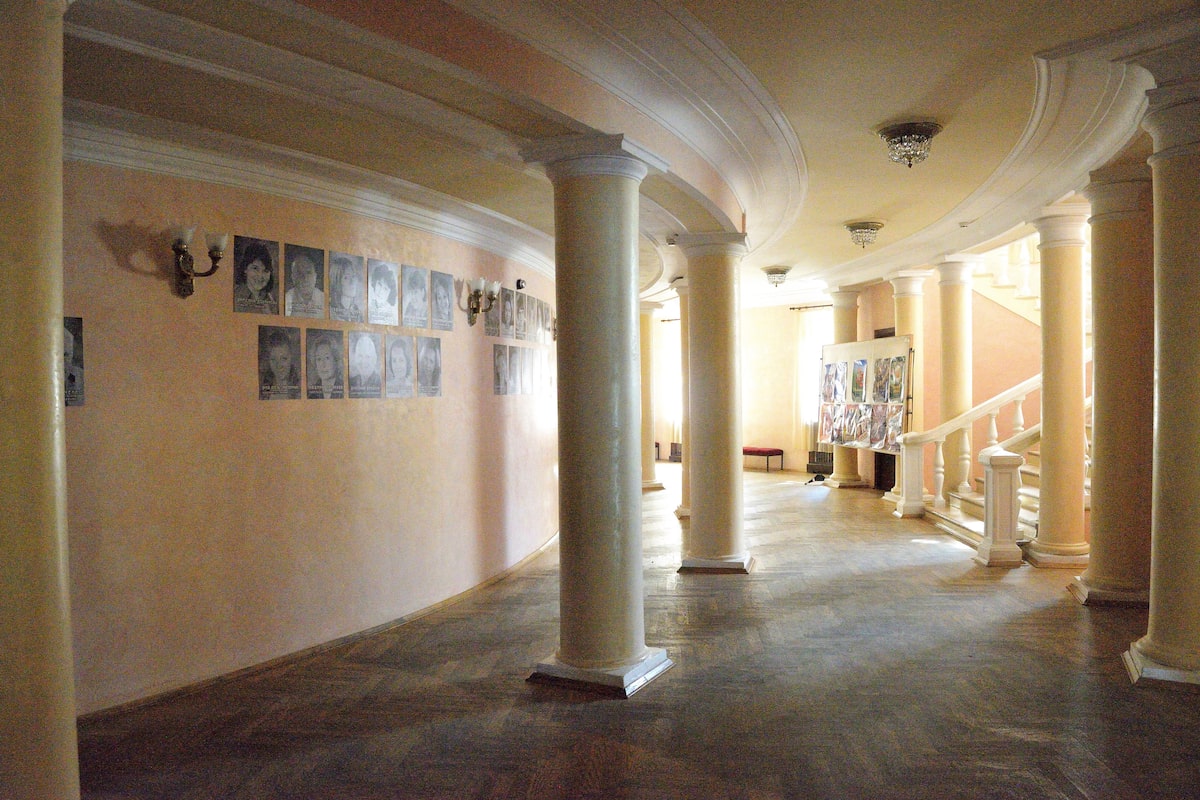
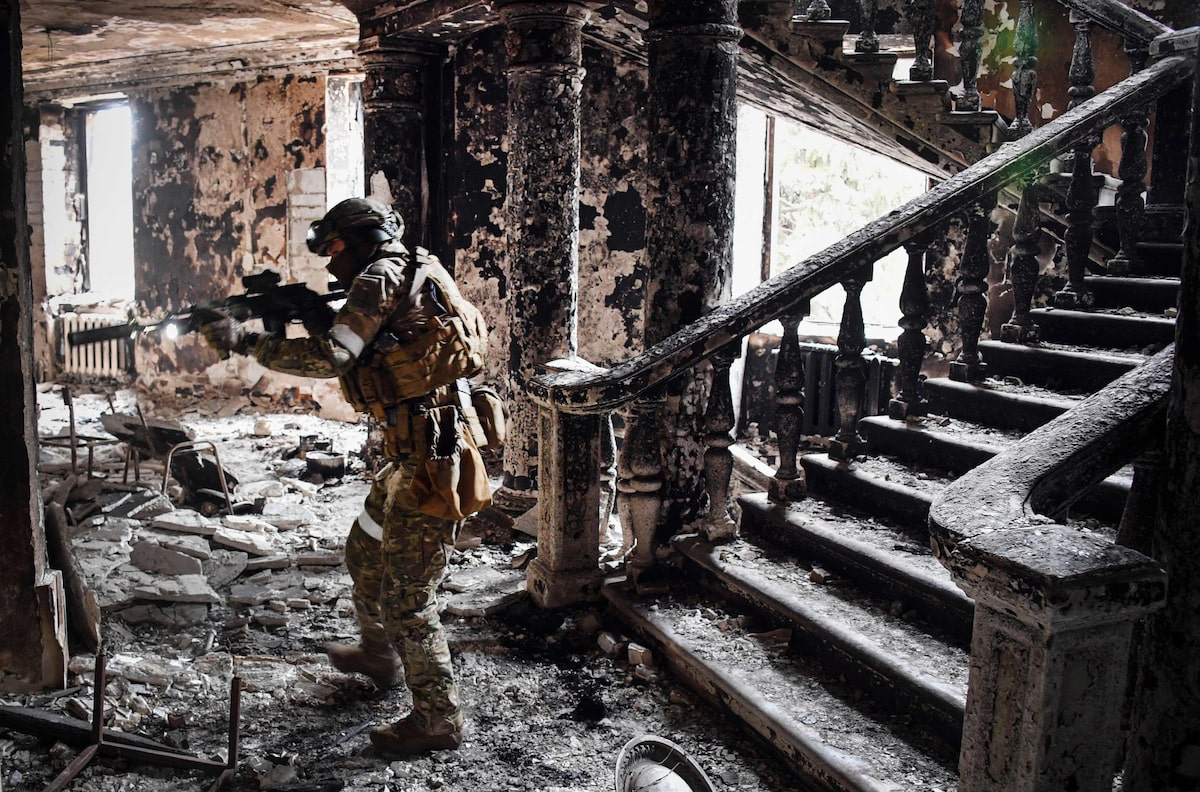


Meanwhile, the Ukraine I used to know – I’ve been reporting from the country since 2002 – is gradually disappearing. It’s a process that began in 2014 with the Revolution of Dignity that saw the Kremlin-backed Viktor Yanukovych ousted from power. Mr. Putin furiously responded to the loss of his man in Kyiv by sending troops to seize the Crimean Peninsula and by instigating a proxy war in Donbas that set the stage for the full-scale invasion eight years later.
Entire cities that I once knew well enough to walk around without the help of a map – Simferopol, Sevastopol, Donetsk, Mariupol – have since disappeared into the darkness of Russian occupation. The fighting most recently smashed through Pokrovsk, a city of 60,000 people that The Globe and other media used as a base to report from during trips to the front line.
When I close my eyes, I can still remember the comfortable booths in Corleone pizzeria – the best and sometimes only restaurant in Pokrovsk – and the face of the stern woman with the bouffant of dyed blonde hair who worked the front desk at the adjacent Druzhba Hotel. Both Corleone and the Druzhba were destroyed in an August, 2023, strike that saw the hotel targeted first with one Iskander missile, then another 40 minutes later after rescue workers had arrived on the scene.
There was no one in Corleone during the nighttime attack, but I’ve long wondered what happened to the receptionist at the Druzhba. At least nine people were killed in the strike, and 82 others were injured, several of them critically. Most of Pokrovsk is now under Russian occupation.

Kramatorsk, 80 kilometres to the northeast, is still under Ukrainian control, but the RIA Lounge – another favourite of mine and my colleagues when we needed to eat near the front line – was destroyed in yet another missile attack a few months before the double-tap strike on Pokrovsk. Among the 13 people killed was Victoria Amelina, a 37-year-old writer who was in Kramatorsk investigating alleged war crimes. Though I didn’t know Victoria well, her name and face often spring to mind when I’m working in Ukraine.
So do those of Volodymyr Kiselov, a special-forces fighter who was killed in action shortly after I interviewed him early in the war, and Nazar Borovitskyi, an officer in the HUR military intelligence service who helped rescue The Globe’s translators from Afghanistan in 2021, only to be killed defending his own country less than a year later.

Intelligence officer Nazar Borovitskyi, commemorated at his home in Pashkivka, died in the first year of the war.Anton Skyba/The Globe and Mail
Too many other friends of mine have left the country – with no timeline to return – creating another type of emptiness.
The new, awful memories are crowding out the ones of what Ukraine was like before the war. It’s hard to remember – in a country that has been under nighttime curfews since Feb. 24, 2022 – that Kyiv was once a city of all-night bars and, longer ago, casino boats docked along the Dnipro River. That the city’s flourishing techno music scene, along with an explosion of street art, had earned it the prewar moniker of “the new Berlin,” as Ukrainian artists helped their country shed its drab post-Soviet reputation.
It wasn’t just Kyiv, either. Kharkiv, in the east, was emerging as a major IT hub, while the graceful southern port of Odesa and cobblestoned Lviv were earning their places alongside Budapest, Prague and Riga as tourist magnets of Eastern Europe.
Even Donetsk, a city long associated with coal mines and criminal syndicates, was starting to shine out from under that history, joining Kyiv, Lviv and Kharkiv in co-hosting the Euro 2012 soccer championships, with a new stadium and airport that were both later destroyed in the fighting.
It’s that other Ukraine, the one that existed before the war, that Mr. Putin is trying to suffocate as he seeks to reclaim what he sees as lost Russian lands.

Crimeans, watching Vladimir Putin's annual news conference in Simferopol last December, have lived under Russian rule since 2014, far longer than the other occupied lands.Alexey Pavlishak/Reuters
Mr. Putin’s military planners believed the war would last only a few days before the Ukrainians capitulated, an assessment shared by Western governments that withdrew their diplomats from Kyiv four years ago, expecting the city would soon fall under Russian occupation. It’s an undeniable victory for Ukraine that the fight continues.
But there’s nothing to celebrate about four years of war.
For anyone who has lived through it, it has been four years of meeting people and wondering if you’ll ever see them again. Four years of checking in on friends to make sure they’re okay after yet another Russian air strike. Four years of hearing the buzz of drones overhead and the thunder of artillery off in the distance.
Four years of sirens. Four years of the new world order.

Yevhen Titov/The Associated Press
War in Ukraine: More from The Globe and Mail
The Decibel podcast
Since the war began, Russia has been spiriting away young Ukrainians to training camps designed to turn them against their homeland. Reporter Mark MacKinnon spoke with The Decibel last year about a project, partly funded by Canada, that tracks the children so they can be brought home one day. Subscribe for more episodes.
From our correspondents
Chilly Kyiv, beset by blackouts, tackles a new kind of cold war
Lured into the Russian army, Africans face heavy casualties in Ukraine
Using frozen Russian assets to fund Ukraine is splitting Europe