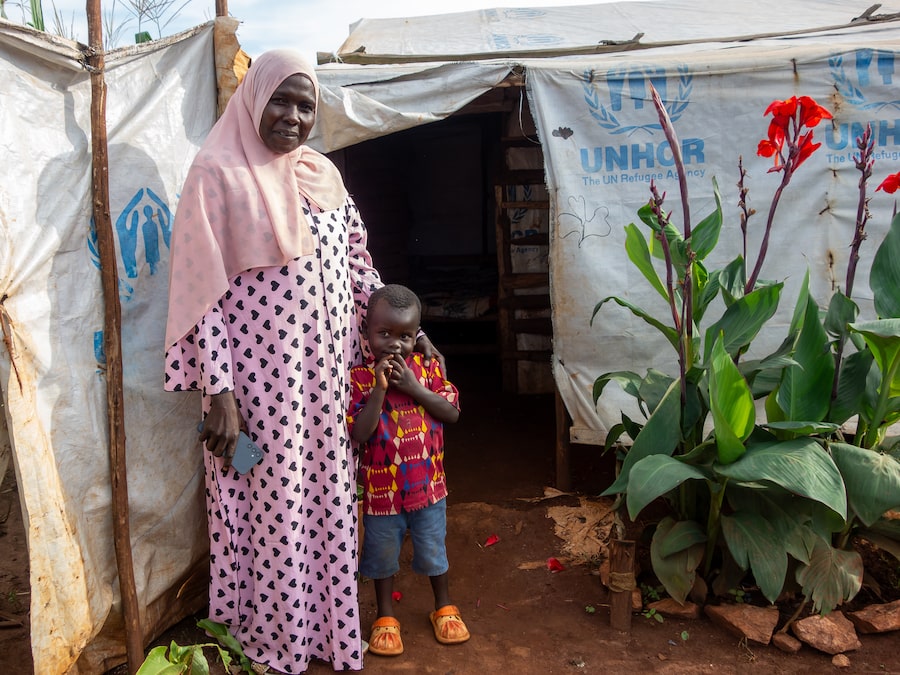
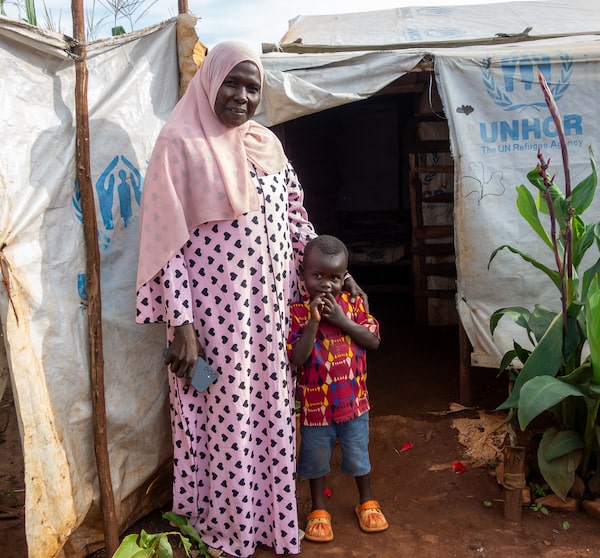
Nuralhuda Abdalalziz, a 46-year-old Sudanese refugee, was sleeping in a tent in the Kiryandongo settlement in western Uganda when she heard screams, the panicked voices carried over dense corn fields.
Her children piled into her bed, a wooden frame that sits just above the ground, protecting them from mud and snakes. Refugees from South Sudan had attacked that night amid tensions between the refugees over humanitarian assistance, local leaders say.
Ms. Abdalalziz, who was elected as a leader in her section of the sprawling settlement that houses about 165,000 refugees from countries such as South Sudan, Sudan, Democratic Republic of Congo and others, said later in an interview that she has participated in meetings to facilitate peace talks so everyone can get along. She said they all came to seek refuge, not to confront any one tribe.
“We tried to explain to our community, let’s respect each other, we’re in a different country now, let us respect the culture of this country, now we’re here,” she said, sitting on a bench under the shade of a tarp.
She gestured toward the aluminum fencing that surrounds her tents, crops and chicken coop, saying she had it built after the attack.


Tension is inevitable among refugees in Uganda, whether its source is ethnic or religious, a spillover from war at home, fights over limited resources, or a combination of factors. With foreign aid decreasing, particularly from cuts by the United States this year, refugees are now more desperate than ever. Many can’t afford food or medicine and consequently tension over assistance that had existed before is worsening.
Uganda is relatively small in size, but has a growing population of approximately 50 million people. It’s bordered by South Sudan, the Democratic Republic of Congo, Rwanda, Tanzania and Kenya. For years it has been lauded for its open-door refugee policy, welcoming nearly two million people from neighbouring countries, giving refugees plots of land in settlements, allowing them to leave to find work and granting access to services.
President Yoweri Museveni, who has been in power for 40 years and is known for jailing his critics, has maintained this policy even as new and old wars erupt outside the country.
“It’s the firm belief of President Museveni to keep the borders open – partly because of his and many other Ugandans’ experience of being a refugee in the seventies and eighties, partly from a PanAfricanist perspective,” said Kristof Titeca, professor at the Institute of Development Policy, University of Antwerp. Geography is also a factor, he added, given that most of the refugees are from DRC and South Sudan, countries that have been beset by wars.
“The first factor has also created a self-perpetuating cycle, in which international actors stepped in to provide resources. And the Museveni government understood the political importance and leverage of doing this.”
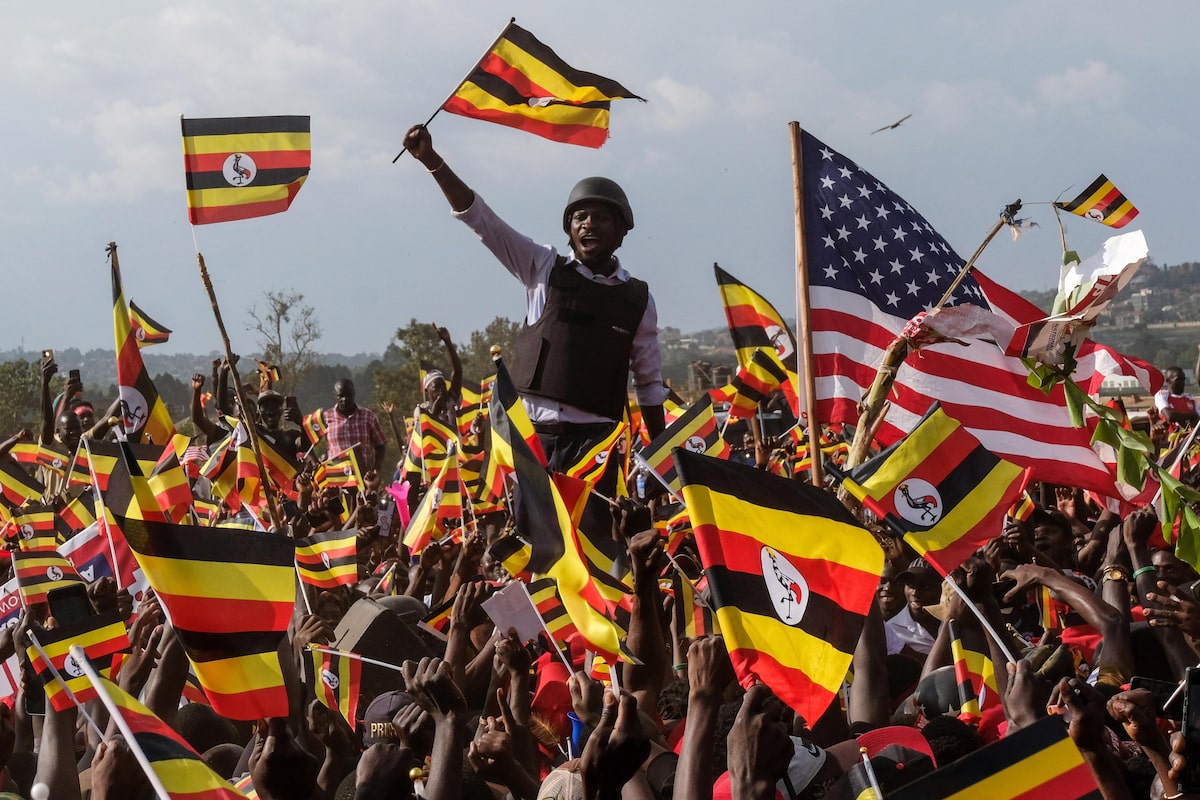
Ugandans go to the polls on Jan. 15 as Yoweri Museveni seeks a seventh term as Ugandan president. Here's what to know about his career and his leading opponents in 2026.
Reuters
Meanwhile, Mr. Museveni has become more authoritarian over the years and his openness to refugees helps deflect criticism.
The success of the policy also relies on international aid organizations, which provide food, cash assistance, health care and education.
Some Ugandans who live near or among refugees told The Globe they have come to rely on aid. But tension persists, particularly in cities such as Kampala, Prof. Titeca said, where anti-immigrant sentiments have increased.
“Over the last 10 years, Uganda has increasingly become authoritarian and the fact that it’s able to host these refugees, and that it’s a major priority for the quote-unquote international community, particularly European countries, has definitely helped Uganda,” Prof. Titeca said.
He said that so long as Mr. Museveni is in power, the refugee policy is unlikely to change.
“What will happen when he leaves power, that’s a question. I don’t think whichever successor comes in place will keep the same policy.”
Ms. Abdalalziz said that before the attack this summer, which left one person dead and dozens wounded, there had been some fights over who could use a playground. While there could have been other factors at play, Ms. Abdalalziz maintained that before the aid cuts this year from U.S. President Donald Trump, everyone lived in peaceful co-existence. “Trump’s cuts,” she said. “People aren’t happy.”
Aid cuts, and tension over such support, have existed in the past, Prof. Titeca said, adding that conflict within communities also existed independently of the cuts, but now has been exacerbated.
Ms. Abdalalziz said she has also felt the decrease in support. She gestured toward the leaky plastic sheets around her makeshift home. For her, the biggest challenge is finding a job. She said there are no opportunities to work.
About a kilometre from the settlement, Norah Nyamusana, a 73-year-old Ugandan woman who is blind, clung tightly to a Bible. Over the years, she has benefited from living close to refugees, she said, adding that she has received medication from aid groups and financial support to build her home.
“I hope my country could continue helping those people so that I also benefit from them,” she said. Life is tough and she needs support. She has young grandchildren and can’t afford to put them in school.
“It could be better,” she said. “People from outside come and benefit from our country and we are also poor. It needs to be balanced.”

Norah Nyamusana, who lives near Kiryandongo, says she’s seen benefits from the refugees' presence.
Outside the settlement, Josephine Achan, 46, pushed a bicycle loaded with jerry cans full of water down a dirt road toward her thatched-roof home as children gathered around her.
Selling water during the rainy season is tough. In the dry season she takes home about US$2 on a good day. She has never benefited from foreign aid but said that funding helped keep people employed.
“It’s just like a visitor coming to your home, you cannot chase that visitor, you have to welcome them,” she said.
Ms. Achan said that whether there is money to support refugees or not, the country should continue to welcome them because they’re fleeing terrible situations. “That is why they run here.”


About 500 kilometres south, past roads teeming with campaign signs for Mr. Museveni that feature his slogan ‘Protecting the Gains,’ dirt roads wind through Nakivale refugee settlement, one of the oldest in Africa and home to more than 275,000 people from several countries. Here, many refugees have more permanent homes, and most new arrivals construct them using blocks of red clay.
Shops line the main roads and vendors sell airtime for cellphones, while salons advertise haircuts and makeovers. On one recent afternoon, a downpour forced them all to pack up their stores as the roads flooded.
Across the settlement, refugees told The Globe that cuts to cash assistance mean they struggle to buy food and medication.
One woman, Josephine Nsengiyumva, 25, was looking after her own children as well as her nephew after his parents were killed in the DRC. The little boy is malnourished, she said, and in general, the kids aren’t doing well. Another woman, who wiped sweat off her face with a scarf, said she and her young daughter were gang raped in the DRC. After she fled, and arrived in a refugee settlement, she was raped again, she said.
Gloire Lapriere, a 26-year-old Congolese refugee, sat on a thin mat on the hard ground outside her home as mosquitoes circled. She held on to a document given to refugees that has information about each family member. For her, it was a page full of children’s faces. One of their fathers was killed, she said. Another died and two left her. She gestures toward a picture of a nine-year-old boy. Ms. Lapriere said he died this summer after an illness. She had taken him for medical care, but the health centre was overwhelmed, with few staff and limited medicine. There was an option for her to pay for additional screening and pills, but she didn’t have the money. With cash assistance cut, her family of five receives about US$4 a person, each month. Before the cuts she was receiving close to US$28 each month. She can’t afford food, medicine, or the cost of her children’s school exams.

Betty Kyenderesire, locking her door in Nakivale, says it’s increasingly common for refugees to steal her belongings since the aid cuts took hold.
Down a wet and muddy path, a heavy door swung open to Betty Kyenderesire’s home.
Ms. Kyenderesire is from Uganda, but lives here, because her husband is an aid worker in the settlement. As the 28-year-old wrangled her young twins, coaxing them to sit, she said she has come to rely on her neighbours.
Refugees helped her give birth here, and refugees look after her young children when she runs to the market. Ms. Kyenderesire said her family had also benefited from food assistance. She used to take home bags of flour that are no longer provided, she said.
But since the U.S. administration reduced foreign assistance, she has noticed more than missing flour. Some refugees have started stealing her things. Most of her belongings wind up at the market, sold for a fraction of what they’re worth, she said, adding she knows it’s because people are desperate and hungry.
Before the aid cuts, Ms. Kyenderesire said, she thought of Uganda’s refugee policy as a good thing, and in fact hoped to one day get a job working with refugees. “The more they come, the more we gain,” she said. But now, some of them treat her and other Ugandans differently. “Sometimes they isolate us, like they say these ones are national, they have money, they have food. But nationals also don’t have it.”
The cuts have also affected her livelihood. Ms. Kyenderesire is a farmer and sells potatoes and fruit in the market. “Now the market is not there. Everyone is crying because of money.”
“Hunger is everywhere,” she said. “Here it is the song of the day.”

Africa in depth: More from The Globe and Mail
The Decibel podcast
As atrocities in Darfur continue, the United Arab Emirates – accused of arming one side of the conflict – is under global pressure to stop. When Mark Carney visited the UAE last fall, Africa bureau chief Geoffrey York spoke with The Decibel about why Canada seems reluctant to press Abu Dhabi on the issue. Subscribe for more episodes.
From our foreign correspondents
Israeli recognition of Somaliland triggers African and Arab anger
U.S. hired illegal foreign workers to aid white ‘refugees,’ South Africa says
As foreign funds dry up, so do South Sudan’s hopes of stopping hunger