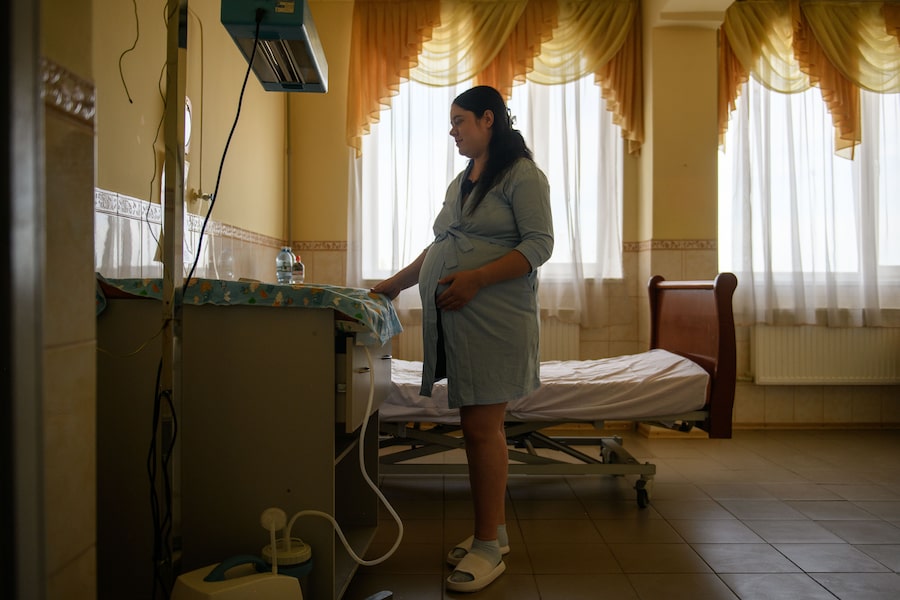

Sixteen hours before Sasha Kotenko was born, his mother was pacing the floor of her hospital room, trying to ignore the air-raid siren that sounded over the central Ukrainian city of Pavlohrad almost as soon as she had gone into labour.
The situation – Russian drones in the sky, and the front line of the war now less than 70 kilometres away from Pavlohrad – was not exactly how Tetyana Kotenko would have planned to have her first child, but she was excited nonetheless.
There was no perfect time to have a baby, the 29-year-old nurse said with a determined smile, exhaling deeply and keeping track of the shrinking time between contractions.
Still, with Russian troops holding territory in Ukraine’s central Dnipropetrovsk oblast – where Pavlohrad is located – for the first time in the war, Ms. Kotenko acknowledged the future was cloudier than ever. “Of course we’re worried. We haven’t talked about leaving yet, but if we need to we will.”
After an exhausting 3½ years of war, though, what she wants most for her growing family is for the conflict to end soon. “I just want him to live his life peacefully, without air-raid alarms, without explosions, without war.”

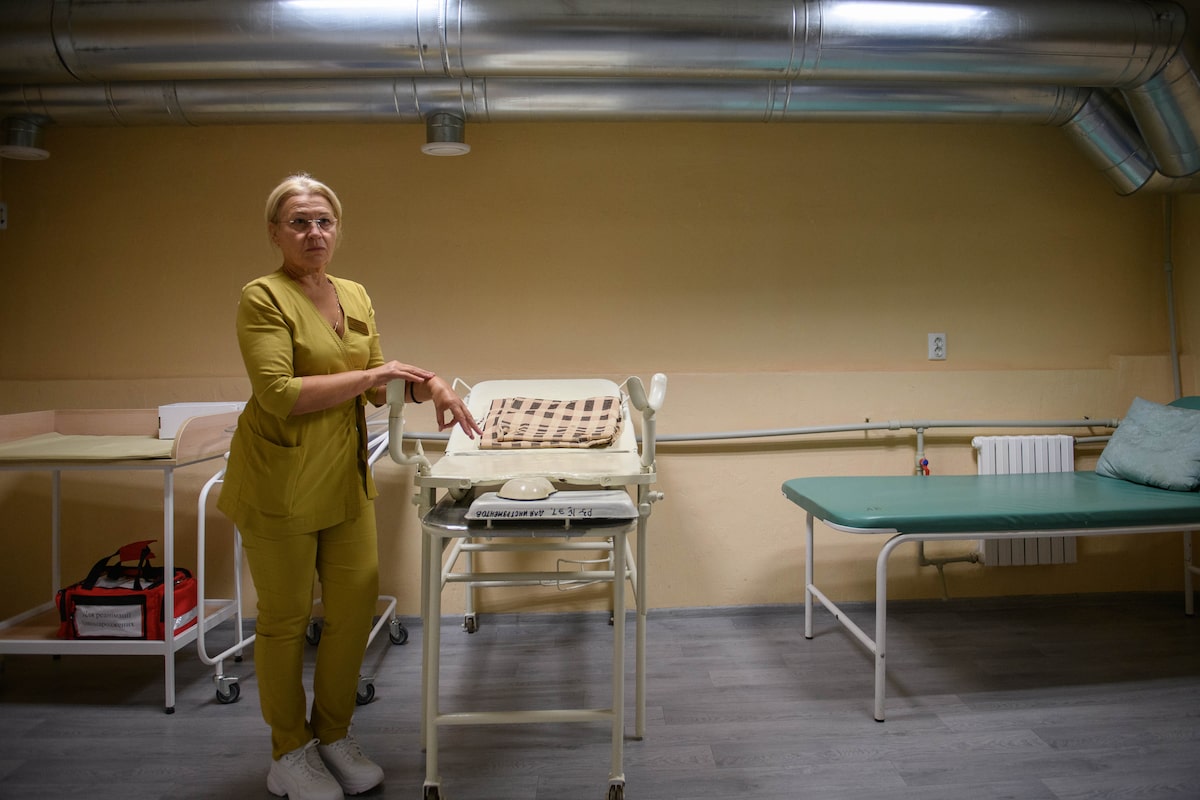
This hospital in Pavlohrad has a maternity ward in the basement in case patients like Tetyana Kotenko, the pregnant woman in the top photo, are ready to deliver when Russian drones are sighted nearby.
It was a busy Tuesday in the maternity ward, despite the threat of an aerial attack.
In the hallway, another parent-to-be, Roman Demyanenko, cut a lonely figure on a bench outside his wife Iryna’s room, waiting for news that their son Lev had been born.
“We’re counting down the minutes. I just want everything to be perfect,” said the 28-year-old, who works in one of the region’s coal mines. Mr. Demyanenko said his family planned to stay in Pavlohrad and carry on working and living just as they had through the war so far, even if the fighting got closer.
Air-raid sirens are such a regular occurrence here that doctors only move people into the basement shelter – which has been equipped for deliveries – when they get the news that a Russian surveillance drone had been spotted over the city that day. “If you see this eye, we know the rockets will follow it,” said Tetyana Oleynik, the hospital’s acting director.
Part of her job, Ms. Oleynik said, is to put on a brave face and show no fear in the face of a storm that’s slowly getting closer to Pavlohrad. “People look to me as the director of the hospital – and if she is calm, then they should be calm.”


Pavlohrad is the biggest city in what locals refer to as the “Western Donbas” – the region just west of the Ukrainian provinces of Donetsk and Luhansk, collectively known as the Donbas, that are now largely under Russian occupation, and which President Vladimir Putin claims to have annexed as Russian territory. The entire region is named after the Donbas coal basin that has powered the local economy since Soviet times.
While the world’s attention has been focused on U.S. President Donald Trump’s suggestion that Ukraine should be ready to make territorial concessions – the entire eastern Donbas – to Russia in exchange for peace, the prospect of any kind of deal to end the fighting remains remote.
Meanwhile, the Russian army’s entry into Dnipropetrovsk oblast opens the possibility that Pavlohrad could soon take its turn on the front line – just as shattered cities like Mariupol, Bakhmut, and now Pokrovsk, in peacetime an hour’s drive east of Pavlohrad, have before it.

Only a few dozen kilometres separate Pavlohrad from the areas under Russian occupation.
The Globe and Mail spent a week in Pavlohrad to see how the city is bracing for its growing role in the war, while dealing at the same time with internal tensions. Some of those divides are a hangover from the Soviet past, which some here still feel nostalgia for. Others are new, revolving around the question of if, or how much, Ukraine should be willing to sacrifice in exchange for peace.
What we found is an overburdened industrial city – with a population similar to that of Brantford, Ont., or Chicoutimi, Que. – that has grown nearly 50 per cent in size with internal refugees from cities and towns closer to the front line.
Before the invasion, Pavlohrad was home to 108,000 people who worked mostly in and around the region’s coalmines. While many of that number fled the city – and in many cases, the country – after the start of the Russian invasion in February, 2022, the city’s population has nonetheless swollen to at least 150,000 with internally displaced people fleeing the fighting further east.

Hospital director Tetyana Oleynik warns of a ‘demographic crisis’ in Pavlohrad, where war discourages women from having children.
The fear that Pavlohrad might be the next front line can be measured in the maternity ward. Despite the population boom, the number of births has fallen from around 1,300 a year since the start of the full-scale invasion to 1,015 last year. “We are having a demographic crisis. Fewer women want to give birth, because they are afraid,” said Ms. Oleynik, the hospital director.
Meanwhile, a black granite wall in another part of the city, memorializing local residents who have died fighting the Russian invasion, has more than 400 names on it, and counting.
Pavlohrad is bracing for worse as the fighting gets closer, with residents downplaying internal divisions even as they whisper about the suspected presence of Russian collaborators in the city. And – in a sharp contrast from Kyiv and the west of Ukraine, where few will speak of a peace that allows Russia to keep the territories it has seized – we found that those who live closest to the front line are more willing to pay that price if it means the war will come to an end.


Matvey Sumarokov didn’t hear the air-raid siren that sounded over the city at 5:55 a.m. on a Wednesday morning, but the 10-year-old heard the loud crack of anti-aircraft fire that followed. He sprinted to his mother Iryna’s bed, as he does whenever he’s jolted awake by the war.
It was still before dawn, so mother and son lay in Ms. Sumarokova’s bed and waited for the attack – which targeted the local railway yard, about five kilometres away – to end. It’s their wartime morning routine.
“There is no shelter nearby, no place to hide, so we just pull up the covers for a while and then I get ready to go to work and he gets ready to go to school,” said Ms. Sumarokova, 43, who moved to Pavlohrad in April, 2022, as Russian troops were closing in on her home city of Kurakhove, in the Donetsk region. “We’ve been asking for the past four years for more shelters to be built.”

A disused storage space in the basement of School No. 7 is now a backup classroom in the event of air raids.
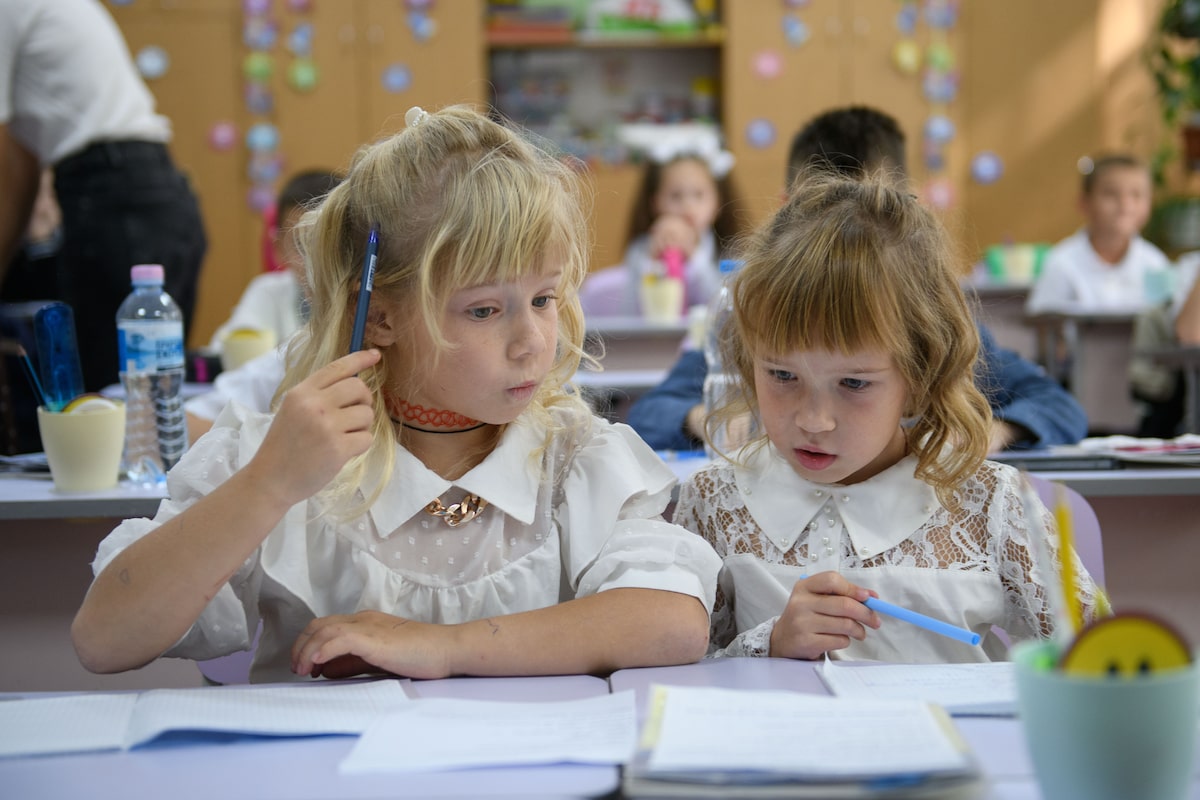
Currently, the main bomb shelters in Pavlohrad are the basements of the local schools. Despite the attack on the railway yard, Wednesday morning began with the new normal at the city’s School No. 7: Lessons started above ground at 8:30 a.m., and continued until the air-raid siren sounded again at 1:46 p.m.
A single Russian drone had been spotted heading toward the city, so teachers and students filed into the basement – a previously disused storage space that has been retrofitted with brightly lit classrooms – and tried to carry on. But kids who had been listening attentively to their teachers before the alarm were now chattering and staring at their mobile phones for updates about what was happening above.
“We keep teaching, but it’s not the same as upstairs. They can’t sit in silence underground,” said Yulia Pyvovarova, the school’s principal.
Ms. Pyvovarova said 93 of the school’s 845 students were internally displaced persons from the war-torn Donbas region. Though they study with the kids from Pavlohrad, there is an invisible divide.
“The other IDPs understand me better,” said Karolina Tancura, a shy 13-year-old who fled Lysychansk, a city 250 kilometres east of Pavlohrad, along with her mother at the start of the invasion. The city fell under Russian occupation a few months later.
Karolina still sends messages to her father and grandmother who live on the other side of the front line, musing about the day when the war will be over and they can see each other again. It’s an experience, Karolina says, that only kids like her, with families scattered on both sides of a slowly moving front line, can understand. Outside of school, she says her friend group consists mostly of other IDPs.

Karolina Tancura still has family in the Russian-held parts of Ukraine, as do many other children in Pavlohrad.
The divisions inside the school are just one of the fault lines that run through society in this part of Ukraine.
School No. 7, like all of Donbas – east and west – was once part of what Mr. Putin likes to call the “Russian World.” Constructed in 1971 amid a Soviet campaign to encourage ethnic Russians to move to eastern Ukraine, Russian was the main language of instruction at School No. 7 until the 1991 collapse of the USSR, and through the first decade of Ukraine’s re-emergence as an independent state.
It was only in 2000 that classes like math and history started being taught in Ukrainian, with Russian taught as a foreign language, even as many in the region spoke – and still speak – it at home.
Since the start of the invasion, all Russian instruction has stopped, with English and French offered in its place. All Russian-language books have been removed from the school library. “It’s really a pity for us, because the children really like the Harry Potter books, and we only had them in Russian,” said Halyna Tkachenko, the school’s long-serving librarian.


For the first two years of the full-scale invasion, it was the city of Pokrovsk – a railway hub that also sits at the intersection of two major roads – that served as the primary logistics base for the Ukrainian army as it fought for as long as it could to defend cities like Bakhmut and Avdiivka. Those battles were ultimately lost, and both cities were all but obliterated by artillery and air strikes during the grinding Russian advance.
Now, Pokrovsk is surrounded on three sides by the Russian army and Pavlohrad, an hour’s drive to the west, has inherited its former role. In addition to the flood of internally displaced persons from Donbas, Pavlohrad has also seen an influx of aid workers – and soldiers.
Mayor Anatoliy Vershyna knows firsthand that the Russians are interested in capturing Pavlohrad. On the first day of the invasion, he received a text message from a Russian phone number inviting him to switch sides. More recently, he received another text message from an unknown Russian number inviting him to meet in Turkey for unspecified “negotiations.” He says he passed both messages on to the country’s SBU security service.
“They want to pull Pavlohrad into this Russian World,” Mr. Vershyna said, referring to Mr. Putin’s dream of seeing all Russian speakers of the former Soviet Union reunited under Moscow’s rule.

Mayor Anatoliy Vershyna, who has gotten texts from Russian phone numbers enticing him to switch sides, knows the Putin regime has designs on his city.
Many in Pavlohrad held pro-Russian worldviews until 2014. The city repeatedly voted for Kremlin-backed presidential candidates such as Viktor Yanukovych. It was Mr. Yanukovych’s decision to walk away from an association agreement with the European Union – in favour of closer ties with Russia – that tipped the country into revolution, which was followed by Mr. Putin’s annexation of Crimea and the start of the proxy war in Donbas.
In 2019, Pavlohrad joined most of Ukraine in supporting the candidacy of political novice Volodymyr Zelensky, who was propelled to the presidency on a platform of making peace with Russia – only to discover that Mr. Putin had no interest in it. Russia’s full-scale invasion of Ukraine began three years later.
Local journalist Tetiana Volkova says there’s still a minority in Pavlohrad that lives in the Russian information sphere, getting their news from Kremlin-controlled sources. That minority believes the Kremlin’s twin narratives that it was forced to go to war in order to protect Ukraine’s Russian speakers from persecution, and to keep Ukraine from being absorbed into a hostile NATO.
Last year, Ms. Volkova founded the Step news website, which now has 20,000 subscribers on various platforms, to push back against such ideas. “A lot of people are victims of Russian propaganda,” she said, sitting outside a café on what was once Karl Marx Street, not far from the square where a statue of Soviet leader Vladimir Lenin once stood. “And some people still perceive themselves as Russians.”

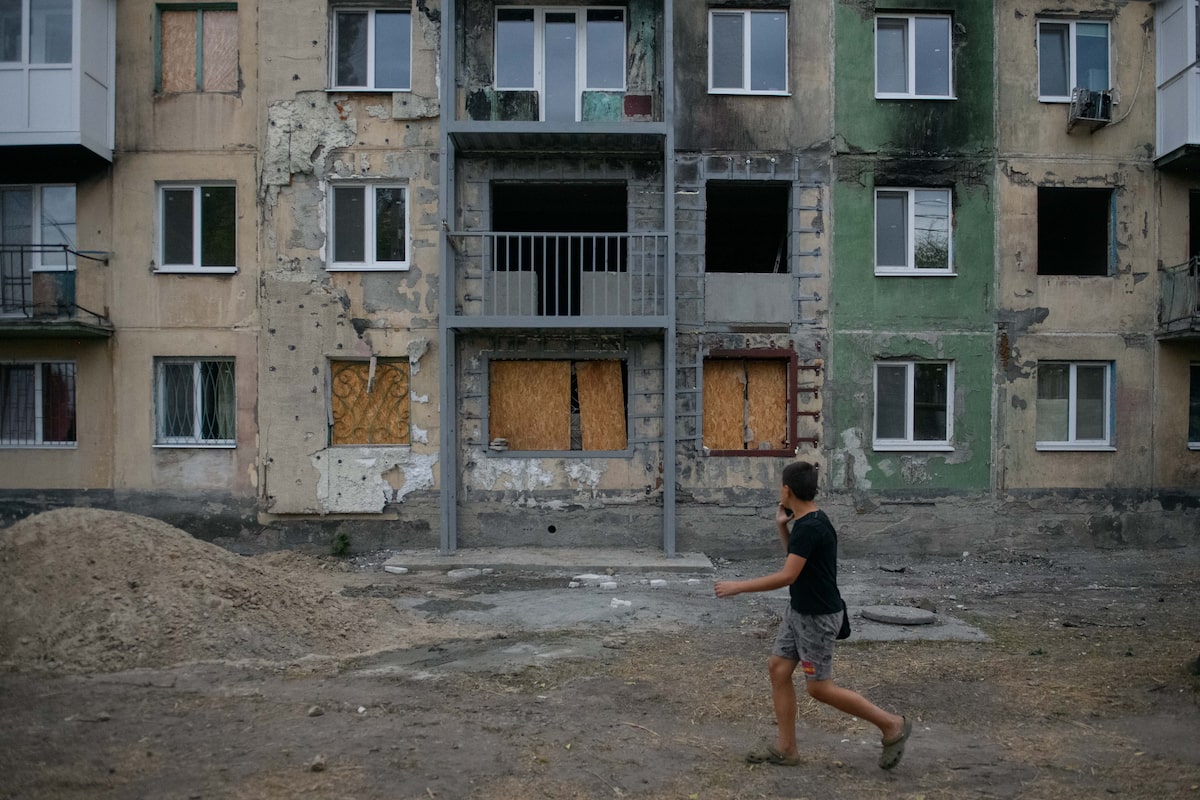
Though not yet on the front line, the war has already changed the way Pavlohrad looks.
An explosion last summer obliterated the city’s House of Culture, which once hosted plays and concerts for crowds of up to 1,000 people. Today, only the front wall of the building still stands. The city’s nearby main public swimming pool complex has also been destroyed after an apparent drone strike collapsed its roof.
The city’s industrial belt – which is closely linked to Ukraine’s defence industry – has also been repeatedly targeted, including during the week The Globe was visiting the city.
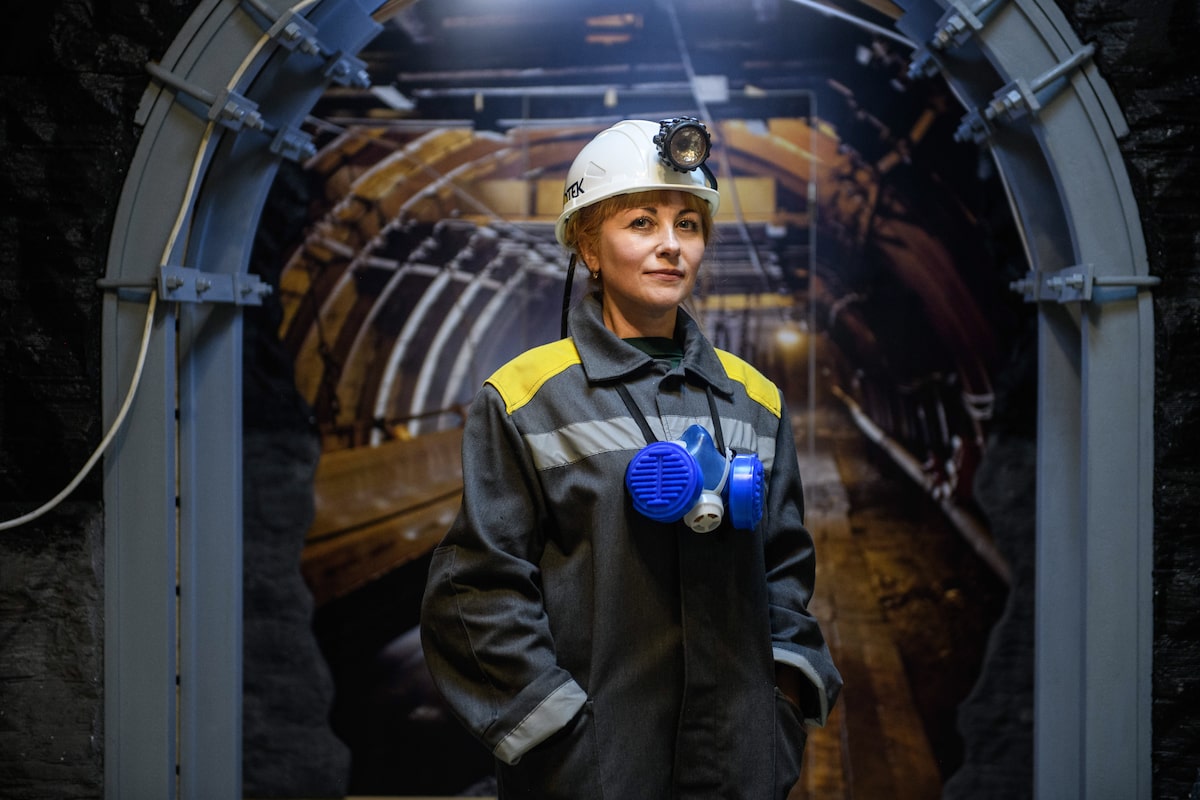
Even gender roles have been upended by the fighting. Though Natalia Ivashko worked jobs related to the region’s coal mines for most of three decades, she was always above ground, doing jobs like analyzing the quality of the coal. The more physically demanding jobs below ground were reserved for men.
Until now. Earlier this year, the 48-year-old Ms. Ivashko began a job as a tunnelling machine operator, making her one of four women, out of a staff of 150, working underground at the Western Donbas coal mine just east of Pavlohrad.
It’s a social change thrust upon this conservative part of Ukraine by the reality that Russia’s population is nearly four times the size of Ukraine’s, forcing the smaller country to dig deeper and deeper into its human resources to find new soldiers.
“We don’t have enough men,” Ms. Ivashko says with a shrug. “If women can do these jobs, why shouldn’t we help our state?”
Despite the groundbreaking nature of her job, Ms. Ivashko says she feels calmer in the mine than she does in the city as the war gets closer to Pavlohrad. “You don’t hear anything underground.”

It sometimes seems like an unfair fight.
When a trio of Russian-made Geran drones – one of the latest developments in modern warfare – were spotted in the sky near Pavlohrad on a recent Thursday night, all the Ukrainian team of anti-aircraft gunners had to counter them with was an ancient Soviet-made machine gun mounted atop an American-donated Humvee.
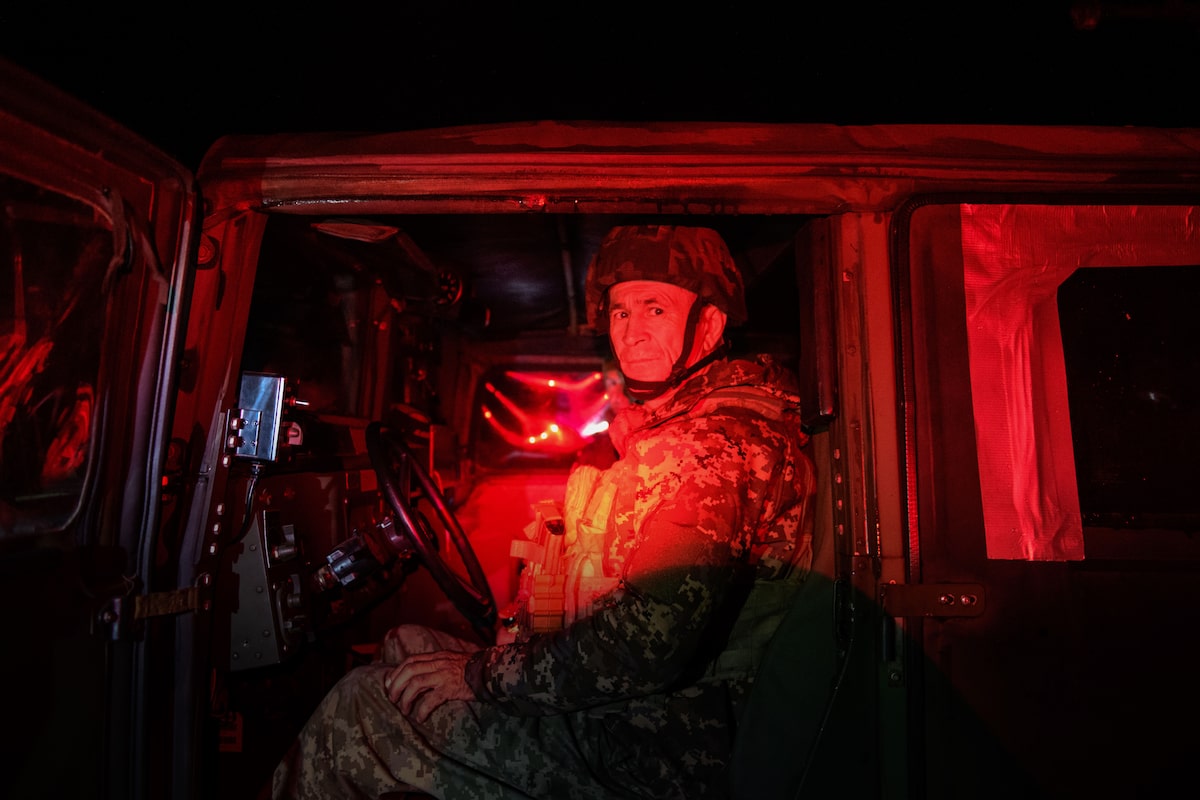
Even before the air-raid siren screamed over Pavlohrad, the Humvee was driving 100 kilometres an hour along the highway east of the city to get into position. The team parked alongside the deserted road and waited, pointing their out-of-date weapon at the starlit sky.
“The machine gun is three years older than I am,” laughed Junior Lieutenant Yuriy Bohachov, his eyes fixed on a tablet computer he was cradling in his arms. On the screen, a little yellow triangle – indicating an enemy target – was twisting its way toward their position on the outskirts of Pavlohrad.
It was still early in the shift – just before 9 p.m. – and the tell-tale buzz of the drone never got closer. Instead, the silence was interrupted only by a pair of thuds that Lt. Bohachov identified as ballistic missiles landing near the village of Mezheva, 30 kilometres to the southeast.
“The Russians are changing their tactics – they’re avoiding the places where we’ve shot them down before,” explains Taras Myshak, press officer for the 59th Assault Brigade, which Lt. Bohachov’s anti-aircraft team is part of.
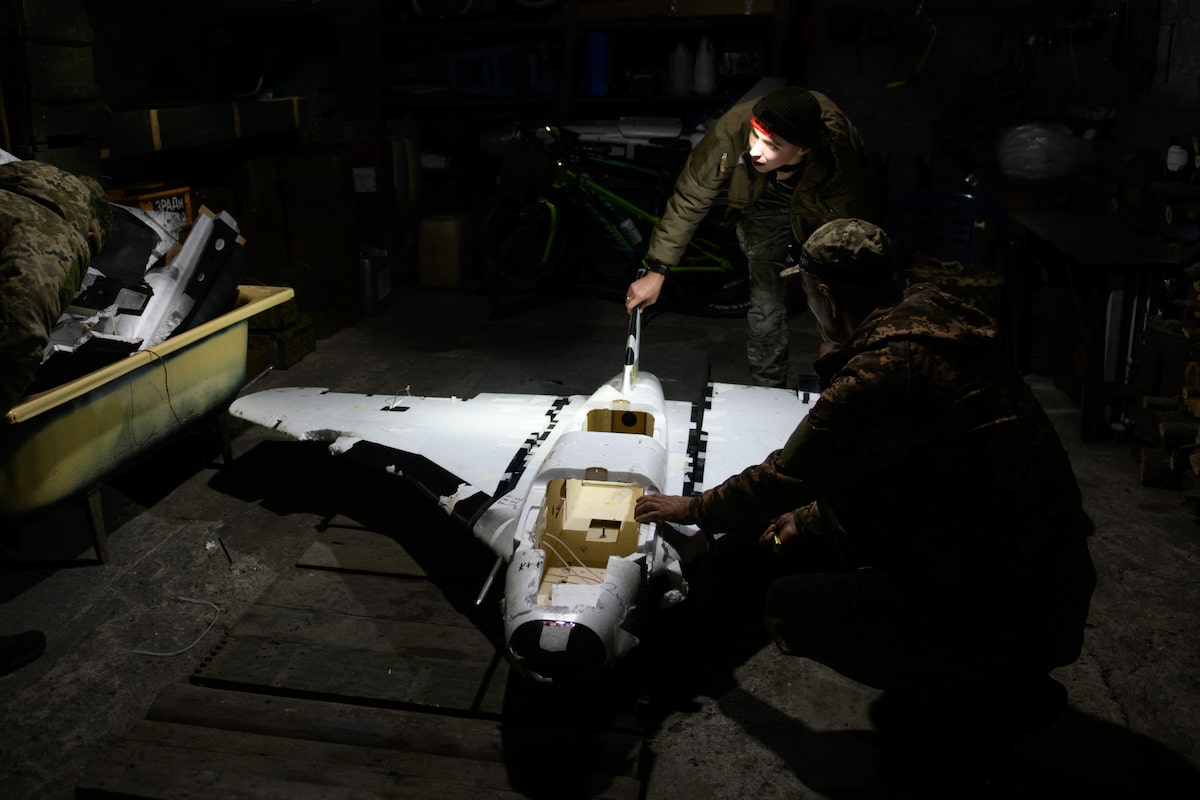

The unit boasts of having shot down 18 drones in September alone. But Lt. Bohachov admitted there was little that the gunners and their Soviet machine guns could do against fast-moving ballistic missiles like the ones that struck Mezheva that evening.
While Kyiv and other large cities have layers of anti-aircraft defences – such as U.S.-made Patriot missiles and the sophisticated NASAMS system that Canada bought and donated to Ukraine last year – Lt. Bohachov says it’s “not realistic” for such weapons to be deployed in smaller cities like Pavlohrad that are closer to the front line.
The next morning, smoke could be seen rising from the city’s industrial area, which is closely connected to the country’s defence industry. (Ukrainian military law forbids reporting on the extent of damage to strategic objects.)
The anti-aircraft guns aren’t Pavlohrad’s only defences. Trenches, along with layers of anti-tank traps, have been dug in a circle around the city, and soldiers – guarding checkpoints covered by anti-drone nets – peer into every vehicle that approaches the city from the east. The trenches aren’t manned yet, but it’s clear that military planners can envision a future where Pavlohrad is besieged in the way that Pokrovsk is now.

The land-for-peace plan that Mr. Trump envisions – or did until he later reversed course and said he believed Ukraine could win all its territory back – poses fundamental questions for Ukrainians: Are they willing to make painful concessions to bring the war to an end? And do they believe Mr. Putin would stop his assault on Ukraine, even if he gained all of the eastern Donbas?
A museum that stands along the highway heading west from Pavlohrad to Dnipro is meant to remind visitors and passersby that the war for Ukraine didn’t begin with the 2022 invasion, but eight years before that, with the annexation of Crimea and the start of the proxy war in Donbas.
The entrance to what’s known locally as “Grandpa’s War Museum” is found beneath a giant black Shahed drone. Up close, the killer robot is menacingly large, perhaps three metres long, towering over visitors.

This black Shahed drone is one of several pieces of Russian weaponry Anatoliy Tokarev has collected.
“Grandpa” is Anatoliy Tokarev, the 68-year-old former commander of a reconnaissance unit, who has been collecting artefacts from Pavlohrad and the nearby battlefields of Donbas since 2019. In addition to the Shahed, the entrance to the museum features a scorched Russian armoured personnel carrier, as well as a collection of missiles – including remnants of the first Kalibr cruise missile to hit Pavlohrad, which he has cut in half and turned into a flowerpot.
Deeper into the display is a black wall decorated with the faces and names of the 400-plus Pavlohrad residents that have died since 2014.
“This one was my godson,” Mr. Tokarev says, pointing at the photo of a smiling young officer who died fighting in Donbas at the age of 24.
“And this one was my neighbour,” he says, pointing at another young military man who died two summers ago at the age of 23. Mr. Tokarev himself spent a month in Russian captivity during the Donbas proxy war, and won’t explain why his left hand is missing its fingertips.
Inside the two-floor museum, visitors must trod over the Russian flag in order to view exhibits such as grenades, landmines and personal effects found on the bodies of Russian soldiers.
A favourite among visiting schoolchildren, Mr. Tokarev said, was a grisly skeleton wearing a Russian army uniform. “In Pavlohrad, there are a lot of children with family members serving on the front line. So, you can guess how they feel.”

The memorial wall at Mr. Tokarev’s museum has room for many more names.
While Mr. Tokarev doesn’t believe peace is possible – and says he’s ready to fight to the death to defend Pavlohrad – many in the city are ready for the conflict to end, even if it means painful sacrifices.
Iryna Sumarokova, the mother who fled Kurakhove, knows it’s taboo to say that Ukraine should be ready to trade land for peace, as Mr. Trump has suggested. But, after more than 3½ years of war, she just wants the fighting to stop so that she and Matvey and her parents can return to what is now Russian-occupied Kurakhove.
“Even if my family is here, my home is in Kurakhove,” she said, complaining that Donbas refugees were treated with suspicion in the rest of Ukraine and given little financial support. “They say, ‘You’re Russian speakers, so you support what Russia is doing.’ But we don’t support it – we are the people who have lost everything.”
A recent poll conducted by the Kyiv International Institute of Sociology found 74 per cent of just over 1,000 respondents were ready to support a peace deal freezing the conflict on its current front lines – so long as the pact included a guarantee from Western countries that they would defend Ukraine against another Russian attack. (Only 17 per cent, however, were willing to give in on other Kremlin demands, which include official recognition of Russia’s territorial claims, the lifting of Western sanctions against Moscow and restrictions on the size of the Ukrainian military.)
The readiness to make compromises gets higher closer to the front. “In 2022 and 2023, a lot of people were saying only we want to see the victory of Ukraine and liberation of all the territories of Ukraine,” said Mr. Vershyna, Pavlohrad’s mayor. “But now the majority of people would just like to stop the war.”
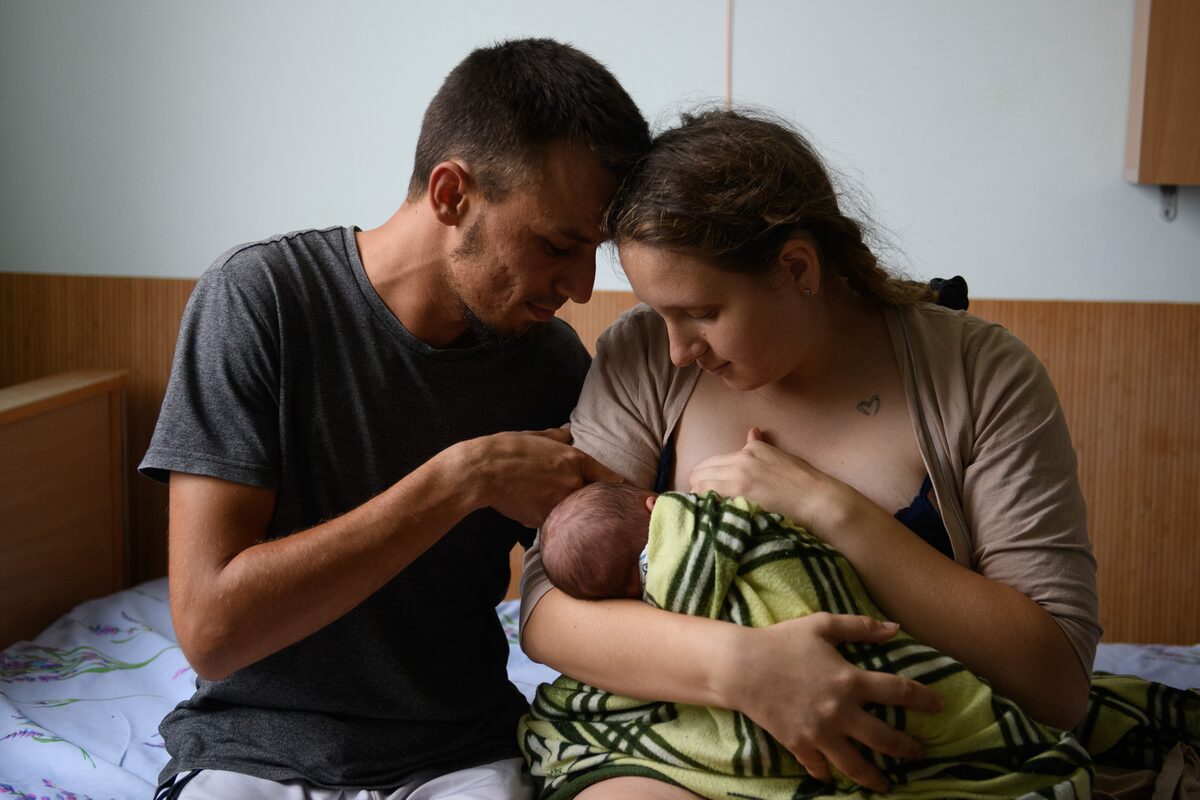
Sasha Kotenko was born at 3 a.m. on a Wednesday morning, Sept. 17. It was a Caesarian section, with the little boy weighing in at just over three kilograms when doctors handed him to his mother, Tetyana. A few hours earlier, little Lev Demyanenko was also born safely, to the relief of parents, Roman and Iryna.
The night was a quiet one by Pavlohrad’s recent standards, meaning the deliveries could be carried out in the hospital’s maternity ward, rather than the underground shelter. But in the first 24 hours of their lives, Sasha and Lev heard more air-raid sirens and explosions than most of the world will ever experience.
“It was scary,” said new mom Iryna, cradling her boy Lev in her arms. “But we can’t put life on pause.”
Sitting up in bed two doors down, cuddling her own son, Tetyana Kotenko said the only blessing was that little Sasha wouldn’t remember any of it.
“I really hope that by the time he’s old enough to remember, this war will already be over – and there will be no more explosions or alarms."
With reporting by Kateryna Hatsenko

‘I just want him to live his life peacefully, without air-raid alarms, without explosions, without war,’ Tetyana Kotenko says of baby Sasha.
War in Ukraine: More from The Globe and Mail
The Decibel podcast
Don’t provoke the soldiers. “If he shouts – do not argue, hide and wait.” These are some of the things captured Ukrainian children are told to do in pamphlets from Russian detention centres. Reporter Janice Dickson spoke with The Decibel about the documents and Russia’s strategy for indoctrinating youth. Subscribe for more episodes.
From our correspondents
Russian soldiers, now serving in Ukraine, are ready to fight until Putin’s downfall
Ukrainian journalist shares story of survival in Russian captivity
Trump’s about-face on Ukraine baffles leaders on both sides of conflict