
Tourists visit the Taj Mahal on a cold smoggy morning in Agra on Nov. 18, 2024.PAWAN SHARMA/AFP/Getty Images
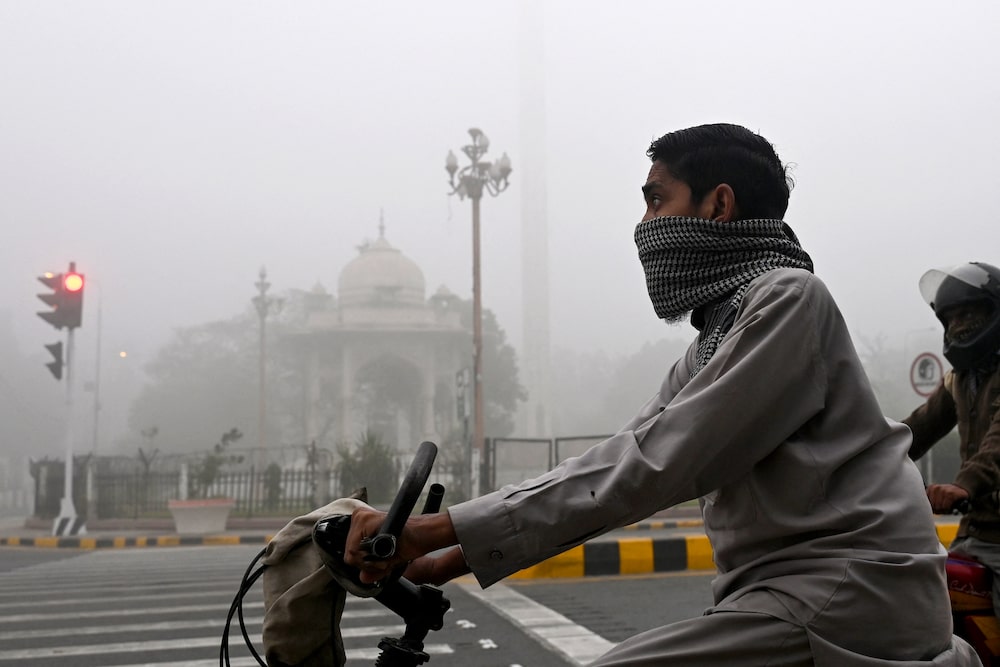
As air pollution soared to unprecedented levels in North India this week, Delhi and neighbouring cities lay shrouded in a dense, smoky haze, bringing with it near-zero visibility. Flights were grounded, and millions sought refuge indoors.
With the Air Quality Index touching 500, a level that is considered hazardous even to people without health conditions, Delhi’s local government termed the smog a “national medical emergency.”
On Monday, the crisis in the city – which contains India’s capital, New Delhi – drove the country’s Supreme Court to order emergency measures. The court’s decision noted the failure of a central government body, the Commission for Air Quality Management, to prevent deterioration of air quality, despite forecasts of rising pollution levels.
The court directed authorities in the region to enforce the highest level of restrictions, including closing schools, halting construction, and limiting heavy vehicle movement and non-essential industrial operations.
Doctors reported a sharp rise in hospital visits and admissions for breathing disorders in November. Toxic air also travelled across the border, affecting cities in Pakistan, including Lahore, and sparking calls for “climate diplomacy” and cross-border co-operation.
But the air pollution crisis, while especially severe this year, has become an annual occurrence in Delhi, where the cool winter air traps emissions from a variety of sources, including farm fires ignited to clear stubble left over from the rice harvest.
Solutions to this perennial onslaught of smog are caught in a political deadlock, with Delhi’s local government and India’s central government, led by opposing parties, the AAP and the BJP, holding each other responsible. Delhi Environment Minister Gopal Rai, for example, called on Prime Minister Narendra Modi this week to approve a proposal to lower the toxicity by seeding clouds, a process that uses dry ice or other materials to encourage rain.
Meanwhile, environmental groups, medical professionals, civil organizations and air pollution experts across the country are questioning why, despite repeated promises from various governments and significant investments in anti-pollution measures, authorities have been unable to stem the problem.


It wasn’t always this way. Winters in Delhi used to bring a pleasant fog, said Mohan George, a clean air and sustainability expert at the Centre for Science and Environment, a New Delhi-based non-profit.
“Things started to change after 2007, when Punjab revised its agricultural policies, delaying the sowing and harvesting of crops,” he said.
“Now, harvesting occurs in October and November, during unfavourable meteorological conditions. Mechanical harvesting has also increased the volume of biomass, leading to rampant stubble burning.”

Farmers burn crop residue after harvest near Bundelkhand expressway about 330 kilometres from New Delhi, India, Nov. 17, 2024.Manish Swarup/The Associated Press
Smoke from the states of Punjab and Haryana can easily be blown south, where it settles in Delhi’s skies. But stubble burning is only part of the problem.
“Data show farm fires have reduced this year. Episodic pollutants like Diwali firecrackers and stubble burning aren’t the main contributing factors,” said Sunil Dahiya, founder and lead analyst of Envirocatalysts, an organization that advocates for clean air.
“Delhi has a very high baseload from perennial sources of pollution such as transport, thermal power plants and industries, construction and road dust, waste burning and residential cooking. These emissions have not been curbed at source at the scale required.”
According to the Centre for Research on Energy and Clean Air, an independent research organization, emissions from coal plants are a major year-round contributor. Of the 12 thermal power plants in Delhi, only two have installed flue gas desulfurization units, or FGDs, to reduce sulphur dioxide emissions, despite a 2017 government deadline. Nationally, only 8 per cent of coal plants have adopted this technology, with deadlines now extended to 2027.
“FGDs could reduce emissions by 67 per cent per plant,” said Manoj Kumar, a researcher at CREA.
India could draw lessons from countries that have tackled air pollution, such as China, which mandated FGDs in its industrial plants in 2008. By 2022, China had reduced its sulphur dioxide emissions to a quarter of India’s levels, despite both countries emitting similar amounts in 2010. But the lack of transparency in India, such as data on industrial emissions, has hampered progress, making it difficult to hold polluters accountable, Mr. Kumar added.
Transboundary sources of pollutants also play a significant role. In October, 60 to 70 per cent of Delhi’s PM2.5 pollution – breathable particles less than 2.5 micrometres in diameter – originated from neighbouring states, while stubble burning contributed less than 10 per cent, a CREA study shows. But the impact of a slew of pollution control initiatives has been limited.

A man jogs as he participates in a marathon while the sky is enveloped with smog in New Delhi, Nov. 14, 2024.Anushree Fadnavis/Reuters

Men carry caddies across a golf course englufed in thick smog, early morning in Chandigarh, India, Nov. 17, 2024.-/AFP/Getty Images
“There is a lack of implementation, low political will and mismanagement,” Mr. George said. Some measures – such as improved vehicular fuel standards and reduced coal plant operations during pollution season – have shown promise but do not have the scale to tackle the emergency.
There is also a misconception that Delhi suffers from pollution only during the winter season. “The air is polluted year-round, even during the monsoon,” Mr. Dahiya said. “Seasonal restrictions are reactive and insufficient. We need sustained, year-long efforts to reduce baseline emissions across Delhi and neighbouring states.
“Instead, the government resorts to short-term measures like spraying water on roads and imposing fines to create an illusion of action being taken. Once the visible smog goes away in February, it’s back to business as usual.”
Fragmented efforts fail because they do not address the deeper issue: Delhi and the surrounding region, with a burgeoning population and urban sprawl, have far exceeded their environmental carrying capacity. Without strict enforcement of existing laws and interventions, temporary fixes will achieve little, Mr. George said.
Another problem is that pollution has so far not risen to the top of political agendas or become a major electoral issue. Until citizens demand accountability and clean air consistently, the situation is unlikely to change, experts believe.
”People don’t die because of air pollution like they do with COVID-19. It is a slow killer. So people don’t react to it like an emergency, and the government doesn’t feel pressured to respond to it with the urgency it deserves,” Mr. Dahiya said.
