
The railroad tracks that once cut through downtown Berkeley are gone, and the draftees they once carried for deployment to Vietnam have long since faded into history.
But Loni Hancock remembers, now more than ever.
She was among those who demonstrated against the troop trains, her family joining the thousands who marched against the war as it took a generation through this Californian city.
“You would see the young men and many of them would make little peace signs at us,” recalled Ms. Hancock. “It was clear they were going and didn’t want to.”
In 1971, as the USS Coral Sea aircraft carrier prepared to set sail for Vietnam from a nearby naval yard, more than a thousand of its sailors spoke out, calling for the ship to be stopped.
It was a moment that would change Berkeley – and fomented a new kind of American resistance, one steeped in religious overtones, and one that has endured long past the Vietnam War and the crises that followed it.

Anti-Vietnam War demonstrators march through Berkeley, Calif., on Nov. 20, 1965.Bettmann/Getty Images
In November of that year, Berkeley’s University Lutheran Chapel, a small congregation with an Alabama-born preacher who grew up admiring Martin Luther King Jr., approved a 332-word resolution to make their church a haven for those opposed to the war.
“Sanctuary,” they wrote, days before the Coral Sea departed, is “an acceptance of the responsibility of a religious community to honour and support the demands of personal conscience and moral decisions.”
The church said it would obey the law but oppose the U.S. government where it could. “We were not doing an act of civil disobedience,” the church’s preacher, the late Rev. Gus Schultz, once said in an oral history project.
But “the government itself was acting in civil disobedience.”
Days later, the city of Berkeley passed its own pioneering sanctuary resolution, promising that no city employee would assist “arrests for violation of federal laws relating to military service on the premises offering sanctuary.”
The idea, as it spread over decades and between churches, and then cities and then states, crystallized a potent concept, a way for the seemingly powerless to exert influence. They had no ability to direct the arms of Washington, nor to halt their movement. But they could refuse to help federal agents. And they could commit to support those who resisted.
Sanctuary movements have emerged alongside each generation of modern American conflict: the Vietnam War, Latin American refugees, the Gulf War, the deportation battles under U.S. President Donald Trump. And what began in Berkeley is now, more than a half-century later, a fact of American life, adopted by a dozen states and hundreds of cities, counties, school districts and places of worship.
“What we were trying to achieve was to do anything we could think of to help people,” said Ms. Hancock, who voted to pass that sanctuary resolution after being elected to Berkeley city council as part of what she called a slate of radicals.
She is now 85, and retired from a life in politics. But as she looks across an American landscape once again bloodied by struggle against the U.S. government, that effort 55 years ago feels newly relevant.
“I think it’s very analogous to what is going on now in Minnesota,” she said.
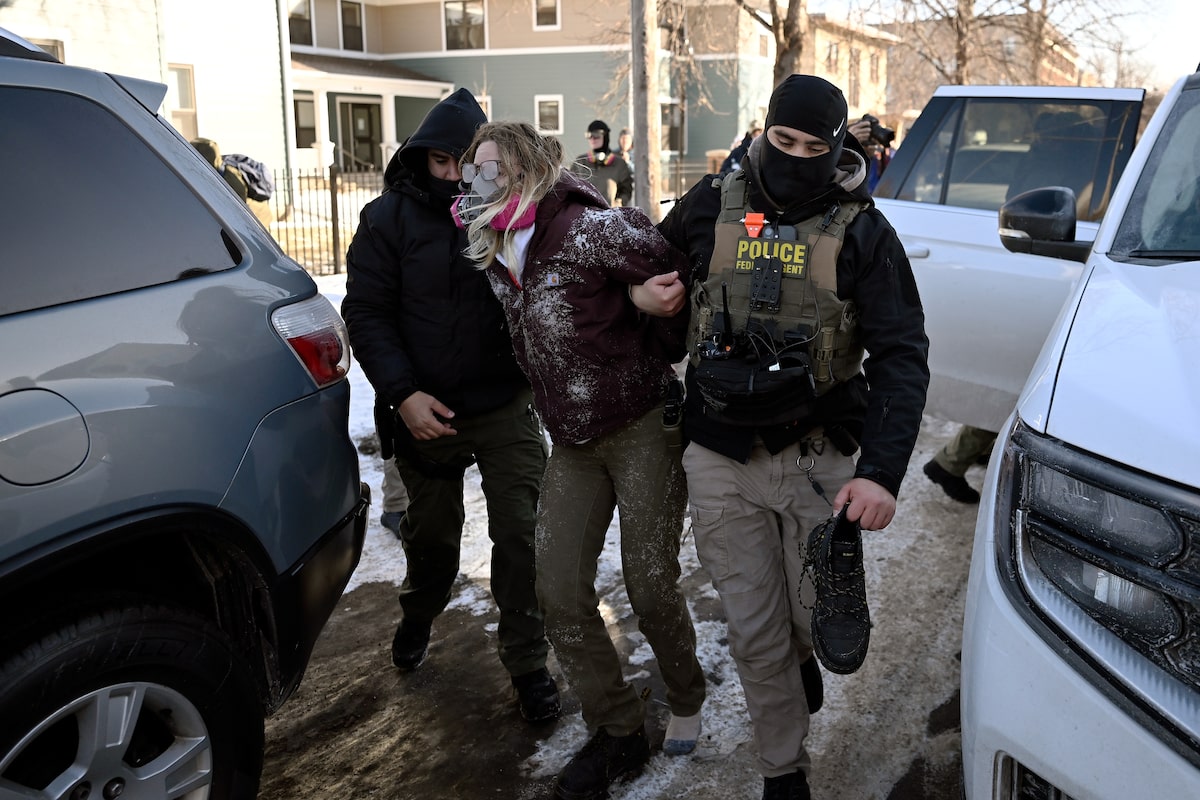
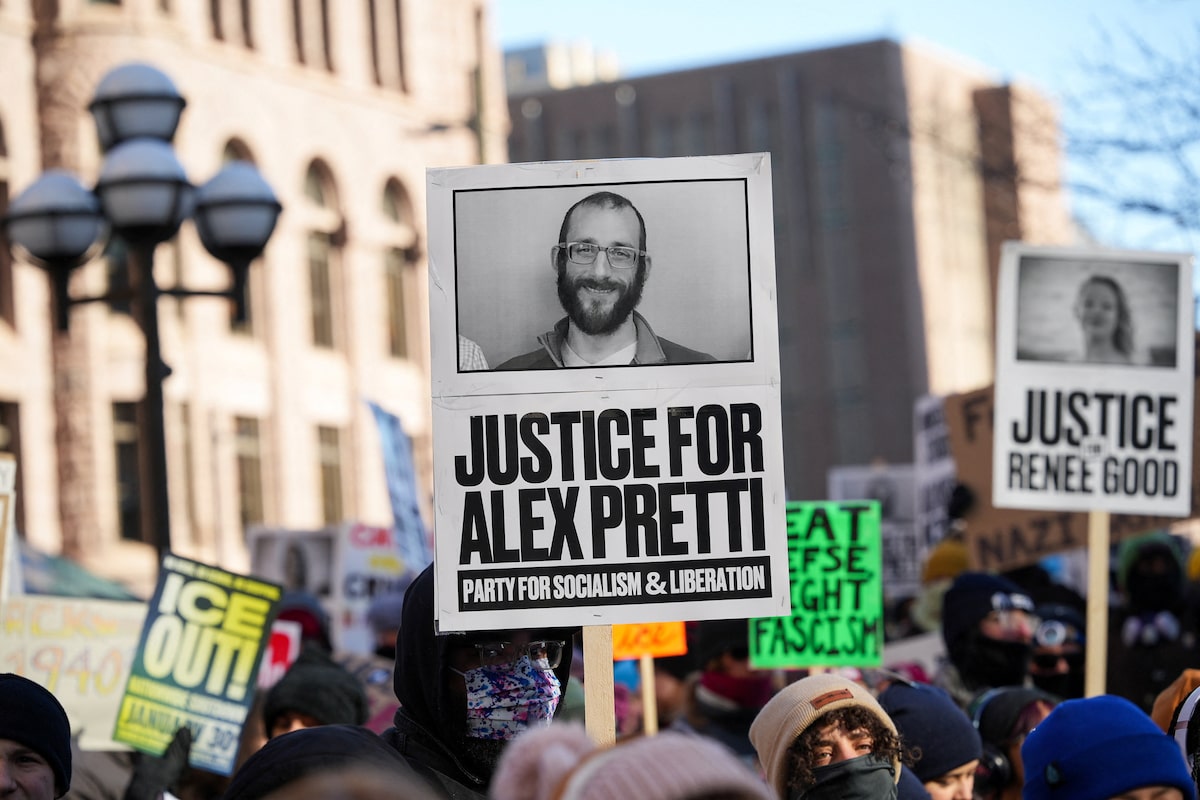
“Sanctuary” evokes calm, a repose from chaos, a safety from brutality.
But sanctuary cities have become battlegrounds. Their streets have been shot through with bullets. Their politics have been inflamed by questions about what individuals can do to counter the might of the federal government, but also about what those policies have accomplished – or whether they have merely provoked presidential vengeance.
Last year, Mr. Trump signed an executive order accusing sanctuary cities of staging a “lawless insurrection,” using their “authority to violate, obstruct, and defy the enforcement of Federal immigration laws.”
In the months since, the hardest fist of federal enforcement has fallen upon cities that declared themselves sanctuaries: Los Angeles, Washington, D.C., Chicago, Minneapolis. Even before Mr. Trump returned to the White House, Texas Gov. Greg Abbott dispatched buses of migrants to places that promised sanctuary, blaming those cities for what he called the “open border policies” of the time.
Minnesotans are resisting ICE – and they’re more galvanized than ever
Now, those who support Mr. Trump say more punishment is needed. Earlier this week, the far-right House Freedom Caucus urged the President to act against sanctuary cities, saying it is time to invoke the powerful Insurrection Act “to maintain order in the face of unlawful obstructions.” Mr. Trump has pledged to cut federal funding in sanctuary cities.
Across the U.S., church leaders have debated whether to abandon the term altogether. Legislators who penned sanctuary laws have mulled whether, in today’s America, there are parts of the country where the idea may not have a place today.
The whole concept is founded, in part, on a fiction, said Kevin de Léon, a former California senator who helped pen the state’s sanctuary law – which was originally called the California Values Act, designed as a message, he said, “to our undocumented immigrant community that you are recognized, you are cherished and you are respected.”
“’Sanctuary’ is a misnomer,” Mr. de Léon said. “Because it leaves you with the impression that there is an invisible force shield,” a bubble built by cities and states to let migrants “walk freely on the streets without fear of being picked up by ICE agents. That’s a complete misrepresentation.”
Over the past months, sanctuary policies have stood helpless against the thousands of federal agents who have commandeered city streets and killed residents.
And yet the idea, rather than wither under the heavily armed attacks of the Trump administration, has found new expression in an era of conflict and fury – a moment not entirely unlike the one in which it emerged a half-century ago in Berkeley.

The campus of UC Berkeley, where radical students and staff in the 1960s helped anti-war sentiment and the civil rights movement take root.Nathan VanderKlippe/The Globe and Mail
Berkeley in the 1960s was a place gripped by dissent and vibrant with ideas. Over years of marches, lectures and sit-ins, the Black Power movement and the radical students and staff at UC Berkeley shaped the New Left, which opposed war and supported civil rights.
Then, in 1969, a spasm of violence – the deadly People’s Park protest in which police killed one person and blinded another – shook the city and awakened a desire for something more than demonstrations and slogans.
“The idea was to use the institutions of city government to start implementing some of the policies and perspectives of the New Left,” said Chuck Wollenberg, a historian who has written extensively about the city’s history.
“The sanctuary city policies were part of that process,” he said.
From its earliest days, the offer of sanctuary was largely symbolic. Not one sailor destined for Vietnam sought refuge inside the University Lutheran Chapel.
A decade later, the church renewed its sanctuary stance as an offer of succour toward refugees from Central America.
Then, too, it had little to actually offer those seeking a physical place of safety. In the chapel basement, a single door opens onto a small private space.

Jose Artiga fled El Salvador in 1980. He’s now the executive director of SHARE, which supports Salvadoran refugees.Nathan VanderKlippe/The Globe and Mail
“How many can we house right here? It’s a tiny little room. Only one bed fits,” said Jose Artiga, who fled El Salvador in 1980, and has become an outspoken advocate for refugee rights in the Berkeley area, where he is executive director of the SHARE Foundation.
In fact, he said, among refugees from El Salvador in the 1980s, “many of us didn’t need to be in a sanctuary.”
What they needed, he said, was not a space. It was “a platform” – to decry the war, to marshal the efforts of lawyers, politicians and others to help.
What they got was a movement.
Sanctuary “wasn’t a matter of, ‘We are against the government.’ It’s more, ’We love our country, and we expect our country to uphold our laws,” said Locke Schultz Jaeger, the daughter of Rev. Schultz, who has devoted much of her own life to pursuing the cause of sanctuary.
Her mother Flora Schultz, now 91, still attends protests every week, only now the sign she carries offers a different message: “Roses are red, violets are blue. Abolish ICE and fascism, too.”

Locke Schultz Jaeger’s father, the late Rev. Gus Schultz, was the preacher at Berkeley’s University Lutheran Chapel. In November, 1971, the congregation approved a resolution to make their church a haven for those opposed to the Vietnam War.Nathan VanderKlippe/The Globe and Mail
If the sanctuary movement took root in Berkeley, the first Trump administration caused it to flower. Most of the cities who have now adopted such measures did so in 2016 and 2017.
“There was so much blowback to Trump’s initial anti-sanctuary push and rhetoric, leading to large numbers of cities becoming sanctuaries,” said Loren Collingwood, a political scientist at The University of New Mexico who is co-author of Sanctuary Cities: The Politics of Refuge.
And so those policies continue to flourish. Berkeley last year passed a sanctuary ordinance, which is more enforceable than a resolution. This week, Alameda County began work on an integrated immigration enforcement response plan, while creating ICE-free zones that will demand federal agents produce a judicial warrant to enter county property.

Locke Schultz Jaeger and her mother, Flora Schultz, protest in Berkeley on Jan. 30.Nathan VanderKlippe/The Globe and Mail
Critics accuse sanctuary advocates of providing safe harbour to criminals, even if their intention is otherwise. The solution, they say, is not sanctuary but a strengthened border.
“The only reason we need sanctuary laws is because the Biden administration let so many people in outside the law,” said Brian Jones, a California senator who proposed legislation last year to curb more expansive sanctuary policies. The law failed.
Yet even Mr. de Léon worries that, at this political moment, sanctuary measures could do more harm than good in some places, accomplishing little but to offer fodder to those whose anger over lenient immigration policies helped propel Mr. Trump back into the presidency.
“If you’re dealing with battleground states with high unemployment, a sense of alienation, dissatisfaction with the country and the economy – I certainly wouldn’t be putting forward any sanctuary city resolutions in the immediate future,” he said.
In Berkeley, however, people have discovered, and rediscovered, an appetite for dissent – as they have across the country.
“A lot of people here over the past year have for the first time in their life attended a protest. Or sometimes for the first time since the sixties,” said Drew Paton, a pastor at First Presbyterian Church of Berkeley, who was himself arrested outside an immigration facility last year.
Lisa Hoffman is co-executive director of the Berkeley-based East Bay Sanctuary Covenant, a 35-person organization that works with migrants. She likened the modern sanctuary movement to the underground railroad and Holocaust resistance.
Mr. Trump “can make life difficult for us, which he has and continues to do,” she said. “But this is our essence, who we are as humans. They can’t shut down sanctuary. Sanctuary is us.”