
On a cold, clear Wednesday this past January, FBI agents descended on the Fulton County elections hub, a warehouse in a semi-rural area outside Atlanta.
The cavernous building is the nerve centre for organizing voting in the jurisdiction that includes Georgia’s capital.
Officers left with 656 boxes of material, including ballots from the 2020 presidential election and voter registration information.
The move was only the latest in U.S. President Donald Trump’s unending campaign to falsely claim that his election loss nearly six years ago was rigged.
And it’s part of a concerted effort by his acolytes to seize control of elections boards across the state, putting themselves in charge of deciding how voting will be run and the results tallied ahead of hotly contested gubernatorial and senatorial races this fall.
It is all raising fears that the President could bring criminal charges against his perceived enemies, meddle in the state’s elections and set the stage to overturn future results.
This week, a Trump-appointed judge rejected the county’s demand that the federal government return the documents.


FBI agents took away boxes from the hub on Jan. 28. Since then, it has won a court case to avoid having to return them to the county.Mike Stewart/The Associated Press
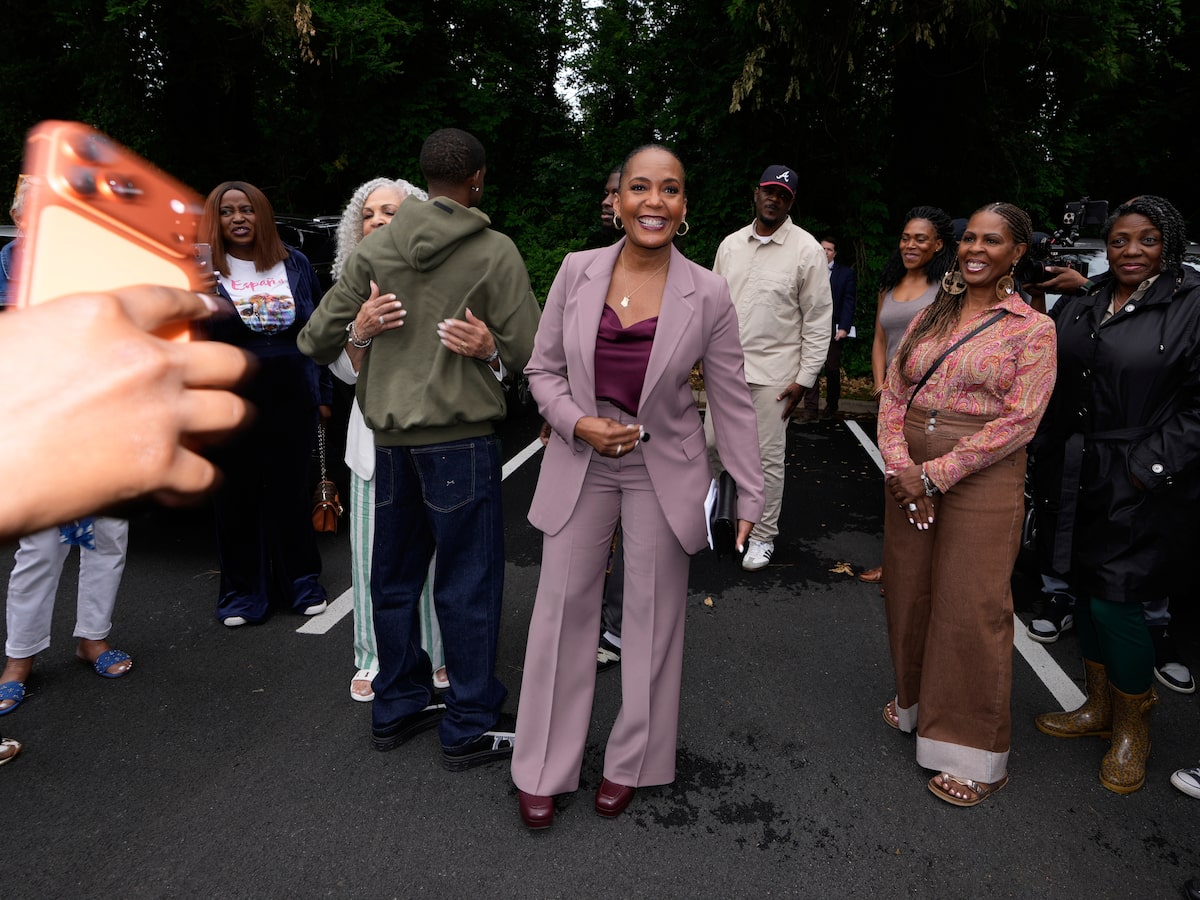
“This is about more than the 2020 election. I think it’s all about what he wants to have happen in ’26 and ’28,” Keisha Lance Bottoms, a former mayor of Atlanta and front-runner for the Democratic gubernatorial nomination, told The Globe and Mail as she glad-handed with voters after an all-candidates’ forum at a Black megachurch in an Atlanta suburb.
She pointed to a famously cryptic comment Mr. Trump made during the 2024 election campaign: “He said if people voted for him, you’d never have to vote again, so maybe this is the preview.”
This fight over the electoral system is the hottest political flashpoint in the country’s most dynamic swing state – a place where explosive growth and demographic shifts have transformed what was once a bastion of southern conservatism into a fiercely competitive battleground.

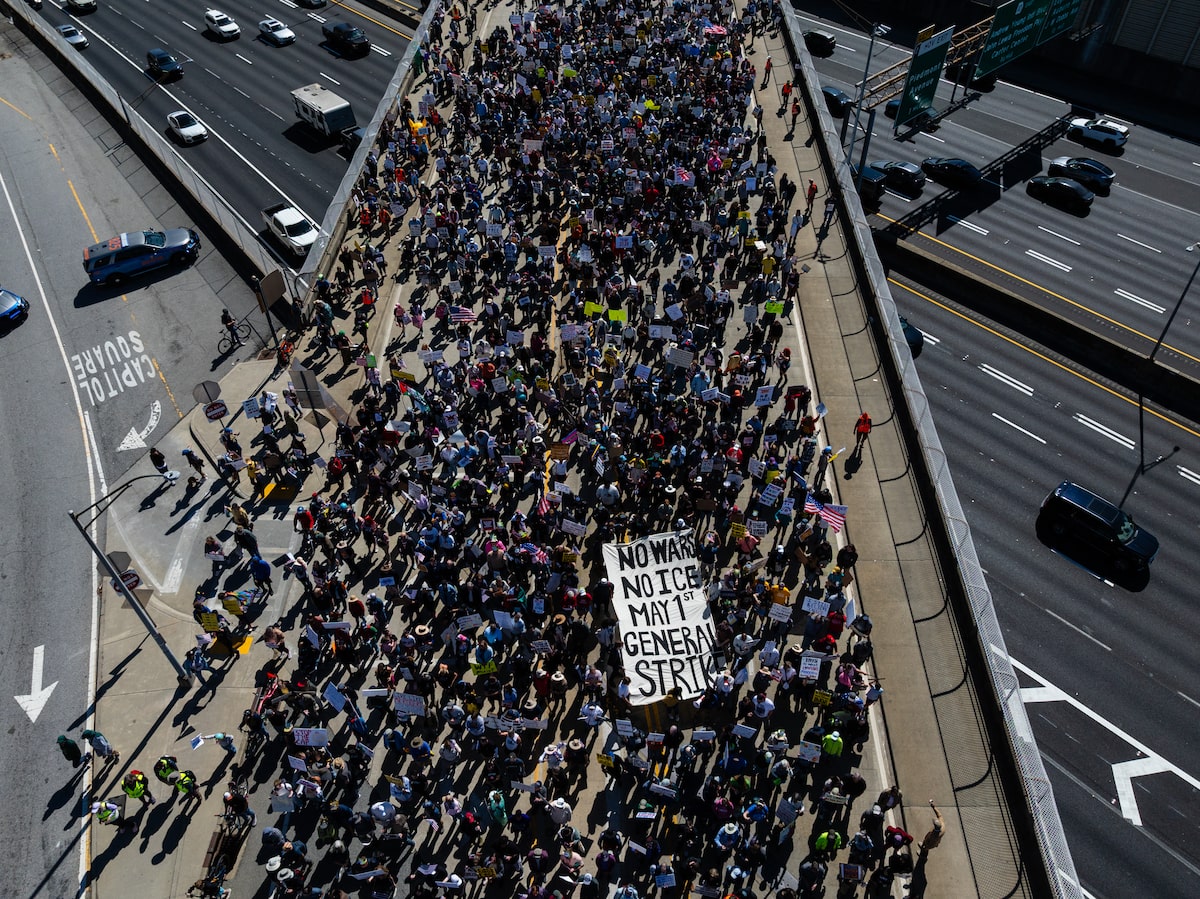
At first glance, Atlanta’s urban vibrancy can be hard to spot. Fourteen lanes of expressway traffic cut off its central business district from adjoining neighbourhoods. Cookie-cutter subdivisions and office parks sprawl across low hills and oak forests.
But a closer look reveals buzzing nodes of activity in the city, where new apartment blocks host restaurants and coffee shops, and bar terraces open onto mixed-use trails. The suburbs are dotted with Indian-themed malls, Pho takeout joints and Korean baths.
All of this is the result of rapid population growth that has changed the city from a regional centre into the country’s sixth-largest metropolitan area.
The New Great Migration has seen Black Americans, many of whose families left the South during Jim Crow, return. And a surge in international immigration has brought people from Latin America and East and South Asia.
“Atlanta is that place in space where there’s hope. There’s energy here, opportunity, especially for young people,” said Melinda Sylvester, president of the Greater Georgia Black Chamber of Commerce, who moved to Atlanta in 2010 from Louisiana to launch a magazine.
“It’s the first home of Dr. Martin Luther King, Jr., and the spirit of his dream is alive and real.”
Demographic diversification has entrained political change, with newcomers disproportionately tending to favour Democrats.
The once solidly red state chose Joe Biden for president in 2020 and elected two Democratic senators. One of them, Jon Ossoff, is up for re-election this fall. Democrats also hope to also wrest the governorship away from the Republicans, whose popular incumbent, Brian Kemp, is term-limited.
They will be counting on people such as Mirna Leberón, who lists Mr. Trump’s war on Iran and his immigration crackdown as her top political issues.
“He doesn’t think when he makes decisions and gets himself into messes he can’t get out of,” the 37-year-old Salvadoran immigrant said as she stood in Plaza Las Americas, a Latin American mall designed to look like an adobe pueblo in the sprawl northeast of the city.
It’s a different location in the Atlanta area, meanwhile, that is currently an obsession of the White House.
In an affidavit, the FBI said its raid on Fulton County’s elections headquarters originated from a referral by Kurt Olsen, a Trump administration official and lawyer who previously worked on the President’s efforts to overturn the 2020 result.

Tulsi Gabbard, Mr. Trump's director of national intelligence, was on hand for January's raid in Fulton. Since then, Georgians have been waiting to see what steps the Trump administration might take next.Elijah Nouvelage/Reuters
Mr. Trump’s specific intent is unclear.
One possibility is that the Department of Justice will launch criminal prosecutions of state officials the President has accused of thwarting him in 2020.
Another is that, armed with information on Georgia voters, the administration could press the state to improperly purge some of them from the rolls.
A third: Mr. Trump is preparing to overturn future election results that don’t go his way and wants to undermine public confidence in the voting system to build support for such an action.
The President’s most loyal supporters in the state are calling for him to act.
“Where are the prosecutions when it comes to our elections being stolen here in Georgia?” said Colton Moore, a 32-year-old former state senator. “We’re ready to see some arrests. We know people have broken the law.”

'Stop the Steal' protesters rally in Dalton, Ga., in early 2021, when the state held a runoff vote. Both contested Senate races would end in the Democrats' favour.Brian Snyder/Reuters
Any claims of election-rigging, of course, were investigated and refuted years ago by Republican state officials.
Since then, election deniers have focused intently on taking control of Georgia’s elections boards. These boards – one at the state level and one for each of its 159 counties – manage the logistics of voting, such as deciding how many polling stations to open and where to put them, count ballots and certify the results.
At the state level, a trio of board members – Janice Johnston, Janelle King and Rick Jeffares – tried to push through sweeping changes to the way elections are run.
Among other things, they voted to allow county elections boards to stop the certification of an election, order the hand-counting of ballots and make it harder for people to cast absentee ballots. The rule changes were struck down by the state supreme court.
It’s been a similar story at the county level, where members of several local boards have tried to stop the certification of election results, including in Fulton and nearby Gwinnett counties, the state’s two most populous and both Democratic strongholds.
“A real risk is if there’s a desire to block a result that they don’t like or refusing to certify an election,” said Jonathan Stonestreet, an expert on election management at the Carter Center in Atlanta. “If you’re joining an election board, then the intention should be to make sure that the elections are conducted in an impartial way, but not to disrupt the process.”
Mr. Stonestreet, who has worked on projects to build democratic institutions around the world, said that “FBI interference in a particular county” risks eroding trust in the system and making people more susceptible to believing false accusations of fraud.
“Voter confidence is one of those things where, we’ve seen in other countries, it takes a long time to build up but it’s pretty easy to destroy,” he said.
The Carter Center has deployed election monitors in the state and found no evidence of fraud or vote-rigging.
It’s not just a fringe minority that has lined up behind Mr. Trump’s efforts to disenfranchise voters.
In 2020, Lieutenant-Governor Burt Jones, now a leading candidate for the Republican gubernatorial nomination, pushed for the legislature to override the election result and appoint electors for Mr. Trump. Mike Collins, a U.S. representative and top contender for the Republican Senate nomination, once ran a campaign ad that showed him shooting a voting machine.

Republican voters on the ground in Georgia evince a range of views on the topic. But it is rare to find anyone who flat-out accepts the 2020 election results – a sign of how thoroughly Mr. Trump’s narrative has become normalized.
“I know there’s been some fraud going on,” said Steve Ledbetter, 72, a retired employee of the Kellogg factory in Rome, Ga. “They want illegal, they want to cheat. Only Americans that are legal here should be able to vote.”
A town of about 40,000 people 90 minutes northwest of Atlanta, Rome is illustrative of the countertrend to the metropolis’s liberal pull on the state. Rural Georgia has moved further right, and voters here three times sent arch-conspiracy theorist Marjorie Taylor Greene to Congress.
Glenda Fuller, 76, asserts that election officials in 2020 “hid ballots everywhere” and counted some ballots twice. “It’s a shame that you would want someone in office so badly you would cheat, steal, whatever,” she said.

Clay Fuller, sworn into Congress on April 14, was the Trump-approved candidate who won Marjorie Taylor Greene's old seat in Georgia. His wife, Kate Fuller, took part in the swearing-in alongside House Speaker Mike Johnson.Jose Luis Magana/The Associated Press
Even those who are uneasy with the FBI raid allow that Mr. Trump may be correct about voter fraud.
“I don’t think you can say one way or another. There were irregularities, for sure, but who knows?” said Lee Griffith, 83, a retired heart surgeon. “He just needs to give it up. It’s in the past now, regardless of what happened.”
Within the state GOP, there is little room for any ambiguity on an official level.
When Geoff Duncan, then the state’s Republican lieutenant-governor, criticized Mr. Trump’s 2020 efforts to overturn the election, he was expelled from the party. On a recent spring weeknight, he was at the same church forum as Ms. Bottoms, seeking the Democratic nomination for governor.
“If somebody can predict what Donald Trump is going to do next, they’d have the keys to the empire. Nobody can predict. I don’t even think he can predict what he wants to do. This is not about the 2020 election. It’s about just sowing seeds of doubt, creating intimidation and fear,” he said in an interview afterward. “I am worried about what’s going to happen.”

Brynn Anderson/The Associated Press
U.S. politics in depth: More from The Globe and Mail
The Decibel podcast
Before the U.S. midterm elections begin, Washington, Ottawa and Mexico City have a decision to make by July 1 about the future of their continental trade pact. Economics reporter Mark Rendell spoke with The Decibel about where the countries stand. Subscribe for more episodes.
David Shribman’s take
In today’s Washington, even state dinners are parties for one party
Scorching new book on RFK Jr. exposes the man behind the caricature
This is what a Trump with few friends and fewer options looks like